
Crime
Antilia case: Pradeep Sharma plotted Mansukh Hiran’s ‘cold-blooded murder’

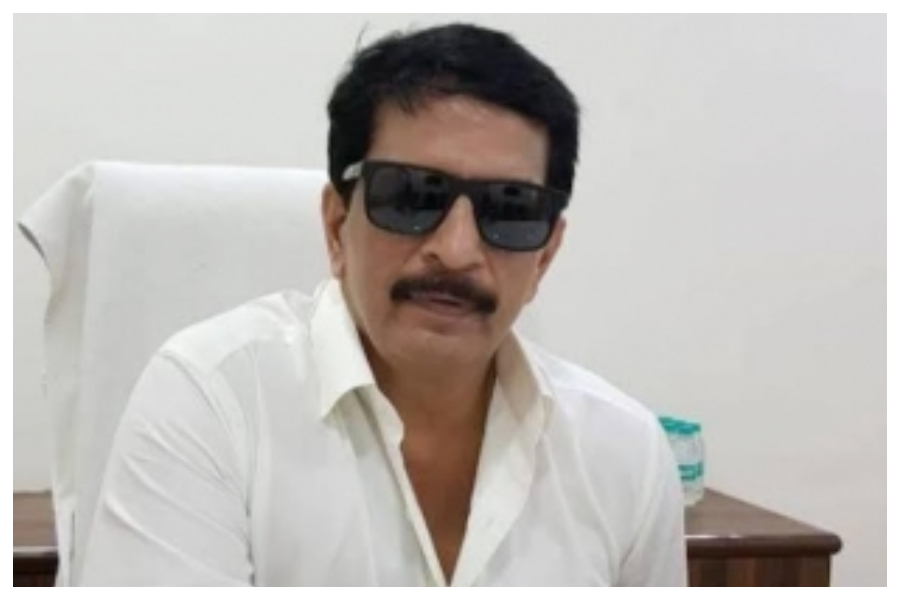
The National Investigation Agency (NIA) has named dismissed police officer Pradeep Sharma as the ‘main conspirator’ in the “cold-blooded murder” of Thane businessman Mansukh Hiran, in its affidavit in the case pertaining to planting a SUV with 20 gelatin sticks outside Antilia, the home of industrialist Mukesh Ambani.
Aware of the entire conspiracy, the NIA told the Bombay High Court that Hiran was considered the ‘weak link’ in the larger conspiracy to terrorise the billionaire Ambani family, when the SUV was discovered on February 25, 2021, sending shockwaves across the country.
Opposing the bail plea of Sharma – nabbed on June 17, 2021 and currently in judicial custody – the NIA affidavit said he was not innocent and had committed offences of criminal conspiracy, murder and terror acts.
A division bench comprising Justice A. S. Chandurkar and Justice G. A. Sanap has kept Sharma’s bail plea — challenging the Special NIA Court’s rejection of his bail application in February 2022 — for further hearing on July 17.
“Pradeep Sharma was an active member of a gang that had conspired to terrorise people, including the Ambani family, and murdered Hiran as he was a weak link in the conspiracy,” said the NIA, adding that Sharma and other accused were charged under the Unlawful Activities Prevention Act for heinous and serious offences.
Hiran was aware of the entire conspiracy of parking the SUV outside Antilia that day and the accused (Sharma and co-conspirator and sacked cop Sachin Vaze) feared that he (Hiran) could spill the beans making it difficult for the duo to gather the fruits of the larger plot.
The NIA said that from the evidence gathered, it was crystal clear that Sharma was directly involved in the crime and committed offences of conspiracy, terrorist act, being member of a terror gang, kidnapping, murder and destruction of evidence.
It said Sharma willingly and intentionally entered into a well-organised criminal conspiracy for the execution of Hiran which was a direct outcome of the terror acts committed by Vaze and the other accused.
The NIA also claimed that Hiran was eliminated after he refused to take the blame for parking the SUV outside Antilia.
“When Hiran refused to take blame for the crime, Vaze hatched a conspiracy with Sharma and other accused to kill Hiran so that he does not divulge that Vaze was the one who parked the vehicle outside Antilia,” the NIA said in its affidavit.
The larger conspiracy in the case involved parking of the SUV, and circulating threat letters in the name of ‘Jaish-ul-Hind’ to terrorise the Ambani family and local people.
The NIA pointed out that after killing Hiran, the accused (Sharma-Vaze) attempted to show it as a suicide. Shockingly, Sharma had attended meetings in the Commissioner of Police premises where the alleged conspiracy was hatched.
As the main conspirator, Sharma hired henchmen to kill Hiran by paying Rs 45 lakhs he had got from Vaze, and after the murder, asked the co-accused to flee from Mumbai to Nepal.
The NIA argued that Sharma was famous as an ‘encounter specialist’, influential and if released on bail, he would tamper with the evidence and influence the witnesses.


Crime
Mumbai Police Busts Fake Apple Accessories Racket In Ghatkopar, ₹16.33 Lakh Goods Seized; Six Booked


Mumbai: In a major crackdown on the sale of counterfeit branded goods, Mumbai Police have dismantled an organised racket dealing in fake Apple accessories in Ghatkopar East, seizing products worth Rs. 16.33 lakh and booking six shopkeepers in the case.
The action was carried out by a team from Pant Nagar police station following a specific tip-off about the sale of duplicate mobile accessories in the Patel Chowk and Nilyog Mall areas. Acting swiftly, police officials devised a coordinated plan and split into six teams to conduct simultaneous raids at multiple locations.
During the operation, authorities raided six shops where a large quantity of counterfeit products was recovered. The seized items included mobile chargers, adapters, USB cables, phone covers, back panels, earphones, AirPods and batteries, all falsely branded as products of Apple Inc. Officials said the items were near-identical replicas designed to mislead customers into believing they were purchasing genuine goods.
To verify the authenticity of the products, representatives from Apple Inc. were present during the raids. Using technical expertise and specialised identification techniques, they confirmed on the spot that all the seized items were counterfeit.
The report also said that the accused had been sourcing these fake products at significantly lower prices and selling them at inflated rates under the Apple brand name. Police said the shopkeepers were illegally using Apple’s logo and product designs without authorisation, thereby deceiving customers and violating intellectual property rights.
Based on the findings, cases have been registered against all six accused under Sections 51 and 63 of the Copyright Act, The seized goods have been confiscated and sent for further forensic examination as part of the ongoing probe.
Police officials stated that this operation is part of a broader drive to curb the circulation of counterfeit branded goods in Mumbai. They added that further investigations are underway to trace the supply chain and identify other individuals linked to the racket.
Authorities have reiterated their commitment to taking strict action against such illegal activities and warned traders against dealing in counterfeit products.
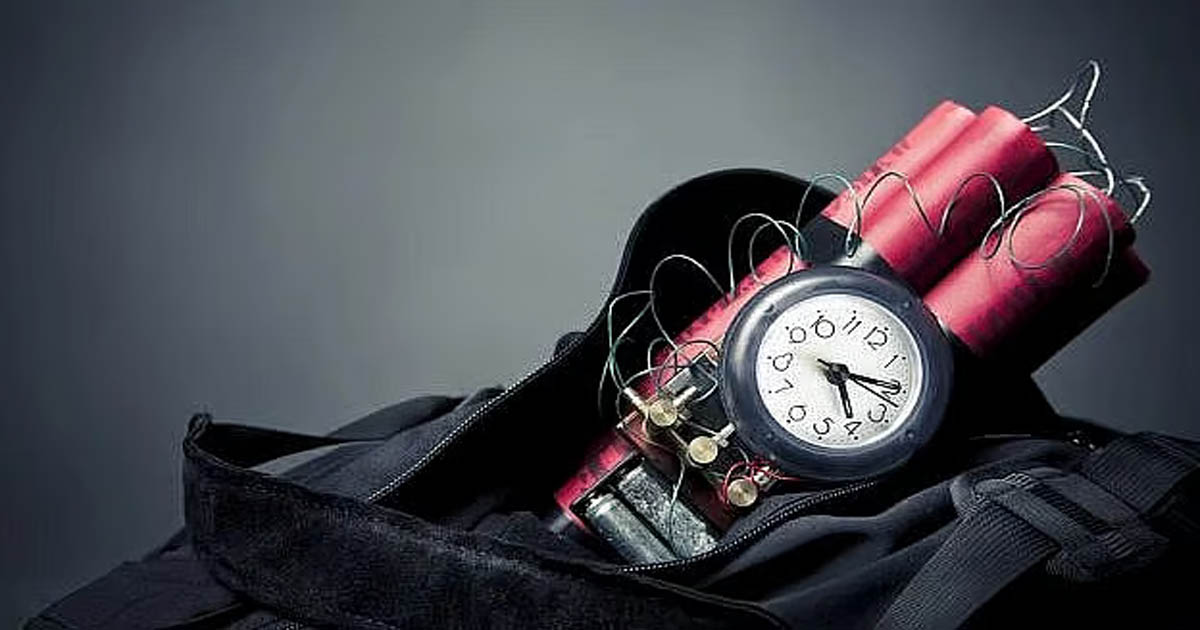
Mumbai: St Xavier’s College in Mahim, Mumbai, received a bomb threat on Tuesday, said the official.
According to the Mumbai police, St Xavier’s College in Mahim, Mumbai, received a bomb threat. Nothing suspicious was found by the police, and they believe this is primarily a hoax threat.
The police are taking appropriate action and investigating.
More details awaited.
This comes after a series of bomb threats earlier this week caused panic across the city.
On Wednesday, threat emails were received at multiple locations, including the Bombay Stock Exchange (BSE), Vidhan Bhawan, and the High Court.
Police, including the Bomb Disposal Squad (BDS) team, are present on the scene, officials said on Wednesday.
According to the Mumbai police, threat mail has been received at BSE, Vidhan Bhawan and the High Court this morning.
“Adequate security measures have been taken and are in place. Necessary legal action is being taken at the respective police stations,” Mumbai Police said.
On March 8, a hospital in Mumbai received a bomb threat via email, claiming that an “LED blast” would be carried out on the premises.
The email sparked significant panic among patients and staff.
In response, the Mumbai Police’s Bomb Detection and Disposal Squad (BDDS) conducted a thorough inspection of the hospital.
Crime
Mumbai Shocker: Husband Pushes Wife To Death In Front Of Running Local Train At Mulund Station; Arrested
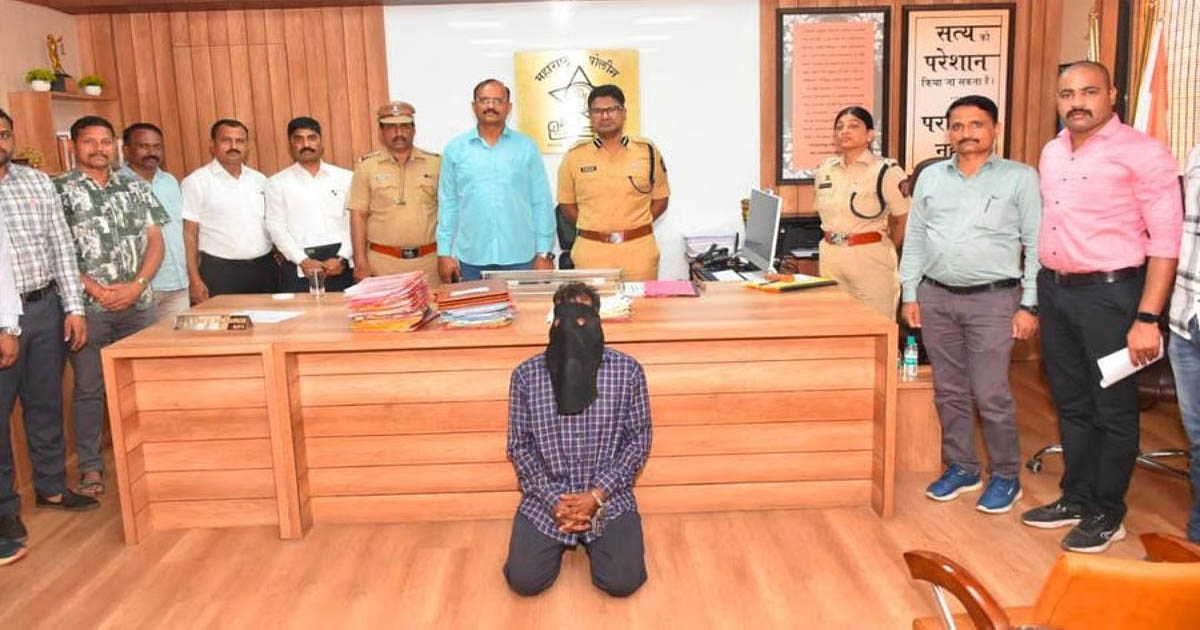
Mumbai: A 42-year-old man, who was captured on CCTV, while pushing his wife before a running local train owing to marital discord, has been arrested in Surat. The accused, Rajukumar Gupta, an electrician, went absconding with his younger son after pushing Pushpa, 36, to her death on the morning of March 14. Hours before the incident, the victim had even lodged a police complaint.
According to victim’s brother Kamlesh Kumar Gupta, 30, who is a soldier, the couple had frequent quarrels and hence he had come to take his sister and his elder nephew, 15, back to their UP native. In his complaint to the Kurla GRP, Kamlesh, who lives in UP, said that on March 14, when they were set to go to UP, Rajukumar and Pushpa again had an argument, prompting the latter to approach the police. Kamlesh said that subsequently, he, Pushpa and her 15-year-old son reached the Mulund station.
However, he realised that he had forgotten his Army ID card at Rajukumar’s house. Hence, he along with his nephew went back, however, an enraged Rajukumar locked the duo inside the house. The accused then arrived at the Mulund station, where he saw his wife standing on platform 1. He pushed her in front of a running local train and fled, said the FIR.
Commuters alerted the station master, following which the railway authorities rushed Pushpa to a government hospital, where she was declared dead. Kamlesh said that he somehow managed to alert neighbours, who helped open the door.
Police said the CCTV footage from the station has captured the incident. Based on the complaint, the Kurla GRP has registered an FIR against Rajukumar under section 103 (punishment for murder) of Bharatiya Nyaya Sanhita.

Mumbai: SIM card used in cyber fraud, case registered against SIM card agents from Nagpara and Andheri

Large-Scale Land Record Irregularities in Maharashtra Spark Statewide Audit

‘Dhurandhar 2 Is A Pakistani Film, Why Show It To People Of Hindustan?’ Samajwadi Party MLA Abu Azmi Slams Ranveer Singh Starrer Movie

‘Saw People Facing Shortage, Felt Deeply Concerned’, Says Consulate General of Iran In Mumbai Amid LPG Crisis; Calls India ‘Friend & Partner’

Maharashtra Infra Update: JNPT Linked Expressway Connecting Mumbai-Pune -Goa Routes Moves Ahead, Bids Open April 16

Married Mumbai Woman Mocked In Andheri Society Over ‘Lift Kissing’ CCTV Video, Files Police Complaint

Mumbai: JBCN International School In Borivali Gets Bomb Threat, Search Reveals Hoax, Students Safe

Former Arsenal Star Mesut Ozil’s Convoy Gets Involved In Road Accident During Bangladesh Visit

Mumbai Local Train Update: Mega, Jumbo Blocks Announced On Central, Harbour & Western Lines On February 22; Check Time & Route Here

Mahayoti’s big gift to the people of Mumbai… Now there is no tax for houses up to 500 square feet, the Municipal Corporation has increased this limit to 700 square feet.
-

 Crime4 years ago
Class 10 student jumps to death in Jaipur
-

 Maharashtra1 year ago
Mumbai Local Train Update: Central Railway’s New Timetable Comes Into Effect; Check Full List Of Revised Timings & Stations
-

 Maharashtra1 year ago
Mumbai To Go Toll-Free Tonight! Maharashtra Govt Announces Complete Toll Waiver For Light Motor Vehicles At All 5 Entry Points Of City
-

 Maharashtra1 year ago
False photo of Imtiaz Jaleel’s rally, exposing the fooling conspiracy
-

 National News1 year ago
Ministry of Railways rolls out Special Drive 4.0 with focus on digitisation, cleanliness, inclusiveness and grievance redressal
-

 Maharashtra1 year ago
Maharashtra Elections 2024: Mumbai Metro & BEST Services Extended Till Midnight On Voting Day
-

 National News1 year ago
J&K: 4 Jawans Killed, 28 Injured After Bus Carrying BSF Personnel For Poll Duty Falls Into Gorge In Budgam; Terrifying Visuals Surface
-

 Crime1 year ago
Baba Siddique Murder: Mumbai Police Unable To Get Lawrence Bishnoi Custody Due To Home Ministry Order, Says Report