
Business
Amazon aims to log $20 billion worth exports from India by 2025


E-commerce giant Amazon on Wednesday announced it now aims exports worth $20 billion from India by 2025, thus doubling its goal.
In 2020, Amazon pledged to enable $10 billion in cumulative exports from India by 2025.
The company said that cumulative exports by the Indian micro, small and medium enterprises (MSMEs) via its ‘Global Selling’ programme are currently on track to surpass the $5 billion milestone.
The programme took about three years to enable the first billion dollars, and the last two billion dollars have come in just 17 months, Amazon said during the ‘Exports Digest 2022’ event.
“Enhancing the export potential of Indian MSMEs is a key government priority and efforts are being made to support Indian MSMEs for their success in international markets,” said Narayan Rane, Union Minister of Micro Small and Medium Enterprises.
The global programme has witnessed good adoption among businesses of all sizes across the country and has grown to more than 1 lakh (100K) exporters since its launch in 2015, showcasing their products to customers worldwide through Amazon’s 18 international websites.
“We are scaling up our pledge to boost exports from India using e-commerce to $20 billion by 2025. We will continue to work with all key stakeholders to make exports easier for the Indian MSMEs,” said Amit Agarwal, SVP India and Emerging Markets, Amazon.
More than 1,000 Indian exporters on Amazon Global Selling crossed Rs 1 crore in sales last year.
In 2021, several Indian entrepreneurs and businesses emerged as globally successful brands, underlining the popularity of ‘Made in India’ products in international markets, the company said.



Navi Mumbai, Oct 6: Navi Mumbai International Airport (NMIA) is strengthening the passenger experience with expanded mobility, transit hospitality and airline support as more flights prepare to shift from capacity-constrained Chhatrapati Shivaji Maharaj International Airport (CSMIA) in Mumbai.
The focus of NMIA, one of India’s largest greenfield airports and operated by Adani Airport Holdings Limited (AAHL), on customer comfort also extends to a futuristic digital art programme and experience zone designed to create a more soothing and engaging environment for passengers.
The measures come ahead of the winter flying schedule, which runs from October 25, 2026, to March 27, 2027.
Maharashtra State Road Transport Corporation will start electric e-Shivai services from October 7 to Dadar, Borivali and Pune, with fares of Rs 170, Rs 210 and Rs 450, respectively. Children below 12 years of age and women travelling with a National Common Mobility Card will be eligible for half-fare.
‘Chalo’ operates 21 daily services to Marol, Bandra, Dadar and Colaba, while Navi Mumbai Municipal Transport runs seven dedicated airport routes.
Bharat Taxi will begin operations with up to 40 vehicles from October 10. Cityflo, Aarya and Chalo will also operate a complimentary hourly shuttle between NMIA and CSMIA.
The airport’s passenger transport network includes 3,787 app-based taxis, 184 car rentals, 171 autorickshaws and 547 buses.
NMIA is also connected to Panvel, Targhar and Bamandongri suburban railway stations, as well as major road corridors including Atal Setu and the Sion-Panvel Highway.
Inside Terminal 1, AAHL will open an 80-room Swirl Transit Hotel in mid-October, offering four-hour and overnight stays, showers, workstations, Wi-Fi and 24-hour dining.
A 21-room Swirl property is also planned at Lokapriya Gopinath Bardoloi International Airport (LGBIA) in Guwahati.
TajSATS’ flight kitchen at NMIA serves more than 40 departing flights a day, with capacity for 7,500 meals daily and expansion to 15,000 as demand rises.
It serves domestic and international carriers, provides local meal uplift for international airlines, and adds to the culinary offering for passengers. TajSATS, which has more than four decades of aviation catering experience, also operates the flight kitchen at CSMIA.
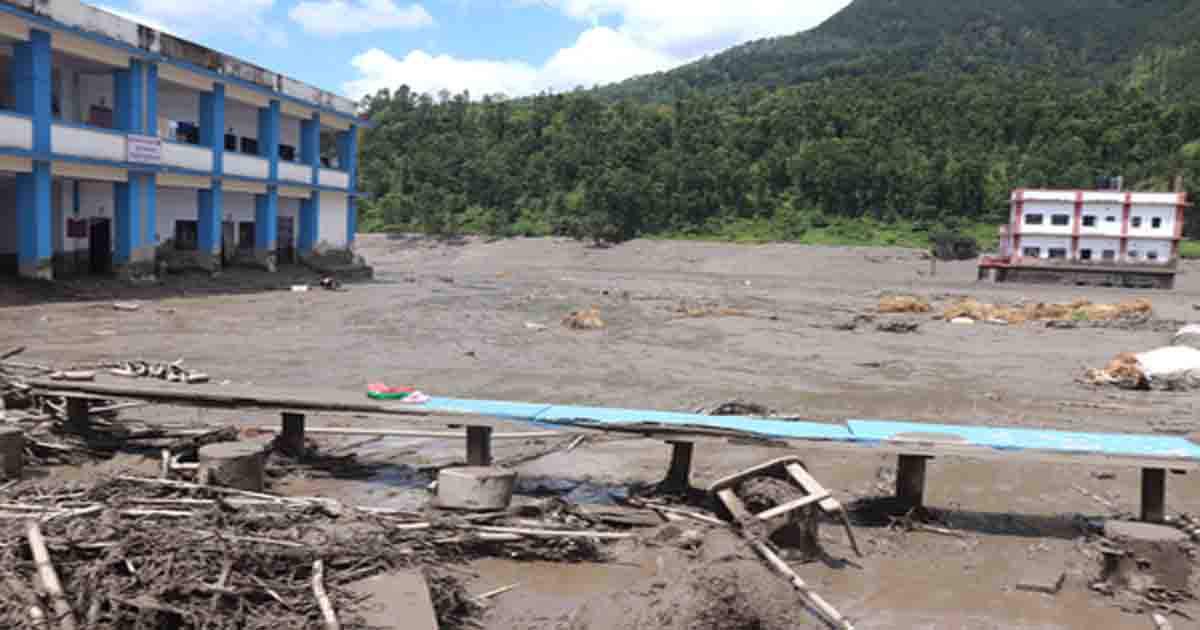
Kathmandu, Oct 6: The devastating August floods in Nepal are expected to have a material negative impact on the country’s economic prospects in the short term, the World Bank said on Tuesday as it lowered its economic growth projection for the Himalayan nation.
The global development lender said Nepal’s economic growth is projected to slow to 3.7 per cent in the current fiscal year 2026-27, which began in mid-July, from the 4.2 per cent projected in April, reflecting disruptions to industry and services.
In its report titled Nepal Development Update: Building Back Differently for the Future, released on Tuesday, the World Bank said the August 2026 floods are expected to affect Nepal’s economy through four primary transmission channels: energy, transportation, trade and tourism.
“Agriculture and banking and insurance are also channels through which the economy would be affected, but with relatively lower potential impact,” it said.
According to the bank’s report, energy, particularly hydropower, is the most critical transmission channel. The floods affected 12 hydropower projects, including seven operational projects with a combined capacity of 256.1 MW and five projects under construction with a combined capacity of 395.02 MW, as well as a 25 MW solar facility.
“Damage to transmission infrastructure disrupted an additional 149.6 MW, bringing total affected generation and transmission capacity to approximately 430.7 MW, equivalent to 10.6 per cent of Nepal’s FY26 installed hydropower and solar capacity,” the bank said.
Transportation and trade are other key transmission channels, given the concentration of Nepal’s international and domestic trade along a limited number of corridors, according to the World Bank.
As many as 1,455 people have been confirmed dead and 5,285 remain missing to date following the disaster, which destroyed communities and infrastructure along the Bhotekoshi and Trishuli river corridors, according to the National Disaster Risk Reduction and Management Authority.
According to the Rapid Disaster Needs Assessment (RDNA) report prepared by a joint technical team of the National Planning Commission and the National Disaster Risk Reduction and Management Authority, the recent floods are estimated to have caused physical damage worth 274.48 billion Nepali rupees (about 1.93 billion US dollars), while overall losses and damages have reached 408.28 billion rupees (about 2.87 billion US dollars).
The preliminary assessment suggests that more than 723 billion rupees will be required for the reconstruction and recovery of affected infrastructure and assets. The Nepali government is now working on a Post-Disaster Needs Assessment involving a more extensive assessment of the damage.
The World Bank said industry is expected to be the main drag on growth, reflecting extensive damage to hydropower, solar energy, electricity transmission and transport infrastructure, which will constrain electricity generation and production and disrupt the movement of goods.
“For instance, it took nearly a year to fully restore generation at the 111 MW Rasuwagadhi Hydropower Project, which was severely damaged by the July 8, 2025, Bhotekoshi (Lhende River) flood,” it said.
The same project has once again been badly affected by the August floods.
“This illustrates the potential for flood-related damage to disrupt electricity supply and impose substantial reconstruction costs,” the global development lender said.
“Hydropower construction in areas not directly affected by the flood is expected to continue, although projects could face higher insurance premiums, financing reassessments, and cost overruns,” it added.
“Services are expected to be affected through disruptions to trade, transport, tourism, and financial activity, while agricultural losses are expected to have limited effects on aggregate output but significant impacts on livelihoods in affected areas,” the bank said in the report.
Tourism is expected to face a potentially prolonged impact, reflecting both physical disruptions and heightened perceptions of travel risks, according to the report.
It said more than 200 hotels and restaurants were damaged across the affected districts, while access to major trekking and pilgrimage destinations—including Langtang, Gosaikunda and the Kailash Mansarovar corridor—has been disrupted.
However, economic activity is expected to gradually recover in fiscal year 2027-28 as reconstruction activity begins to gain momentum and damaged infrastructure and productive capacity are progressively restored, the bank said.
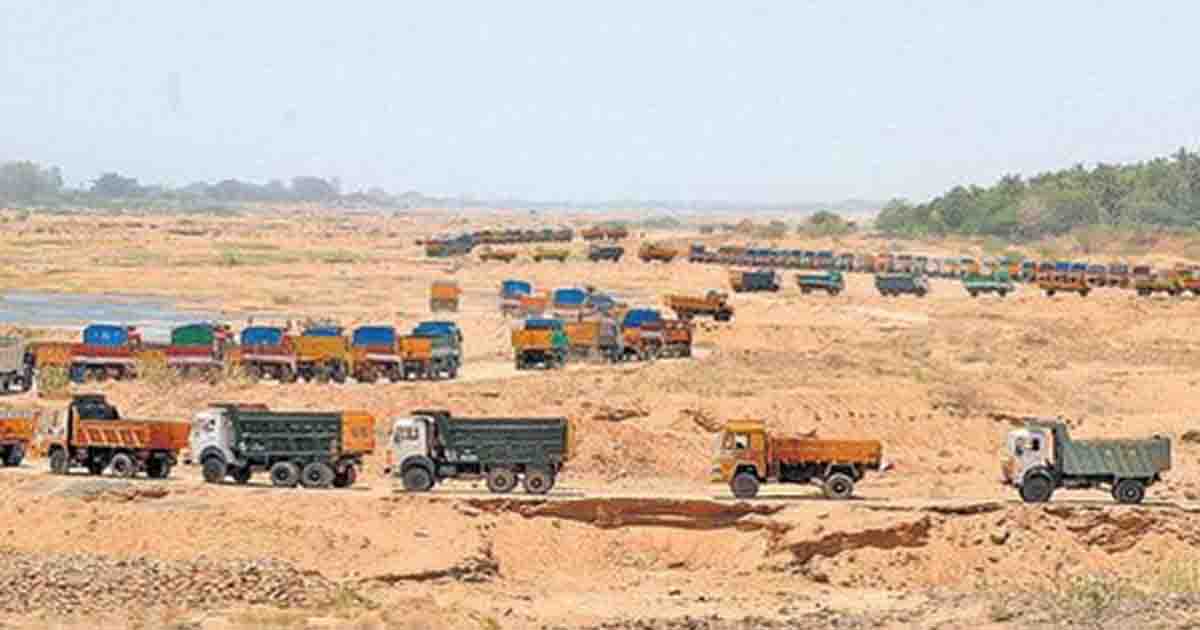
Chennai, Oct 6: Nearly four out of five trucks registered to transport construction minerals in Tamil Nadu remain without GPS tracking devices, prompting another extension of the installation deadline despite a Madras High Court order aimed at tightening monitoring of mineral movement.
Only 30,000 of the 1.4 lakh trucks registered on the Mineral Management System (MIMAS) portal had vehicle location-tracking devices as of September 30. The remaining 79 per cent are yet to comply with the requirement to cover vehicles carrying M-sand, P-sand and other construction aggregates.
The Geology and Mining Department has now extended the deadline to October 31, following representations from transport associations seeking additional time. The original March 31 deadline had already been extended, while the government had separately announced that vehicles without GPS devices would stop receiving mineral transit passes from September 1.
Linking vehicle trackers to MIMAS is intended to strengthen oversight of mineral transportation by recording where trucks load material and tracking their movement. Such records could help authorities identify supplies originating from unauthorised quarries and investigate illegal extraction and transport violations.
However, the slow rollout has drawn criticism from lorry owners, who have questioned the government’s commitment to enforcing the system. G. Ganesh, general secretary of the Tamil Nadu State Lorry Owners Federation, said the cost of tracking devices had fallen sharply, from Rs 15,000 to Rs 3,700.
He said several vendors could supply more than one lakh devices meeting the AIS-140 standard, arguing that availability should not justify further delays.
The government’s reluctance to implement the requirement raised questions about its resolve to curb illegal mining, he said.
Department officials, however, said the approximately 37 authorised suppliers lacked sufficient stocks to equip all remaining vehicles within a short period.
An official said the latest extension followed requests from several associations. Officials also said action was being taken against people generating fraudulent mineral transit passes with fake QR codes.
A dedicated number for complaints about quarrying violations would soon be introduced and linked to the department’s control room in Chennai.
The enforcement challenge comes amid a substantial gap between construction demand and authorised quarry output.
Official estimates put Tamil Nadu’s average daily requirement for construction aggregates at around 5.25 lakh units, compared with permitted quarry production of only 1.2 lakh units, highlighting the need for closer regulatory scrutiny.

AAP students’ wing to join protests against CEC on Oct 10

Drug-free Maharashtra: CM Devendra Fadnavis, NCB D-G Anurag Garg discuss strategy

CM Yadav promises more job opportunities for youth, announces twice-yearly PSC exams

Maha CM launches ‘Participate Mumbai’ platform to boost CSR-led development partnerships

Navi Mumbai International Airport steps up mobility, hospitality and airline support

Gift to President Putin part of PM Modi bid to globally display India’s heritage

PM Modi’s warm camaraderie with Putin, Xi on full display at BRICS Summit

Corporators of all parties in trouble! Corporators of all major parties including Shiv Sena (UBT), BJP and Congress are facing legal challenges.

Complaint against Netflix & Mukesh Chhabra for inappropriate language on ‘India’s Got Latent 2’

Maha Congress stages agitation against Gyanesh Kumar
-

 Crime4 years ago
Class 10 student jumps to death in Jaipur
-

 Maharashtra2 years ago
Mumbai Local Train Update: Central Railway’s New Timetable Comes Into Effect; Check Full List Of Revised Timings & Stations
-

 Maharashtra2 years ago
Mumbai To Go Toll-Free Tonight! Maharashtra Govt Announces Complete Toll Waiver For Light Motor Vehicles At All 5 Entry Points Of City
-

 Maharashtra2 years ago
False photo of Imtiaz Jaleel’s rally, exposing the fooling conspiracy
-

 National News2 years ago
Ministry of Railways rolls out Special Drive 4.0 with focus on digitisation, cleanliness, inclusiveness and grievance redressal
-

 Maharashtra2 years ago
Maharashtra Elections 2024: Mumbai Metro & BEST Services Extended Till Midnight On Voting Day
-

 National News2 years ago
J&K: 4 Jawans Killed, 28 Injured After Bus Carrying BSF Personnel For Poll Duty Falls Into Gorge In Budgam; Terrifying Visuals Surface
-

 Crime2 years ago
Baba Siddique Murder: Mumbai Police Unable To Get Lawrence Bishnoi Custody Due To Home Ministry Order, Says Report