
International News
AI, trade, defence, energy, cooperation: All that PM Modi and Trump discussed

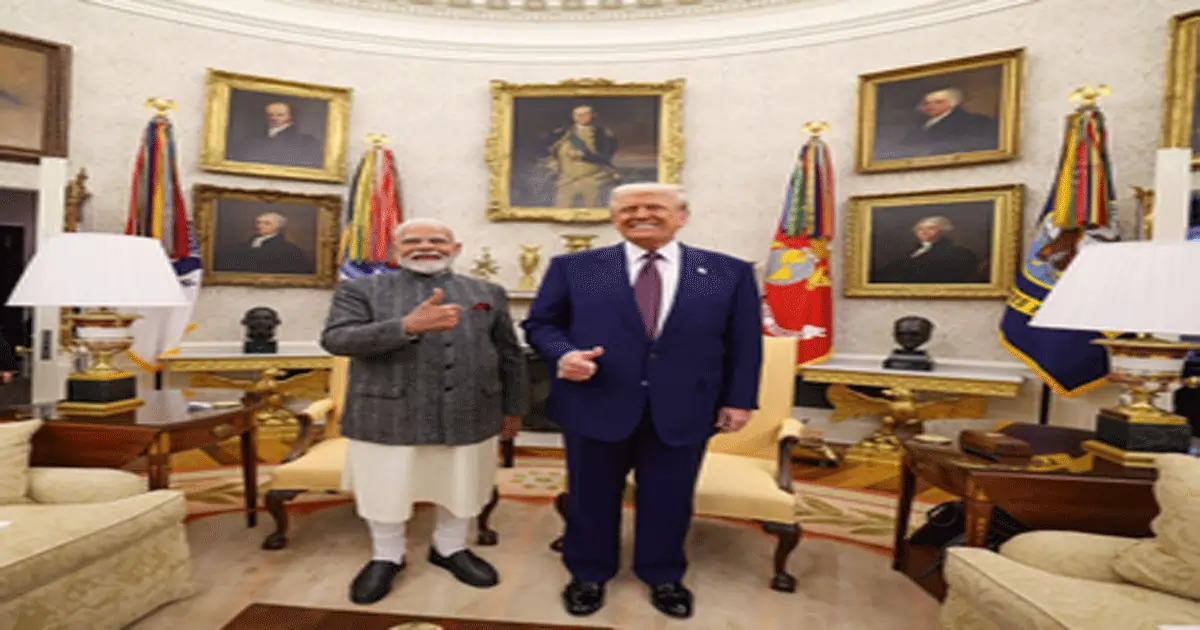
New Delhi, Feb 14: In a significant reaffirmation of their partnership, Prime Minister Narendra Modi and US President Donald Trump highlighted the robust India-US Comprehensive Global Strategic Partnership, rooted in mutual trust and shared democratic values.
During their high-profile meeting in Washington, the leaders emphasised their commitment to freedom, the rule of law, human rights, and pluralism, signalling a strong and vibrant alliance between their nations as per the press release from the Prime Minister’s office.
Prime Minister Modi and President Trump during their recent meeting launched a new initiative — the “US-India COMPACT (Catalysing Opportunities for Military Partnership, Accelerated Commerce & Technology) for the 21st Century” – to drive transformative change across key pillars of cooperation.
“Under this initiative, they committed to a results-driven agenda with initial outcomes this year to demonstrate the level of trust for a mutually beneficial partnership,” said the press release.
Defence
The leaders reaffirmed their unwavering commitment to a dynamic defence partnership spanning multiple domains. To advance defence ties further, the leaders announced plans to sign this year a new ten-year Framework for the ‘US-India Major Defense Partnership’ in the 21st Century.
The leaders welcomed the significant integration of US-origin defence items into India’s inventory to date, including C‑130J Super Hercules, C‑17 Globemaster III, P‑8I Poseidon aircraft; CH‑47F Chinooks, MH‑60R Seahawks, and AH‑64E Apaches; Harpoon anti-ship missiles; M777 howitzers; and MQ‑9Bs. The leaders determined that the US would expand defence sales and co-production with India to strengthen interoperability and defence industrial cooperation.
They also announced plans to pursue this year new procurements and co-production arrangements for “Javelin” Anti-Tank Guided Missiles and “Stryker” Infantry Combat Vehicles in India to rapidly meet India’s defence requirements expecting completion of procurement for six additional P-8I Maritime Patrol aircraft to enhance India’s maritime surveillance reach in the Indian Ocean Region following agreement on sale terms.
Recognising that India is a Major Defence Partner with Strategic Trade Authorization-1 (STA‑1) authorization and a key Quad partner, the US and India will review their respective arms transfer regulations, including International Traffic in Arms Regulations (ITAR), to streamline defence trade, technology exchange and maintenance, spare supplies and in-country repair and overhaul of US-provided defence systems.
The leaders also urged the commencement of negotiations this year for a Reciprocal Defence Procurement (RDP) agreement, aimed at better aligning their procurement systems and facilitating the mutual supply of defence goods and services. They committed to accelerating cooperation in defence technology across various domains, including space, air defence, missile systems, maritime operations, and undersea technologies. Additionally, the US announced a review of its policy regarding the release of fifth-generation fighter jets and undersea systems to India.
Building on the US-India Roadmap for Defence Industrial Cooperation and recognising the rising importance of autonomous systems, the leaders announced a new initiative – the Autonomous Systems Industry Alliance (ASIA) – to scale industry partnerships and production in the Indo-Pacific.
The leaders welcomed a new partnership between ‘Anduril Industries and Mahindra Group’ on advanced autonomous technologies to co-develop and co-produce state-of-the-art maritime systems and advanced AI-enabled counter Unmanned Aerial Systems (UAS) to strengthen regional security, and between L3 Harris and Bharat Electronics for co-development of active towed array systems.
The leaders also pledged to elevate military cooperation across all domains – air, land, sea, space, and cyberspace – through enhanced training, exercises, and operations, incorporating the latest technologies. The leaders welcomed the forthcoming “Tiger Triumph” tri-service exercise (first inaugurated in 2019) with a larger scale and complexity to be hosted in India.
Finally, the leaders committed to breaking new ground to support and sustain the overseas deployments of the US and Indian militaries in the Indo-Pacific, including enhanced logistics and intelligence sharing, as well as arrangements to improve force mobility for joint humanitarian and disaster relief operations along with other exchanges and security cooperation engagements.
Trade and investments
The leaders agreed to enhance trade and investment to improve prosperity for their citizens, strengthen their nations, foster innovation in their economies, and create more resilient supply chains. They committed to deepening the US-India trade relationship to promote growth that ensures fairness, enhances national security, and generates job opportunities. To achieve this, they established an ambitious target for bilateral trade, called “Mission 500,” which aims to more than double total bilateral trade to $500 billion by 2030.
Recognising that this level of ambition would require new, fair-trade terms, the leaders announced plans to negotiate the first tranche of a mutually beneficial, multi-sector Bilateral Trade Agreement (BTA) by the fall of 2025. The leaders committed to designate senior representatives to advance these negotiations and to ensure that the trade relationship fully reflects the aspirations of the COMPACT.
To advance this innovative, wide-ranging BTA, the US and India will take an integrated approach to strengthen and deepen bilateral trade across the goods and services sector, and will work towards increasing market access, reducing tariff and non-tariff barriers, and deepening supply chain integration.
The leaders welcomed early steps to demonstrate a mutual commitment to address bilateral trade barriers. The US welcomed India’s recent measures to lower tariffs on US products of interest in the areas of bourbon, motorcycles, ICT products and metals, as well as measures to enhance market access for US agricultural products.
India also expressed appreciation for US measures taken to enhance exports of Indian mangoes and pomegranates to the US. Both sides also pledged to collaborate to enhance bilateral trade by increasing US exports of industrial goods to India and Indian exports of labour-intensive manufactured products to the US. The two sides will also work together to increase trade in agricultural goods.
Finally, the leaders committed to driving opportunities for US and Indian companies to make greenfield investments in high-value industries in each other’s countries.
In this regard, the leaders welcomed ongoing investments by Indian companies worth approximately $7.35 billion, such as those by Hindalco’s Novelis in finished aluminium goods at their state-of-the-art facilities in Alabama and Kentucky; JSW in steel manufacturing operations at Texas and Ohio; Epsilon Advanced Materials in the manufacture of critical battery materials in North Carolina; and Jubilant Pharma in the manufacture of injectables in Washington. These investments support over 3,000 high-quality jobs for local families.
Energy Security
The leaders underscored the importance of US-India collaboration to ensure energy affordability, reliability, availability and stable energy markets. Realising the consequential role of the US and India, as leading producers and consumers, in driving the global energy landscape, the leaders re-committed to the US-India Energy Security Partnership, including in oil, gas, and civil nuclear energy.
The leaders underscored the importance of enhancing the production of hydrocarbons to ensure better global energy prices and secure affordable and reliable energy access for their citizens. The leaders also underscored the value of strategic petroleum reserves to preserve economic stability during crises and resolved to work with key partners to expand strategic oil reserve arrangements.
In this context, the US side affirmed its firm support for India to join the International Energy Agency as a full member.
The leaders reaffirmed their commitment to increase energy trade, as part of efforts to ensure energy security and to establish the US as a leading supplier of crude oil and petroleum products and liquified natural gas to India.
The leaders announced their commitment to fully realise the US-India 123 Civil Nuclear Agreement by moving forward with plans to work together to build US-designed nuclear reactors in India through large-scale localisation and possible technology transfer. Both sides welcomed the recent Budget announcement by the Government of India to take up amendments to the Atomic Energy Act and the Civil Liability for Nuclear Damage Act (CLNDA) for nuclear reactors and further decided to establish bilateral arrangements under CLNDA, that would address the issue of civil liability and facilitate the collaboration of Indian and US industry in the production and deployment of nuclear reactors.
Technology and Innovation
The leaders announced the launch of the US-India TRUST (“Transforming the Relationship Utilizing Strategic Technology”) initiative, which will catalyse government-to-government, academia and private sector collaboration to promote the application of critical and emerging technologies in areas like defence, artificial intelligence, semiconductors, quantum, biotechnology, energy and space while encouraging the use of verified technology vendors and ensuring sensitive technologies are protected.
As a central pillar of the “TRUST” initiative, the leaders committed to work with US and Indian private industry to put forward a US-India Roadmap on Accelerating AI Infrastructure by the end of the year, identifying constraints to financing, building, powering, and connecting large-scale US-origin AI infrastructure in India with milestones and future actions.
Two nations will work together to enable industry partnerships and investments in next-generation data centres, cooperation on development and access to compute and processors for AI, innovations in AI models and building AI applications for solving societal challenges while addressing the protections and controls necessary to protect these technologies and reduce regulatory barriers.
The leaders announced the launch of INDUS Innovation, a new innovation bridge modelled after the successful INDUS-X platform, that will advance US-India industry and academic partnerships and foster investments in space, energy, and other emerging technologies to maintain US and India leadership in innovation and to meet the needs of the 21st century. The leaders also reinforced their commitment to the INDUS-X initiative, which facilitates partnerships between US and Indian defence companies, investors and universities to produce critical capability for our militaries, and welcomed the next summit in 2025.
Recognising the strategic importance of critical minerals for emerging technologies and advanced manufacturing, India and the US will accelerate collaboration in research and development and promote investment across the entire critical mineral value chain, as well as through the Mineral Security Partnership, of which both the US and India are members. Both countries have committed to intensifying efforts to deepen cooperation in the exploration, beneficiation, and processing as well as recycling technologies of critical minerals. To this end, the leaders announced the launch of the Strategic Mineral Recovery initiative, a new US-India program to recover and process critical minerals from heavy industries like aluminium, coal mining, oil and gas.
The leaders hailed 2025 as a pioneering year for US-India civil space cooperation, with plans for a NASA-ISRO effort through AXIOM to bring the first Indian astronaut to the International Space Station (ISS), and early launch of the joint “NISAR” mission, the first of its kind to systematically map changes to the Earth’s surface using dual radars.
The leaders called for more collaboration in space exploration, including on long-duration human spaceflight missions, spaceflight safety and sharing of expertise and professional exchanges in emerging areas, including planetary protection.
The leaders underscored the value of deepening ties between the US and Indian scientific research communities, announcing a new partnership between the US National Science Foundation and the Indian Anusandhan National Research Foundation in researching critical and emerging technologies. This partnership builds on ongoing collaboration between the US National Science Foundation and several Indian science agencies to enable joint research in the areas of semiconductors, connected vehicles, machine learning, next-generation telecommunications, intelligent transportation systems, and future biomanufacturing.
The leaders determined that their governments redouble efforts to address export controls, enhance high-technology commerce, and reduce barriers to technology transfer between our two countries while addressing technology security.
Multilateral Cooperation
The leaders emphasised that a strong partnership between the US and India is crucial for ensuring a free, open, peaceful, and prosperous Indo-Pacific region. As partners in the Quad, they reiterated that this collaboration is founded on several key principles: the importance of ASEAN’s central role; adherence to international law and good governance; support for the safety and freedom of navigation, overflight, and other lawful uses of the seas; the promotion of unimpeded lawful commerce; and the encouragement of peaceful resolutions to maritime disputes in line with international law.
PM Modi looks forward to hosting President Trump in New Delhi for the Quad Leaders’ Summit, ahead of which the leaders will activate new Quad initiatives on shared airlift capacity to support civilian response to natural disasters and maritime patrols to improve interoperability.
The leaders resolved to increase cooperation, enhance diplomatic consultations, and increase tangible collaboration with partners in the Middle East. The leaders plan to convene partners from the India-Middle East-Europe Corridor and the I2U2 Group within the next six months to announce new initiatives in 2025.
The US appreciates India’s role as a developmental, humanitarian assistance and net security provider in the Indian Ocean Region. In this context, the leaders committed to deepening bilateral dialogue and cooperation across the vast Indian Ocean region and launched the Indian Ocean Strategic Venture, a new bilateral, whole-of-government forum to advance coordinated investments in economic connectivity and commerce.
Supporting greater Indian Ocean connectivity, the leaders also welcomed Meta’s announcement of a multi-billion, multi-year investment in an undersea cable project that will begin work this year and ultimately stretch over 50,000 km to connect five continents and strengthen global digital highways in the Indian Ocean region and beyond. India intends to invest in the maintenance, repair and financing of undersea cables in the Indian Ocean, using trusted vendors.
The leaders recognised the need to build new plurilateral anchor partnerships in the Western Indian Ocean, Middle East, and Indo-Pacific to grow relationships, commerce and cooperation across defence, technology, energy and critical minerals.
The leaders also resolved to advance military cooperation in multinational settings to advance global peace and security. The leaders applauded India’s decision to take on a future leadership role in the Combined Maritime Forces naval task force to help secure sea lanes in the Arabian Sea.
The leaders reaffirmed that the global scourge of terrorism must be fought and terrorist safe havens eliminated from every corner of the world. They committed to strengthen cooperation against terrorist threats from groups, including Al-Qa’ida, ISIS, Jaish-e Mohammad, and Lashkar-e-Tayyiba to prevent heinous acts like the attacks in Mumbai on 26/11 and the Abbey Gate bombing in Afghanistan on August 26, 2021.
Recognising a shared desire to bring to justice those who would harm our citizens, the US announced that the extradition to India of Tahawwur Rana has been approved.
The leaders further called on Pakistan to expeditiously bring to justice the perpetrators of the 26/11 Mumbai, and Pathankot attacks and ensure that its territory is not used to carry out cross-border terrorist attacks. The leaders also pledged to work together to prevent the proliferation of weapons of mass destruction and their delivery systems and to deny access to such weapons to terrorists and non-state actors.
People to People Cooperation
US President Trump and PM Modi noted the importance of advancing the people-to-people ties between the two countries. They noted that more than 3,00,000 strong Indian student communities contribute over $8 billion annually to the US economy and helped create several direct and indirect jobs.
They recognised that the talent flow and movement of students, researchers and employees, has mutually benefitted both countries.
Both leaders emphasised that the evolution of the world into a global workplace calls for putting in place innovative, mutually advantageous and secure mobility frameworks.
The leaders also committed to strengthening law enforcement cooperation to take decisive action against illegal immigration networks, organised crime syndicates, including narco-terrorists human and arms traffickers, as well as other elements who threaten public and diplomatic safety and security, and the sovereignty and territorial integrity of both nations.
US President Trump and PM Modi committed to maintaining strong engagement between our governments, industries, and academic institutions. They aim to achieve an enduring partnership between India and the US that meets the aspirations of both nations for a bright and prosperous future, contributes to the global good, and supports a free and open Indo-Pacific region.


International News
Qatar condemns Israeli settlers’ storming of Al-Aqsa Mosque, terms it ‘violation of international law’

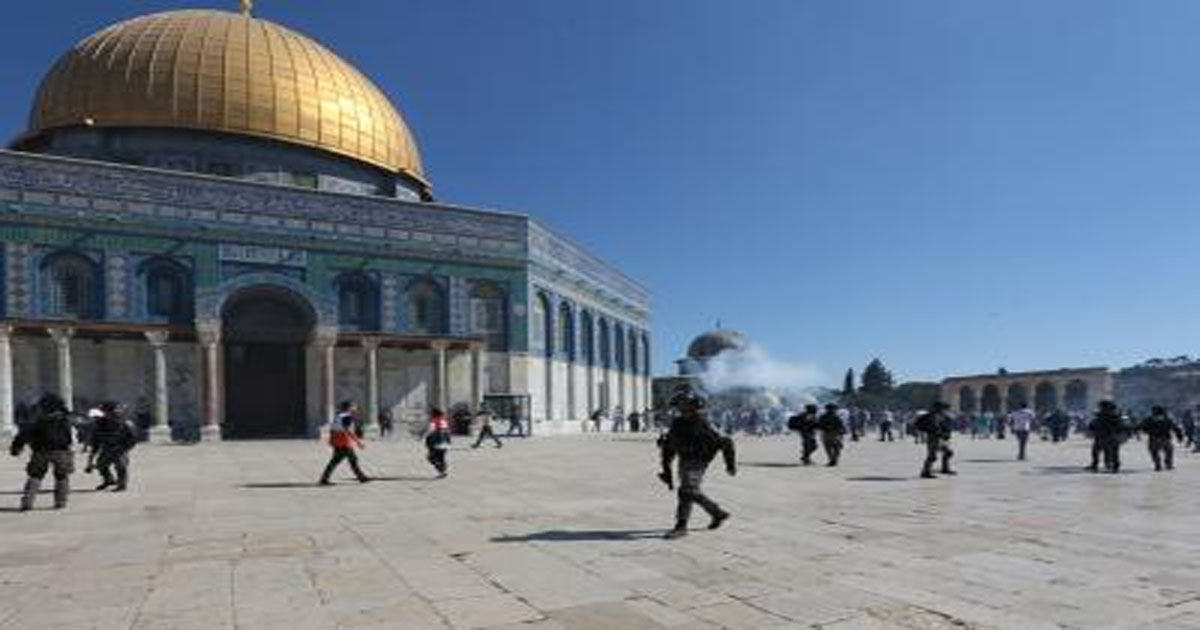
Doha, June 1: Qatar on Monday condemned the storming of Al-Aqsa Mosque by Israeli extremists, terming their actions “flagrant violation of international law and unacceptable provocation of the feelings of millions of Muslims around the world.”
It stated that Al-Aqsa Mosque is a place of worship of Muslims and all unilateral actions aimed at altering the historical and legal status quo in Jerusalem and its sanctities are null and void under international law.
“The State of Qatar condemns the storming of the blessed Al-Aqsa Mosque by Israeli extremists, along with the provocative actions carried out under the protection of the occupation forces, describing it as a flagrant violation of international law, an unacceptable provocation of the feelings of millions of Muslims around the world, and a dangerous attempt to impose a new reality in the occupied Jerusalem and its Islamic and Christian sanctities,” the Qatar’s Ministry of Foreign Affairs said in a statement.
“The Ministry of Foreign Affairs stresses that Al-Aqsa Mosque is an exclusively Muslim place of worship and that all unilateral measures aimed at altering the historical and legal status quo in Jerusalem and its sanctities are null and void under international law,” it added.
Qatar’s Ministry of Foreign Affairs warned that the continuation of such violations and repeated provocations could cause further violence and escalation in the region, undermining prospects for de-escalation and stability.
“The Ministry warns that the continuation of such violations and repeated provocations could fuel further violence and escalation in the region, undermining prospects for de-escalation and stability. It renews its call on the international community to act urgently and compel Israel, as the occupying power, to stop its ongoing violations against the Palestinian people and their holy sites and to comply with relevant international resolutions,” the statement said.
“The Ministry also reiterates the State of Qatar’s firm and supportive stance on the Palestinian cause and the steadfastness of the brotherly Palestinian people, based on ending the occupation and enabling the Palestinian people to attain their legitimate rights, foremost among them the establishment of an independent state on the 1967 borders with East Jerusalem as its capital,” it added.
Qatar’s statement comes after settlers raised Israeli flags on the steps leading to the Dome of the Rock and sang Israeli national anthem under police protection. The settlers the mosque from Al-Maghrabah Gate, which is fully controlled by Israeli authorities, Arab News reported.
Frequent clashes, including Israeli settler raids and restrictions on Muslim worshippers, have been witnessed in the Al-Aqsa Mosque since East Jerusalem was occupied in June 1967, Arab News reported. The mosque is administered by Jordan’s Ministry of Awqaf, which has the legal authority to manage the compound and control access. Jordan warned settlers against taking actions that aim to create a new reality that would temporally and spatially divide the landmark.
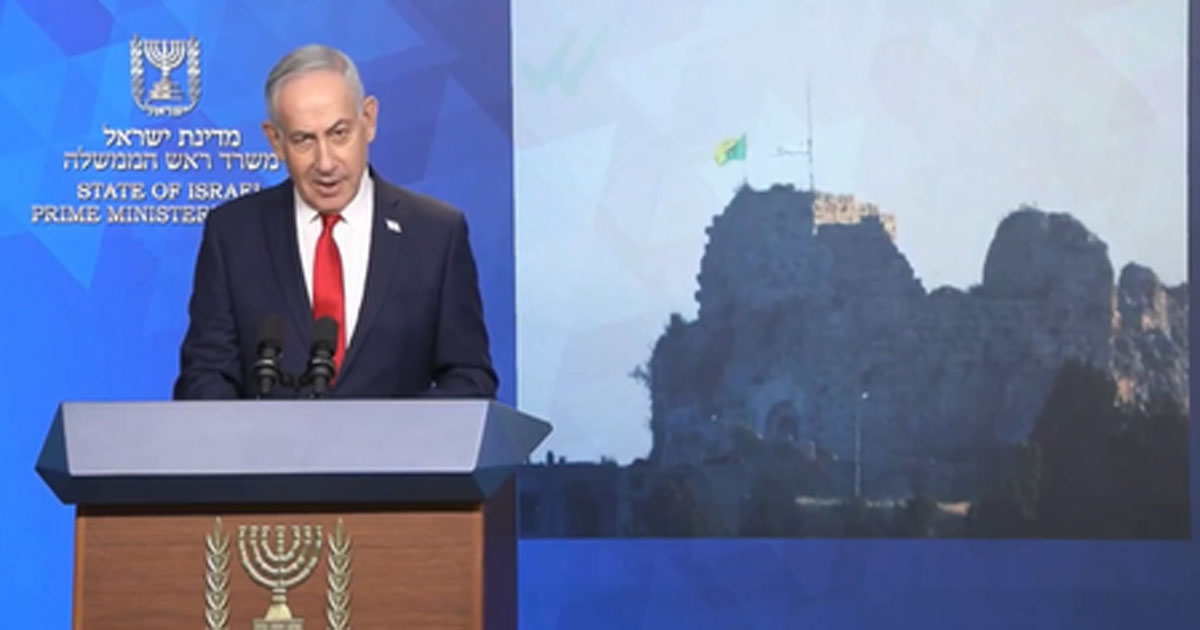
Jerusalem: The Israel Defense Forces (IDF) on Sunday said it had captured Beaufort Castle after entering the Beaufort Ridge and Wadi al-Saluki areas in southern Lebanon.
According to the IDF, the operation is focused on establishing operational control over the Beaufort Ridge and the Wadi al-Saluki area, as well as degrading Hezbollah’s capabilities in the region.
“Last night, our heroic fighters captured the Beaufort Castle. They proudly raised the flag of the State of Israel and the flag of the Golani Brigade there,” Israeli Prime Minister Benjamin Netanyahu said on Sunday.
“I remind you that 44 years ago, this place was a symbol of a heroic battle by our fighters, but it was also a symbol of deep division among us. Today, we returned to Beaufort differently. We returned united, determined and stronger than ever,” he added.
According to the IDF, Hezbollah directed military and combat activities from the Beaufort Ridge and carried out numerous attacks from the area.
Prime Minister Netanyahu also said he had instructed the IDF to expand its incursion into Lebanon.
“Our forces have crossed the Litani River. They took dominant terrain. They captured the Beaufort Ridge. And now my instruction is to deepen and expand our hold on places that were under Hezbollah’s control,” Netanyahu said.
He also described the capture of Beaufort as a dramatic stage and a significant shift in the policy being pursued by his government.
“We have broken the barrier of fear. We are taking the initiative, we are operating on all fronts — in Syria, in Gaza, in Lebanon; we have established security zones beyond our borders to protect our communities,” he added.
“I am with you. The entire nation of Israel is with you. It will take more time, but we will restore security to the residents of the North, just as we did for the residents of the South,” he told brigade commanders on Friday.

Quetta, May 27: Several leading human rights organisations and student bodies on Wednesday strongly condemned the escalating wave of enforced disappearances of Baloch civilians, including women, across Pakistan, allegedly carried out by security forces, saying that for many affected families, Eid has turned into a period of grief, uncertainty and painful separation from their loved ones.
According to the Baloch Students Council (BSC) of Pakistan’s Punjab province, multiple students affiliated with the organisation’s Punjab and Islamabad chapters have been forcibly disappeared, leaving their families without any credible information regarding their detention or whereabouts.
Expressing grave concern, the student body said that the dire situation not only causes severe mental anguish for the affected families but also raises serious questions regarding “fundamental human and legal principles”.
“On the occasion of Eid al-Adha, while people around the world are celebrating with their families, the parents, siblings, and loved ones of the forcibly disappeared Baloch students are immersed in the sorrow of separation from their dear ones. For these families, the day of Eid has become a symbol of waiting, uncertainty, and grief,” the BSC, Punjab, stated.
Meanwhile, another Baloch woman, Habiba Peerjan, a resident of the Nazarabad Tump region in Balochistan, who is currently based in Karachi, was reportedly forcibly disappeared by Pakistani security forces on May 25 following a raid at her residence in Baldia Town.
According to the Baloch Women Forum, this marks her second enforced disappearance, as she was previously detained in May 2022 and released days later.
“The repeated targeting of Baloch women through enforced disappearances highlights a deeply troubling system of repression and collective punishment. It has created an atmosphere of fear and instability, leaving families in prolonged uncertainty without access to information, legal remedy or accountability,” the BWF stated.
Condemning the incident, Paank, the Baloch National Movement’s Human Rights Department, demanded the immediate and safe release of Habiba, while calling on the Pakistani authorities to end the ongoing practice of enforced disappearances and harassment of families in Balochistan and Karachi.
Pakistani forces also reportedly carried out large-scale search operations in several parts of Balochistan on Monday, during which multiple civilians were taken into custody in overnight raids.
Citing sources, The Balochistan Post reported that Pakistani forces forcibly disappeared a shopkeeper identified as Saif-ur-Rehman during a late-night raid in the Doctor Colony area of Khuzdar district.
Reports further suggest that six more individuals were picked up in separate operations across the district, although their identities remain unconfirmed.
Additionally, Pakistani forces, along with Counter Terrorism Department (CTD) personnel, reportedly conducted a large-scale search operation overnight in the Windar area of the Lasbela district.
Residents alleged that security forces conducted house-to-house searches during which incidents of assault, vandalism and looting occurred.
Several civilians were reportedly taken into custody in Windar during the operation, with their current whereabouts remaining unknown.

Qatar condemns Israeli settlers’ storming of Al-Aqsa Mosque, terms it ‘violation of international law’

Mumbai Shocker! 17-Year-Old Molested In Metro Lift At Dahanukarwadi Station In Kandivali

Mahayuti’s MLC poll deal: BJP takes lion’s share with 11 seats; Shiv Sena 4, NCP 2

Israel captures strategic Beaufort Castle in southern Lebanon

‘Mumbai’s Drain Cleaning More Than 80% Complete Ahead Of Monsoon,’ Says Mayor Ritu Tawde During Inspection

Mumbai: Strict action directed against prominent Marathi placards in shops and institutions, warning of action in Shiv Sena style: Deputy Mayor Sanjay Ghadi

The Municipal Corporation and the Railway Administration should work together to make Mumbai flood-free, directs Standing Committee Chairman Prabhakar Shinde

Virar Citizens Protest Demolition Drive In Arnala; Police Block Lal Bawta March, Sit-in Held On Road

Apple to invest Rs 100 crore in India’s renewable energy infrastructure

Dangerous Love Triangle In Mira-Bhayandar: Youth Kidnapped, Brutally Beaten, & Burned With Cigarettes Over Affair With Same Girl
-

 Crime4 years ago
Class 10 student jumps to death in Jaipur
-

 Maharashtra2 years ago
Mumbai Local Train Update: Central Railway’s New Timetable Comes Into Effect; Check Full List Of Revised Timings & Stations
-

 Maharashtra2 years ago
Mumbai To Go Toll-Free Tonight! Maharashtra Govt Announces Complete Toll Waiver For Light Motor Vehicles At All 5 Entry Points Of City
-

 Maharashtra2 years ago
False photo of Imtiaz Jaleel’s rally, exposing the fooling conspiracy
-

 National News2 years ago
Ministry of Railways rolls out Special Drive 4.0 with focus on digitisation, cleanliness, inclusiveness and grievance redressal
-

 Maharashtra2 years ago
Maharashtra Elections 2024: Mumbai Metro & BEST Services Extended Till Midnight On Voting Day
-

 National News2 years ago
J&K: 4 Jawans Killed, 28 Injured After Bus Carrying BSF Personnel For Poll Duty Falls Into Gorge In Budgam; Terrifying Visuals Surface
-

 Crime2 years ago
Baba Siddique Murder: Mumbai Police Unable To Get Lawrence Bishnoi Custody Due To Home Ministry Order, Says Report