
International News
2022 was ‘a defining moment’ for Turkish diplomacy

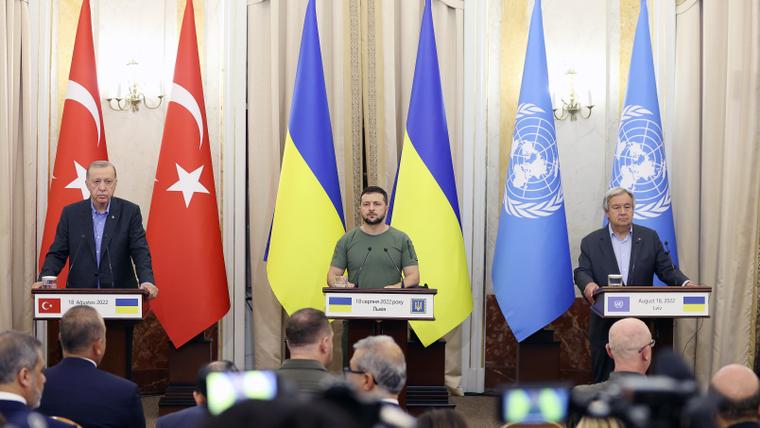
Türkiye has been a top mediating force between Ukraine and Russia, while developing different reconciliation paths with countries from Israel to Egypt.
2022 will be remembered as the year when Russia attacked Ukraine, starting a difficult war with no end in sight and escalating tensions between the West and Moscow.
The year has also seen some crucial peace initiatives emanating from Türkiye, a NATO member, which has a working relationship with Russia on different conflicts like Syria, aiming to find a common ground between Kiev and Moscow.
Turkish peace efforts were fruitful with some significant results, like the landmark grain deal and exchange of prisoners of war between Russia and Ukraine. Ankara has also launched other crucial peace initiatives normalising its ties with Israel and Egypt, two important Middle Eastern states, with which its relations had deteriorated in the 2010s.
Gregory Simons, an associate professor at the Institute for Russian and Eurasian Studies at Uppsala University, believes 2022 was “a defining moment” for Türkiye, which “managed to negotiate achievements that no other country can.”
According to Simons, “the example of Ukraine as a geopolitical shatter belt between US and Russia has seen Türkiye take a role as an honest broker in the conflict,” which reaffirmed the country’s wisdom in establishing and developing an independent balancing and mediating role in the current era of risk and uncertainty.
Unlike many other Western states, Ankara’s hard work and persistence along political and economic tracks yielded progress like the grain shipment agreement “in a highly divisive and emotionally driven geo-economic and geopolitical conflict,” showcasing Ankara’s growing position as a subject and not an object of events, Simons tells TRT World.
In 2022, Türkiye emerged as “the world’s most important peace actor that left its mark on the year,” says Mesut Hakki Casin, a professor of international law at Yeditepe University, referring to Turkish efforts to address the Ukraine conflict.
“While Turkey successfully demonstrated its neutrality policy in the Ukraine war, just as it did in the Second World War, it played the role of mediator in the conflict as stipulated in the 33th article of the UN,” Casin tells TRT World. During WWII, Ankara stayed neutral between Nazi Germany-led Axis countries and the Allied forces, avoiding any casualties.
Ukraine policy:
Despite much pressure from the US and Europe, Türkiye has refused to be part of Western sanctions on Russia, believing that talking with Moscow is better than isolating it. But at the same time, Türkiye has urged Russia to withdraw from all occupied Ukrainian territories, fiercely defending Kiev’s territorial integrity.
The Ukraine war has shown that “Türkiye in the 21st century pursues a fundamentally different foreign and security path than that played during the Cold War,” says Simons. In this path, Ankara acts as a bridge between the Western-centric and non-Western-centric worlds, he says.
Unlike the past, when Ankara followed a passive foreign policy, under President Recep Tayyip Erdogan Türkiye has demonstrated the country’s political and military potential in the international arena from Ukraine to Central Asia.
“Turkish President Recep Tayyip Erdogan is the only leader capable of talking with both Vladimir Putin and Volodymyr Zelenskyy, working to develop a rapprochement between the two sides,” says Casin.
Beyond Turkish mediation efforts, Ankara has also taken a crucial step to close its straits to both Russian and NATO warships in alignment with the Montreux Convention, which regulates the status of Turkish channels. “With this crucial measure, Türkiye has prevented the spread of the Ukraine war to other areas particularly in the Black Sea,” says Casin.
This measure also crucially led to setting demarcations in the conflict between Russia and the West, limiting tensions between the two sides, according to the Turkish professor.
Yasar Sari, an expert at Haydar Aliyev Eurasian Research Center of Ibn Haldun University, also believes that Türkiye’s diplomatic efforts “have kept the Ukraine conflict limited,” preventing the war from turning into a regional conflict.
Besides the Ukraine conflict, Türkiye has displayed its mediation skills in another difficult conflict between Armenia and Azerbaijan on the Karabakh dispute, urging both Erivan and Baku to find common ground to address their differences.
In October, Erdogan played a critical role to realise an icebreaker peace talks between Azerbaijani and Armenian leaders in Prague on the sidelines of an EU meeting.
Middle East normalisations:
During 2022, Türkiye also worked hard to de-escalate tensions across the Middle East, reestablishing its ties with Egypt and Israel and strengthening its connections with Saudi Arabia and the UAE.
Since a 2010 Israeli raid on Mavi Marmara, a Turkish aid ship travelling toward Gaza, which had long faced blockade by Tel Aviv, Turkish-Israeli ties experienced a deteriorating trend. In 2013, Turkish-Egyptian diplomatic ties were cut off after a coup led by general-turned-President Abdul Fattah al Sisi overthrew the country’s first democratically-elected government.
“Turkiye’s diplomatic initiatives have been very successful in opening a new page with all of the regional powers in the region. This is part of a broader trend in the region of trying to maintain diplomatic channels open among the major players,” says Gallia Lindenstrauss, a senior research fellow at the Institute for National Security Studies (INSS), an Israeli think-tank.
“The normalisation process with Israel has been noteworthy for the fact that contrary to the 2016 normalisation effort, this time around there were many more high-level visits, indicating that there is a more solid ground for the current normalisation,” Lindenstrauss tells TRT World.
In March, Israeli President Isaac Herzog met with Erdogan in a groundbreaking visit to Türkiye. In September, another high-level meeting between Israeli Prime Minister Yair Lapid and Erdogan was held at the sidelines of the UN General Assembly. Erdogan also indicated that he wanted to visit Israel after the November elections.
This high-level meeting approach to solidify ties between Türkiye and other states has also been obvious in Ankara’s normalisation process with Egypt. Last month, Erdogan met Sisi in Qatar saying that “there should be no resentment in politics,” referring to past tensions between the two states following the Arab Spring rebellions.
It’s an approach that could go further in the turbulent Middle East. “In the next period, just as it (Türkiye) has entered a (normalisation) path with Egypt, it can also enter another (normalisation) path with Syria,” the Turkish president said. Ankara-Damascus ties have been cut off in the wake of the Syrian civil war, seeing millions of refugees flowing to Türkiye.
During 2022, Erdogan also met UAE leader Sheikh Mohammed bin Zayed Al Nahyan in Abu Dhabi and Mohammed Bin Salman in Ankara, showing his commitment to strengthening formerly strained ties with the two Gulf countries.
According to Lindenstrauss, Ankara’s normalisation with Israel indicates the depths of ongoing Turkish diplomatic efforts in the Middle East.


International News
Iran to pursue US seizure of commercial ship during truce in international courts: official

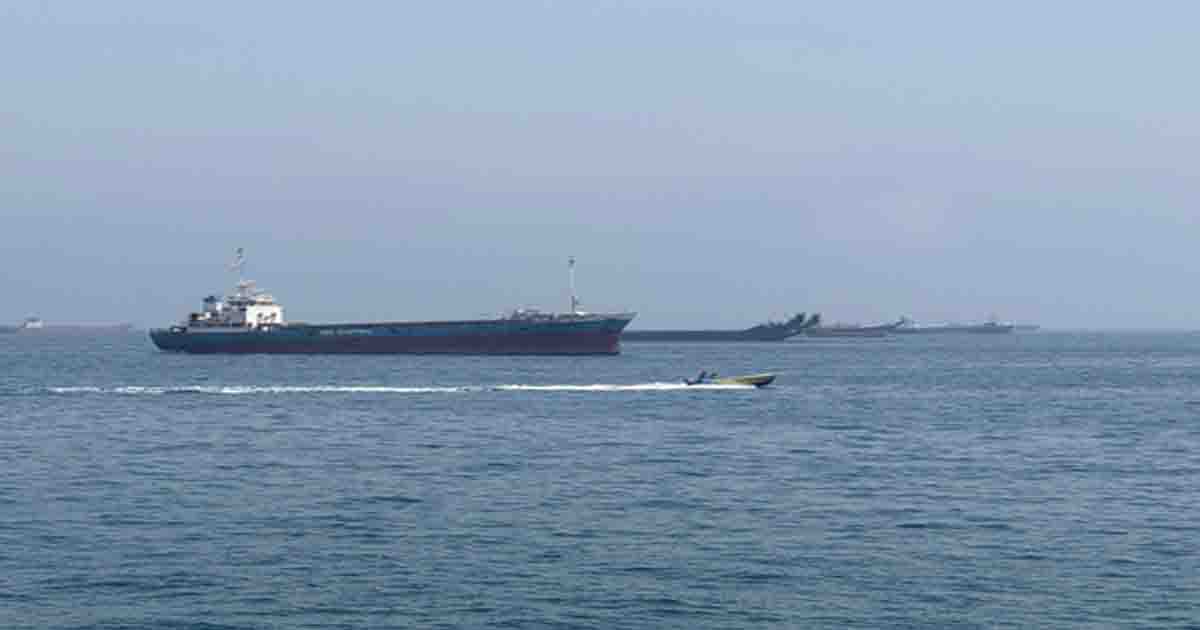
Tehran, Oct 3: A senior Iranian shipping official has said the country will pursue in international courts the US attack on and seizure of one of its container ships, which took place in April during the ceasefire between Tehran and Washington, the official news agency IRNA reported Saturday.
Mohammad-Reza Modarres Khiabani, CEO of the Islamic Republic of Iran Shipping Lines, made the remarks at a meeting in Tehran while describing as a “war crime” the US forces’ boarding and seizure of the Iranian-flagged vessel Touska off the coast of Iran’s southeastern Chabahar port in the Gulf of Oman on April 19, said the report.
He said the ship was carrying medicines related to the Iranian Red Crescent Society and dialysis patients, noting that attacking a commercial ship during the ceasefire constitutes a “war crime and violation of the truce,” Xinhua News Agency reported.
He also said that the imposition of any form of naval blockade violated international law and constituted a “hostile” act, alleging that the US Navy struck Touska’s engine room and took 28 crew members hostage.
Meanwhile, US President Donald Trump declined to reveal his next move on Iran, saying the situation was “working out very well” and predicting that the conflict would not last long.
Trump made the remarks while speaking to reporters at the White House before departing aboard Marine One.
Asked what his next step regarding Iran would be, Trump initially suggested that disclosing it would make major news.
“That’s very, oh, it’s — well, if I told you, you’d have a major story, right? But you’ll see. Working out very well. Iran is not doing well,” Trump said.
The President did not elaborate on what action his administration was considering or provide a timetable.
But later in the same exchange with reporters, Trump again referred to Iran while discussing global energy supplies and his efforts to get Europe to put more diesel into the market.
International News
Capt Smit Machchhar under excellent medical care, recovering well: Indian Embassy in UAE
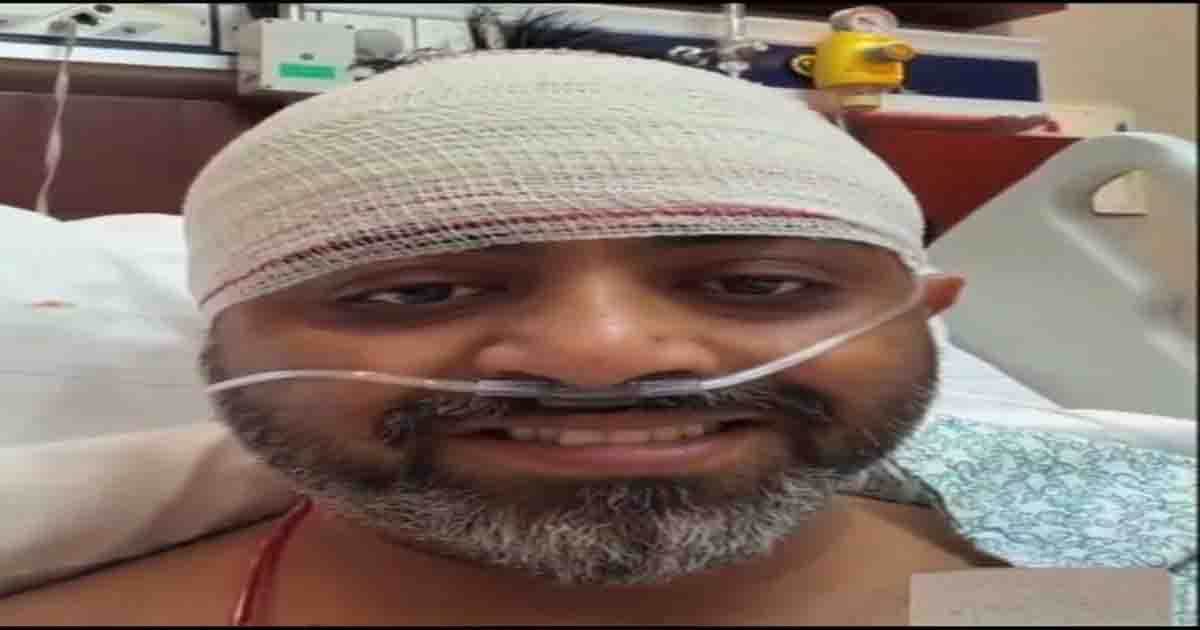
Abu Dhabi, Oct 3: Captain Smit Machchhar, the brave Indian pilot of flydubai flight FZ1073, is responding well to treatment and continues to receive medical attention, the Indian Embassy in the UAE said on Saturday.
The mission said it was coordinating with his family and local authorities. It also thanked the UAE government for the care being extended to him.
“Indian braveheart Capt. Smit remains under excellent medical care & is recovering well. We are in touch with his family & local authorities, extending support for a speedy recovery. Our thanks to UAE gov. for their care. We join well-wishers in praying for his good health,” the Indian mission posted on X.
Captain Machchhar was injured while preventing a mid-air attack on Wednesday aboard the flydubai flight from Dubai to Israel.
During the incident, another pilot stabbed Captain Machchhar and the aircraft began to plummet.
The Indian pilot fought the assailant bravely and opened the cockpit door, following which passengers rushed to assist, entered the cockpit and overpowered the attacker.
Once the attacker was subdued, the seriously wounded Indian pilot was stabilised until the aircraft made an emergency landing in Saudi Arabia.
Prime Minister Narendra Modi on Friday spoke with Captain Machchhar over a video call, praising his courage, presence of mind and composure during the mid-air incident in which he helped save the lives of passengers and crew members.
During the conversation, PM Modi said the country could proudly say that Indians are not those who take lives, but those who are willing to risk their own lives to save others.
PM Modi began the conversation by asking about Captain Machchhar’s health and said the entire country was praying for his speedy recovery.
“The whole country is praying for you. Maha Mrityunjaya Jaap is being performed for you and your health. Your courage, presence of mind and composure saved many lives. The country can proudly say that Indians are not those who take lives, but those who are willing to risk their lives to save others,” PM Modi said.
Captain Machchhar nodded and responded, “Yes, sir.”
The Indian pilot has also received recognition from across the world, with leaders and people lauding his bravery and actions that helped save hundreds of lives during the mid-air attack.
International News
Dubai Crown Prince visits Captain Machchhar, says brave Indian pilot embodies ‘highest degrees of courage’
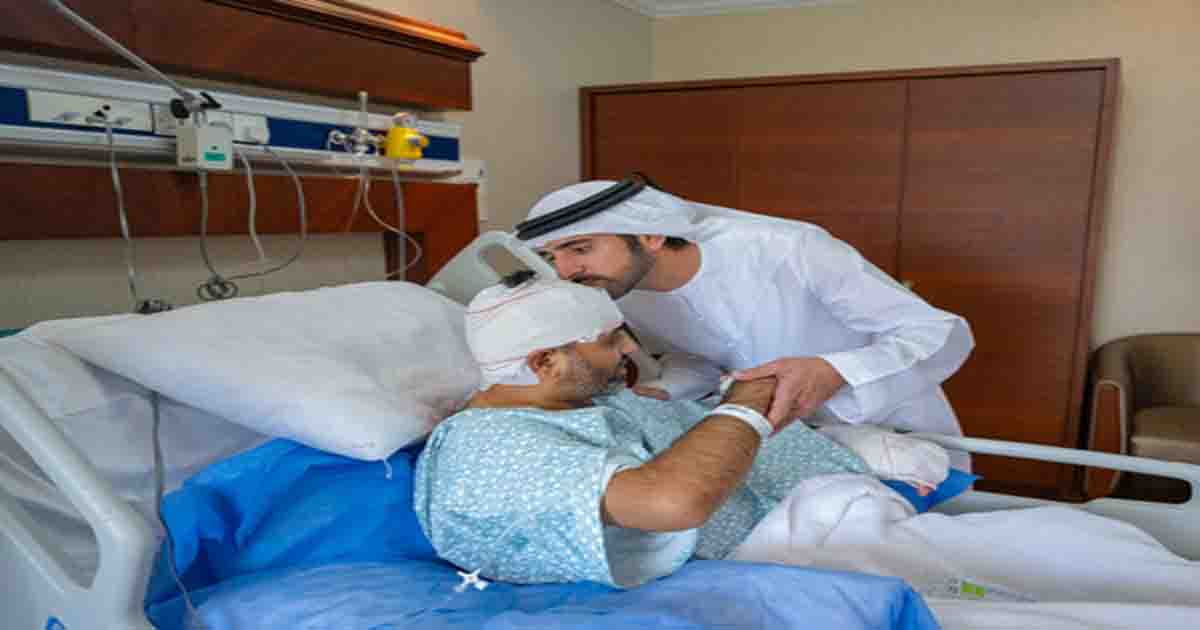
Abu Dhabi, Oct 3: Hamdan bin Mohammed, Crown Prince of Dubai and the Deputy Prime Minister of the United Arab Emirates (UAE), on Saturday visited the brave Indian pilot of flydubai flight FZ1073, Smit Machchhar, in the hospital and praised his courage.
“During a visit to Captain Smit Machchhar… the flydubai pilot who embodied the highest degrees of courage, responsibility, and care for human life. From us, and from the leadership of the nation, he has our full appreciation and praise. We are proud that he is part of our team… part of the story of our nation… and part of what the UAE stands for… a nation of compassion… a nation of peace… and a nation of life,” Hamdan bin Mohammed, who is also UAE’s Minister of Defence and Chairman of The Executive Council of Dubai, wrote on X after the meeting.
Earlier, the Indian Embassy in the UAE said Captain Machchhar is responding well to treatment and continues to receive medical attention.
The mission said it was coordinating with his family and local authorities. It also thanked the UAE government for the care being extended to him.
“Indian braveheart Capt. Smit remains under excellent medical care & is recovering well. We are in touch with his family & local authorities, extending support for a speedy recovery. Our thanks to the UAE gov. for their care. We join well-wishers in praying for his good health,” the Indian mission posted on X.
Captain Machchhar was injured while preventing a mid-air attack on Wednesday aboard the flydubai flight from Dubai to Israel.
During the incident, another pilot stabbed Captain Machchhar and the aircraft began to plummet.
The Indian pilot fought the assailant bravely and opened the cockpit door, following which passengers rushed to assist, entered the cockpit and overpowered the attacker.
Once the attacker was subdued, the seriously wounded Indian pilot was stabilised until the aircraft made an emergency landing in Saudi Arabia.
Prime Minister Narendra Modi on Friday spoke with Captain Machchhar over a video call, praising his courage, presence of mind and composure during the mid-air incident in which he helped save the lives of passengers and crew members.

Deported narco-trafficking kingpin Navpreet Singh sent to 10-day police custody

Kasturba Marg Police recover 100 stolen mobile phones, return them to their original owners

Iran to pursue US seizure of commercial ship during truce in international courts: official

SP changes 2 MLC candidates in UP; fields Akash Agrawal, Sanjay Tripathi

Capt Smit Machchhar under excellent medical care, recovering well: Indian Embassy in UAE

Gift to President Putin part of PM Modi bid to globally display India’s heritage

PM Modi’s warm camaraderie with Putin, Xi on full display at BRICS Summit

Corporators of all parties in trouble! Corporators of all major parties including Shiv Sena (UBT), BJP and Congress are facing legal challenges.

Complaint against Netflix & Mukesh Chhabra for inappropriate language on ‘India’s Got Latent 2’

School bus driver shot at in MP’s Dabra; 50 terrified children on board witness crime
-

 Crime4 years ago
Class 10 student jumps to death in Jaipur
-

 Maharashtra2 years ago
Mumbai Local Train Update: Central Railway’s New Timetable Comes Into Effect; Check Full List Of Revised Timings & Stations
-

 Maharashtra2 years ago
Mumbai To Go Toll-Free Tonight! Maharashtra Govt Announces Complete Toll Waiver For Light Motor Vehicles At All 5 Entry Points Of City
-

 Maharashtra2 years ago
False photo of Imtiaz Jaleel’s rally, exposing the fooling conspiracy
-

 National News2 years ago
Ministry of Railways rolls out Special Drive 4.0 with focus on digitisation, cleanliness, inclusiveness and grievance redressal
-

 Maharashtra2 years ago
Maharashtra Elections 2024: Mumbai Metro & BEST Services Extended Till Midnight On Voting Day
-

 National News2 years ago
J&K: 4 Jawans Killed, 28 Injured After Bus Carrying BSF Personnel For Poll Duty Falls Into Gorge In Budgam; Terrifying Visuals Surface
-

 Crime2 years ago
Baba Siddique Murder: Mumbai Police Unable To Get Lawrence Bishnoi Custody Due To Home Ministry Order, Says Report