
National News
150 companies of Central Forces to help UP conduct fair polls

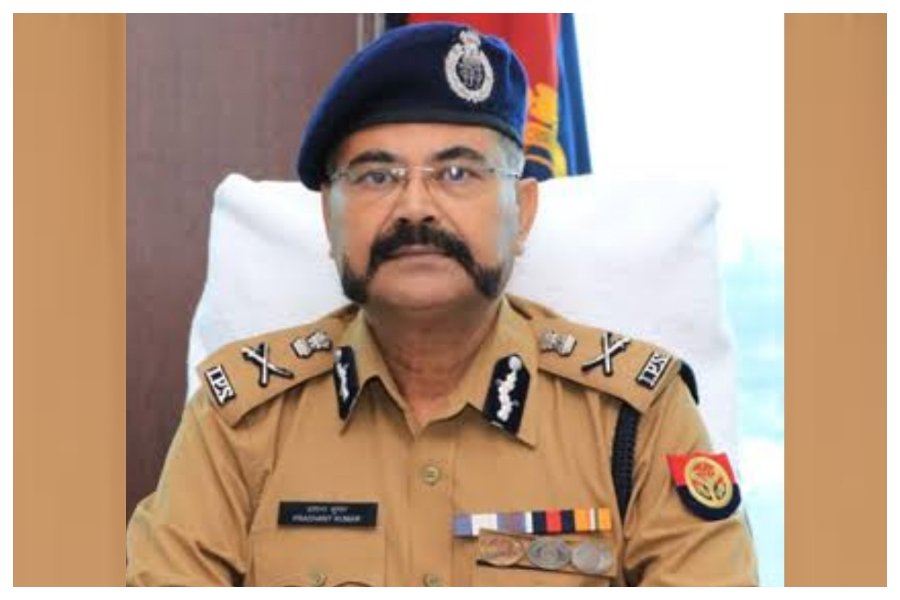
Ahead of upcoming Uttar Pradesh assembly elections, the Centre is providing 150 companies of Central Armed Police Force to the state to avoid any untoward incidents. The Centre doesn’t want that any untoward incident take place during the polls. They are not leaving any stone unturned to provide maximum security to the state.
The poll panel on Saturday announced polling to take place in UP in 7 phases — from February 10 till March 7 and the votes will be counted on March 10.
Uttar Pradesh would vote on February 10, 14, 20, 23 and March 3 and 7, Chief Election Commissioner Sudhir Chandra announced.
“Thirty Companies of Border Security Force (BSF) and Sashastra Seema Bal, 20 companies of Central Industrial Security Force (CISF), and Indo Tibetan Border Police (ITBP), 50 companies of the Central Reserved Police Force (CRPF) have been included in the total companies of 150 Central Armed Police Forces which are being provided by the Centre,” said a UP police official.
The official said that generally there are hundred personnel in one company of Central Armed Police Force.
There are 78 districts in Uttar Pradesh including four commissionerate. Each districts has different problems when it comes to polls. Extra forces of the Central Police Armed Force will be deployed as per the senstivity and vulnerability of the districts.
“The centre is providing these agencies so that election could be conducted in fair and efficient manner. We will get the service of this companies by January 10. It will also reduce the senstivity and vulnerability during the polls. We hope that the elections will be conducted in a fair manner,” said the official.
The UP Police Department has told all the districts that they have to conduct flag march. Local police and paramilitary forces will assist each other in the flag march.
Four companies of Central Reserve Police Force will be deployed at Prayagraj districts. This will be the maximum security among 74 districts provided by the Centre.
Lucknow, Kanpur and Varanasi have commissionerate. These three will get three companies of CAPF. Gautam Buddha Nagar also has commissionerate but it has been given only two paramilitary companies.
“Thirty five districts have got two paramilitary companies, wile 25 districts have got one paramilitary company,” said the UP Police.

New Delhi, Oct 13: Eleven cyber criminals were arrested and a potential loss of Rs 7.25 crore through digital arrests, prevented by the Delhi Police, who busted an international syndicate linked to gangs in Cambodia and other South-East Asian countries, an official said on Tuesday
The arrests by the Intelligence Fusion and Strategic Operations (IFSO) unit of the Delhi Police led to the working out of cybercrime cases spread across different states, including Andhra Pradesh and West Bengal, and resulted in a freeze/hold on Rs1.96 crore in HDFC and SBI accounts related to fraud cases, the police said.
Deputy Commissioner of Police, IFSO Unit, Gaurav Tyagi said in one case probe began on the complaint of Pradeep Kumar Das, 69, retired Scientist “F”, Director, Ministry of Electronics and Information Technology, regarding a “digital arrest” fraud of Rs 1.25 crore, the police said.
During the investigation, the police identified a hotel and a flat in Sector-7, Dwarka, along with the mobile number 8617839064, which was registered/linked with the HDFC Bank account of the MR Traders and used for facilitating cybercrime, said a statement.
The main handler was identified as Anish Khan, a resident of Etah, UP, who was in contact with foreign-based handlers through Telegram and involved in operating/managing the bank account allegedly used for cybercrime-related transactions.
As per the investigation, he was allegedly working on a 5.5 per cent commission basis. The commission was allegedly received in USDT (Tether/cryptocurrency) and subsequently converted into Indian Rupees through different cryptocurrency exchanges/platforms, the police said.
Other accused were identified as Mahfuzar Rahman and Izhar Alam, both from West Bengal; Altaf Hussain, a resident of J&K; and Intekhab, a resident of Muzaffarnagar, UP, the police said.
The mastermind of another related case was identified as 31-year-old Anil Sagu alias Krishna, a resident of village Dabri, District Hanumangarh, Rajasthan. He was arrested in connection with a case registered by the Special Cell.
The DCP said that Sagu collected commission in USDT (Tether/cryptocurrency) and distribute it among his associates.
He was the main handler who remained in touch with foreign associates through Telegram, the police said.
Other arrested accused were identified as Neeraj Kumar Mittal, an account holder from Meerut; Kanwar Pal, introducer for the bank account in Meerut; Saif Ali Khan, resident of Gajraula, UP; Ranbir, resident of Rampur, District Shimla; Prabhat Rai alias Ashutosh, resident of Mangolpuri, Delhi.
During the investigation, the police recovered the cheque book of the alleged bank account No. 50200099629024, maintained with HDFC Bank, of MR Traders.
Six Mobile phones, which contain the WhatsApp chat, Telegram chat, and the crypto currency transaction history and other incriminating evidence relevant, with the case, were also seized.
As many as seven Telagram channels have been identified through which the sale and purchase of mule bank accounts was being undertaken by the accused, said the police.
An analysis of Telegram and WhatsApp chats revealed the sharing of bank credentials, linking the accused to 78 National Cybercrime Reporting Portal (NCRP) complaints across different States, with further investigation ongoing. The total amount involved in these 78 NCRP complaints was Rs 73 crore, said the statement.
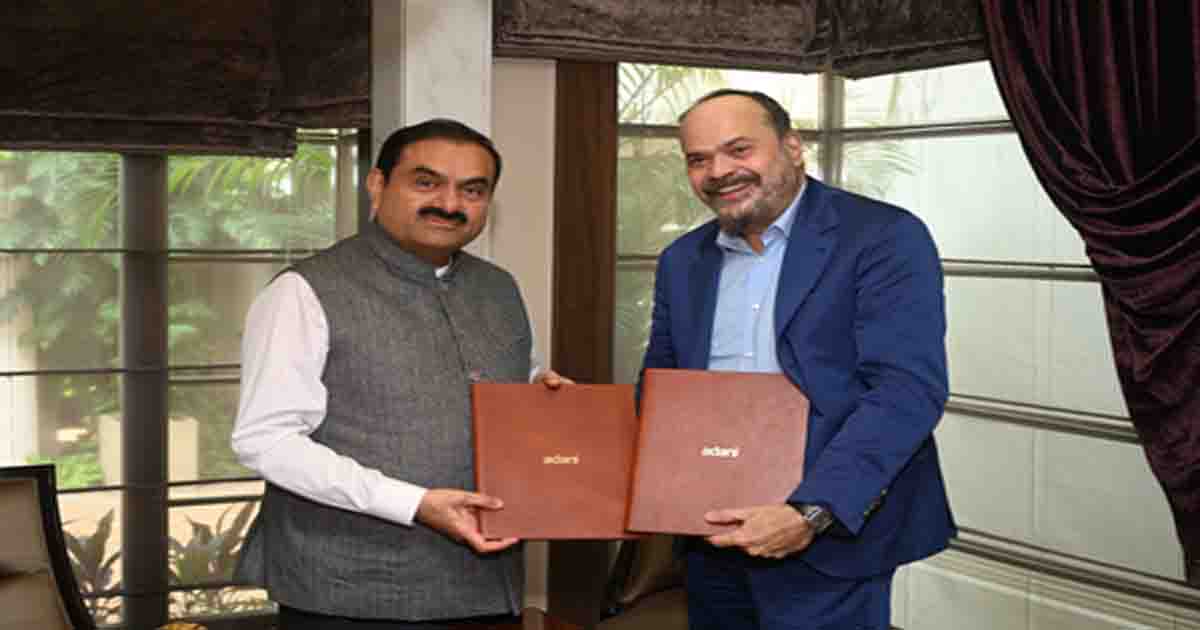
New Delhi, Oct 13: Adani Enterprises Limited (AEL) and global engineering, supply chain and manufacturing company Jabil Inc. on Tuesday said they have signed a non-binding Memorandum of Understanding (MoU) for a proposed 50:50 joint venture to manufacture and assemble artificial intelligence (AI) and data centre equipment in India.
The MoU follows the June 2026 announcement of Adani Group and Jabil’s intent to establish a strategic alliance to develop an AI and data centre infrastructure manufacturing ecosystem in India.
“The AI revolution will demand far more than just breakthroughs in algorithms. It will require an entire new industrial architecture where energy, hyperscale infrastructure, advanced computing and precision manufacturing converge to power the intelligence economy,” Adani Group Chairman Gautam Adani said.
At Adani, “our vision is to expand up the AI value chain evolving from powering and hosting AI infrastructure to engineering and manufacturing the critical systems that will define the next generation of computing”, the billionaire industrialist said.
According to a statement, the proposed joint venture remains subject to execution of definitive agreements, receipt of applicable approvals, and satisfaction of customary conditions.
“Our proposed joint venture with Jabil marks a strategic step towards this future, combining Jabil’s world-class engineering and manufacturing capabilities with Adani’s integrated strengths in energy, infrastructure and data centres to help build the physical backbone of the global AI economy,” said Gautam Adani.
The venture would provide a manufacturing base in India to serve domestic demand and support exports.
The companies estimate the global market opportunity at more than $3 trillion over the next seven years, driven by investment in AI computing.
“The signing of this MoU is the next step forward in our shared efforts to establish a scaled AI infrastructure manufacturing platform in India, a market we believe will become increasingly important for both domestic and global AI infrastructure demand,” Jabil Inc. Chief Executive Officer Mike Dastoor said.
“Integrating Jabil’s 60 years of engineering and manufacturing expertise with Adani’s significant infrastructure and energy capabilities, we can bring our rack-level data centre solutions to more hyperscalers in India and around the world,” he added.
The venture is aligned with Adani Group’s $100 billion commitment to develop 5 GW of green-energy-powered, hyperscale AI-ready data centres by 2035. The proposed venture would add hardware manufacturing to the Group’s presence across infrastructure, energy, logistics and data centres.
The joint venture would manufacture and assemble AI racks, servers, storage and networking equipment used in data centres. The racks would house high-performance computing systems for AI applications and other digital services, the statement said.
National News
‘People will never forgive such behaviour’: Piyush Goyal on LoP ‘pushing’ a female journalist

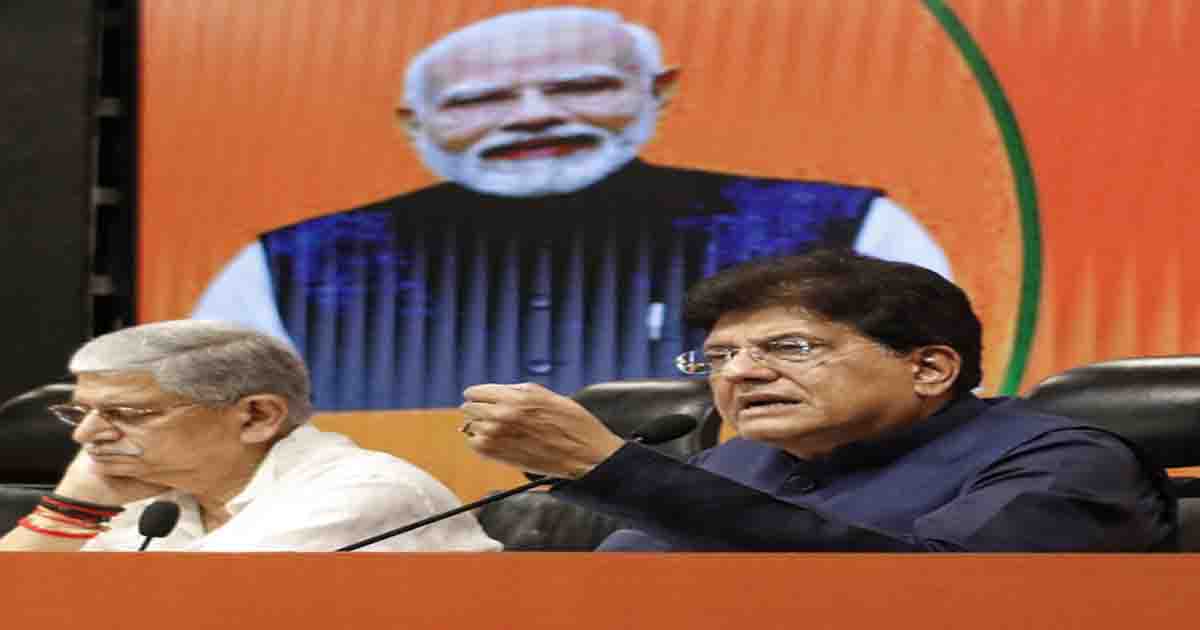
New Delhi, Oct 13: Union Minister and Bharatiya Janata Party (BJP) leader Piyush Goyal said on Tuesday that the way Leader of Opposition in Lok Sabha Rahul Gandhi and members of the Opposition “misbehaved” with a female journalist during the INDIA bloc march a day before, the conduct would “never be forgiven” by the people of the country.
Addressing a press conference, Goyal said: “Yesterday’s disgraceful behaviour by Rahul Gandhi and his colleagues towards a woman journalist was unacceptable. She was three months pregnant and therefore was repeatedly telling them to be careful. However, she was pushed around and thrown to the ground, and eventually had to be hospitalised. What was her only fault? She was covering their protest and asking a few questions.”
“I do not believe the 1.4 billion people of this country will ever forgive such behaviour. I do not believe that even a single journalist, male or female, could ever forgive this conduct,” he added.
Meanwhile, Goyal referred to Rahul Gandhi’s previous allegations against former West Bengal Chief Minister Mamata Banerjee, saying: “They (Congress leaders) abuse Mamata Banerjee and contest elections against her, accusing her of opening the doors for the BJP to win the recently held West Bengal polls through her alleged wrongdoings and malpractices.”
“After both of them (Congress and Mamata-All India Trinamool Congress) lost elections (in West Bengal), they shamelessly took a U-turn and started blaming Special Intensive Revision (SIR) of electoral rolls and Election Commission since both of them are now searching for a reason for their defeat. Both Rahul Gandhi and Mamata Banerjee should show some spine and stick to one story rather than constantly changing narratives,” he remarked.
The Union Minister spoke about the protests against Chief Election Commissioner Gyanesh Kumar over alleged irregularities in the SIR of electoral rolls, emphasising that the Supreme Court had upheld the constitutional validity of Bihar’s SIR in May 2026.
“While proceedings regarding Form-6 are ongoing in court, if they (Congress) truly respect the Constitution, why take to the streets? The judicial process is already underway. The court is examining whether Form-6 is appropriate, and if any corrections are needed, it will direct them. The court has already held that the SIR is constitutionally valid. So, why are they (Congress) taking to the streets and trying to create anarchy?” Goyal said.
“Why are they (Congress) trying to provoke people? When constitutional avenues and methods are available to you, but you refuse to follow or respect them, you demonstrate that you are an anarchist and believe in the path of anarchy. I think Rahul Gandhi and the Congress are insulting the Constitution and showing anarchy on the streets,” he remarked.
Goyal said that if Rahul Gandhi and the Congress party really have any evidence of “vote chori”, then why was it not submitted to the court or to the Election Commission?
“This is such height of stupidity that they (Congress) can’t even file a petition properly despite (Congress) giving Rajya Sabha seats to such big lawyers. There were 14 defects in the petition (filed) in the Supreme Court…I believe the Congress is itself responsible for its failure. The party has a dark future under the leadership of Rahul Gandhi,” he remarked while referring to the petition filed by opposition leaders in the Supreme Court alleging irregularities in SIR.
Goyal added: “The person (Rahul Gandhi) who believes in anarchy and does his politics based on lies, the party’s leaders who can’t even file a petition properly…what future will such a party and its leader give to the country!”

Delhi Police arrest 11 cyber criminals for digital arrests linked to Cambodia

Eknath Shinde Calls Rahul Gandhi’s Supreme Court March a Black Day in India’s History, Alleges INDIA Bloc Is Part of a Foreign Conspiracy.

Maha leads in creating an investment ecosystem for industries: CM Fadnavis

Indians in Saudi Arabia advised to stay indoors during aerial attacks; Embassy opens 24×7 control room

Adani Enterprises, Jabil plan to build mega AI, data centre infra platform in India

INDIA bloc begins protest march against ECI

Maha Congress stages agitation against Gyanesh Kumar

Complaint against Netflix & Mukesh Chhabra for inappropriate language on ‘India’s Got Latent 2’

Delhi court grants three-week interim bail to influencer Swatantra Bhardwaj

Bombay HC warns Vijay Mallya against posting court documents on social media
-

 Crime4 years ago
Class 10 student jumps to death in Jaipur
-

 Maharashtra2 years ago
Mumbai Local Train Update: Central Railway’s New Timetable Comes Into Effect; Check Full List Of Revised Timings & Stations
-

 Maharashtra2 years ago
Mumbai To Go Toll-Free Tonight! Maharashtra Govt Announces Complete Toll Waiver For Light Motor Vehicles At All 5 Entry Points Of City
-

 Maharashtra2 years ago
False photo of Imtiaz Jaleel’s rally, exposing the fooling conspiracy
-

 National News2 years ago
Ministry of Railways rolls out Special Drive 4.0 with focus on digitisation, cleanliness, inclusiveness and grievance redressal
-

 Maharashtra2 years ago
Maharashtra Elections 2024: Mumbai Metro & BEST Services Extended Till Midnight On Voting Day
-

 National News2 years ago
J&K: 4 Jawans Killed, 28 Injured After Bus Carrying BSF Personnel For Poll Duty Falls Into Gorge In Budgam; Terrifying Visuals Surface
-

 Crime2 years ago
Baba Siddique Murder: Mumbai Police Unable To Get Lawrence Bishnoi Custody Due To Home Ministry Order, Says Report