
International News
‘You lose Peshawar, You lose Pakistan’: Imran Khan gets a warning

Senior Pakistan TV anchor Kamran Khan has said that the biggest proof of Prime Minister Imran Khan and the ruling Pakistan Tehreek-e-Insaf (PTI) governments unpopularity is that they have lost the local government polls in Peshawar.
“If you lose Peshawar, you lose Pakistan,” he said, Friday Times reported.
Khan released a video message on his Twitter account and added that these results were out nine months ago. He said that he had predicted this result in March, but his advice to PM Imran Khan fell on deaf ears, the report said.
Addressing the Prime Minister, Kamran Khan said, “I have always supported you and thought of your benefit while encouraging your government. But today I am representing the views of Pakistani citizens [who are disappointed in you].”
He added that Imran Khan should do whatever it takes to resolve the issue of inflation in the country. Criticising the Pakistan Punjab government, he said that the failure of the Buzadar administration was evident.
Kamran Khan said that the Prime Minister should know that every supporter of the ruling party is surprised by Chief Minister Usman Buzdar’s performance. He said the Prime Minister must fire the Punjab Chief Minister and introduce a new and energetic team in the province.
He claimed that almost all bureaucrats around the Prime Minister are unhappy with his principal secretary Azam Khan, adding that Imran Khan should replace him, the report said.


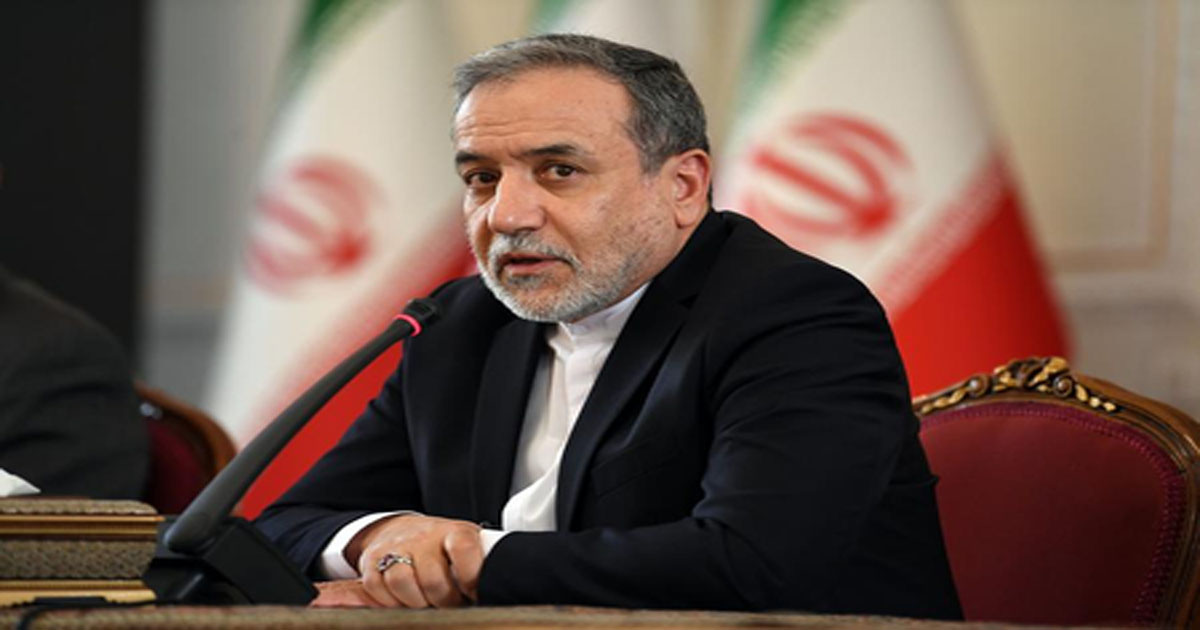
Tehran, April 13: Iran has accused the United States of derailing a potential breakthrough agreement, saying that “maximalism, shifting goalposts, and blockade tactics” prevented what was “inches away” from becoming the proposed “Islamabad MoU”, after 21 hours of intense negotiations ended without a deal.
In a post on X, Iranian Foreign Minister Abbas Araghchi said Tehran had entered into its highest-level direct engagement with Washington in 47 years with sincerity and intent to help bring an end to the ongoing conflict, but lamented that there were “zero lessons earned”.
His assertion that both sides were “inches away” from finalising an agreement highlighted how close the talks had come to success before tensions escalated sharply at the final stage.
“In intensive talks at highest level in 47 years, Iran engaged with US in good faith to end war. But when just inches away from ‘Islamabad MoU’, we encountered maximalism, shifting goalposts, and blockade. Zero lessons earned. Good will begets good will. Enmity begets enmity,” Araghchi posted on X.
Iranian President Masoud Pezeshkian said that the possibility of a diplomatic breakthrough with the United States still exists, provided Washington changes its approach. He urged the US to abandon what he termed “totalitarianism” and to respect Iran’s rights, suggesting that such a shift could pave the way for an agreement.
“If the American government abandons its totalitarianism and respects the rights of the Iranian nation, ways to reach an agreement will certainly be found,” Pezeshkian said in a post on X, while praising members of the negotiating delegation.
Meanwhile, the United States announced that it will begin enforcing a sweeping maritime blockade of vessels entering or exiting Iranian ports from April 13, escalating tensions after high-stakes talks between Washington and Tehran failed to yield agreement on key issues, including Iran’s nuclear programme.
The move, announced by US Central Command (CENTCOM), follows a presidential directive and will target “all maritime traffic entering and exiting Iranian ports”, including those along the Arabian Gulf and Gulf of Oman.
“The blockade will be enforced impartially against vessels of all nations,” CENTCOM said, adding that US forces would not impede ships transiting the Strait of Hormuz to and from non-Iranian ports.
Commercial mariners have been advised to monitor official navigation warnings and remain in contact with US naval forces while operating in the region.
The announcement came hours after US President Donald Trump declared that negotiations with Iran had stalled over its nuclear ambitions, despite progress on other fronts.
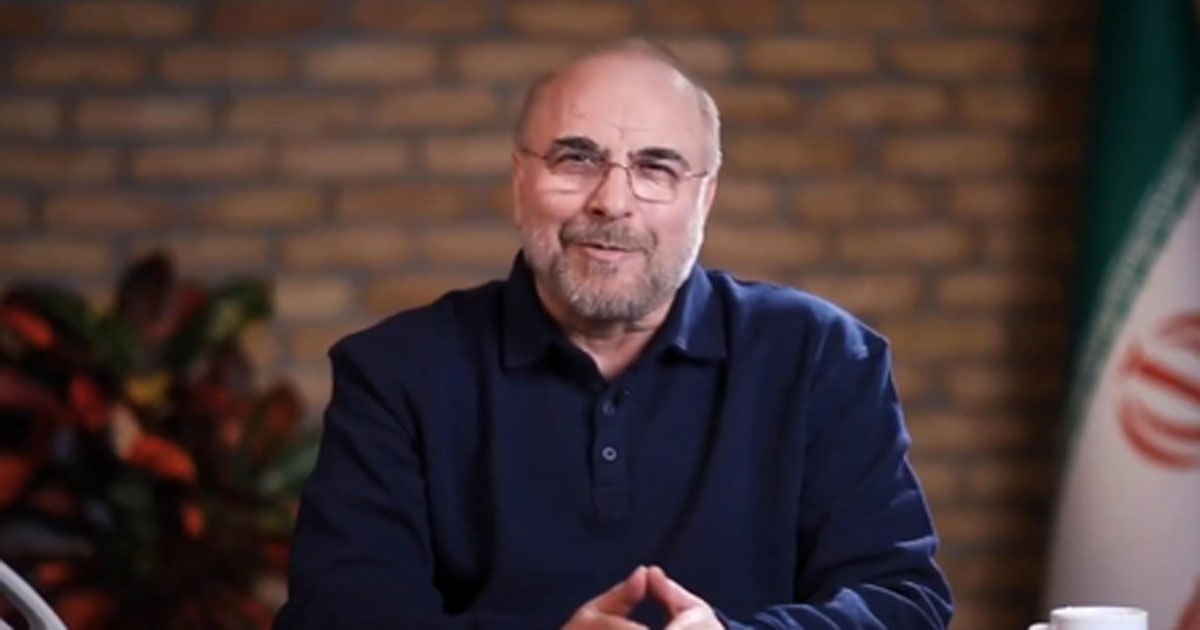
Tehran, April 12: Iranian Parliament Speaker Mohammad Baqer Ghalibaf said on Sunday that the US failed to gain Iran’s trust during recent negotiations, despite what he described as Tehran’s willingness to engage in “good faith”.
In a series of posts on X, Ghalibaf stated that the Iranian delegation raised “forward-looking initiatives”, however, the US failed to gain its trust. He mentioned that the US has to decide whether it can earn Iran’s trust and logic, as it has understood Tehran’s logic and principles.
“Before the negotiations, I emphasised that we have the necessary good faith and will, but due to the experiences of the two previous wars, we have no trust in the opposing side. My colleagues on the Iranian delegation raised forward-looking initiatives, but the opposing side ultimately failed to gain the trust of the Iranian delegation in this round of negotiations,” Ghalibaf posted on X.
In another post, he wrote: “America has understood our logic and principles, and now it’s time for it to decide whether it can earn our trust or not?”
His statement comes as high-level talks between US and Iranian officials in Pakistan failed to produce an agreement. The Speaker led the Iranian delegation during the negotiations with the US in Islamabad.
Ghalibaf also hailed the people of Iran for taking to the streets following the advice of the Supreme Leader and expressed gratitude to his colleagues for attending the 21-hour negotiations.
In a post on X, he stated: “We consider every mirror to be another method of authority diplomacy, alongside military struggle, for upholding the rights of the Iranian nation, and we will not for a moment cease our efforts to consolidate the achievements of the forty days of Iran’s national defence.”
“Iran is a body with 90 million souls, from all the heroic people of Iran who, following the advice of the Supreme Leader and by taking to the streets, supported their children and sent us on our way with their blessings—for this, I am grateful, and to my colleagues in these intense 21-hour negotiations, I say: well done, God strengthen you,” he posted on X.
The failed talks mark a setback in efforts to revive diplomatic engagement over Iran’s nuclear programme, which has long been a point of contention between Washington and Tehran. Previous negotiations have stalled over verification measures, sanctions relief and the scope of Iran’s enrichment activities.
Meanwhile, US Vice President J D Vance said negotiations with Iran failed to produce an agreement after more than 20 hours of talks in Islamabad, warning that Tehran’s refusal to accept Washington’s terms was “bad news for Iran much more than it’s bad news for the United States of America”.
“We have been at it now for 21 hours, and we’ve had a number of substantive discussions with the Iranians. That’s the good news. The bad news is that we have not reached an agreement,” Vance told reporters at a press conference in the early hours of Sunday morning.
The Vice President said US negotiators had clearly outlined their position, but Tehran declined to accept the terms.
“We’ve made very clear what our red lines are, what things we’re willing to accommodate them on, and what things we’re not willing to accommodate them on, and we’ve made that as clear as we possibly could, and they have chosen not to accept our terms,” he said.
Vance emphasised that the core US objective remained preventing Iran from acquiring nuclear weapons capability.
“The simple fact is that we need to see an affirmative commitment that they will not seek a nuclear weapon, and they will not seek the tools that would enable them to quickly achieve a nuclear weapon,” he said.
He added that Washington was seeking long-term assurances from Tehran, not temporary commitments.
“Do we see a fundamental commitment of will for the Iranians not to develop a nuclear weapon, not just now, not just two years from now, but for the long term. We haven’t seen that yet. We hope that we will,” Vance said.
He confirmed that Washington has put forward what it considers its final proposal.
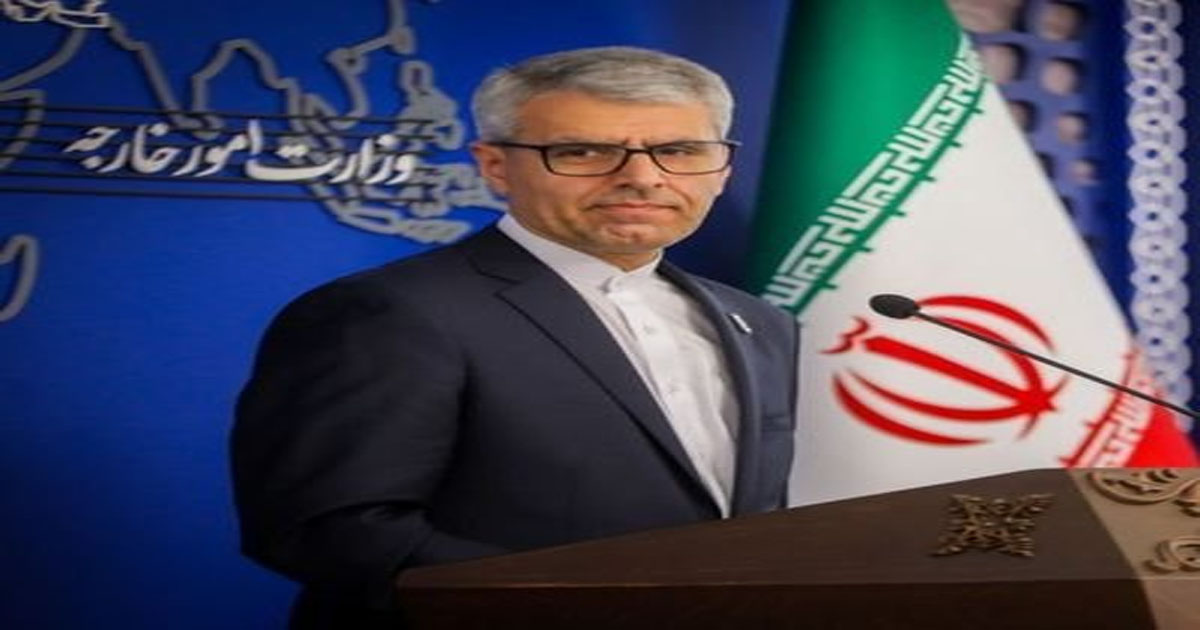
Tehran, April 12: Iran has taken a firm stance amid ongoing negotiations with the US, with Foreign Ministry spokesperson Esmaeil Baqaei declaring that the country “has not forgotten and will not forget” past breaches of promise by the United States, underscoring deep mistrust even as talks continue in Islamabad.
In a detailed post on X, Baqaei stated, “Diplomacy for us is the continuation of the sacred jihad of the defenders of the Iranian land. We have not forgotten and will not forget the experiences of America’s breaches of promise and malicious acts. Just as we will not forgive the heinous crimes committed by them and the Zionist regime during the course of the second and third imposed wars.”
He described the negotiations as intense and prolonged, noting, “Today was a busy and long day for the delegation of the Islamic Republic of Iran in Islamabad. The intensive negotiations that began from the morning of Saturday with Pakistan’s benevolent efforts and mediation have continued without interruption until now, and numerous messages and texts have been exchanged between the two sides.”
Highlighting the determination of the Iranian delegation, Baqaei added, “The Iranian negotiators are employing all their capabilities, experience, and knowledge to safeguard Iran’s rights and interests. The heavy loss of our great elders, dear ones, and fellow countrymen has made our resolve to pursue the Iranian nation’s interests and rights firmer than ever before.”
Reaffirming Iran’s broader stance, he said, “Nothing can or should deter us from pursuing our great historical mission toward our beloved homeland and noble Iranian civilization. The Islamic Republic of Iran is determined to utilize all tools, including diplomacy, to secure national interests and protect the country’s well-being.”
According to Baqaei, discussions over the past 24 hours covered key issues including the Strait of Hormuz, the nuclear programme, war reparations, sanctions relief, and ending ongoing regional conflicts. He stressed, “The success of this diplomatic process depends on the seriousness and good faith of the opposing side, refraining from excessive demands and unlawful requests, and the acceptance of Iran’s legitimate rights and interests.”
At the conclusion of the latest round of talks, negotiations between Iran and the United States have been extended for another day at Pakistan’s proposal, with both sides agreeing to continue discussions. The talks, which began at 1 p.m. local time on Saturday, lasted over 14 hours and involved continuous exchanges of messages and draft texts.
According to Iran’s semi-official Tasnim News Agency, the extension comes amid continued disagreements, particularly over the Strait of Hormuz and other critical issues. The report noted that while some initial progress had been made, “serious” differences persist, largely due to what Iran describes as “illogical and excessive demands” from the US side.

Iran blames US ‘maximalism’ as near-final Islamabad MoU collapses

BMC’s Cleanliness Enforcement Plan Hits Roadblock Over Uniform Row

24-Year-Old Man Attacked With Sharp Weapon At Simba Uproar 2026 In Bandra After Dance Floor Altercation, Case Registered

Fake Govt Jobs Racket Busted In Mumbai; 13 Accused Named In ₹1.54 Crore Fraud Case

US failed to gain Iran’s trust during talks: Iranian Parliament Speaker Ghalibaf

Dhurandhar 2 Box Office Collection Day 1: Ranveer Singh Starrer Takes An Exceptional Opening; Crosses ₹100 Crore Mark

Mumbai Police Busts Fake Apple Accessories Racket In Ghatkopar, ₹16.33 Lakh Goods Seized; Six Booked

Thane Horror: Man Slashed With Chopper In Naupada For Refusing ‘Vargani’, Caught On Camera

Mumbai: 28-Year-Old Ghatkopar Woman Killed By Speeding Tanker While Crossing Road, Driver Arrested

Dhurandhar 2 Box Office Collection Day 9: Ranveer Singh Starrer Earns ₹41.55 Crore On Its Second Friday; Enters ₹700 Crore Club
-

 Crime4 years ago
Class 10 student jumps to death in Jaipur
-

 Maharashtra2 years ago
Mumbai Local Train Update: Central Railway’s New Timetable Comes Into Effect; Check Full List Of Revised Timings & Stations
-

 Maharashtra1 year ago
Mumbai To Go Toll-Free Tonight! Maharashtra Govt Announces Complete Toll Waiver For Light Motor Vehicles At All 5 Entry Points Of City
-

 Maharashtra2 years ago
False photo of Imtiaz Jaleel’s rally, exposing the fooling conspiracy
-

 National News2 years ago
Ministry of Railways rolls out Special Drive 4.0 with focus on digitisation, cleanliness, inclusiveness and grievance redressal
-

 Maharashtra1 year ago
Maharashtra Elections 2024: Mumbai Metro & BEST Services Extended Till Midnight On Voting Day
-

 National News2 years ago
J&K: 4 Jawans Killed, 28 Injured After Bus Carrying BSF Personnel For Poll Duty Falls Into Gorge In Budgam; Terrifying Visuals Surface
-

 Crime1 year ago
Baba Siddique Murder: Mumbai Police Unable To Get Lawrence Bishnoi Custody Due To Home Ministry Order, Says Report