
National News
WPL 2026 to take place from Jan 9 to Feb 5 in Navi Mumbai and Vadodara

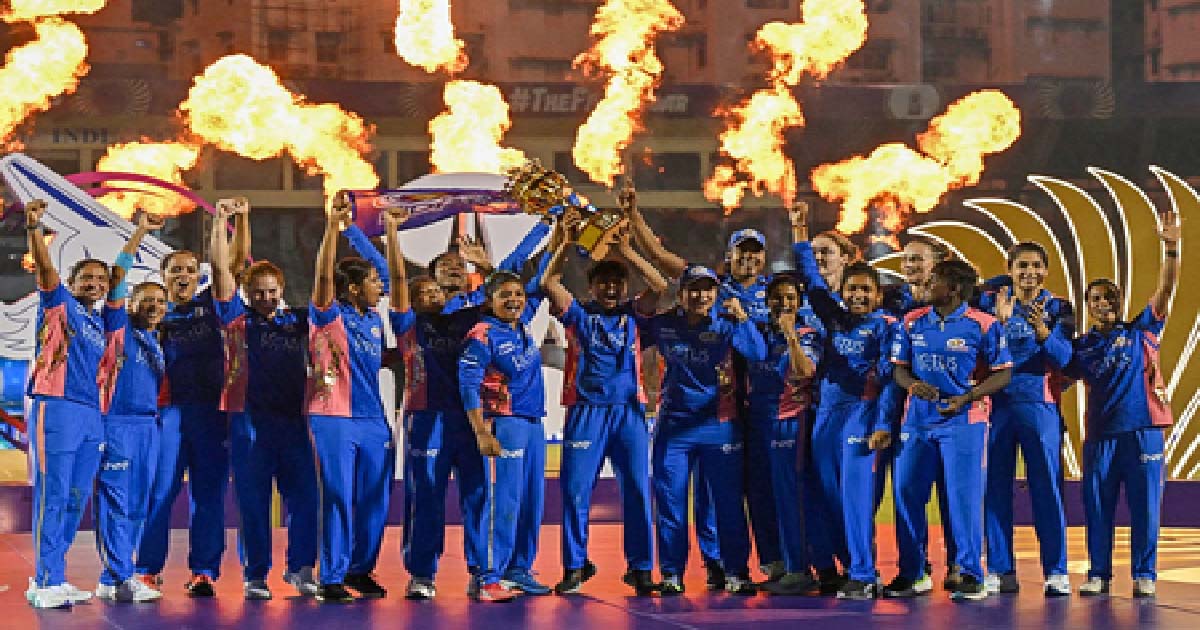
New Delhi, Nov 27: Navi Mumbai and Vadodara are the venues for the 2026 Women’s Premier League, to be held from January 9 to February 5. The tournament will open at the DY Patil Stadium in Navi Mumbai, while the final is scheduled to be held at Kotambi Stadium in Vadodara.
The announcement was made by WPL Committee Chairman Jayesh George before the competition’s first-ever mega auction began in New Delhi on Thursday. IANS understands that the WPL Committee had a meeting at the auction venue around noon to finalise the dates and venues, with the full schedule expected to come out soon.
As per the dates announced by George, the fourth WPL final will be held two days before the 2026 Men’s T20 World Cup begins in India and Sri Lanka. IANS understands that the rationale behind keeping the second half of WPL 2026 in Vadodara is also due to the Kotambi stadium being set to host the men’s ODI series opener between India and New Zealand on January 11.
Vadodara was one of the four hosts for WPL in 2025 and now sees getting the entire second half as well as the knockout stages, including the all-important title clash. The tournament will also mark the return of women’s cricket in the WPL for the first time after India won the 2025 Women’s ODI World Cup on November 2.
For now, the focus of all five teams – two-time champions Mumbai Indians, 2024 winners Royal Challengers Bengaluru, three-time runners-up Delhi Capitals, UP Warriorz and Gujarat Giants – will be to make a trophy-winning squad for the 2026 season.
At the mega auction, India’s ODI World Cup-winning captain Harmanpreet Kaur is present at the MI table, alongside Jhulan Goswami, new coach Lisa Keightley, and team owners. DC have a star-studded line-up in head coach Jonathan Batty and director of cricket Sourav Ganguly.
New UPW head coach Abhishek Nayar and mentor Lisa Sthalekar are present, while Pravin Tambe and Michael Klinger are representing GG and RCB has newly appointed assistant coach Anya Shrubsole on the table alongside head coach Malolan Rangarajan.

National News
‘It shows toolkit mindset’, BJP blasts Cong, Rahul over organising stir ahead of NEET re-exams

New Delhi, June 17: The Bharatiya Janata Party (BJP) on Wednesday launched a scathing critique of Congress and Rahul Gandhi over its proposed nationwide campaign on NEET paper leaks, just days ahead of re-examinations and said that such ‘irresponsible and insensitive’ conduct smacks of a “toolkit mindset”.
The NEET (UG) retest is slated for June 21, following the cancellation of May 3 exams over paper leaks.
The Congress party has announced nationwide student conventions, starting from Rajasthan’s Kota on Wednesday, to protest the government’s ‘inability’ to conduct fair examinations.
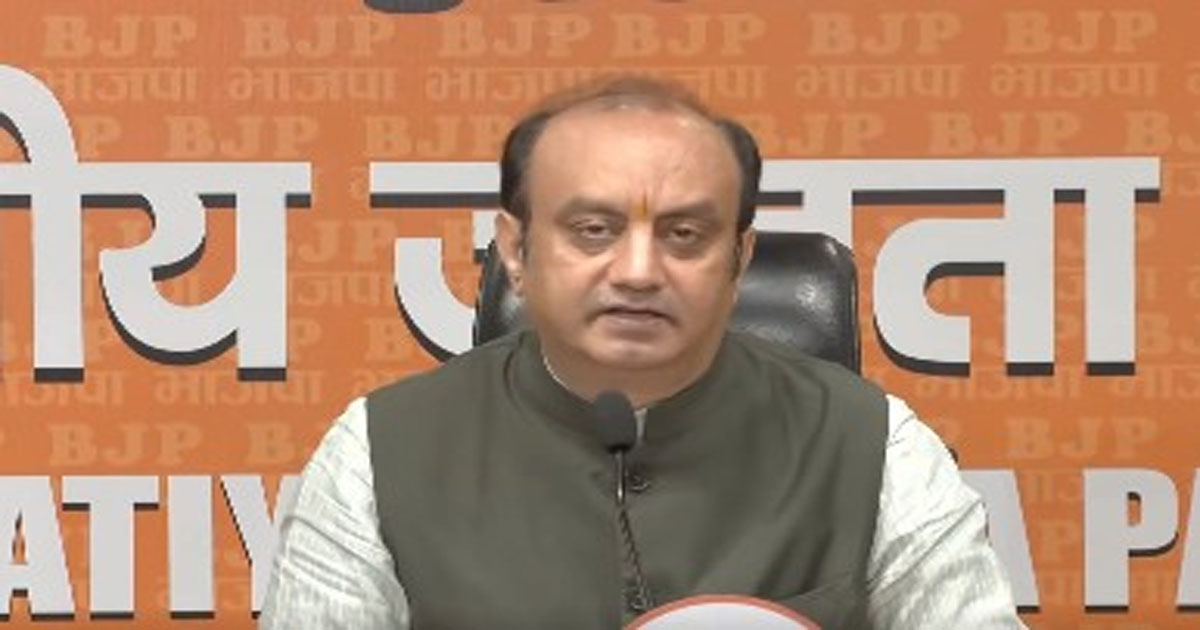
During a press conference at party HQ, BJP national spokesperson Sudhanshu Trivedi lambasted the Congress party and Rahul Gandhi for timing their stir just ahead of NEET re-exams, questioning their real intentions and ‘machinations’. He also accused them of misusing and exploiting students’ sentiments for furthering their own political ambitions.
“There are many opportunities to do politics, you can do it after June 21, when the examinations are over. I want to ask you, why have you chosen this moment only? The pupils whom you are taking along for the student convention show that you just want to fulfil your political ambition,” he said.
Trivedi further pointed out that the government is being considerate and sensitive to students’ concerns and has made elaborate efforts to conduct the retest in all fairness, but the Opposition is acting with utmost insensitivity and resorting to “cunning tactics”.
“When the students are engrossed in their studies, are in the final stages of preparation for the impending exams, why does Rahul Gandhi want to stoke apprehension and fear in the minds of wards regarding NEET re-exams?” he asked.
Further taking potshots at Rahul, the BJP leader said that you have failed as a student, as a working professional, you failed in your entrepreneurial stint and made yourself a disaster in politics, but why do you want to play with the lives and future of students?
Sudhanshu Trivedi posed four-pointed questions at the Congress party, demanding why the party chose Kota in the first place, given the huge number of students preparing for competitive examinations here.
“Why do you want to distract students, divert their attention from crucial examinations. Do you want to imperil their career and dreams?” he asked.
Trivedi further said that during the Congress government in Rajasthan, 19 paper leaks happened, but when the BJP came to power, it not only ensured zero paper leaks but also cracked down on more than 400 suspects.
He also claimed that Kota’s coaching institutes and PG guest houses owners were being “intimidated” and “forced” to send their students to participate in the Congress’s student convention.
“This shows the toolkit mindset of Congress; it is a planned and plotted campaign by the Congress party to spread anarchy and chaos,” the BJP leader asserted.
He also said that the protest over paper leaks is nothing but Congress’s toolkit strategy to stoke anarchy, as per the party’s established designs in the past and attempts to derail the process.
Notably, Rahul’s student convention in Kota against NEET paper leaks is slated for later this evening, at Shri Ram Rangmanch in Dussehra Ground. The proposed stir has already triggered political confrontation, with the Congress accusing the Modi govt of crushing the aspirations of millions of young students.
New Delhi/Vadodara, June 17: Union Home Minister Amit Shah on Wednesday expressed condolences over the fatal luxury bus accident on the Vadodara-Jarod Road in Gujarat, as the death toll from the crash rose to seven and 28 people were injured, including two in critical condition.
In a post on the social media platform X, HM Shah described the incident as “extremely tragic” and said his condolences were with the families of those who had lost their loved ones.
He said the local administration was providing medical facilities to the injured and prayed for their speedy recovery.
“The accident that occurred on the Vadodara-Jarod Road in Gujarat is extremely tragic. My condolences are with those who have lost their loved ones in this accident. The local administration is providing medical facilities to the injured. I pray for the speedy recovery of those who have been injured,” HM Shah wrote.
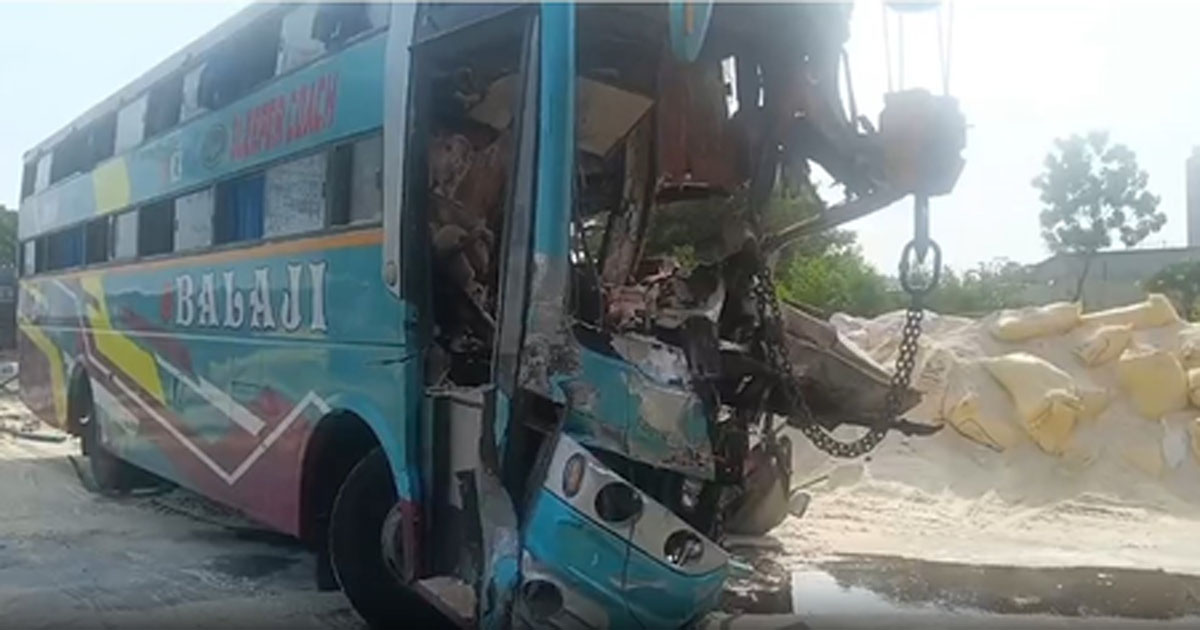
The accident occurred at around 4 a.m. near Kotambi village when a luxury bus travelling from Banswara in Rajasthan to Surat rammed into the rear of a truck parked on the roadside.
According to preliminary information, the truck had been halted while its driver was checking tyre pressure.
The collision crushed the front portion of the bus, trapping several passengers inside. Local residents and passing motorists rushed to the scene before emergency services arrived and launched rescue operations.
Police, fire brigade personnel and teams from the National Disaster Response Force (NDRF) carried out a large-scale rescue effort.
Firefighters used a JCB machine to separate the two vehicles and cut through the mangled metal of the bus to extricate trapped passengers.
Most of the passengers travelling on the bus were from Rajasthan. The injured were shifted to Sir Sayajirao General (SSG) Hospital and private hospitals in Vadodara, where treatment is continuing.
Hospital authorities said 28 people sustained injuries, with two reported to be in critical condition.
The accident also led to a traffic jam stretching several kilometres along the highway as rescue and clearance operations continued.
Reacting to the tragedy, Gujarat BJP state president described the crash as “extremely shocking and painful” and paid tribute to those who lost their lives.
“The horrific road accident that occurred on the Vadodara-Jarod Road is extremely shocking and painful. I offer my heartfelt tributes to the brothers and sisters who lost their lives in this tragedy and pray that God gives strength to their family members to bear this loss. I also pray for the speedy recovery of all the passengers who were injured in the accident,” he said.
Police have begun an investigation into the circumstances that led to the collision.
New Delhi, June 17: Days before lakhs of students are set to appear for the NEET-UG re-examination on June 21, a NEET aspirant allegedly died by suicide in Delhi.
The deceased, identified as Renu, lived with her family in the Palam area of South-West Delhi. According to reports, she had appeared for the NEET examination on May 3 and had reportedly been suffering from depression after the examination was cancelled.
Police said that on June 13, Renu’s father had gone to his in-laws’ residence following the death of his father-in-law. Renu was alone at home when the incident occurred. She allegedly died by hanging herself on the evening of June 13.
A suicide note recovered from the spot revealed her emotional distress. In the note, she apologised to her parents and wrote that she had been unable to fulfil their aspirations. The family is originally from Rajasthan.
The incident comes amid growing concern over the mental well-being of students preparing for highly competitive examinations, particularly after the controversy surrounding the NEET examination and allegations of paper leaks.
Earlier this week, a 22-year-old NEET aspirant died by suicide in Rajasthan’s Sikar district. The student, identified as Umesh Mali, was preparing for his third attempt at the NEET examination, which is scheduled to be held on June 21.
This was the second case of a NEET aspirant dying by suicide in Sikar, highlighting the mounting pressure faced by students preparing for competitive entrance examinations.
According to police, Umesh was a native of Nawalgarh in Jhunjhunu district. His father works as a tile contractor in Mumbai. Umesh had been residing in a flat in the Udyog Nagar police station area of Sikar along with his mother, elder sister, and younger brother while preparing for the examination.
In another similar incident reported on Tuesday, a 23-year-old woman in Dehradun allegedly ended her life after reportedly struggling to clear the NEET examination. She left behind a note addressed to her parents that read, “Mummy-Papa, I love you.”
According to investigators, preliminary findings suggest that she had been preparing for the NEET examination for a long time and aspired to pursue a career in medicine.
Meanwhile, NTA Director General Abhishek Singh on Tuesday assured aspirants that the re-examination would be conducted in a secure and error-free manner, while cautioning students and parents against social media rackets claiming to sell “leaked papers” for hefty sums.
In a video message, Singh said there was “no leaked paper for the re-exam” and warned candidates against falling prey to fraudsters operating through Telegram channels.
He said the temporary suspension of the Telegram application till June 22 was aimed at curbing fake news and misleading claims relating to the examination.

Municipal Commissioner directed to complete work on Bhandup Water Purification Project to ensure safe water supply to Mumbai

Eknath Shinde’s Operation Tiger was successful… Uddhav Thackeray’s rebellion in Shiv Sena UBT, Sanjay Raut is angry

Muslim students deprived of government schemes… Only Hindu candidates are accepted for drone pilot training scheme: Raees Sheikh

Maharashtra Freedom of Religion Bill 2026: Important seminar in Mumbai on constitutional rights and minority concerns, Justice Abhay Thapsay and legal experts express their views

‘It shows toolkit mindset’, BJP blasts Cong, Rahul over organising stir ahead of NEET re-exams

Trump, Netanyahu hold phone talks after Iranian missile fire: Israeli state media

Virar Citizens Protest Demolition Drive In Arnala; Police Block Lal Bawta March, Sit-in Held On Road

Indian equity markets trade higher as Iran-Israel tensions ease

Israel captures strategic Beaufort Castle in southern Lebanon

Rubio says Hamas disarmament key to Gaza rebuild
-

 Crime4 years ago
Class 10 student jumps to death in Jaipur
-

 Maharashtra2 years ago
Mumbai Local Train Update: Central Railway’s New Timetable Comes Into Effect; Check Full List Of Revised Timings & Stations
-

 Maharashtra2 years ago
Mumbai To Go Toll-Free Tonight! Maharashtra Govt Announces Complete Toll Waiver For Light Motor Vehicles At All 5 Entry Points Of City
-

 Maharashtra2 years ago
False photo of Imtiaz Jaleel’s rally, exposing the fooling conspiracy
-

 National News2 years ago
Ministry of Railways rolls out Special Drive 4.0 with focus on digitisation, cleanliness, inclusiveness and grievance redressal
-

 Maharashtra2 years ago
Maharashtra Elections 2024: Mumbai Metro & BEST Services Extended Till Midnight On Voting Day
-

 National News2 years ago
J&K: 4 Jawans Killed, 28 Injured After Bus Carrying BSF Personnel For Poll Duty Falls Into Gorge In Budgam; Terrifying Visuals Surface
-

 Crime2 years ago
Baba Siddique Murder: Mumbai Police Unable To Get Lawrence Bishnoi Custody Due To Home Ministry Order, Says Report