
International News
Why is India not banning int’l flights, Kejriwal asks PM


In the wake of emergence of a new Covid-19 variant — Omicron, Delhi Chief Minister Arvind Kejriwal on Tuesday requested Prime Minister Narendra Modi to ban international flights as most of them land in the national capital.
“Many countries have stopped incoming flights from Omicron-affected countries. Why are we not following their suit? In the first wave also, we had taken time to stop foreign flights,” Kejriwal said in a tweet, adding that most of the foreign flights come to Delhi, which is the most affected state.
He requested the prime minister to “kindly stop flights immediately.” The AAP leader had quoted a media report: “A South Africa returnee has tested positive for COVID-19 in Chandigarh. One of his family members and domestic help are also positive for the disease. The samples of positive cases will be sent for whole-genome sequencing to NCDC, Delhi to ascertain a variant of coronavirus”.
With the news of Omicron, being detected in South Africa, scientists and health experts in India have said that new waves of infection are anticipated and unless we act quickly and efficiently, the country will possibly see repeat waves. The variant has also been declared as a variant of concern by the World Health Organisation (WHO).
On Sunday, Kejriwal wrote to Prime Minister Narendra Modi, requesting him to stop international flights from regions witnessing a rise in Covid-19 cases. Meanwhile,
Meanwhile, Delhi government-run Lok Nayak Jai Prakash Hospital has been designated to treat patients testing positive for the new Covid-19 variant Omicron.
The hospital has been asked to earmark wards for isolating and treating such patients.In order, the Health Department has directed the hospital not to deny admission to patients infected with the new variant on any ground.


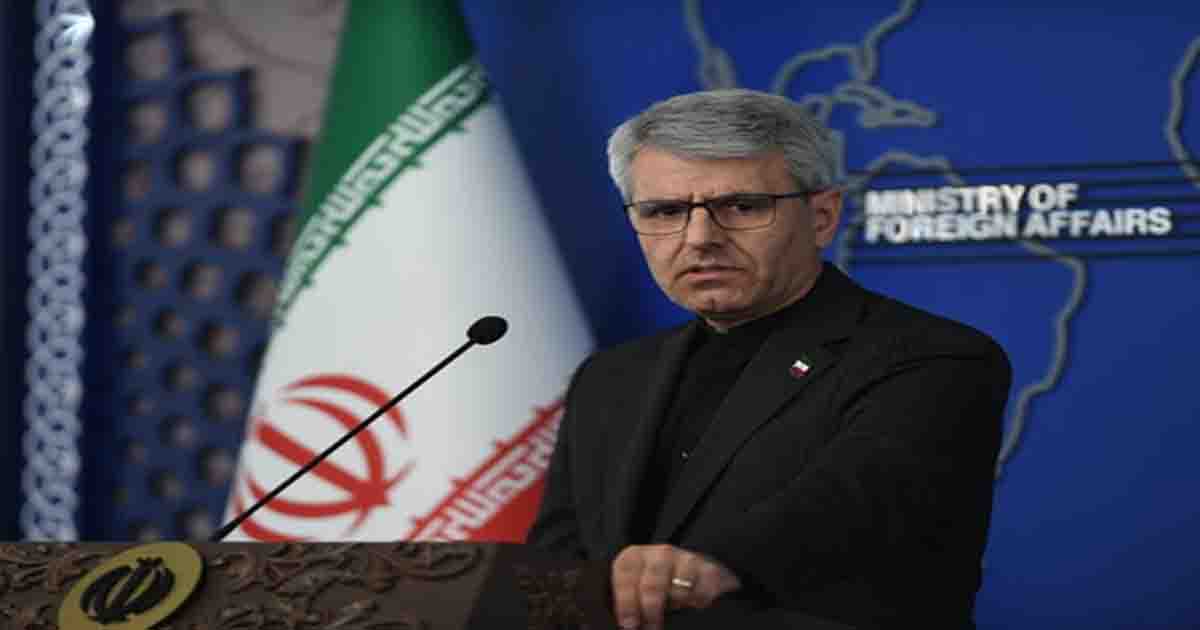
With US midterm elections about to conclude, tensions between Washington and Tehran remained high as both sides exchanged warnings and conditions for a possible settlement, while regional countries stepped up diplomatic efforts to prevent renewed hostilities.
Chief of Staff of the Iranian Armed Forces Ali Abdollahi warned Tuesday that Iran’s armed forces would respond to any level or type of threat from the United States and Israel immediately and “without geographical limitations.”
Meanwhile, Secretary of Iran’s Supreme National Security Council Mohsen Rezaei said in a post on social media platform X that the US response to Iran’s demands was not convincing, Xinhua news agecy reported.
“They must completely and explicitly address Iran’s seven conditions and act upon them. Only in this case the Strait of Hormuz will be reopened,” Rezaei said.
Iran conveyed a plan to the United States through mediators on September 22 to end hostilities and reopen the Strait of Hormuz within seven days if its conditions were met.
Iranian Foreign Ministry spokesman Esmaeil Baghaei said Monday that Iran had reduced the period for implementing the seven-day plan to two days in good faith.
US President Donald Trump said Monday that he was “in no rush” to decide whether to resume military action against Iran.
“One way or the other, we will do something, but there is no rush. We crippled them financially,” Trump said in a phone interview with Axios.
Trump later wrote on Truth Social that Iran wanted a settlement and that one could happen soon.
Axios reported that Trump was weighing three possible courses of action: reaching a diplomatic deal, resuming military action, or maintaining maximum economic pressure without a deal or renewed hostilities.
US Vice President JD Vance and White House envoy Steve Witkoff favor diplomacy, while Israeli Prime Minister Benjamin Netanyahu and US Secretary of Defence Pete Hegseth are pushing for renewed military operations. Treasury Secretary Scott Bessent, CIA Director John Ratcliffe and Secretary of State Marco Rubio favor maintaining the current “no war, no deal” status quo, the report said.
The Wall Street Journal (WSJ) reported Monday that Trump was leaning toward launching a large-scale attack on Iran after the midterm elections, potentially targeting Iranian infrastructure and nuclear facilities, although no final decision had been made.
Qatari Foreign Ministry spokesperson Majed Al Ansari said Tuesday that the United States and Iran were reviewing proposals to end their conflict, but differences remained unresolved.
He told a weekly press briefing that a Qatari delegation had returned from Tehran on Monday evening after more than three hours of talks with Iranian officials.
Qatar was relaying proposals in coordination with Pakistan, Gulf Cooperation Council countries and other regional and international partners, he said, adding that no concrete breakthrough had been achieved.
Also on Tuesday, Egyptian President Abdel Fattah El-Sisi urged the United States and Iran to show maximum flexibility and seek a political settlement.
At a joint press conference in Cairo with visiting Slovenian President Natasa Pirc Musar, he called on the two sides to “create space for understanding and dialogue” and pledged Egypt’s continued efforts with regional and international partners to de-escalate tensions.
Egyptian Foreign Minister Badr Abdelatty and his Iranian counterpart Seyed Abbas Araghchi made a phone call on Tuesday evening and discussed regional efforts to de-escalate tensions and reach a comprehensive deal addressing all parties’ concerns, the Egyptian Foreign Ministry said.
Despite diplomatic efforts, military tensions have persisted.
The United States attacked Iran’s strategic Qeshm Island in the Strait of Hormuz on Monday, The WSJ reported, citing US officials.
Iran’s Islamic Revolution Guard Corps said late Monday that its air defense systems had intercepted three US drones in the country’s southern airspace, identifying two of them as MQM-170 Outlaw drones, which it said were intercepted over Qeshm Island, and the third as an MQ-9 Reaper, which it said was shot down in waters east of the Strait of Hormuz.
The strikes were part of a series of limited attacks Washington had secretly carried out against Iran in recent weeks while President Trump was touting the possibility of a diplomatic deal, the WSJ report said.
Washington did not publicly announce the strikes to avoid signaling a resumption of major combat operations, one US official was quoted as saying.
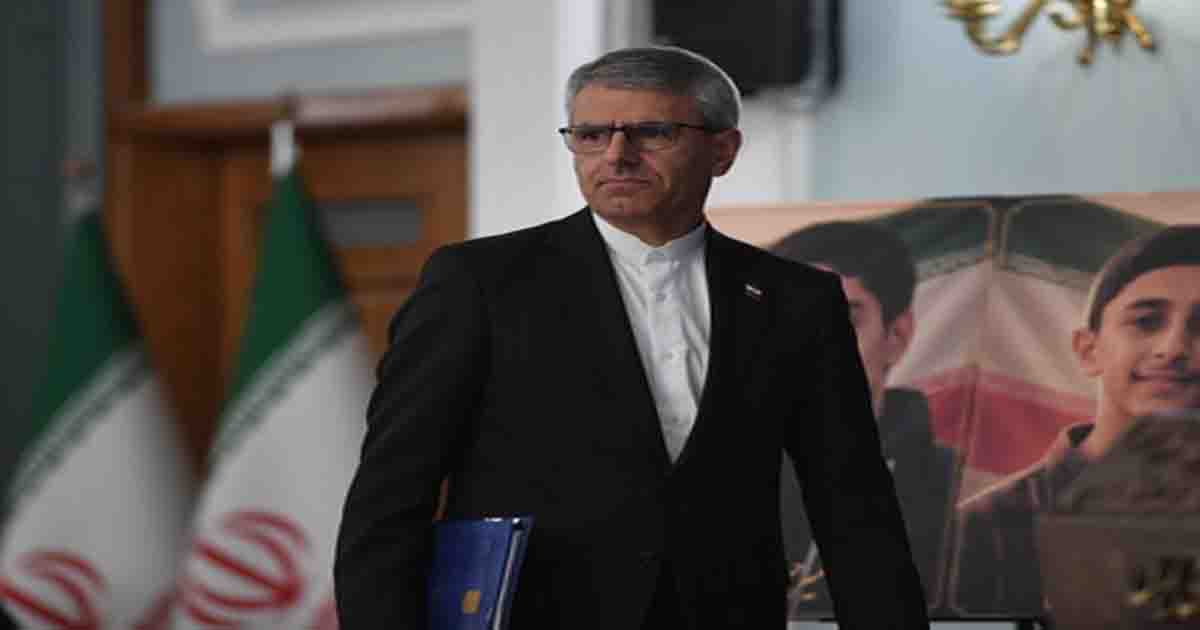
Iran signalled that it could reopen the Strait of Hormuz and resume diplomatic negotiations within two days if the United States meets its demands, even as Washington and Tehran exchanged renewed warnings over potential military escalation.
Iran’s Foreign Ministry spokesman, Esmaeil Baghaei, said on Monday that Iran has reduced the period for implementing the seven-day plan proposed by Tehran in September to two days, in good faith.
He noted, “We have announced that if Iran’s demands are met, the possibility will exist to restore security to the Strait of Hormuz and start the negotiation process in a short period of time,” stressing that all these depend on the American side’s decision on how to proceed regarding the future of the process.
In tandem with the ministry’s announcement, Iran’s President Masoud Pezeshkian said Monday that his administration is committed to resolving challenges through dialogue, noting that Supreme Leader Mojtaba Khamenei has granted the government certain authorities to pursue diplomatic solutions.
He stressed that no one benefits from war, adding that the “enemies” will not be able to make Iran surrender.
Concurrently, Iran’s Foreign Minister Seyed Abbas Araghchi said consultations mediated by Qatar and Pakistan have become “extremely intensive,” involving frequent delegation visits, phone conversations and message exchanges.
Reaffirming Iran’s readiness for both diplomacy and defense, Araghchi warned that any further military escalation by Washington would draw a “far more bitter and severe” response.
The diplomatic maneuvers unfold amid mixed signals from Washington over its next move on Iran.
Tehran reportedly received a letter from US Vice President JD Vance on Thursday, sent at Trump’s direction, calling for the resumption of peace negotiations. Iran described the shift in Washington’s tone reflected in the letter as “a good sign.”
However, US President Donald Trump on Sunday again threatened to resume military action against Iran “at some point,” telling a campaign rally in Iowa that Washington would eventually have to “give them the hammer.”
He was reportedly urged by Israeli Prime Minister Benjamin Netanyahu in a Saturday phone call to strike Iran “immediately after the midterm elections.” US news outlet Axios reported that Trump preferred to allow negotiations to continue, an approach that has raised concerns for Netanyahu.
Also on Monday, US President Donald Trump said that Tehran wants to make a deal with Washington, and that an agreement could be reached. “They want to make a deal, and that could happen,” said the US president.
Underpinning the ongoing diplomatic maneuvers are concrete military preparations and escalating operational risks across the region.
A senior Iranian commander said on Monday that over 30 million Iranians are receiving general military training to defend the country if needed.
The military mobilisation followed a Saturday statement from Iran’s Supreme Leader Mojtaba Khamenei instructing senior military commanders to ensure that any threat from the “enemies,” regardless of its nature or scale, would be met with an “immediate and effective” response, without geographical limitations.
On the US side, the Wall Street Journal reported that senior US military officials briefed Trump on Thursday on possible options regarding Iran. The United States had also reportedly urged several Gulf countries to prepare for a possible brief but intense military campaign against Iran following the midterm elections.
Amid mounting military preparations, tensions in the Strait of Hormuz have escalated rapidly. The navy of Iran’s Army announced Monday that a “violating” oil tanker caught fire after hitting naval mines in a forbidden region east of the Strait of Hormuz, adding that the vessel had turned off its navigation systems.
Separately, the navy of the Islamic Revolution Guard Corps said 11 oil tankers have caught fire or sunk in the strait over the past nine days, following a “demonstrative visit” to the strait by US Central Command chief Brad Cooper on October 25.

The United States attacked Iran’s strategic Qeshm Island in the Strait of Hormuz, The Wall Street Journal reported, citing US officials.
The attacks, carried out on Monday (local time), were the latest in “a series of limited strikes Washington has secretly carried out against the country in recent weeks as President Trump touted the possibility of a diplomatic deal,” the report said.
The United States has been conducting smaller-scale strikes against Iran for several weeks, with explosions reported on social media around Qeshm Island on Monday, according to the report.
Some US officials described the attacks as defensive operations aimed at preventing Iran from freely attacking commercial vessels in the Strait of Hormuz, reports Xinhua news agency.
Unlike earlier in the conflict, the United States has not publicly announced the attacks, the report said. Washington has deliberately kept the campaign under wraps to avoid signalling any intention of resuming major combat operations, one US official was quoted as saying.
Trump said that he was “in no rush” to decide whether to resume military action against Iran. “One way or the other, we will do something, but there is no rush. We crippled them financially. They have no money, no gasoline, and their people are getting very tired of it,” he said in a phone interview with Axios on Monday.
The US midterm elections are seen as a turning point for Trump as he decides whether to launch a major bombing campaign against Iran to try to bring the conflict to an end, Axios reported.
It added that the president appears to be pursuing two tracks simultaneously, allowing diplomatic efforts to continue while preparing to resume military action if he determines that a deal is out of reach.
“Oil Prices are dropping like a rock, down almost 10 US dollars a barrel, a record, because people feel that there will not be a war with Iran. Iran wants a settlement as soon as possible. It could happen,” Trump wrote Monday in a post on Truth Social.
Iranian officials have warned that any new attack would trigger an unrestrained response. Iranian President Masoud Pezeshkian, however, said Tehran remained willing to continue negotiations, Iran’s official news agency IRNA reported.

NCP’s Umesh Patil flags concerns over fielding of candidates, choice of office bearers in case of merger with NCP-SP

The Uniform Civil Code (UCC) is not actually a ‘Uniform Civil Code’, but a ‘Control Code’ by the government: Abu Asim Azmi

‘An Abdul will now become a leader in UP’, says Owaisi after victory of Democratic candidate Abdul El-Sayed in US

3 arrested for fraud in the name of investment in Mumbai share trading

Encroachment removal drive completed in Borivali East, 27 commercial units demolished.

Rahul, Cong ecosystem want to force regime change: BJP after Neha Bora praises B’desh Gen-Z protest

Attack on democratic rights: INDIA Bloc leaders on detentions of anti-ECI protestors

BJP pays tribute to ex-President Abdul Kalam, recalls his enduring influence on generations of India’s youth

INDIA bloc begins protest march against ECI

Congress trying to protect 3 crore Bangladeshi infiltrators in voter list: HM Shah
-

 Crime4 years ago
Class 10 student jumps to death in Jaipur
-

 Maharashtra2 years ago
Mumbai Local Train Update: Central Railway’s New Timetable Comes Into Effect; Check Full List Of Revised Timings & Stations
-

 Maharashtra2 years ago
Mumbai To Go Toll-Free Tonight! Maharashtra Govt Announces Complete Toll Waiver For Light Motor Vehicles At All 5 Entry Points Of City
-

 Maharashtra2 years ago
False photo of Imtiaz Jaleel’s rally, exposing the fooling conspiracy
-

 National News2 years ago
Ministry of Railways rolls out Special Drive 4.0 with focus on digitisation, cleanliness, inclusiveness and grievance redressal
-

 Maharashtra2 years ago
Maharashtra Elections 2024: Mumbai Metro & BEST Services Extended Till Midnight On Voting Day
-

 National News2 years ago
J&K: 4 Jawans Killed, 28 Injured After Bus Carrying BSF Personnel For Poll Duty Falls Into Gorge In Budgam; Terrifying Visuals Surface
-

 Crime2 years ago
Baba Siddique Murder: Mumbai Police Unable To Get Lawrence Bishnoi Custody Due To Home Ministry Order, Says Report