
Business
UPI clocks highest ever single-day payments of Rs 1.02 lakh crore as GST rate cuts spur demand


New Delhi, Oct 23: Finance Minister Nirmala Sitharaman highlighted on Thursday that the unified payments interface (UPI) platform processed 754 million payments worth Rs 1.02 lakh crore on October 18, marking the highest single-day tally, as consumer demand surged due to the GST rate cuts.
During the three-day period between Dhanteras and Diwali, the average UPI volumes stood at 736.9 million — higher than 647.46 million in the corresponding period a month ago, the Finance Minister said.
“It has been a cracker of a Diwali for retailers this year as GST rate cuts have boosted consumption, enabling the middle class to add more items to their shopping bags this festive season,” she observed.
From lab-grown diamonds to casual wear and products to adorn homes, both mass and premium segments of the market picked up, Sitharaman remarked.
She pointed out that the roll-out of Goods and Services Tax (GST) 2.0 has injected fresh momentum into India’s growth story by enhancing household purchasing power, easing business operations, and simplifying tax administration.
“By rationalising slabs and lowering rates across a range of consumer goods, the reform has delivered tangible savings for households, freeing up disposable income and helping stimulate demand,” the Finance Minister added.
According to the Confederation of All India Traders (CAIT), Diwali sales soared to an all-time high of Rs 6.05 lakh this year.
This marks a 25 per cent jump over the 2024 festive sales of Rs 4.25 lakh crore from the Navratri to Diwali period and is the highest-ever sales in India’s trading history, according to Research and Trade Development Society, the research wing of CAIT.
Mainline retail accounted for nearly 85 per cent of total sales, indicating a strong revival of the brick-and-mortar market, the survey showed.
The reduction in GST rates across key consumer and retail categories such as confectionery, home decor, footwear, and ready-made garments, consumer durables and daily use items significantly improved price competitiveness and increased purchase momentum.
About 72 per cent of surveyed traders reported higher sales volumes directly attributable to reduced GST, according to the survey.
Consumers expressed greater satisfaction with stable prices amid festive demand, aiding consumption continuity post-Diwali.
The non-corporate and non-agricultural sector has emerged as a central pillar of India’s growth, driven by 9 crore small businesses, crores of small manufacturing units and the largest base of consumers.


Mumbai, May 20: Gold and silver prices declined sharply on Wednesday, with both precious metals falling over 1 per cent amid rising concerns over higher US interest rates.
On the Multi Commodity Exchange (MCX), gold futures (June 5) declined as much as 0.7 per cent or Rs 1,121 to hit an intraday low of Rs 1,57,959 as of 11:17 am. The yellow metal was trading at Rs 1,58,369, down 0.45 per cent or Rs 711. It touched an intraday high of Rs 1,60,378, rising 0.81 per cent or Rs 1,298, according to the exchange.
Meanwhile, silver futures (July 3) also witnessed selling pressure, slipping 1.21 per cent, or Rs 3,269, to Rs 2,66,850, its intraday low so far. The white metal was trading at Rs 2,68,970, down 0.43 per cent or Rs 1,149. It recorded an intraday high of Rs 2,69,605, lower by 0.19 per cent or Rs 514.
Earlier in the day, gold and silver opened on the MCX at Rs 1,58,974 and Rs 2,67,230, respectively.
In the international market as well, precious metals were trading lower. COMEX gold declined 0.49 per cent to $4,462 per ounce, while COMEX silver slipped 0.17 per cent to $73.868 per ounce.
According to commodity market experts, gold prices remained under pressure as investors assessed rising inflation risks and the possibility of higher US interest rates.
They noted that geopolitical tensions also continued to weigh on sentiment after US President Donald Trump warned that Washington could resume strikes on Iran within “two or three days” if Tehran failed to accept Washington’s peace terms.
The ongoing conflict has disrupted shipping through the Strait of Hormuz, pushing crude oil prices higher and intensifying global inflationary pressures.
Analysts added that rising inflation concerns have reduced expectations of US Federal Reserve rate cuts while increasing speculation around possible rate hikes later this year.
For silver, experts said the metal has additionally erased recent gains that were supported by optimism around AI-linked stocks and rising demand from data-centre infrastructure expansion.
Meanwhile, domestic stock markets opened lower on Wednesday, with benchmark indices Sensex and Nifty trading in negative territory during early trade.
Business
Petrol Crosses ₹107 In Mumbai After Second Fuel Price Hike In A Week Amid Iran Conflict; Diesel Rises To ₹94

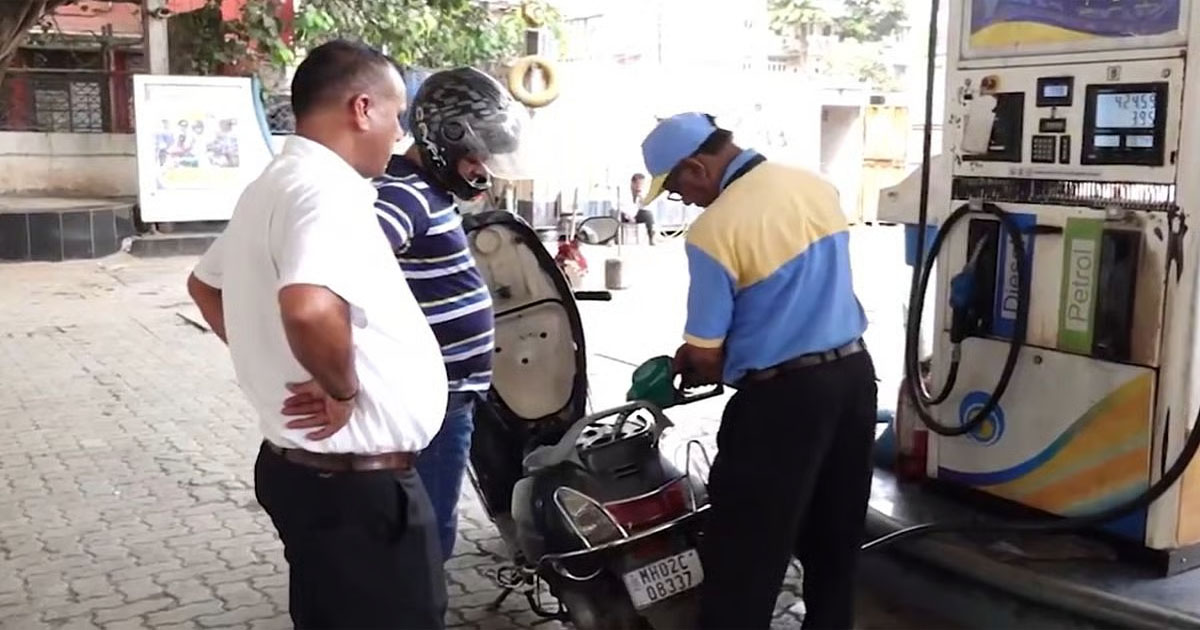
Mumbai: Residents of Mumbai are facing another increase in fuel prices after oil marketing companies on Tuesday raised petrol and diesel rates for the second time within a week amid rising global crude oil prices linked to the ongoing Iran conflict. With the latest revision, petrol prices in Mumbai have climbed by 91 paise to Rs 107.59 per litre, while diesel has become costlier by 94 paise and is now retailing at Rs 94.08 per litre.
The latest increase comes just three days after fuel prices were raised by Rs 3 per litre on Friday, majorly increasing transportation and commuting costs for Mumbaikars already dealing with inflationary pressure. The fresh hike is largely driven by the sharp surge in international crude oil prices due to tensions in West Asia, particularly disruptions linked to the conflict involving Iran.
According to data released by the Petroleum Planning and Analysis Cell under the Petroleum Ministry, the average price of India’s crude oil basket has jumped from USD 69.01 per barrel in February 2026 to USD 110.73 per barrel as of May 15, an increase of over 60 per cent in less than three months.
The situation has been worsened by disruptions in cargo movement through the Strait of Hormuz, through which a major share of India’s crude oil imports traditionally passes. India imports more than 85 per cent of its crude oil requirements, making domestic fuel prices highly sensitive to global market fluctuations.
Mumbai, being one of the country’s largest metropolitan and commercial hubs, is likely to feel the impact more sharply due to its heavy dependence on road transport, logistics and daily commuting.
Taxi operators, app-based cab drivers and transporters have already started expressing concern over the rising operational costs. The repeated hikes are also expected to affect prices of essential goods and services, as transportation expenses rise across the supply chain.
Another factor contributing to the price rise is the weakening of the Indian rupee against the US dollar. With the rupee reportedly touching around 96 against the dollar, oil imports have become more expensive for Indian refiners and oil companies.
Despite the earlier Rs 3 increase, oil marketing companies were reportedly still facing losses after maintaining older fuel rates for nearly 10 weeks amid continuously rising global crude prices. It is also speculated that if geopolitical tensions in West Asia continue or escalate further, Mumbai and other major Indian cities could witness additional fuel price increases in the coming weeks.
Business
Panic Buying In Palghar Amid Fuel Shortage Rumours: Long Queue Seen At Petrol Pump Along Mumbai-Ahmedabad Highway
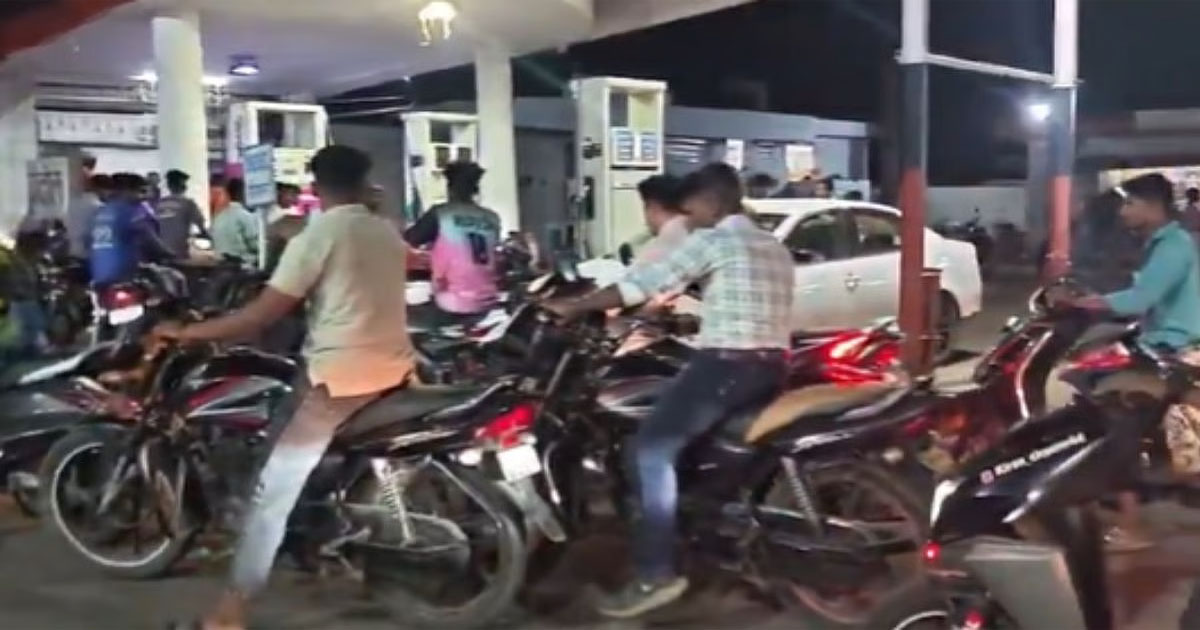
Palghar: Long queues of vehicles, especially two-wheelers, were seen at petrol pumps along the Mumbai-Ahmedabad National Highway amid rumours of a fuel shortage. The motorists claimed that they were waiting for more than an hour to refill their vehicles.
the scenes were captured at the Asian Petrol Pump in Charoti, where long queues of vehicles stretched outside the fuel station as residents feared limited fuel availability. Not just this, the report also claimed that several petrol pumps across Palghar district reportedly witnessed similar crowds, with panic buying increasing after rumours of fuel supply disruptions.
Meanwhile, the alleged rumours triggered people amid Prime Minister Narendra Modi’s recent appeal to citizens to reduce fuel consumption and adopt sustainable practices to help the country manage global economic disruptions.
Earlier on May 15, a similar scene was witnessed along the Maharashtra-Gujarat border, where long queues of vehicles were seen at several petrol pumps, as people rushed to fill petrol and diesel before the revised fuel rates came into effect. Visuals showed all kinds of vehicles, including trucks, cars, motorcycles and other commercial vehicles, lined up outside fuel stations, leading to heavy rush and congestion near the pumps.
Meanwhile, a similar incident was reported in Akola, where a scuffle broke out among farmers at a petrol pump over alleged fuel unavailability. Visuals showed several men fighting while standing in a crowded queue at the fuel station.
On May 10, PM Modi appealed to people to increasingly use public transport systems, including metro services, and adopt environmentally responsible practices to reduce pressure on fuel consumption and foreign exchange outflows.

Virar Citizens Protest Demolition Drive In Arnala; Police Block Lal Bawta March, Sit-in Held On Road

Gold, silver prices fall over 1 pc amid rising US inflation concerns

PM Modi gifts ‘Melody’ to Giorgia Meloni, revives viral ‘Melodi’ moment

Mumbai Shocker! 40-Year-Old Man Allegedly Molests Minor Boy In Agripada; Hunt On For Absconding Accused

A comprehensive action plan has been submitted to the central government for immediate and effective drainage of rainwater accumulated in low-lying areas : Amit Satyam

Maharashtra Shock: 22-Year-Old Arrested For Exploiting & Blackmailing Multiple Women In Kolhapur; Love Jihad Angle Suspected

Google to invest up to $40 billion in Anthropic amid global AI race

27 Years After Gangster Sadiq Kalia’s Encounter By Daya Nayak, His Nephew Arrested For Alleged Revenge Killing In Mumbai

Chembur Police Arrest Four For Trying To Sell Elephant Tusks Worth ₹3.5 Crore; Forest Department Confirms Seizure

India, New Zealand set to sign FTA for improved market access on April 27
-

 Crime4 years ago
Class 10 student jumps to death in Jaipur
-

 Maharashtra2 years ago
Mumbai Local Train Update: Central Railway’s New Timetable Comes Into Effect; Check Full List Of Revised Timings & Stations
-

 Maharashtra2 years ago
Mumbai To Go Toll-Free Tonight! Maharashtra Govt Announces Complete Toll Waiver For Light Motor Vehicles At All 5 Entry Points Of City
-

 Maharashtra2 years ago
False photo of Imtiaz Jaleel’s rally, exposing the fooling conspiracy
-

 National News2 years ago
Ministry of Railways rolls out Special Drive 4.0 with focus on digitisation, cleanliness, inclusiveness and grievance redressal
-

 Maharashtra2 years ago
Maharashtra Elections 2024: Mumbai Metro & BEST Services Extended Till Midnight On Voting Day
-

 National News2 years ago
J&K: 4 Jawans Killed, 28 Injured After Bus Carrying BSF Personnel For Poll Duty Falls Into Gorge In Budgam; Terrifying Visuals Surface
-

 Crime2 years ago
Baba Siddique Murder: Mumbai Police Unable To Get Lawrence Bishnoi Custody Due To Home Ministry Order, Says Report