
International News
UNSC raps Pak, poses tough questions concerning J&K terror attack: Reports

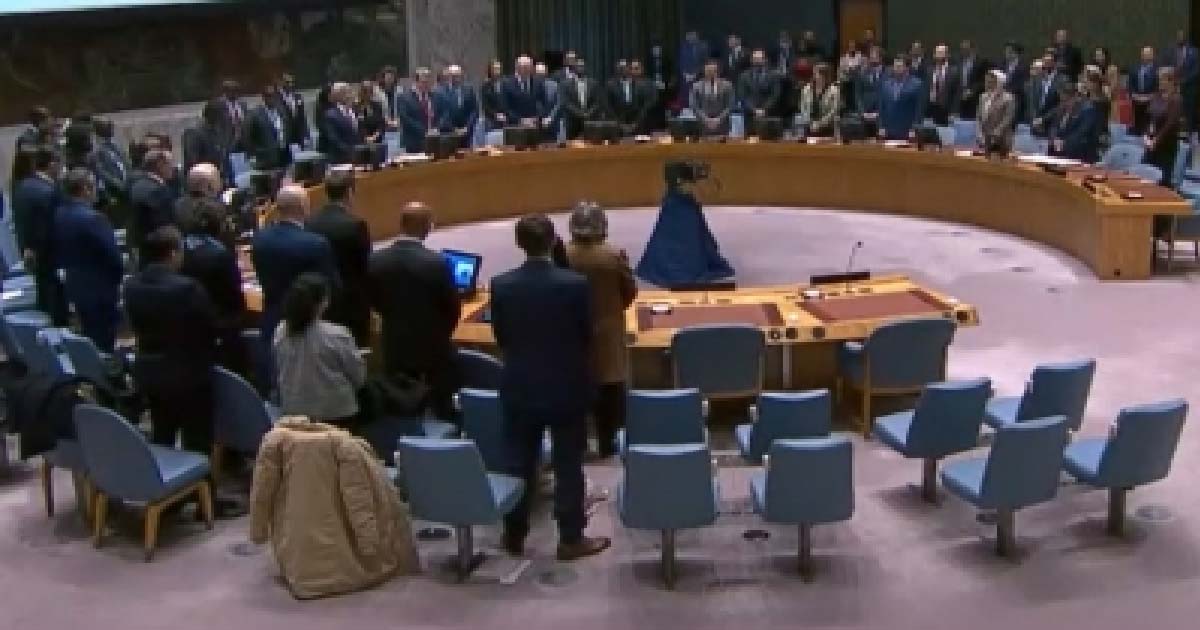
United Nations, May 6: The United Nations Security Council (UNSC) has pulled up Pakistan and asked tough questions concerning the terror attack in Jammu and Kashmir’s Pahalgam at its closed session amid the escalating tensions between New Delhi and Islamabad, reports said.
The members slammed Islamabad and questioned Pakistan-based Lashkar-e-Taiba’s involvement in the Pahalgam attack, which killed 26 people.
Though Pakistan claimed that the meeting largely served and achieved the objectives of the UNSC’s meeting, reports showed that it flopped miserably.
In the meeting, which was called at the request of Pakistan’s Permanent Representative Asim Iftikhar Ahmad, he claimed that his country was not involved in the terror attack.
Though the session was a closed consultation and had no official records, the UNSC members called for dialogue and restraint to resolve the issues.
After the meeting on Monday, UNSC President Evangelos Sekeris told reporters, “The Security Council is always helpful in such efforts” to de-escalate. It is the responsibility of the Council. It was a productive and helpful meeting. Since the meeting was a closed consultation, its proceedings are secret without official records.”
Assistant Secretary-General Mohamed Khaled Khiari, who briefed the meeting, said all want de-escalation. Russia’s Deputy Permanent Representative Anna Evstigneeva, who attended the meeting, said, “We hope for de-escalation”.
Secretary-General Antonio Guterres said the situation was at a “boiling point” and asked the two countries to “step back from the brink”.
“It is also essential — especially at this critical hour — to avoid a military confrontation that could easily spin out of control,” he said.
Condemning “strongly” the terrorist massacre of 26 people in Pahalgam last month, he said, “I understand the raw feelings following the awful terror attack”.
Notably, The Resistance Front (TRF), an affiliate of the Pakistan-based Lashkar-e-Taiba, claimed responsibility for the terrorist attack, in which 25 Indians and one Nepalese national were killed.

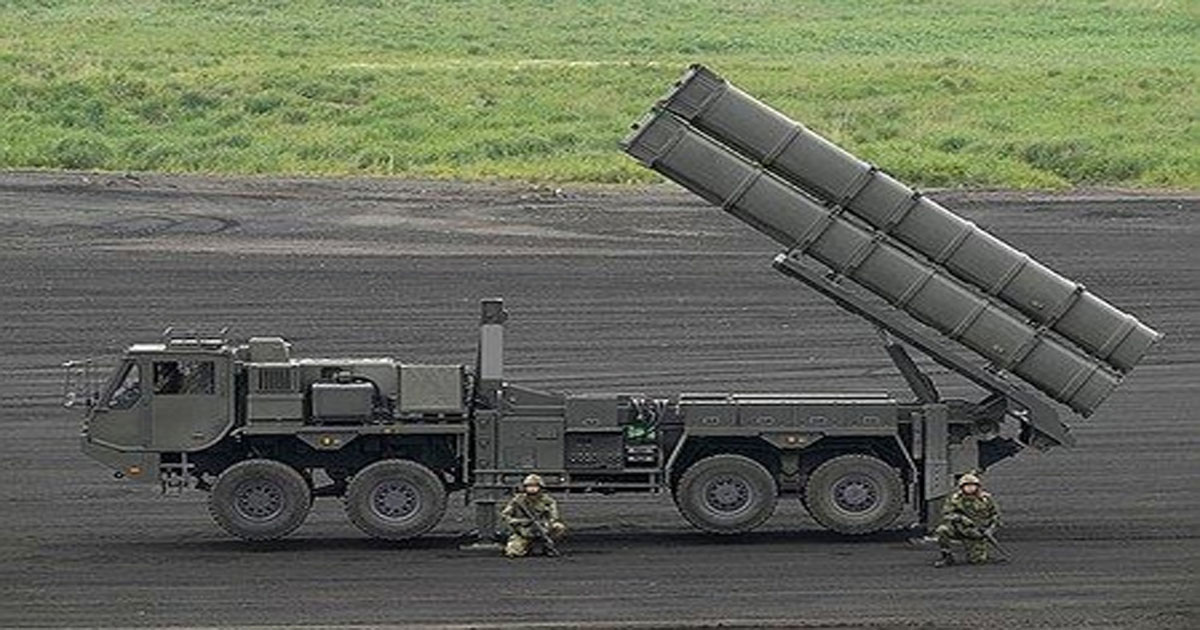
Tokyo, March 31: Japan’s Defence Ministry said on Tuesday that long-range missiles with counterstrike capabilities have been brought into service for the first time at two Ground Self-Defense Force (GSDF) bases in the country, a move that has sparked domestic opposition.
The deployment of the missiles at Camp Kengun in Kumamoto Prefecture, southwestern Japan, and Camp Fuji in Shizuoka Prefecture, central Japan, marks a significant shift from the country’s long-standing exclusively defence-oriented policy under its war-renouncing Constitution, reports Xinhua, quoting Kyodo News.
Camp Kengun has been equipped with a ground-launched version of the upgraded Type 12 land-to-ship guided missile that can fly about 1,000 kilometres, far exceeding Japan’s territorial boundaries and widely seen as having clear offensive capabilities.
Meanwhile, hyper velocity gliding projectiles have been equipped at a training unit at Camp Fuji. Designed for island defence, the deployed model has a range of several hundred kilometres, with the ministry working to upgrade it to around 2,000 kilometres.
Kyodo News noted that “enemy base strike capability” refers to Japan’s ability to launch counterstrikes against adversary bases before actual damage occurs, if it determines that an attack is imminent. However, analysts warn that misjudgments could risk violating international law by constituting a preemptive strike.
Atsushi Koketsu, emeritus professor at Yamaguchi University in Japan, told Xinhua that while the government frames the capability as a means of strengthening deterrence, it “clearly goes beyond the scope of self-defence.”
On Tuesday, local residents in Kumamoto staged protests near Camp Kengun, holding placards reading “Oppose deployment” and “No missiles needed,” Kyodo News reported.
Protesters expressed concern that the deployment could turn the area into a potential military target, and have repeatedly called on the defence ministry to hold public briefings, which have yet to take place, the report said.
Separately, more than a dozen citizen representatives met with defence ministry officials in Tokyo on Monday, urging the government to halt its military expansion measures, including the missile deployment in Kumamoto. Participants criticised officials for providing vague responses and frequently avoiding transparency.
Citizen representative Kujirai said after the meeting that the government’s replies followed a “routine pattern,” increasingly citing “confidentiality” as a pretext when declining to answer specific questions. He also criticised Prime Minister Sanae Takaichi’s push to “make Japan strong and wealthy,” arguing it amounts to large-scale military expansion without adequate public accountability. “This is a misinterpretation of the citizens’ demands and a very dangerous stance,” he said.
Another representative, Akira Saito, told Xinhua that the government officials’ response remained very limited. Going forward, in addition to directly questioning Takaichi at the parliamentary level, “it is crucial to continuously expand and amplify our voices through civic movements,” he said.
International News
Attacks on healthcare in Lebanon surge as humanitarian access tightens in Gaza: UN

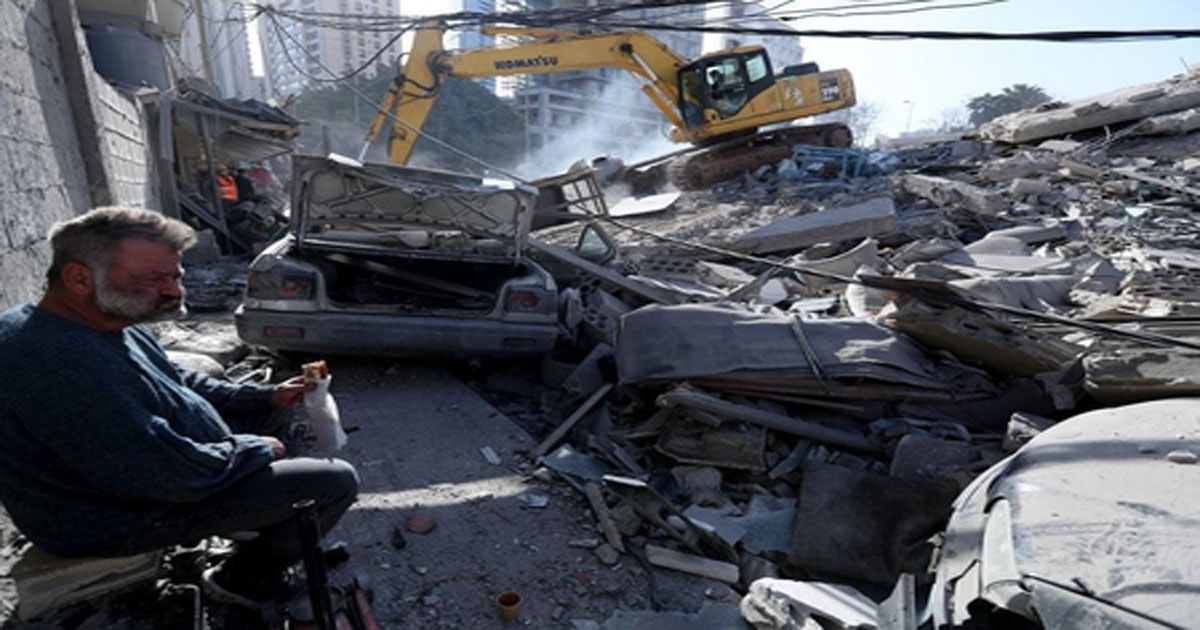
United Nations, March 31: Amid Middle East hostilities, UN humanitarians pointed to a sharp rise in attacks on healthcare in Lebanon and growing obstacles for humanitarian operations in the Gaza Strip.
The UN Office for the Coordination of Humanitarian Affairs (OCHA) said attacks on healthcare facilities, ambulances and medical personnel in Lebanon have risen at an alarming rate.
The World Health Organization (WHO) reported seven incidents over the weekend alone, which killed at least nine health workers while they were on duty.
In southern Lebanon, OCHA said that strikes hit ambulances, including vehicles transporting casualties from an earlier attack in the town of Kfar Sir in Nabatieh governorate.
Since the escalation began, OCHA said 87 attacks on healthcare have been recorded, killing 52 health workers and injuring 126 others.
In a joint statement issued over the weekend, UN’s deputy special coordinator and humanitarian coordinator for Lebanon Imran Riza and WHO Representative in Lebanon Abdinasir Abubakar called for the protection of health workers and first responders, saying that medical personnel and facilities must never be targeted.
The office said Lebanese authorities reported that at least 96 people were killed over the weekend, bringing the total number of people killed since the escalation began to 1,238, with more than 3,500 injured.
OCHA said that despite deteriorating security conditions, the office and its partners continue to work closely with the government to reach people in need. WHO and health partners have provided more than 33,500 medical consultations to displaced people and delivered essential medicines to over 22,500 people.
In the occupied Palestinian territories, OCHA said lethal attacks affecting civilians continue in both Gaza and the West Bank, as restrictions on humanitarian operations continue to mount.
Over the weekend, airstrikes and shelling reportedly hit residential areas in Gaza. In the West Bank, OCHA recorded reports of fatal shootings by Israeli forces and attacks linked to Israeli settlers.
International non-governmental organizations (NGOs) said Monday they intend to file a petition of appeal with Israeli High Court of Justice challenging a new Israeli NGO registration system, which they say further restricts their ability to operate in Israel and the occupied Palestinian territories.
OCHA said that international NGOs play a critical role in the humanitarian response, collectively delivering around $1 billion in assistance each year in the territories. The new registration requirements are among several measures undermining people’s access to humanitarian services.
The office called on Israeli authorities to facilitate the rapid and unimpeded passage of humanitarian relief, to reverse policies that obstruct humanitarian operations, and to ensure that humanitarian organisations can operate in line with humanitarian principles, Xinhua news agency reported.
OCHA said that civilians must always be protected and that in the context of law enforcement, lethal force must be used only as a last resort. Perpetrators of unlawful attacks must be held to account.
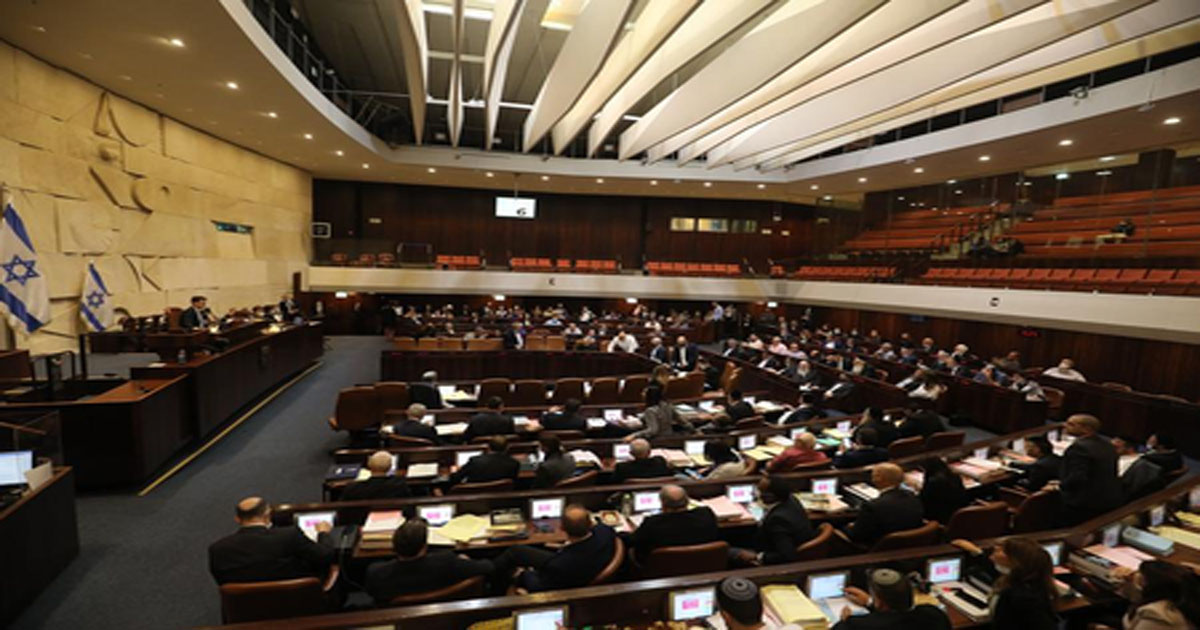
Tel Aviv, March 31: Israel’s parliament has passed a controversial law making death by hanging the default punishment for Palestinians convicted in military courts of carrying out deadly attacks, fulfilling a key demand of Prime Minister Benjamin Netanyahu’s far-right allies.
The legislation, passed on Monday (local time), has drawn sharp international criticism, with opponents describing it as discriminatory and unconstitutional. Critics argue that the law creates a differential legal framework based on identity and raises serious human rights concerns.
Under the new law, the death penalty would apply to Israelis convicted of murder only if the act was committed with the intent of “ending Israel’s existence”, a clause that critics say effectively ensures that the punishment will disproportionately target Palestinians while excluding Jewish Israelis accused of similar offences.
The law also mandates that executions be carried out within 90 days of sentencing, allowing only limited grounds for delay and providing no provision for clemency.
Courts retain the option to impose life imprisonment instead, but only under undefined “special circumstances”.
Israel had abolished the death penalty for murder in 1954. The only execution carried out following a civilian trial was that of Adolf Eichmann in 1962, a key figure involved in the Holocaust.
Although military courts in the occupied West Bank already had the authority to award death sentences to Palestinian convicts, such a punishment had never been implemented.
The legislation was strongly backed by far-right National Security Minister Itamar Ben-Gvir, who drew attention ahead of the vote by wearing lapel pins shaped like a noose.
After the bill was approved, various opposition parties, such as Yair Lapid’s Yesh Atid, the Arab-majority Hadash–Ta’al, and the left-leaning Democrats party, alongside multiple human rights organisations, declared their intention to challenge the law in the High Court of Justice.
“This is an immoral law that contradicts the foundational values of the State of Israel as a Jewish and democratic state, and the provisions of international law that Israel has undertaken to uphold,” Democrats MK Gilad Kariv, a member of the Knesset National Security Committee and one of the law’s strongest critics, was quoted as saying by the Times of Israel.

Japan deploys long-range counterstrike missiles for 1st time despite opposition

Mumbai: Fraudster targeting senior citizens at ATM centers arrested; 25 ATM cards and cash recovered.

Mumbai Metro 2B Inauguration On April 3: Know Route & How Corridor Will Help Ease Congestion & Improve Connectivity Between Chembur & Mankhurd

Gold loans top retail credit market in India, account for 36 pc volume: Report

Mumbai Local Train Tragedy: Fatal Accident Reported At Bhayandar Station’s Platform No 1 – Disturbing Video Surfaces

Married Mumbai Woman Mocked In Andheri Society Over ‘Lift Kissing’ CCTV Video, Files Police Complaint

LPG Crisis In Maharashtra: Cyber Crime On Rise Amid Shortage, 2 Women Lose ₹4 Lakh In ‘Gas Update’ Online Scam In Kalyan-Dombivli

Mahayoti’s big gift to the people of Mumbai… Now there is no tax for houses up to 500 square feet, the Municipal Corporation has increased this limit to 700 square feet.

Rashmika Mandanna-Vijay Deverakonda Wedding: Virosh Turn Modern Day Prince & Princess For Their Dreamy Sangeet Ceremony

Dhurandhar 2 Box Office Collection Day 1: Ranveer Singh Starrer Takes An Exceptional Opening; Crosses ₹100 Crore Mark
-

 Crime4 years ago
Class 10 student jumps to death in Jaipur
-

 Maharashtra1 year ago
Mumbai Local Train Update: Central Railway’s New Timetable Comes Into Effect; Check Full List Of Revised Timings & Stations
-

 Maharashtra1 year ago
Mumbai To Go Toll-Free Tonight! Maharashtra Govt Announces Complete Toll Waiver For Light Motor Vehicles At All 5 Entry Points Of City
-

 Maharashtra2 years ago
False photo of Imtiaz Jaleel’s rally, exposing the fooling conspiracy
-

 National News1 year ago
Ministry of Railways rolls out Special Drive 4.0 with focus on digitisation, cleanliness, inclusiveness and grievance redressal
-

 Maharashtra1 year ago
Maharashtra Elections 2024: Mumbai Metro & BEST Services Extended Till Midnight On Voting Day
-

 National News2 years ago
J&K: 4 Jawans Killed, 28 Injured After Bus Carrying BSF Personnel For Poll Duty Falls Into Gorge In Budgam; Terrifying Visuals Surface
-

 Crime1 year ago
Baba Siddique Murder: Mumbai Police Unable To Get Lawrence Bishnoi Custody Due To Home Ministry Order, Says Report