
National News
United over Rahul Gandhi, Bihar Oppn finds an issue to counter BJP

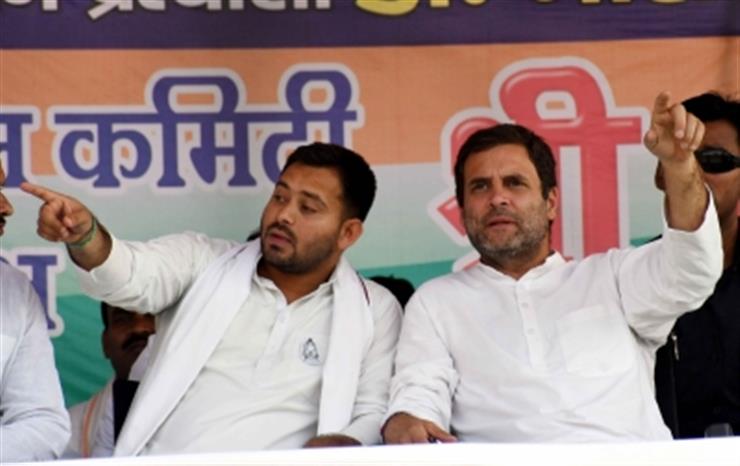
Congress leader Rahul Gandhi’s disqualification from the Lok Sabha following the Surat court verdict that convicted him in a criminal defamation case has given new hope to Opposition parties in Bihar to corner the BJP.
The fear of central probe agencies is being considered as the reason for this “unprecedented” unity among opposition parties over the Rahul Gandhi issue. The family of Bihar’s former Chief Minister Lalu Prasad Yadav is continuously under the radar of central agencies.
When asked about Rahul Gandhi’s conviction and disqualification, Deputy Chief Minister Tejashwi Yadav said: “We are watching everything, and will answer (the BJP) in the best way when the time comes.”
With his remarks, Tejashwi made it a loud and clear message that he is ready to fight against BJP.
“BJP keeps the Opposition busy in court cases and uses the Hindutva card to win elections. But now, Rahul Gandhi has given a clear message that they (Opposition) do not fear court cases and investigation agencies. And, the Hindutva card of the BJP will be countered through the caste combination,” a Congress leader said.
Bihar is crucial for the BJP in the 2024 Lok Sabha elections as this is the state where BJP is not in power. Moreover, the caste equation is also not ideal for the BJP in the state.
When it comes to the caste equation here, Muslims have more than 18 per cent vote share followed by Yadavs (16 per cent), Kushwaha (12 per cent) and upper castes comprising Bhumihar, Brahmins, Rajput and Kayasth have around 15 per cent votes. These are estimated figures and the exact numbers would be revealed after the completion of caste-based census in the state, which is currently underway and the state government has announced that it will be completed in 11 months.
The political parties in the state strongly believe that caste equations are the only weapon to counter the Hindutva politics of the BJP.
Muslims and Yadavs are the core voters of RJD and Luv (Kurmi having 4 per cent voters)-Kush (Kushwaha having around 12 per cent voters) is the core voters of JD-U. On the other hand, the upper caste voters in the state are tilted towards BJP. Now, as BJP leaders are aware that they cannot easily penetrate into the MY (Muslim-Yadav) equation of the RJD, they go for weakening the JD-U vote bank. The voters of Kushwaha community are on the target list of the saffron party in the state.
The way Upendra Kushwaha formed a new party – Rashtriya Lok Janata Dal (RLJD) – by leaving the JD-U and now openly supporting the BJP is an indication that the BJP would hurt the Kushwaha vote bank of Nitish Kumar.
Upendra Kushwaha has openly announced that “there is no leader who could challenge Narendra Modi in the 2024 Lok Sabha elections”.
To strenghthen its hold over the Kushwaha community, the saffron party has even made Samrat Chaudhary – who belongs to Kushwaha community – the party’s state president. The idea is to give a message to the voters of Kushwaha community that Nitish Kumar is not their leader.
To counter the strategy of BJP, JD-U prepared jumbo jet teams, keeping in mind the caste equations.
The national team comprising 32 leaders is led by party’s national President Lalan Singh, while the state team with 252 leaders in it is being led by party’s state chief Umesh Kushwaha.
JD-U, to keep Kushwaha vote bank intact, has given the responsibility to two Kushwaha leaders to lead Rohtas and Muzaffarpur districts. The idea is to make up for the loss of Kushwaha votes after Upendra Kushwaha left the party. Further, it has appointed Mangni Lal Mandal as national vice president of the party to make a substitute of Upendra Kushwaha.
JD-U has given space to five leaders of Muslim community in the national team. Besides them, four leaders belong to upper castes, eight leaders of Lav-Kush community, two leaders of Yadav community, six leaders of EBC and two Mahadalit leaders are also given space in the national team.
Bihar has 40 Lok Sabha seats and will play crucial role in deciding the fate of Prime Minister Narendra Modi.
In 2019, BJP-led NDA that also had support of JD-U in Bihar had won 39 out of 40 Lok Sabha seats. However, the situation has changed now; in 2024, BJP is in the Opposition and has to contest against an alliance of seven parties headed by Nitish Kumar. It has to face the might of Lalu Prasad Yadav, Jitan Ram Manjhi and left parties leaders. After the ‘Bharat Jodo Yatra’ and the issue of Rahul Gandhi’s disqualification has given new life to the Congress in Bihar.
This is the reason why BJP’s ‘Chanakya’ and Union Home Minister Amit Shah is making frequent visits to Bihar to strengthen his party’s position.
Reacting on Shah’s visit, RJD senior leader and MLA Bhai Virendra said: “The visit of Amit Shah will not have much impact in Bihar. People are aware that the BJP means ‘Badka Jhutha Party’. It had come into power with many promises and none of them were fulfilled. Unemployment, price rise, farmers issues still haunt the state and the country… The Mahagathbandhan will win all 40 seats in the state.”


The Directorate of Enforcement (ED) arrested Baneet Singh Talwar, son of late Harminder Singh, on Friday, under the Prevention of Money Laundering Act (PMLA) in a major case linked to large-scale narcotics smuggling, an official statement said on Saturday.
Talwar was produced before the Special Judge (PMLA), Tis Hazari Courts (West District), on Friday and remanded to five days of ED custody, the ED press note said.
The ED probe was initiated on the basis of an FIR registered by the National Investigation Agency (NIA) under the Unlawful Activities (Prevention) Act, 1967, the Narcotic Drugs and Psychotropic Substances Act, 1985, and the Indian Penal Code against Harpreet Singh Talwar and others.
The NIA has already filed six charge sheets, alleging a conspiracy with an international drug-smuggling syndicate operating from Afghanistan, Pakistan and Dubai under the mastermind Vitaysh Koser alias Raju Dubai, a wanted accused, along with Pakistani ISI agents and Afghan nationals, the statement said.
Investigations have revealed that proceeds amounting to Rs 76 crore generated from the illegal sale of narcotics were transferred via hawala to Afghanistan and used for funding terrorist activities.
Financial probes by the ED have so far identified proceeds of crime totalling Rs 89 crore arising from contraband smuggling, drug sale proceeds siphoned to Afghanistan through hawala channels, and goods received in kind.
Baneet Singh Talwar is brother of Harpreet Singh Talwar. Probe findings show that he continued to manage and operate business entities under the beneficial control of his brother even after the latter’s arrest by the NIA, it said.
He is alleged to have provided more than Rs 55 lakh to M/s Magent India, an entity controlled by Harpreet Singh Talwar and involved in narcotics smuggling.
Financial analysis has uncovered multiple instances of round-tripping of funds, with matching and mirror entries across different entities indicating a structured flow of proceeds of crime.
Baneet Singh is also accused of using cash deposits to finance the purchase of vehicles in the names of benami entities, which have already been seized by the ED, and of parking proceeds to acquire immovable properties whose benefits continue to be enjoyed by Harpreet Singh Talwar and his family.
The ED described the arrest as part of a whole-of-government approach to dismantle the drug-smuggling racket and the nexus involving narcotics trafficking, money laundering and hawala transactions. Further investigation is in progress.
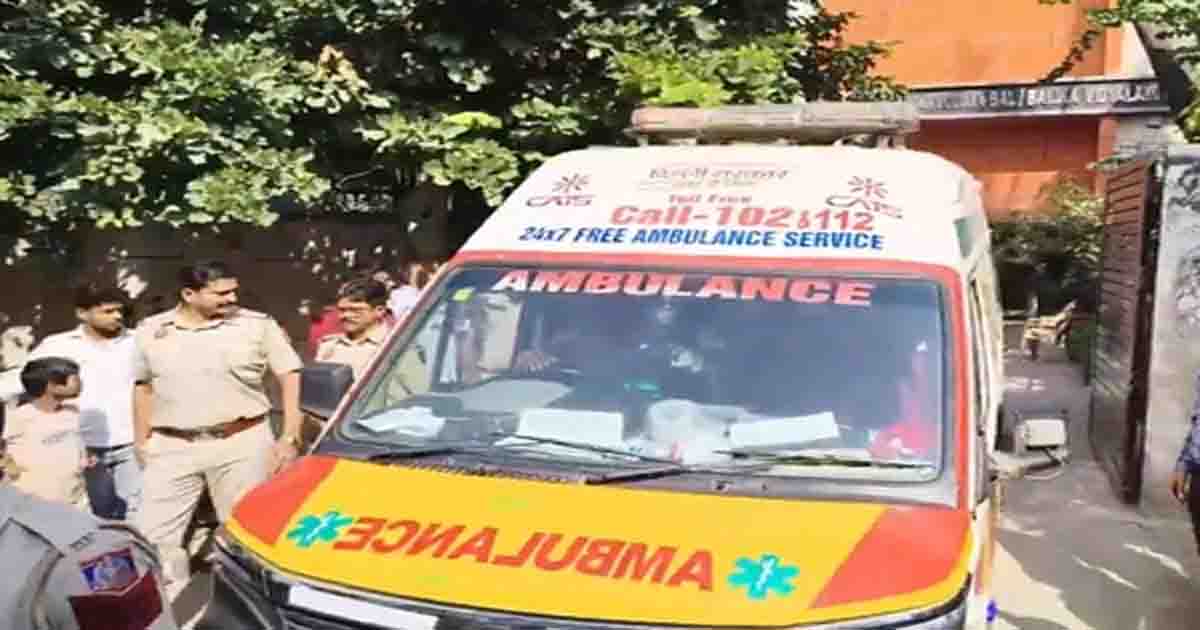
A Class 12 student died on Saturday after allegedly pouring an inflammable substance on herself and setting herself on fire at Sarvodaya Bal/Balika Vidyalaya in East Delhi Krishna Nagar area, officials said on Saturday.
The incident triggered panic among teachers and students on the school premises, prompting the authorities to initiate an investigation into the circumstances surrounding the student’s death.
Officials said certain suspicious items were reportedly found in the student’s school bag. However, the nature of these items has not yet been officially confirmed, and the police are examining the circumstances that led to the incident.
According to officials, a Police Control Room (PCR) call reporting a fire incident was received from the school located in the Krishna Nagar area of Delhi’s Shahdara district.
“Upon receipt of the information, police staff from PS Krishna Nagar promptly reached the spot, where an approximately 18-year-old female student of Class 12th was found in a burnt condition behind the school guard room,” officials said.
They further stated that some materials were recovered during the initial proceedings at the scene and from the deceased student’s school bag. These items are being examined as part of the investigation.
“During preliminary proceedings, certain materials were recovered from the spot and the deceased girl’s school bag,” they added.
The police said a Crime Team of the Delhi Police was called to the school to inspect the scene, examine the circumstances and collect relevant evidence that could help establish the sequence of events leading to the incident.
“The circumstances leading to the incident are being examined, and further enquiry is in progress,” the police said.
A fire brigade team and police personnel were also present at the school as authorities began investigating the incident.
The police are examining the available evidence and the materials recovered from the spot to determine the circumstances surrounding the student’s death.
The investigation is ongoing, and officials have not yet confirmed the nature of the suspicious items reportedly recovered from the student’s bag.
Further details are expected to emerge as the police continue their enquiry into the incident.
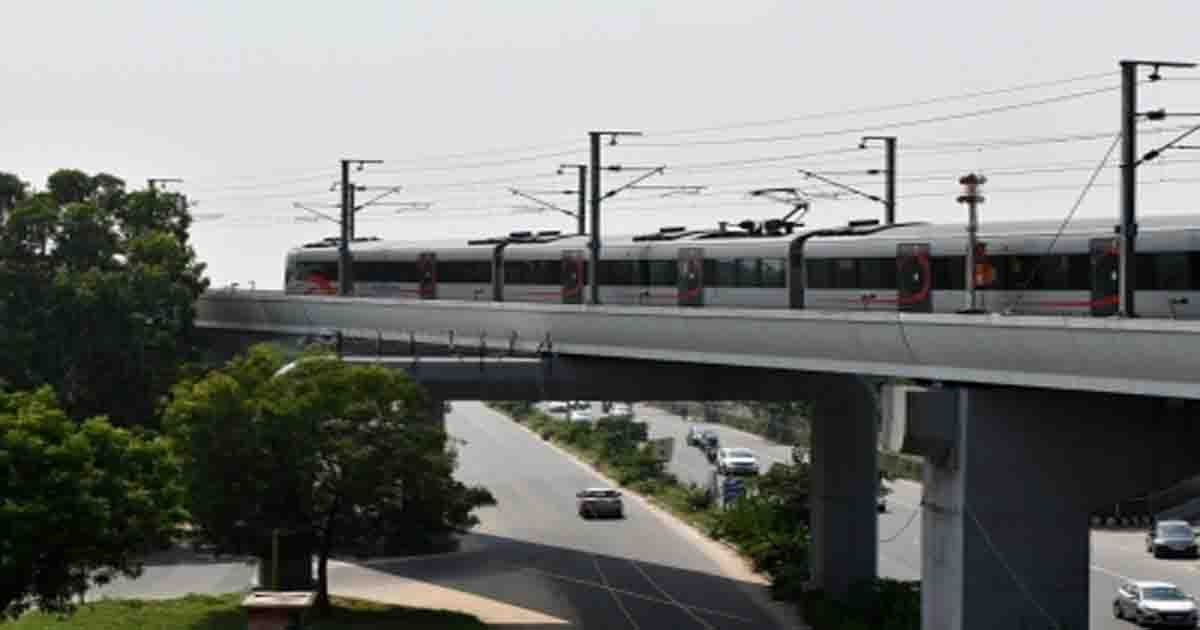
An FIR has been registered against unidentified persons after two posters against the government were found pasted inside a train on the Delhi Metro’s Airport Express Line, police said on Saturday.
The FIR was registered under Sections of the Delhi Prevention of Defacement of Public Property Act, 2007, and the Metro Railway (Operations and Maintenance) Act, 2002.
“The black-and-white posters raised various issues and listed nine claims about changes in the country over recent years. They also carried a QR code inviting people to join an online group,” police said.
Officials said that police seized the posters, and the Special Cell is also involved in the investigation.
This comes amid the anti-Election Commission of India (ECI) protests in the National Capital over the alleged irregularities in the Special Intensive Review (SIR) of electoral rolls.
Several Opposition parties, student activists, as well as the Cockroach Janata Party (CJP) organised protests across the city demanding a rollback of the SIR protest and resignation of Chief Election Commissioner (CEC) Gyanesh Kumar.
Meanwhile, the INDIA Bloc has scheduled a mega rally against ‘vote chori’ on November 1 in New Delhi.
All India Congress Committee General Secretary, K.C. Venugopal on Friday said the party held high-level meetings with senior leaders from Uttar Pradesh and Haryana to intensify mobilisation for the rally.
In a post on X, Venugopal said that he, along with Congress leader Priyanka Gandhi Vadra, met AICC in-charge for Uttar Pradesh Rajendra Pal Gautam, UP PCC president Aradhana Misra Mona and other senior leaders from the state to discuss strategies for building large-scale participation in the rally.
The November 1 rally is being projected as one of the largest mobilisations by the Opposition alliance in recent times, with a special focus on drawing participation from northern states.
The Congress has appealed to supporters and citizens concerned about democratic processes to join the march and the Ramleela Maidan gathering in large numbers.

ED arrests Baneet Singh Talwar in Rs 89 cr narcotics money laundering case

Class 12 student dies after setting herself on fire at Delhi school; police probe on

Hindu American parents push US teachers to rethink how Hinduism is taught

Maharashtra ATS arrests suspected Jaish-e-Mohammed associate in Mumbai Mahim area

‘Bigg Boss 20’: Rohit Shetty questions Lovepreet Gill, Scout’s closeness

Rahul, Cong ecosystem want to force regime change: BJP after Neha Bora praises B’desh Gen-Z protest

BJP pays tribute to ex-President Abdul Kalam, recalls his enduring influence on generations of India’s youth

Attack on democratic rights: INDIA Bloc leaders on detentions of anti-ECI protestors

INDIA bloc begins protest march against ECI

Maha Congress stages agitation against Gyanesh Kumar
-

 Crime4 years ago
Class 10 student jumps to death in Jaipur
-

 Maharashtra2 years ago
Mumbai Local Train Update: Central Railway’s New Timetable Comes Into Effect; Check Full List Of Revised Timings & Stations
-

 Maharashtra2 years ago
Mumbai To Go Toll-Free Tonight! Maharashtra Govt Announces Complete Toll Waiver For Light Motor Vehicles At All 5 Entry Points Of City
-

 Maharashtra2 years ago
False photo of Imtiaz Jaleel’s rally, exposing the fooling conspiracy
-

 National News2 years ago
Ministry of Railways rolls out Special Drive 4.0 with focus on digitisation, cleanliness, inclusiveness and grievance redressal
-

 Maharashtra2 years ago
Maharashtra Elections 2024: Mumbai Metro & BEST Services Extended Till Midnight On Voting Day
-

 National News2 years ago
J&K: 4 Jawans Killed, 28 Injured After Bus Carrying BSF Personnel For Poll Duty Falls Into Gorge In Budgam; Terrifying Visuals Surface
-

 Crime2 years ago
Baba Siddique Murder: Mumbai Police Unable To Get Lawrence Bishnoi Custody Due To Home Ministry Order, Says Report