
Business
India’s core sector growth surges to 10.9 pc in Oct

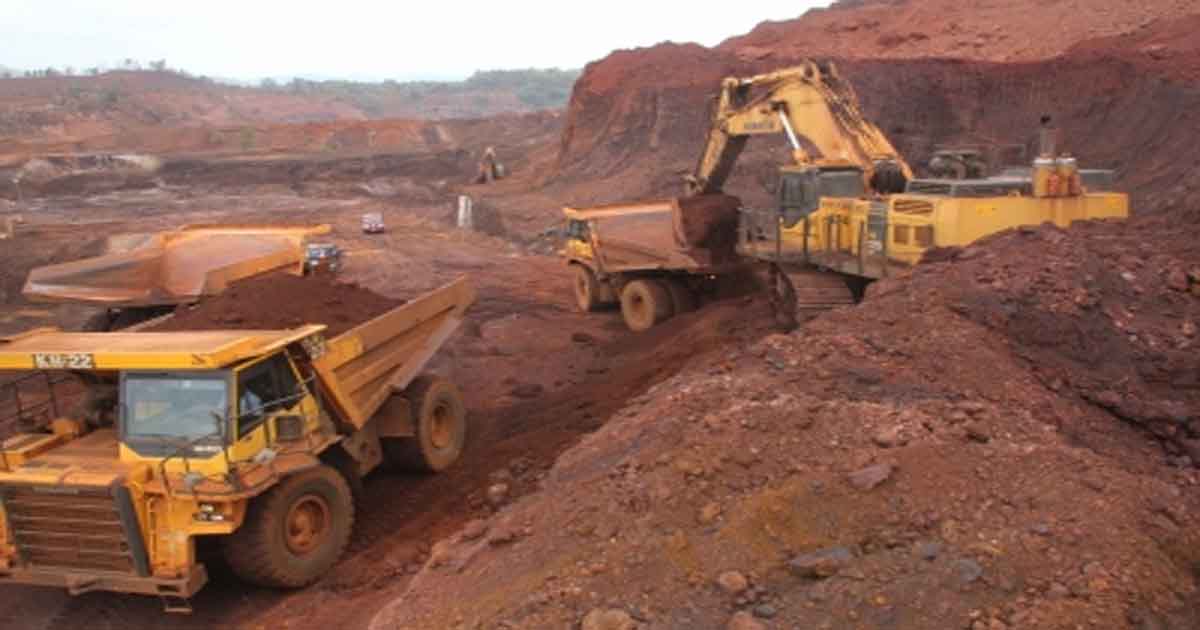
The growth rate of India’s core sector industries surged to 10.9 per cent in October this year, compared to the same month of the previous year, driven by the strong performance of the iron ore, coal, electricity, cement and steel sectors, according to figures released by the Ministry of Commerce and Industry on Friday.
The production of iron ore surged by as much as 26.4 per cent, while coal production went up by 23.1 per cent, and electricity generation grew by 21.6 per cent during October.
The cement sector clocked a robust growth of 15.4 per cent while steel production was up 7.3 per cent during the month, as demand stayed buoyant due to large government investments in big-ticket infrastructure projects such as highways, ports and railways.
The output of refinery products increased by 7.3 per cent during the month as demand for petroleum goods rose due to the higher level of economic activity. However, fertilisers, natural gas, and crude oil witnessed negative growth in October.
The final index for the month of September 2026 has been revised to 8.2 per cent, according to an official statement.
The cumulative growth rate of the index of core industries (ICI) during April-October 2026 works out to 6 per cent compared to the correspond figure of 2.3 per cent in the same period of the previous year.
The Office of Economic Adviser, Department for Promotion of Industry and Internal Trade (DPIIT) released the revised series of Index of Core Industries (ICI) with Base Year 2022-23 for the first time in July this year. The new series has replaced the earlier series of ICI with Base Year 2011- 12.
Owing to intensive use of iron ore in the production process, and its contribution to industrial development, it has been included in the list of core industries as a new item in the revised series of the index of core industries (ICI). Accordingly, the number of core industries increased from eight to nine in the new series.


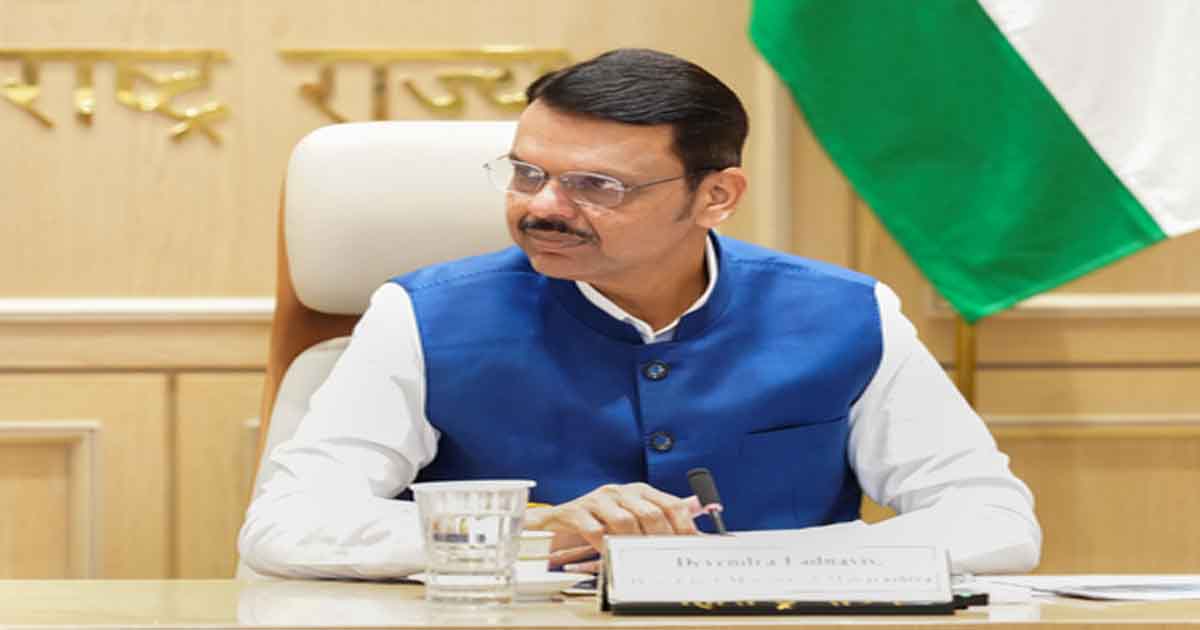
Chief Minister Devendra Fadnavis said on Friday said that long-term planning, proper land management, timely execution of infrastructure projects, and boosting agricultural productivity are vital to Maharashtra’s all-round development.
He added that the state government is actively implementing a range of development initiatives to achieve these goals.
He made the remarks during a review meeting on Maharashtra’s development projects at his official residence, held with NITI Aayog Vice Chairman Ashok Kumar Lahiri.
Thanking NITI Aayog, the Chief Minister noted that the think tank has consistently provided guidance and practical advice to the state, expressing hope for continued support going forward. He reiterated that the administration is working in mission mode to complete development works at a set pace.
During the meeting, special emphasis was placed on long-term planning for land acquisition. Lahiri urged authorities to resolve pending issues related to land acquisition, infrastructure, and agriculture on priority.
Observing that land development and sound management can generate substantial revenue, Lahiri emphasised acquiring land needed for future development projects in advance and managing it effectively.
Land available at lower costs today can become far more valuable in the future, he said, calling for an ambitious land acquisition policy framed with future generations in mind.
He also expressed satisfaction with the progress of the state government’s flagship Vadhavan Port project.
Earlier, CM Fadnavis presented the state’s long-term development roadmap—anchored around the goal of making Maharashtra a $5-trillion economy by 2047, aligned with Viksit Bharat 2047.
He further stated that the government has laid focus on developing Mumbai Metropolitan Region (MMR) into a major economic engine, with NITI Aayog partnering on the city-region growth strategy to scale MMR’s economy from $140 billion toward $300 billion by 2030 and $1 trillion long-term.
A special development plan under post-Naxal development initiatives is being implemented to turn Gadchiroli into India’s first major integrated steel hub, alongside investments in infrastructure, education, healthcare, and employment.

Indian equity benchmarks traded sharply lower in early deals on Friday, tracking weakness across global markets and profit booking after the recent rally.
Sensex dropped as much as 615 points or 0.74 per cent to an intraday low of 82,403 in early trade.
Nifty 50 declined around 170 points or 0.66 per cent to 25,345 by 9:17 am.
The selling pressure was widespread across sectors with Nifty Metal emerging as the biggest laggard and declining 1.8 per cent.
Nifty PSU Bank declined 0.97 per cent, while Nifty Realty and Oil & Gas indices shed 0.79 per cent each.
In contrast, information technology (IT) shares bucked the trend as the Nifty IT index rose 0.76 per cent.
Among Nifty constituents, Tata Steel, JSW Steel, Titan, Shriram Finance, Larsen & Toubro, Hindalco, SBI and Bajaj Finserv were among top losers.
Analysts attributed the weakness to a combination of global risk aversion and domestic profit taking following the sharp surge in Indian equities this month.
However, they said India’s market remains among the strongest-performing globally this month supported by sustained foreign institutional investor (FII) inflows and robust corporate earnings.
Experts expect near-term volatility to persist amid global market uncertainty, though they believe strong foreign inflows and earnings momentum could continue to support domestic equities.
In addition, concerns surrounding the artificial intelligence (AI) investment theme continued to weigh on global markets after another round of declines on Wall Street. The Nasdaq fell 2.25 per cent overnight, while S&P 500 also declined nearly 2 per cent.
Investor sentiment was also affected by developments surrounding AI company Anthropic’s market debut. Although the stock surged after listing, concerns about elevated valuations in the AI space triggered broader selling across technology-linked markets globally.
Additionally, Asian markets showed negative trend as major indices — Japan’s Nikkei, Hong Kong’s Hang Seng and South Korea’s KOSPI — declined up to 5 per cent.

India’s upcoming wedding season is expected to generate an estimated Rs 7.5 lakh crore in economic activity between November 21 and December 15 with around 52 lakh marriages scheduled during the period, the Confederation of All India Traders (CAIT) said on Thursday.
The traders’ body said the wedding season — which concludes before the commencement of Kharmas (Malmas) — in mid-December is likely to emerge as one of the largest drivers of consumption-led growth, supporting businesses across retail trade, manufacturing, hospitality, logistics and services.
CAIT Secretary General Praveen Khandelwal said the scale of projected spending demonstrates how weddings have evolved into a major economic ecosystem supporting traders, manufacturers, MSMEs, artisans and service providers across the country.
According to CAIT’s estimates, Delhi-NCR alone is expected to host nearly 5 lakh weddings, generating business worth about Rs 2.5 lakh crore and reinforcing its position as one of the country’s largest wedding-related commercial centres.
CAIT said wedding-related expenditure is expected to benefit a wide range of sectors, including jewellery, apparel, electronics, furniture, food products, event management, hospitality, transportation, photography and decoration services.
Of the projected Rs 7.5 lakh crore business, around Rs 4 lakh crore or 54 per cent is estimated to come from goods and retail purchases, while services are expected to account for the remaining Rs 3.45 lakh crore.
Jewellery and precious metals are projected to contribute the largest share with spending estimated at Rs 1.2 lakh crore, followed by garments and apparel at Rs 90,000 crore.
Other major categories include gifts and wedding accessories, groceries and food supplies, electronics, sweets and confectionery, furniture and household goods.
On the services side, catering is expected to generate business worth Rs 75,000 crore, while marriage venues, banquet halls and hotels could account for another Rs 60,000 crore.
CAIT also highlighted the rapid expansion of India’s wedding economy in recent years.
Wedding-related business was estimated at Rs 3.75 lakh crore in 2022, rising to Rs 4.74 lakh crore in 2023 and Rs 5.90 lakh crore in 2024.
Notably, the figure was estimated at Rs 6.50 lakh crore in 2025 before increasing to the projected Rs 7.50 lakh crore this year.
CAIT also projected that the wedding season could generate around 1.25 crore temporary, seasonal and part-time employment opportunities across sectors such as catering, decoration, photography, transport, hospitality, beauty services and event management.

India’s core sector growth surges to 10.9 pc in Oct

Maha CM stresses land management, farm productivity at NITI Aayog meeting

ED raids 12 locations in Kolkata in money laundering probe against TMC ex-MLA Sabyasachi Dutta

PM Modi speaks to CM Yogi; Amit Shah, Rajnath Singh condole his mother demise

Siraj not selected in India XI because of his name, says Cong MP; BJP calls remark ‘hateful’

Congress trying to protect 3 crore Bangladeshi infiltrators in voter list: HM Shah

Red Fort car blast probe exposes blueprint for spread of terror modules across India

Trump flags Iran targets as talks continue

‘Conspiracy, not accident’: NCP on Ajit Pawar death

BJP, Shiv Sena slam Mallikarjun Kharge for terming Diwali ‘Khushiyon ka Eid’
-

 Crime4 years ago
Class 10 student jumps to death in Jaipur
-

 Maharashtra2 years ago
Mumbai Local Train Update: Central Railway’s New Timetable Comes Into Effect; Check Full List Of Revised Timings & Stations
-

 Maharashtra2 years ago
Mumbai To Go Toll-Free Tonight! Maharashtra Govt Announces Complete Toll Waiver For Light Motor Vehicles At All 5 Entry Points Of City
-

 Maharashtra2 years ago
False photo of Imtiaz Jaleel’s rally, exposing the fooling conspiracy
-

 National News2 years ago
Ministry of Railways rolls out Special Drive 4.0 with focus on digitisation, cleanliness, inclusiveness and grievance redressal
-

 Maharashtra2 years ago
Maharashtra Elections 2024: Mumbai Metro & BEST Services Extended Till Midnight On Voting Day
-

 National News2 years ago
J&K: 4 Jawans Killed, 28 Injured After Bus Carrying BSF Personnel For Poll Duty Falls Into Gorge In Budgam; Terrifying Visuals Surface
-

 Crime2 years ago
Baba Siddique Murder: Mumbai Police Unable To Get Lawrence Bishnoi Custody Due To Home Ministry Order, Says Report