
National News
Union Budget fails to address core issues of inflation, unemployment: Jamaat-e-Islami Hind

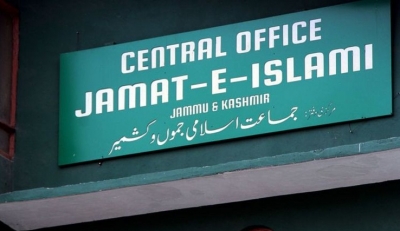
After the Union Budget for 2023-24 was presented by Finance Minister Nirmala Sitharaman on Wednesday, the Jamaat-e-Islami Hind (JIH) has criticised the budget for not addressing two important core issues of price rise and unemployment.
Issuing a statement, the JIH said, “The Budget falls short of addressing the core issues of inflation (price rise) and severe unemployment. The Budget has been insensitive to the call of the Prime Minister of ‘Sab ka Vikas’ as it has reduced the budgetary allocation to the minorities from Rs 5,000 crore to around Rs 3,000 crore.”
It said that the decision to reduce the tax on income above Rs 5 crore from 37 per cent to 25 per cent is not correct. This will further increase wealth inequality as pointed out by the latest Oxfam report. Overall the Budget appears to cater to the interest of corporates and not the informal economy and the common man.
However, the JIH further said that the budget can be credited to being focused on economic growth and fiscal consolidation bridging the negative gap between revenue and expenditure. Now, those having income up to Rs 7 lakh per annum will not have to pay any income tax. This change will help the salaried class. One more positive is the boost given to capital expenditure which is now budgeted at Rs 13.7 lakh crore i.e. 4.5 per cent of GDP. This will help in easing the funding of infrastructure projects.
“Despite these positives in the Budget, it appears as if it is aimed at benefiting only one class of society while ignoring the country’s poor and those living in rural areas. While the push for fiscal prudence is good, it has squeezed government expenditures even further resulting in a decrease in allocation for the social sector. For example, the MGNREGA scheme allocation has been slashed by 33 per cent when unemployment is historically high,” the JIH added.
“Another worrying aspect of the Budget is that various subsidies have been cut. For example, food subsidy has been cut by Rs 90,000 crore, fertilizer subsidy by Rs 50,000 crore and petroleum subsidy by Rs 6,900 crore. Also, Rs 9,255 crore remained unspent in the health sector and Rs 4,297 crore remained unused in the education sector. This non-utilization of allocated funds happened at a time when both these sectors required special focus in the post-pandemic era,”, the JIH said.

National News
Madhya Pradesh gears up for NEET-UG 2026; CM directs officials to ensure ‘zero-error’ conduct of exam

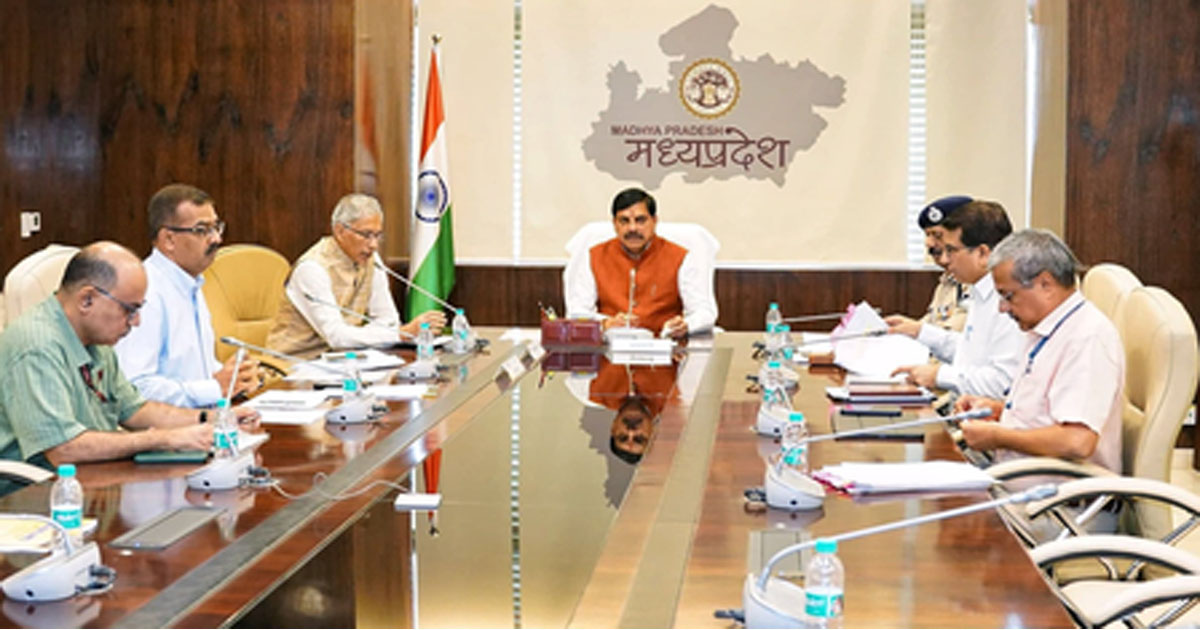
Bhopal, June 16: With the National Eligibility-cum-Entrance Test (NEET-UG) 2026 scheduled to be held on June 21, Madhya Pradesh Chief Minister Mohan Yadav on Tuesday reviewed the state’s preparedness and directed government officials to ensure a “transparent, secure and error-free conduct” of the examination across all examination centres.
Chairing a high-level review meeting via video conference from the Mantralaya, the Chief Minister said the credibility of a national-level examination depends on meticulous planning and flawless execution.
“NEET is a national-level examination. All preparations must be completed in advance and the examination should be conducted with complete transparency. There should be no lapses or errors at any stage,” Chief Minister Yadav said in statement.
The examination will be conducted at 283 centres spread across 30 districts of the state, with Indore, Bhopal, Gwalior and Jabalpur accounting for the largest number of centres.
The examination will be held from 2 to 5:15 p.m. on June 21 in pen-and-paper mode.
Against the backdrop of heightened scrutiny of competitive examinations in recent years, the Chief Minister directed government officials to strengthen security arrangements and ensure that biometric verification systems, CCTV cameras and jammers are installed at all examination centres by June 19.
He also ordered trial runs of the equipment a day before the examination.
The review meeting paid special attention to Jabalpur, where President Droupadi Murmu is scheduled to visit on the same day.
Chief Minister Yadav instructed district administration and police officials to formulate a detailed traffic management plan to ensure that candidates reach their examination centres without delays.
He also noted that the International Yoga Day programmes would coincide with the examination and said administrative arrangements should be made to prevent any disruption to students.
“No candidate should suffer because of transportation or traffic-related issues. If required, administrative and police officials should assist students in reaching examination centres through available government resources,” the Chief Minister said.
National News
‘7 MPs of SS(UBT) willing to switch sides’: Shiv Sena MLC amid growing buzz over ‘Operation Tiger’
Mumbai, June 16: Amid the buzz and speculation over ‘Operation Tiger’ intensifying in Maharashtra, suggesting more MPs and MLAs are ready to abandon the Uddhav Thackeray-led Shiv Sena camp, a startling claim from SS (Shinde camp) MLC Krupal Tumane has sent political temperatures soaring within the Opposition ranks.
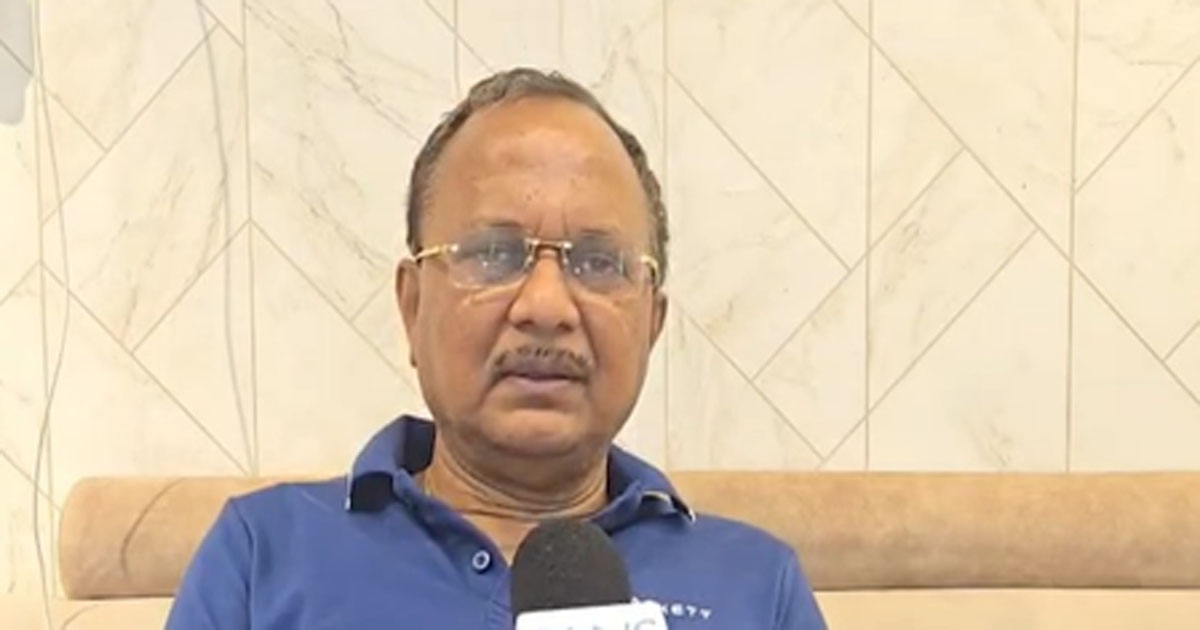
Krupal Tumane, speaking to media, said, “Out of nine MPs of SS(UBT), seven are willing to work under the leadership of Eknath Shinde. They want to work according to his policies and ensure development of their constituencies.”
“At least seven UBT MPs and 16 MLAs are in contact with us,” he said, emphasising the scale of “discontent and disgruntlement” within the Uddhav camp.
Tumane further stated that the “discussions” with them were in an advanced stage and the switchover may happen sooner rather than later.
The assertions by MLC Krupal Tumane come in the backdrop of heightened speculation of a fresh break-up in the Uddhav camp and how shifting loyalties could shake up the Bal Thackeray-founded party and ‘perennially’ alter the support bases of the two Shiv Sena factions in the state.
The speculations have, however, been refuted strongly by at least two Shiv Sena MPs, including Uddhav Thackeray’s staunch loyalist Sanjay Raut.
SS(UBT) MP Sanjay Raut has rubbished all speculations of ‘Operation Tiger’ and affirmed that the party remains “intact, united and strong”.
Voices of discontent and unease within the camp started surfacing over a recent meeting of the Sena MPs convened at ‘Matoshree’, the residence of Uddhav Thackeray.
Conflicting reports claimed that the informal meet was given a miss by most Sena Parliamentarians, and only a handful turned up. The party later, in a clarification, stated that all the MPs had joined the meeting, though some via virtual mode. This only gave strength to speculations that something was amiss within, as this marked a clear diversion from previous such meets.
Bhausaheb Wakchaure, another Shiv Sena(UBT) MP from Shirdi, dismissed the speculation as merely hearsay and stated that too much was being read into it, for stoking fresh turmoil in Maharashtra politics.
“I am with SS(UBT). These are just speculations; they have been going on for a year. I don’t know why they are going on,” he stated.
“Today, I am standing with UBT; I can’t say about tomorrow; I am not a soothsayer,” he said, giving fresh fodder for political watchers to interpret his remarks.

New Delhi, June 16: The government on Tuesday refuted media reports that it is pursuing a deep-sea energy pipeline, connecting Gujarat to Oman and other Gulf countries.
In a clarification, the Petroleum Ministry said it has noticed a series of media reports suggesting that the Government of India is actively pursuing a deep-sea energy pipeline, sometimes referred to as the Middle East-India Deepwater Pipeline (MEIDP), connecting Gujarat to Oman and other Gulf countries.
“The Ministry of Petroleum and Natural Gas wishes to categorically clarify that no such proposal is currently under consideration by this Ministry. There are no active discussions or negotiations with Oman or any other Gulf countries on this project at any level in this Ministry,” it said in a statement.
“This clarification is issued to put all speculation in this regard to rest,” added the ministry.
Meanwhile, the Malta-flagged LNG carrier DISHA, managed by a Shipping Corporation of India-led consortium, safely transited the Strait of Hormuz on Monday with a cargo of 62,370 metric tonnes of LNG bound for Dahej in Gujarat, and is likely to reach India on June 18.
The government said it remains in continuous coordination with the Ministry of External Affairs, Indian missions abroad, shipping companies, and other relevant stakeholders to ensure the safety and welfare of Indian seafarers and provide all assistance. Port operations across India remain normal, with no congestion reported.
The Directorate General of Shipping (DGS) has also advised shipping companies as well as maritime recruitment and placement agencies to restrict deployment of Indian seafarers to in the Middle East conflict areas until further orders, days after three Indian seafarers onboard MT Settebello were killed after the US military strike on the commercial vessel off the Oman coast.
DG Shipping, in a circular, said masters of vessels operating in or transiting through the Gulf region, including the Strait of Hormuz and adjoining waters, are advised to maintain heightened security awareness, closely monitor navigational warnings received and advisories issued from security agencies, and implement all applicable ship security measures and company security procedures.

Madhya Pradesh gears up for NEET-UG 2026; CM directs officials to ensure ‘zero-error’ conduct of exam

FIFA WC: When and where to watch Portugal vs DR Congo; know all details

Mumbai: BMC’s helpline ‘My BMC Marg System’ launched ahead of monsoon, special focus on filling potholes

Mumbai: Two accused arrested for staging a drama of jewellery theft worth over Rs 60 lakh in Andheri

Accused in Rs 2 crore Pune embezzlement case arrested in Nashik

Trump, Netanyahu hold phone talks after Iranian missile fire: Israeli state media

The Municipal Corporation and the Railway Administration should work together to make Mumbai flood-free, directs Standing Committee Chairman Prabhakar Shinde

Virar Citizens Protest Demolition Drive In Arnala; Police Block Lal Bawta March, Sit-in Held On Road

Indian equity markets trade higher as Iran-Israel tensions ease

Dangerous Love Triangle In Mira-Bhayandar: Youth Kidnapped, Brutally Beaten, & Burned With Cigarettes Over Affair With Same Girl
-

 Crime4 years ago
Class 10 student jumps to death in Jaipur
-

 Maharashtra2 years ago
Mumbai Local Train Update: Central Railway’s New Timetable Comes Into Effect; Check Full List Of Revised Timings & Stations
-

 Maharashtra2 years ago
Mumbai To Go Toll-Free Tonight! Maharashtra Govt Announces Complete Toll Waiver For Light Motor Vehicles At All 5 Entry Points Of City
-

 Maharashtra2 years ago
False photo of Imtiaz Jaleel’s rally, exposing the fooling conspiracy
-

 National News2 years ago
Ministry of Railways rolls out Special Drive 4.0 with focus on digitisation, cleanliness, inclusiveness and grievance redressal
-

 Maharashtra2 years ago
Maharashtra Elections 2024: Mumbai Metro & BEST Services Extended Till Midnight On Voting Day
-

 National News2 years ago
J&K: 4 Jawans Killed, 28 Injured After Bus Carrying BSF Personnel For Poll Duty Falls Into Gorge In Budgam; Terrifying Visuals Surface
-

 Crime2 years ago
Baba Siddique Murder: Mumbai Police Unable To Get Lawrence Bishnoi Custody Due To Home Ministry Order, Says Report