
General
Understanding Cauvery Water Dispute: A Century-Old Struggle Between Tamil Nadu & Karnataka

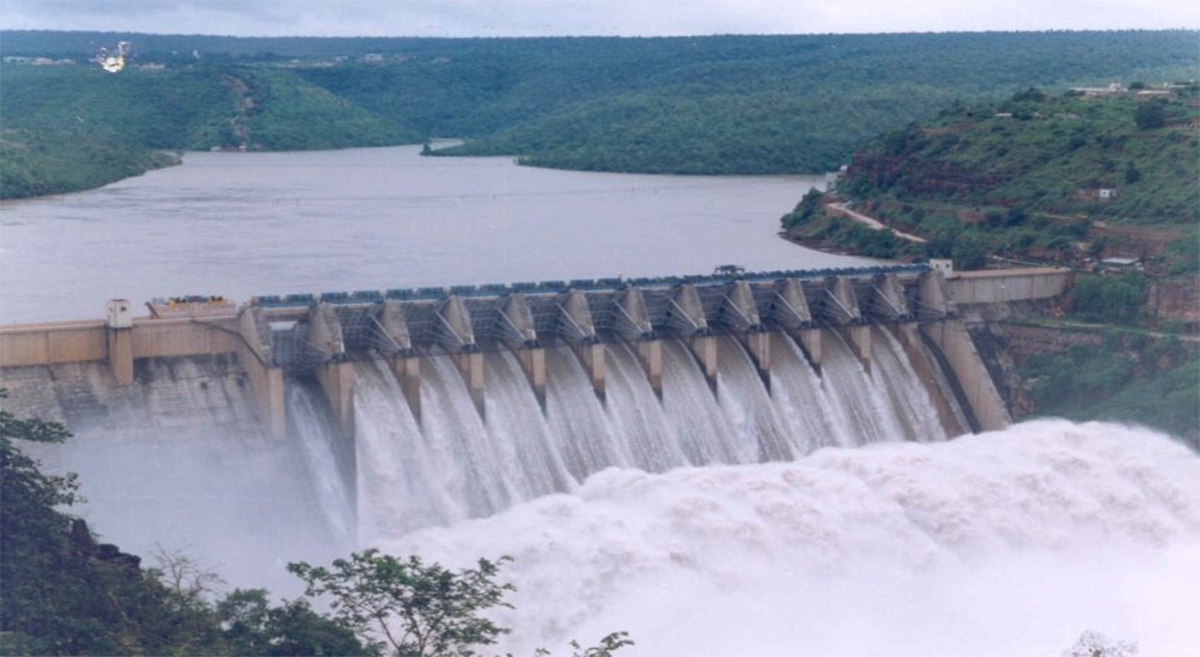
The Cauvery River, traversing the southern Indian states of Karnataka, Tamil Nadu, Kerala, and the Union Territory of Puducherry, has been at the center of one of the most heated water disputes. This enduring clash, referred to as the Cauvery water dispute, originates from historical accords and conflicting requirements.
In recent developments, this issue has resurfaced, causing significant turmoil in Karnataka. Kannada groups have launched protests throughout the state, disrupting normal life on numerous occasions. Similarly, Cauvery water plays a crucial role in sustaining Tamil Nadu’s farming community, especially during the cultivation of their ‘Kuruvai’ crop. Around 30 lakh acres of agricultural land in the Cauvery delta region rely on the river’s water for their farming endeavors.
Farmers from both Karnataka and Tamil Nadu have mobilised, advocating for the resolution of the Cauvery water-sharing dispute.
What reignited the controversy?
The recent dispute arose when Karnataka refused to comply with previously agreed-upon water release quotas. Tamil Nadu insisted on a release of 10,000 cusecs of water over a 15-day period, while Karnataka proposed a lower release of 8,000 cusecs for the same duration. Karnataka justified its stance by pointing to inadequate inflow caused by reduced rainfall in the Cauvery catchment area, including its source in Kodagu. The state government stated that from June to August, Kodagu experienced a rainfall deficit of 44%.
To assert its demand, Tamil Nadu approached the Supreme Court to ensure Karnataka’s release of 24,000 cubic feet per second (cusecs) of water from its reservoir. In response, Karnataka argued before the Supreme Court that Tamil Nadu had failed to acknowledge that 2023 constituted a “distressed water year,” not a “normal water year.”
Karnataka’s Deputy Chief Minister, DK Shivakumar, subsequently requested a reconsideration of this decision due to water scarcity issues in the Cauvery basin area since the onset of this year’s monsoon season. Consequently, the state formally wrote to the Cauvery Water Management Authority (CWMA), urging them to review the order to release 10,000 cusecs to Tamil Nadu.
Following discussions during a meeting held on Tuesday, the Cauvery Water Regulation Committee recommended that Karnataka initiate a release of 3,000 cusecs at Biligundlu, commencing from September 28th until October 15th.
History of the dispute
The Cauvery River, known as the “Ganges of the South,” holds immense importance as a crucial water source for the southern states. Its primary usage lies in irrigation, supporting the livelihoods of countless farmers.
This conflict has its origins in the colonial period, during which the British administration formulated agreements to distribute the river’s waters between the princely states of Mysore and Madras Presidency (present-day Karnataka and Tamil Nadu, respectively).
1892 Agreement: The 1892 Agreement between the State of Mysore and Madras pertained to the initiation of new irrigation projects along the river’s course. However, it did not hold the same significance as the 1924 agreement, which would eventually become the root cause of the dispute.
1924 Agreement: In 1910, Mysore proposed the construction of the Kanambadi dam on the Cauvery River. Concurrently, Madras also put forth an irrigation project on the same river. When Madras raised objections to the second phase of the Kanambadi project, it led to the intervention of the Indian government.
Initially, there was hope that the two states could reach a mutually acceptable agreement. However, when this proved unfeasible, a Court of Arbitration, presided over by Sir Henry Griffin, was appointed to address the matter.
Under Griffin’s supervision, an agreement was fashioned on February 18, 1924, intended to remain in effect for the subsequent 50 years. Comprising ten clauses, the 1924 agreement stipulated that, for at least the following five decades, Tamil Nadu and Puducherry would receive 75 percent of the Cauvery water allocation, while 23 percent would be allocated to Mysore, with the remaining share flowing into Kerala, then known as Travancore.
Dispute continues in independent India
Following the state reorganisation in 1956, Tamil Nadu obtained 75 percent of the Cauvery water allocation, which led to an expansion of its irrigated areas. However, the issues continued to persist.
To address the ongoing disputes, the Cauvery Water Disputes Tribunal (CWDT) was established in 1990 with the purpose of arbitrating the water-sharing matter. The tribunal issued its final order in 2007.
According to the tribunal’s ruling, Kerala received an allocation of 30 tmc (thousand million cubic feet), Karnataka was allotted 270 tmc, Tamil Nadu received 419 tmc, and Puducherry was granted 7 tmc.
On February 16, 2018, the Supreme Court issued a unanimous verdict that resulted in a reduction of Karnataka’s annual water releases from 192 TMC to 177.25 TMC, consequently diminishing Tamil Nadu’s water allocation as well.
In accordance with the court’s directives, the Cauvery Water Management Authority was established by the Central government on June 1, 2018, to enforce the judgment.
The present
On August 14, the Tamil Nadu government approached the Supreme Court, seeking its intervention to compel Karnataka to promptly release 24,000 cubic feet per second (cusecs) of water from its reservoirs.
Tamil Nadu urged the Court to instruct Karnataka to adhere to the release of 36.76 TMC of water, as mandated for September 2023 by the final award of the Cauvery Water Disputes Tribunal (CWDT) in 2007.
Karnataka argued that diminished rainfall in the Cauvery catchment area, encompassing regions in Kerala, had resulted in insufficient inflow into its reservoirs.
Chief Minister Siddaramaiah elucidated that historically, whenever there was an excess of water in the reservoirs, Karnataka willingly supplied it to Tamil Nadu. However, unfavorable conditions this year have left Karnataka unable to do so.
Upon reaching the court, the Supreme Court declined to interfere with the orders of the Cauvery Water Management Authority and Cauvery Water Regulation Committee.
These directives mandated Karnataka to maintain the release of 5,000 cusecs of water to Tamil Nadu.
On September 18, the Cauvery Water Management Authority reaffirmed the necessity for Karnataka to persist with the release of 5,000 cusecs (cubic feet per second) of water to Tamil Nadu, aligning with the prior order issued by the Cauvery Water Regulation Committee on September 12.
Contending Perspectives
The Karnataka government maintains that the terms of the 1924 agreement, which had a 50-year expiration date, should not be applicable to the current water distribution scenario.
Karnataka also argues that when the agreement was forged, Tamil Nadu was under British governance, while Karnataka was a princely state, potentially limiting its ability to effectively assert its interests.
In contrast, Tamil Nadu asserts that making fundamental alterations to the 1924 agreement would prove detrimental to both regions. Tamil Nadu contends that the original understanding during the negotiation of the agreement was for its clauses to be reviewed after 50 years rather than completely overhauled.


Mumbai: Yesterday (October 7, 2026), the ‘N’ Ward office of the Mumbai Municipal Corporation carried out a demolition drive targeting 28 structures in Ghatkopar (West) that were affected by the road-widening project between Jhunjhunwala College and the Andheri-Ghatkopar Link Road.
This demolition campaign was conducted under the supervision of Assistant Commissioner (‘N’ Ward) Jaydeep More.
Adequate police security was deployed alongside municipal officers and staff during the operation.
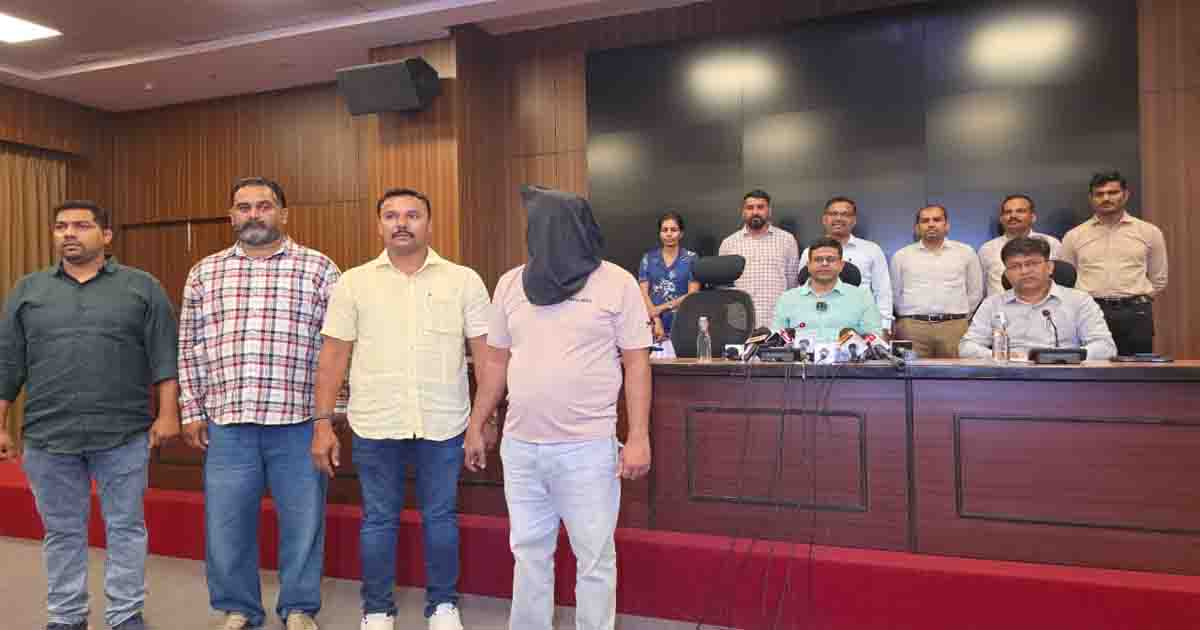
In a case involving the defrauding of a 72-year-old senior citizen in Mumbai on August 13, an unidentified caller—posing as Dinesh Kumar, a Senior Manager at Bank of India—gained the victim’s trust by promising to facilitate the issuance of a Senior Citizen Card. The caller sent an APK file named “Senior Citizen Card http://Verification.apk” to the complainant’s WhatsApp and coerced them into entering personal and bank debit card details, resulting in the misappropriation of ₹5,62,000. Initially, the Byculla Police Station registered a case (No. 497/26) under Sections 318(4) and 319(2) of the BNS and Sections 66(C) and (D) of the Information Technology Act, 2000. While the Property Cell of the Mumbai Crime Branch was conducting a parallel investigation, senior officials ordered the transfer of the case to the Crime Branch; it was subsequently re-registered as Case No. 927/2026 for further investigation.
A thorough technical analysis of the aforementioned APK file was conducted, leading to the identification and arrest of the accused—a 36-year-old male software developer and resident of Madhya Pradesh—who was responsible for developing the fraudulent APK file. During a raid on the accused’s office in Madhya Pradesh, authorities recovered a pen drive, a CPU, three hard disks, a Wi-Fi router, and three mobile phones. Preliminary technical analysis revealed that the accused was utilizing servers from various service provider companies. Investigation confirmed that the accused had created and sold a total of 2,805 malicious APK files to other cybercriminal gangs. These files were used to defraud 9,673 people across India. Complaints regarding these incidents have been registered on the cyber helpline number 1930—specifically 1,074 nationwide, 143 in Maharashtra, and 36 in Mumbai—revealing a total fraud amount of ₹15.75 crore. Cases have been cracked involving 88 incidents across India, 8 in Maharashtra, and 5 in Mumbai.
This successful operation was executed by a team comprising Police Commissioner Devin, Joint Police Commissioner Anil Kumbhare, Additional Commissioner Krishna Kant Upadhyay, DCP (Crime) Raj Tilak Roshan, and the Crime Branch. DCP Raj Tilak Roshan stated that this action was taken in response to fraud targeting the elderly under the guise of issuing senior citizen cards; the police also regularly conduct awareness campaigns among the elderly regarding this issue.
Maharashtra
Mumbai CSMT: Case Filed Against Garjana Morcha Over Demand to Scrap SIR; Nitesh Rane Defends Action, Calls for Aditya Thackeray Passport to Be Seized

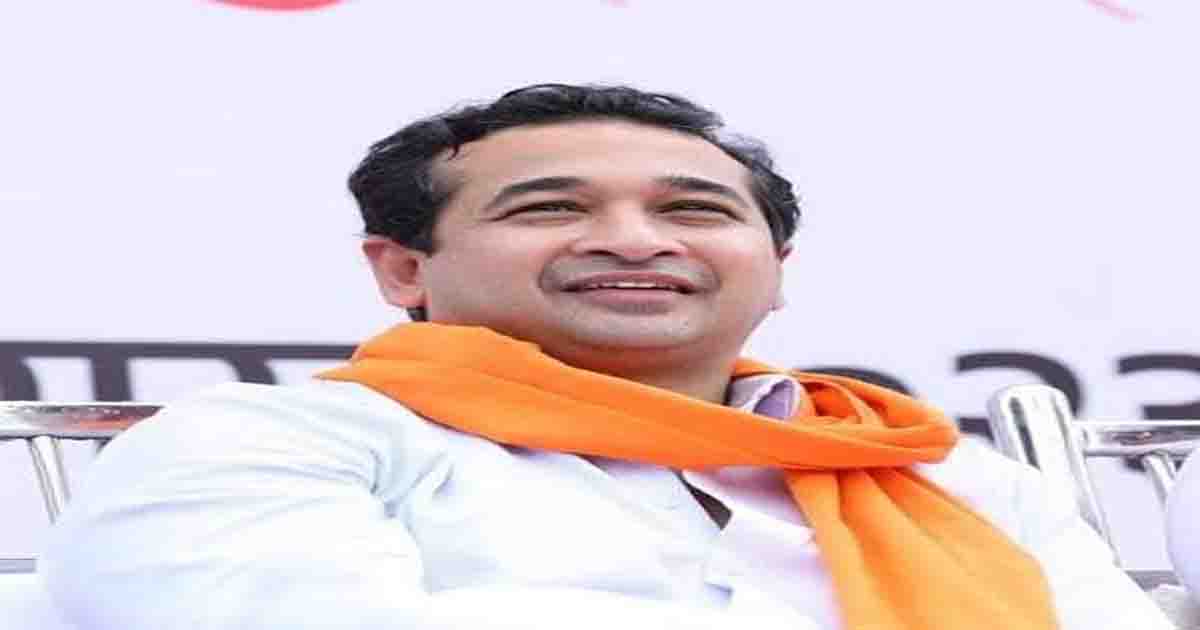
Mumbai: The Mumbai Police have registered a case against the organizers of the ‘Garjana Morcha’ (Roaring Rally), which was held without permission at Azad Maidan near the BMC headquarters. The protest, organized by Shiv Sena chief Uddhav Thackeray and MNS chief Raj Thackeray, saw the participation of party workers from across Mumbai and the state. During the event, demands were raised to cancel the FIR, and Raj Thackeray—in his address—termed the FIR itself illegal; he also proposed a boycott of the elections. The Mumbai Police have registered the case under Sections 223, 189, and 190 of the BNS. Authorities stated that the case was filed due to the unlawful assembly of a crowd. The Azad Maidan Police have initiated an investigation into the matter, and the case has been registered against the organizers as well as other leaders. A case must be registered for an illegal protest: Nitesh Rane
Following the police case registered after the Azad Maidan protest, BJP leader and minister Nitesh Rane stated that filing a case for an unauthorized, illegal protest is mandatory because the Constitution of Babasaheb Ambedkar prevails here. He alleged that the protest was held for “Vote Jihad.” Furthermore, in a vitriolic outburst, Rane noted that Aaditya Thackeray was absent from the protest organized by Uddhav and Raj Thackeray; claiming Aaditya knew action would be taken against him and might flee, Rane demanded that his passport be confiscated.

696 kg of poppy husk worth Rs 1.04 crore seized from truck carrying steel coils in Gujarat

JNU sexual crime: Delhi BJP women ask Congress to expel its MP-cum-professor

Pakistan blasphemy laws under scrutiny over relentless minority persecution

Amitabh Bachchan gets emotional listening to late mother Teji Bachchan’s voice ahead of 84th birthday

Over 50 detained during protest against proposed Mata Sita Women varsity in Patna

Gift to President Putin part of PM Modi bid to globally display India’s heritage

PM Modi’s warm camaraderie with Putin, Xi on full display at BRICS Summit

INDIA bloc begins protest march against ECI

Complaint against Netflix & Mukesh Chhabra for inappropriate language on ‘India’s Got Latent 2’

Maha Congress stages agitation against Gyanesh Kumar
-

 Crime4 years ago
Class 10 student jumps to death in Jaipur
-

 Maharashtra2 years ago
Mumbai Local Train Update: Central Railway’s New Timetable Comes Into Effect; Check Full List Of Revised Timings & Stations
-

 Maharashtra2 years ago
Mumbai To Go Toll-Free Tonight! Maharashtra Govt Announces Complete Toll Waiver For Light Motor Vehicles At All 5 Entry Points Of City
-

 Maharashtra2 years ago
False photo of Imtiaz Jaleel’s rally, exposing the fooling conspiracy
-

 National News2 years ago
Ministry of Railways rolls out Special Drive 4.0 with focus on digitisation, cleanliness, inclusiveness and grievance redressal
-

 Maharashtra2 years ago
Maharashtra Elections 2024: Mumbai Metro & BEST Services Extended Till Midnight On Voting Day
-

 National News2 years ago
J&K: 4 Jawans Killed, 28 Injured After Bus Carrying BSF Personnel For Poll Duty Falls Into Gorge In Budgam; Terrifying Visuals Surface
-

 Crime2 years ago
Baba Siddique Murder: Mumbai Police Unable To Get Lawrence Bishnoi Custody Due To Home Ministry Order, Says Report