
International News
UN says delivering aid to Gaza remains challenging

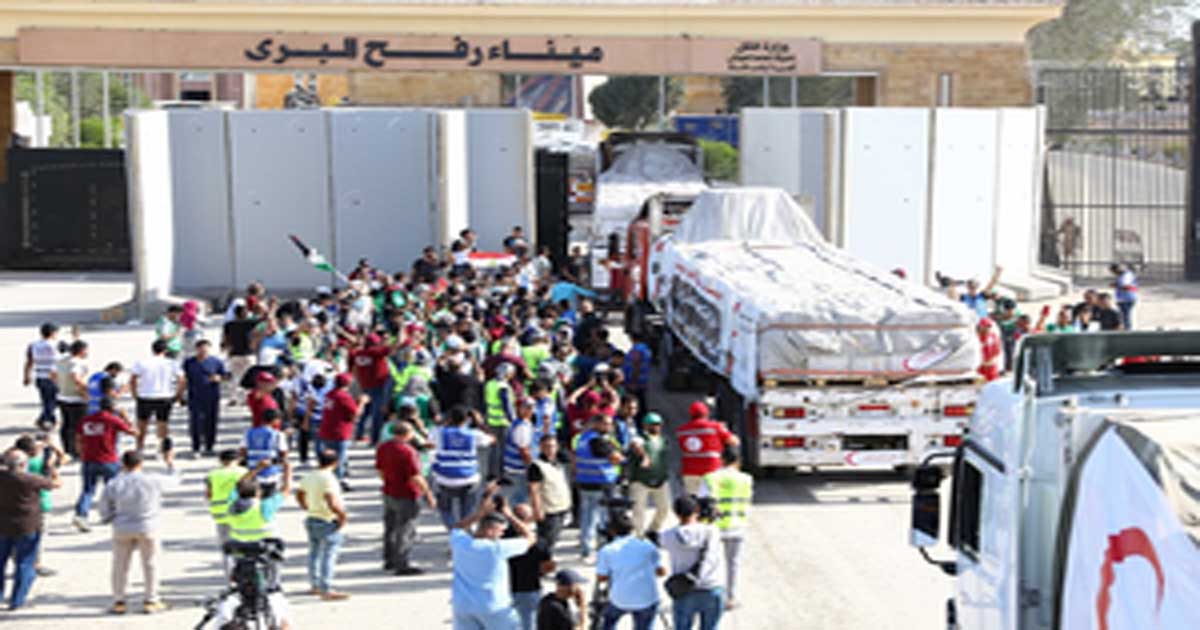
United Nations, Oct 23: UN humanitarians have said that delivering vital support to northern Gaza remains challenging, even though the ceasefire took effect more than 10 days ago.
The UN Office for the Coordination of Humanitarian Affairs (OCHA) said on Wednesday that since the ceasefire took effect on October 10, the world body and its partners have made progress in scaling up response efforts, especially in central and southern areas of the Gaza Strip.
However, the continued closure of the Zikim and Erez border crossings, which provide direct access to the north, makes it extremely challenging for humanitarian aid to reach the area, OCHA added.
At the same time, UN partners monitoring population flows across Gaza have reported more than 425,000 movements from southern to northern parts of the strip since October 10, Xinhua news agency reported.
UN Population Fund Deputy Executive Director Andrew Saberton, who just returned from Gaza, told reporters that the agency was able to bring in some assistance last week through the Kerem Shalom/Karem Abu Salem crossing.
“We have been distributing medical supplies and equipment, including incubators, delivery beds and fetal monitoring machines, that were prepositioned inside Gaza, to hospitals,” he said.
“But the trickle of aid being allowed to enter Gaza after the ceasefire is nowhere near enough.”
Inside Gaza on Tuesday, out of 10 humanitarian missions coordinated with the Israeli authorities, six were facilitated, including the collection of water tanks, hygiene kits and fuel from the crossings into Gaza, OCHA said.
Abeer Etefa, senior regional communications officer and spokesperson for the World Food Programme (WFP), said that since the ceasefire began on October 11, the agency has delivered more than 6,700 metric tonnes of food, enough for nearly half a million people for two weeks.
“Daily deliveries continue and now average around 750 tonnes,” she said, noting this remains well below WFP’s target of 2,000 tonnes a day.
“Unless all border crossing points are used, reaching this target is almost impossible.”
Currently, only the Kerem Shalom and Kissufim crossings in the south are open. Severe destruction continues to block access to northern Gaza, where famine was declared in August. “We need Erez, we need Zikkim, we need these border crossing points to open,” Etefa stressed.
Reaching northern Gaza with large-scale convoys is a priority.
“We’ve cleared roads at scale into the north,” she said, “but we need these crossings open to connect to Gaza City, where conditions are especially dire.”
WFP is restoring its food distribution network, aiming for 145 distribution points across the Strip, of which 26 have reopened. “People are showing up in large numbers, grateful for the efficiency and the dignified way they can collect their rations,” Etefa said.
The aid is especially crucial for “the most vulnerable,” the women, female-headed households, and the elderly, she added.
While many are hopeful, “there is cautious optimism” about how long current conditions will last.
Many families save part of their rations because they are not confident the ceasefire will hold.
“It is a fragile peace,” she said.
Food prices remain prohibitive, and supplies are still insufficient. “People can find food in the market, but it’s out of reach because it’s extremely expensive,” Etefa warned.
WFP is also helping the most food-insecure households through digital payments, enabling about 140,000 people to buy food locally, with plans to double that number soon. But Etefa stressed that humanitarian aid alone cannot solve the crisis, and commercial supplies must enter to complement relief efforts.
Only a fully implemented and sustained ceasefire can allow WFP to operate at the scale needed, Etefa said.


Jerusalem, April 9: The Israel Defence Forces (IDF) said on Thursday that it has killed Ali Yusuf Harshi, personal secretary of Hezbollah Secretary-General Naim Qassem, in Beirut. Harshi was also nephew of the Hezbollah chief who heads the Lebanese group backed by Iran.
In a statement shared on X, the IDF said that it has also hit two key crossings used by Hezbollah for moving weapons south of the Litani River and 10 weapons storage sites, launchers and command centres in southern Lebanon.
“ELIMINATED: Ali Yusuf Harshi, the personal secretary to Hezbollah Secretary-General Naim Qassem in Beirut. A close associate and personal advisor, Harshi played a key role in managing and securing Qassem’s office. The IDF also struck two key crossings used by Hezbollah to move weapons south of the Litani River, along with 10 weapons storage sites, launchers and command centers in southern Lebanon,” IDF posted on X.
The development comes a day after the US and Iran announced a two-week ceasefire agreement.
Earlier, IDF claimed it has killed a Hamas terrorist operating under the guise of a journalist. The IDF claimed that Muhammad Samir Muhammad Washah was actively involved in planning attacks against IDF troops and posed a threat to forces in the area.
In a post on X, IDF stated, “ELIMINATED: Muhammad Samir Muhammad Washah, a Hamas terrorist operating under the guise of an Al Jazeera journalist. Washah, a key terrorist in Hamas’ rocket & weapons production HQ, was also involved in the production and transfer of weapons through Gaza. The terrorist was actively involved in planning attacks against IDF troops & posed a concrete threat to forces in the area.”
On Wednesday, IDF Chief of the General Staff LTG Eyal Zamir, overseeing the wave of strikes against Hezbollah, said that Israel will continue to strike Hezbollah and use every operational opportunity, according to his statement shared by IDF on X.
He further said, “We will not compromise the security of the residents of northern Israel. We will continue to strike with determination.”
The IDF said on Wednesday that it has completed the largest coordinated strike in Lebanon since the start of Operation Roaring Lion. According to the statement, IDF hit more than 100 Hezbollah headquarters, military arrays and command-and-control centers in Beirut, Beqaa and southern Lebanon.
“In 10 minutes, the IDF completed the largest coordinated strike across Lebanon since the start of Operation Roaring Lion. The strike targeted 100+ Hezbollah headquarters, military arrays, and command-and-control centers in Beirut, Beqaa and southern Lebanon, including: Intelligence command centers and central headquarters used planning terror attacks, Infrastructure of firepower and naval arrays, responsible for launching missiles, Assets of the Radwan Force, and the Aerial unit—Hezbollah’s elite units,” IDF posted on X.
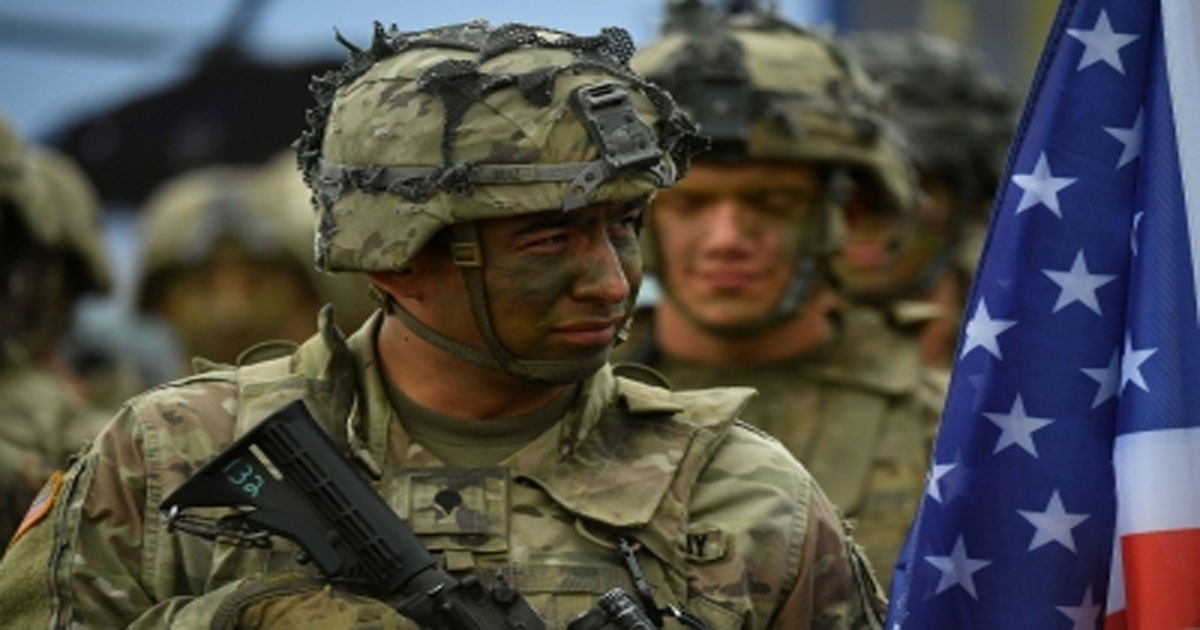
Washington, April 9: The United States will maintain full military readiness in the Middle East despite a two-week ceasefire with Iran, the White House said, signalling that Washington is prepared for a rapid escalation if negotiations falter.
Officials said no immediate drawdown of US forces is planned, even as diplomatic efforts begin following weeks of intense military operations.
Asked what to expect from US troops during the ceasefire window, a reporter queried: “What we should expect from U.S. troops in theatre for the next two weeks and beyond?”
White House Press Secretary Karoline Leavitt said the administration is taking a cautious approach.
“We’re not going to move anything immediately… in the meantime, we’re going to ensure that our military is always at the ready of the commander in chief,” she said.
She referred operational specifics to the Pentagon but made clear that US forces will remain in place as negotiations proceed.
The posture reflects concerns within the administration that the ceasefire could break down, particularly given ongoing regional tensions and uncertainty over Iran’s internal command structures.
“This is a fragile truce. Ceasefires are fragile by nature,” Leavitt said, warning that implementation could face disruptions in the coming days.
The ceasefire, announced after 38 days of US military operations against Iran, has opened a two-week diplomatic window aimed at securing a longer-term agreement.
However, Washington has emphasised that military preparedness remains central to its strategy, both as a deterrent and as leverage in negotiations.
The White House has argued that sustained military pressure forced Iran to accept the ceasefire in the first place.
“The President’s maximum pressure and the leverage created by the success of Operation Epic Fury led to the Iranian regime asking for and ultimately agreeing to a ceasefire proposal,” Leavitt said.
At the same time, officials acknowledged that the operational impact of US strikes on Iran could complicate the ceasefire’s early stages.
One reporter raised concerns about reports of renewed activity inside Iran, asking about explosions and air defence activation in multiple cities.
Leavitt said she had not yet verified those reports but pointed to a broader issue.
“One of the results of Operation Epic Fury was that we completely dismantled Iran’s command and control center, which makes it difficult for them to pass messages up and down the chain,” she said.
The disruption, she suggested, could affect Iran’s ability to coordinate compliance with the ceasefire, at least in the short term.
The administration has also said that many of Iran’s remaining leaders are operating under constraints following the strikes, further complicating internal coordination.
In addition to military effects, questions were raised about the political consequences inside Iran, particularly whether the conflict had led to greater freedoms for its population.
Asked directly whether “regime change has led to more freedoms for the Iranian people,” Leavitt said it was too early to draw conclusions.
“I think that’s a question that’s being asked a little bit too early… ” It’s something that has yet to be seen,” she said.
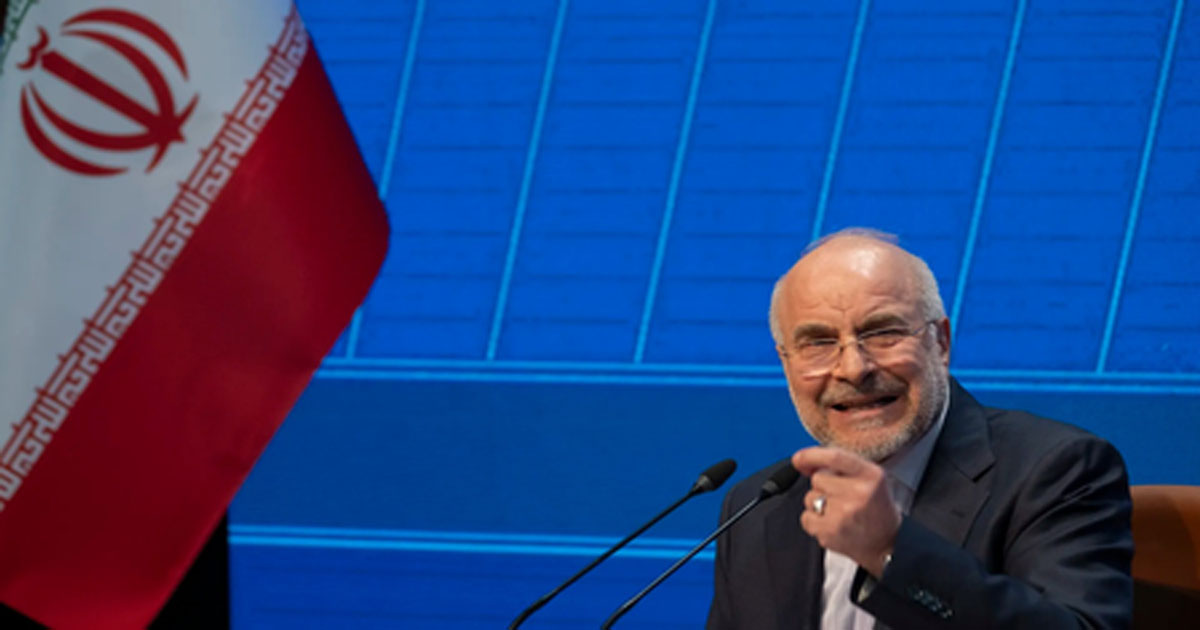
Tehran, April 9: A fresh diplomatic row has erupted after Iranian officials accused the United States of violating three clauses of the 10-Point Proposal, the agreed framework for upcoming negotiations.
In a formal statement released late on Tuesday, Iran said its “deep historical distrust” of Washington had been reinforced by repeated violations of commitments.
The statement noted that while the President of the United States had described the 10-Point Proposal as a “workable basis on which to negotiate,” three provisions had already been breached.
The first violation, according to Tehran, was non-compliance with the ceasefire clause relating to Lebanon.
Iranian officials pointed out that Pakistan’s Prime Minister Shehbaz Sharif had explicitly called for “an immediate ceasefire everywhere, including Lebanon and other regions, effective immediately.”
The second violation involved the entry of a drone into Iranian airspace, which was shot down in Lar, Fars Province.
The third concerned denial of Iran’s right to enrichment, a right enshrined in the sixth clause of the framework.
Iran argued that these breaches undermine the credibility of negotiations even before they begin.
“The very workable basis on which to negotiate has been openly and clearly violated,” the statement declared, adding that in such circumstances, “a bilateral ceasefire or negotiations is unreasonable.”
The development comes as Pakistan has been actively engaged in efforts to broker peace in the region, with Prime Minister Sharif repeatedly urging restraint and dialogue.
Islamabad has positioned itself as a mediator, stressing the importance of immediate ceasefires to prevent escalation across Lebanon and other conflict zones.
The allegations highlight the fragile state of trust between Tehran and Washington, raising doubts over whether the proposed framework can serve as a viable foundation for meaningful talks.

Israel claims killing nephew of Hezbollah chief Qassem in Beirut

US keeps forces ready as Iran truce holds

Mumbai Local Trains To Have Hawkers Inside Soon? Central Railway Approves 100 Vendors Amid Safety, Overcrowding Concerns: Report

Iran accuses US of violating key clauses of peace framework before talks

Anti-Terrorism Branch Busts Hawala Racket In Malad East, Detains Man With Fake Passports, Foreign Currency; Terror Funding Angle Probed

Married Mumbai Woman Mocked In Andheri Society Over ‘Lift Kissing’ CCTV Video, Files Police Complaint

LPG Crisis In Maharashtra: Cyber Crime On Rise Amid Shortage, 2 Women Lose ₹4 Lakh In ‘Gas Update’ Online Scam In Kalyan-Dombivli

Dhurandhar 2 Box Office Collection Day 1: Ranveer Singh Starrer Takes An Exceptional Opening; Crosses ₹100 Crore Mark

Mumbai Police Busts Fake Apple Accessories Racket In Ghatkopar, ₹16.33 Lakh Goods Seized; Six Booked

Thane Horror: Man Slashed With Chopper In Naupada For Refusing ‘Vargani’, Caught On Camera
-

 Crime4 years ago
Class 10 student jumps to death in Jaipur
-

 Maharashtra2 years ago
Mumbai Local Train Update: Central Railway’s New Timetable Comes Into Effect; Check Full List Of Revised Timings & Stations
-

 Maharashtra1 year ago
Mumbai To Go Toll-Free Tonight! Maharashtra Govt Announces Complete Toll Waiver For Light Motor Vehicles At All 5 Entry Points Of City
-

 Maharashtra2 years ago
False photo of Imtiaz Jaleel’s rally, exposing the fooling conspiracy
-

 National News1 year ago
Ministry of Railways rolls out Special Drive 4.0 with focus on digitisation, cleanliness, inclusiveness and grievance redressal
-

 Maharashtra1 year ago
Maharashtra Elections 2024: Mumbai Metro & BEST Services Extended Till Midnight On Voting Day
-

 National News2 years ago
J&K: 4 Jawans Killed, 28 Injured After Bus Carrying BSF Personnel For Poll Duty Falls Into Gorge In Budgam; Terrifying Visuals Surface
-

 Crime1 year ago
Baba Siddique Murder: Mumbai Police Unable To Get Lawrence Bishnoi Custody Due To Home Ministry Order, Says Report