
Business
Turkey allows quarantine free access to fully vaccinated Indian passengers


Turkey has declared that fully vaccinated travellers from India will no longer be subjected to mandatory 14-day quarantine rule, with effect from Saturday.
According to the announcement, travel restrictions will be eased for fully vaccinated passengers of 12 years of age and older travelling from India or stayed in India in last 14 days.
“The vaccines that have been approved by WHO or Turkish Government are covered under this exemption,” said the Culture and Tourism Office of the Embassy of the Republic of Turkey in India.
“In addition to WHO approved vaccines, the vaccines approved by Turkish government are Pzifer Biontech, Sputnik V and Sinovac.”
According to the statement, a traveller must be taken the second dose at least 14 days prior to the date of travel.
“For Indian travellers who are vaccinated with Covishield will also be allowed to travel to Turkey. Once, Covaxin get a nod from WHO, travellers vaccinated with the same will also be able to visit Turkey.”


New Delhi, March 30: The government has approved the proposal of New Mangalore Port Authority (NMPA) for the redevelopment of Berth No. 9 for handling liquid bulk cargo on a Public-Private Partnership (PPP) basis under the DBFOT model, it was announced on Monday.
The approval for implementation was conveyed on March 25, 2026, in a major step towards augmenting India’s port infrastructure and strengthening maritime logistics, according to the Minister of Ports, Shipping and Waterways.
With an estimated project cost of Rs 438.29 crore, the redevelopment will be undertaken by a private concessionaire selected through an open competitive bidding process (single-stage, two-envelope system).
The project will have a capacity of 10.90 MTPA, and the concessionaire will commit to a Minimum Guaranteed Cargo (MGC) of 7.63 MTPA by the 5th year of operations. The construction period is 2 years, with a concession period of 30 years, inclusive of construction.
The project envisages the dismantling of legacy infrastructure and comprehensive redevelopment of Berth No. 9 to handle liquid bulk cargo such as crude oil, petroleum products (POL), and LPG.
“As part of the modernisation, the berth draft will be enhanced from the existing 10.5 metres to 14 metres, with a future-ready design provision up to 19.8 metres, enabling the port to accommodate vessels up to 2,00,000 DWT, including Very Large Gas Carriers (VLGCs),” said the ministry.
“This transformative project is a reflection of the visionary leadership of Prime Minister Narendra Modi, under whom India’s maritime infrastructure is being modernised at an unprecedented pace,” said Minister of Ports, Shipping and Waterways, Sarbananda Sonowal.
By replacing ageing facilities with world-class marine infrastructure, enhancing cargo handling capacity to 10.90 MTPA, and enabling the handling of larger vessels including VLGCs, “we are positioning our ports to meet future energy and trade demands while strengthening India’s role as a global maritime leader”, he added.
The project will replace nearly 50-year-old structures with modern marine infrastructure designed for a 50-year structural life, ensuring long-term sustainability and resilience.
The enhanced capacity will strengthen the port’s ability to meet the growing regional demand for liquid bulk cargo, particularly energy commodities.
By enabling the handling of larger vessels and VLGCs, the project will improve economies of scale, reduce logistics costs, and enhance overall port competitiveness, said the ministry.
Business
Bharti Airtel Receives ₹1,74,000 Penalty Notice From DoT For Subscriber Verification Lapses


New Delhi: Bharti Airtel has disclosed a regulatory development involving a minor financial penalty tied to compliance checks on customer onboarding processes.
The Department of Telecommunications, Madhya Pradesh Licensed Service Area, has issued a notice imposing a penalty of Rs 1,74,000 on the company. The action relates to alleged non-compliance with subscriber verification requirements under telecom licensing conditions, as detailed in Annexure A on page 2.
The issue stems from a Customer Application Form audit conducted by the DoT for January 2026. These audits are carried out periodically to ensure telecom operators adhere to rules governing customer identity verification before activating services.
Under the license agreement, telecom operators are required to maintain strict verification processes when enrolling subscribers. The audit identified alleged gaps in meeting these standards, prompting regulatory action from the authority.
Bharti Airtel has decided not to contest the notice and will pay the penalty. The company clarified that the financial impact is limited to the amount levied, with no broader operational implications highlighted in the filing. The disclosure reflects routine regulatory oversight in the telecom sector, where periodic audits ensure adherence to compliance norms.
Business
Maharashtra Minister Nitesh Rane Announces AI Project For Mango, Cashew Farming In Sindhudurg With 400 Farmers In Pilot Phase
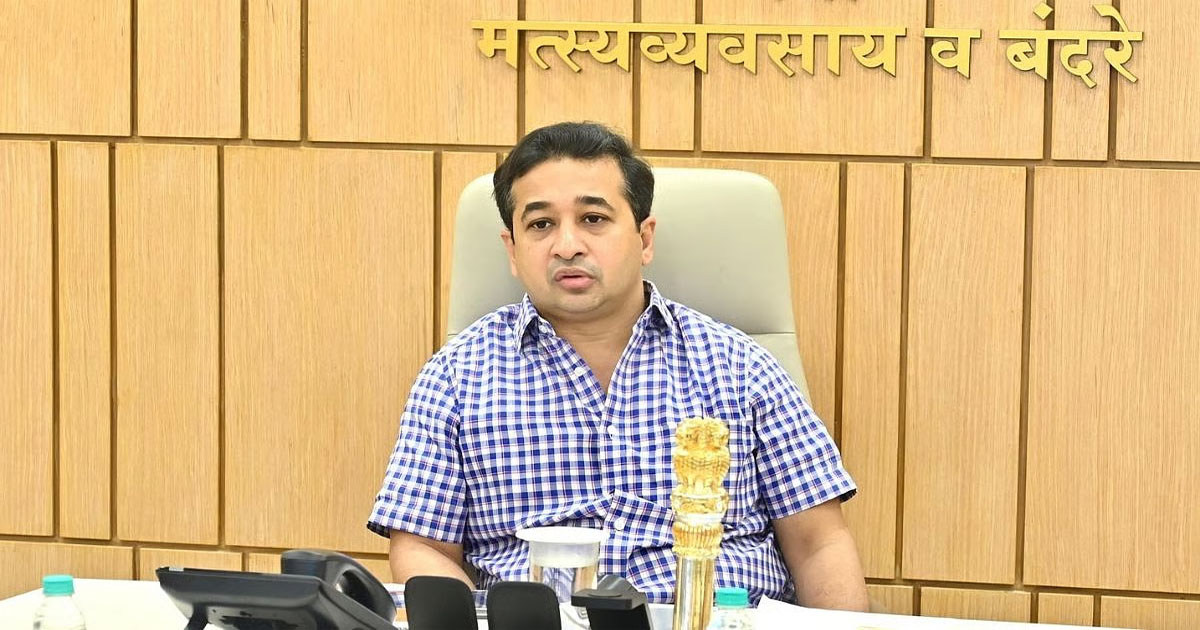
Mumbai, March 27: Maharashtra Fisheries and Ports Minister Nitesh Rane on Friday announced that an Artificial Intelligence (AI)-based project will be implemented to enhance mango and cashew cultivation in Sindhudurg district.
Initially, 400 farmers—200 each cultivating mango and cashew—will be selected for the pilot phase. The project aims to digitise farms by collecting basic data such as farmers’ names, contact details and village information. Based on the success of the initial phase, the initiative will be expanded to include more farmers.
The proposal was presented by experts from ADT Krishi Vigyan Kendra Baramati in the presence of agricultural scientists and officials, including representatives from Dr Balasaheb Sawant Konkan Krishi Vidyapeeth.
Under the project, sensors will be installed to monitor soil health, crop conditions and yield patterns. Farmers will receive training and awareness about AI technology through group-based sessions conducted over a 150-day initial phase.
The use of drones for pesticide spraying is expected to significantly reduce time from several days to just a few hours, ensuring quicker and more effective disease control. Additionally, AI-based predictive models will help detect crop diseases in advance, reducing excessive pesticide use and curbing black marketing.

Senior IAS Officer Ashwini Bhide Set To Take Charge As 1st Woman BMC Commissioner Today

Mumbai: Music banned at night on Shivaji Maharaj Road, temporary nighttime disruptions after residents were inconvenienced

Afghans in London, Oslo hold protests against Pakistan’s strikes in Afghanistan

Mumbai: Impostor Ashok Kharat sexually abused 150 women, several sensational revelations in the SIT investigation.

Navi Mumbai Crime: Police Arrest 24-Year-Old Man Accused Of Raping & Impregnating 13-Year-Old Girl

Married Mumbai Woman Mocked In Andheri Society Over ‘Lift Kissing’ CCTV Video, Files Police Complaint

LPG Crisis In Maharashtra: Cyber Crime On Rise Amid Shortage, 2 Women Lose ₹4 Lakh In ‘Gas Update’ Online Scam In Kalyan-Dombivli

Mahayoti’s big gift to the people of Mumbai… Now there is no tax for houses up to 500 square feet, the Municipal Corporation has increased this limit to 700 square feet.

Rashmika Mandanna-Vijay Deverakonda Wedding: Virosh Turn Modern Day Prince & Princess For Their Dreamy Sangeet Ceremony

Dhurandhar 2 Box Office Collection Day 1: Ranveer Singh Starrer Takes An Exceptional Opening; Crosses ₹100 Crore Mark
-

 Crime4 years ago
Class 10 student jumps to death in Jaipur
-

 Maharashtra1 year ago
Mumbai Local Train Update: Central Railway’s New Timetable Comes Into Effect; Check Full List Of Revised Timings & Stations
-

 Maharashtra1 year ago
Mumbai To Go Toll-Free Tonight! Maharashtra Govt Announces Complete Toll Waiver For Light Motor Vehicles At All 5 Entry Points Of City
-

 Maharashtra2 years ago
False photo of Imtiaz Jaleel’s rally, exposing the fooling conspiracy
-

 National News1 year ago
Ministry of Railways rolls out Special Drive 4.0 with focus on digitisation, cleanliness, inclusiveness and grievance redressal
-

 Maharashtra1 year ago
Maharashtra Elections 2024: Mumbai Metro & BEST Services Extended Till Midnight On Voting Day
-

 National News2 years ago
J&K: 4 Jawans Killed, 28 Injured After Bus Carrying BSF Personnel For Poll Duty Falls Into Gorge In Budgam; Terrifying Visuals Surface
-

 Crime1 year ago
Baba Siddique Murder: Mumbai Police Unable To Get Lawrence Bishnoi Custody Due To Home Ministry Order, Says Report