
National News
Tribal bodies in Manipur urge PM Modi to implement NRC

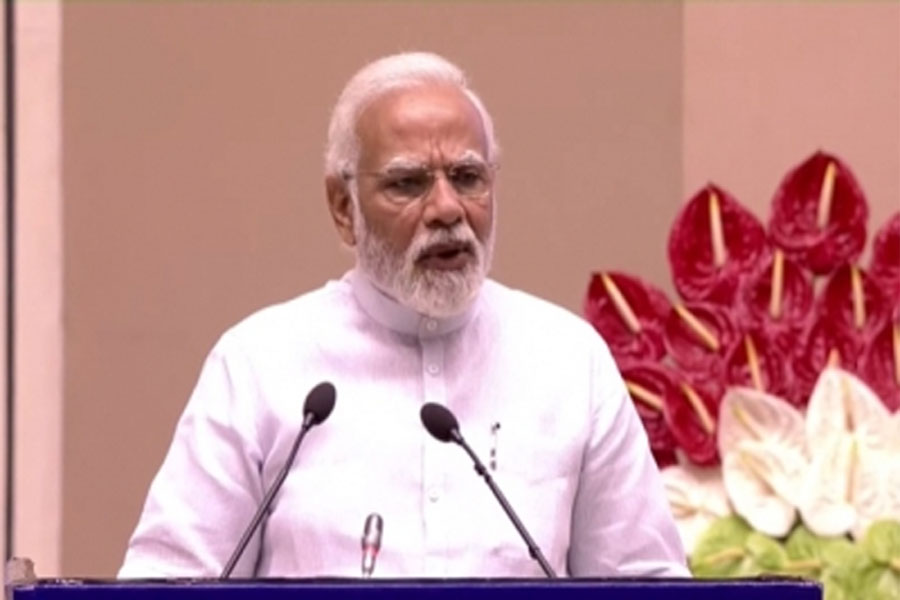
A total of 19 influential tribal organisations in Manipur have stepped up the demand to implement the National Register of Citizens in the state to protect the indigenous people and to deal with the issue of illegal foreigners.
The indigenous 19 tribal federations and tribes submitted a memorandum to Prime Minister Narendra Modi on Wednesday strongly demanding the NRC for filtering the foreigners out, putting them in detention centres and deporting them.
The organisations said that Union Home Minister Amit Shah in his speech in the Rajya Sabha on November 19, 2019 said that NRC would be implemented across the country. “In the light of this perception, we call for the implementation of NRC in Manipur to safeguard the genuine citizens,” the tribal organisations submitted.
“It is the request to our responsible central government to open centres for detection and deportation of foreigners with immediate footsteps.”
The tribal bodies said that in 1980 and 1994, the All Manipur Students Union and All Manipur Coordinating Committee had undergone an agreement twice with the Manipur government and the then governor V.K. Nair regarding the detection and deportation of foreign nationals from Manipur with the cut off base of 1951 for identifying the foreign nationals from genuine Indian citizens.
Nevertheless, the past as well present government in Manipur has not taken up any steps towards the agreement, they pointed out.
The copies of the memorandum of the tribal organisations, which included, Mao Council, Tangkhul Naga Headman’s Association, Thangal Union, Zeme Naga Council, Tarao Tribe Union, have also submitted to Home Minister Amit Shah, Manipur Governor La Ganeshan and Chief Minister N. Biren Singh.
They said that though the Central government extended the Inner Line Permit System to the state of Manipur in December 2019, most importantly, the fixation of indigenous people has yet not been defined.
As Manipur is a border state, the intrusion of immigrants from Bangladesh, Myanmar and Nepal by far and autonomously had settled at large since the abolition of the Pass Permit and Permit System on November 18, 1950 by the then Chief Commissioner Himmat Singh, the organisations said.
They said that on this issue, no discerning step had been taken up so far for the last 75 years under the Foreigners Act 1946.
“Because of this continuous overflow of influxes, which subsisted within us, has now taken possession of the socio economic and political rights of the indigenous people. Bangladeshi and Myanmar Muslims have occupied the constituency of Jiribam and a large number of them scattered on average in valley areas.
“Myanmar kuki and nearby Lushai kuki have settled at an unsystematic population of some lakhs in number. They have now counteracted ownership against the occupant indigenous people in hill areas. Likewise, Nepali population has risen in tremendous numbers,” the tribal organisations pointed out.
Besides, the NRC with 1951 as the base year for recognising domicile, various Manipur students’ bodies also demanded the establishment of a State Population Commission to “check and balance the population growth”.
They said the indigenous communities are being “swamped and marginalised” in their own state by the “ever-increasing population” of outsiders.


International News
EAM Jaishankar and US counterpart Rubio discuss advancing ties, regional developments

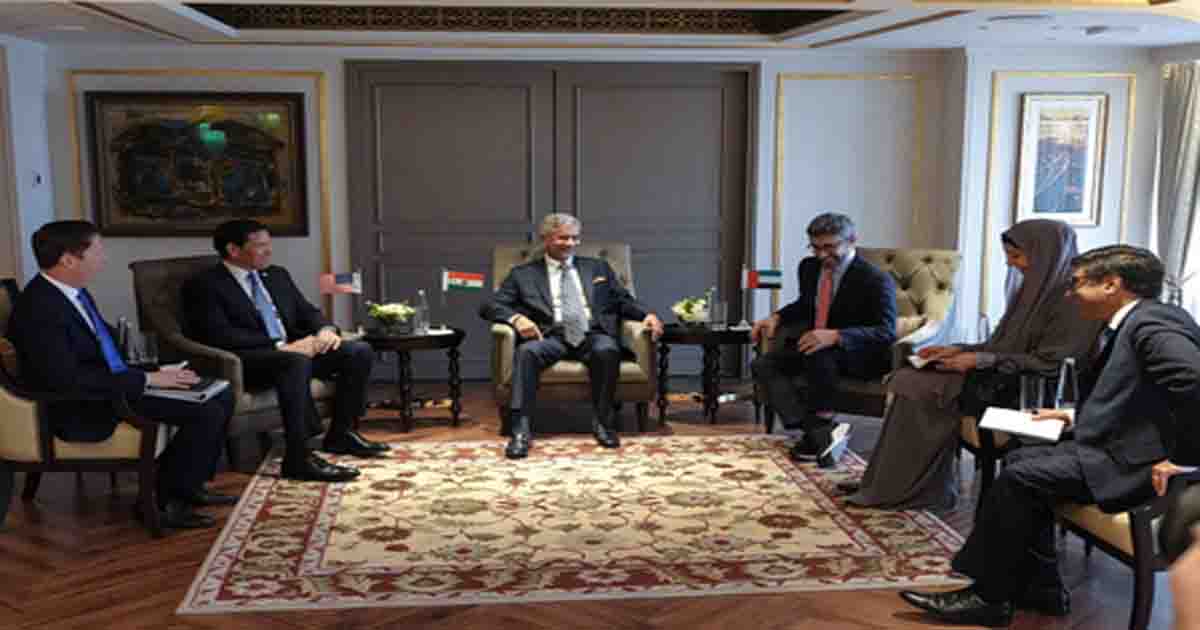
External Affairs Minister (EAM) S Jaishankar held a meeting with US Secretary of State Marco Rubio in Mumbai on Tuesday, with discussions focusing on further advancing bilateral ties.
During the meeting, the two ministers exchanged views on regional developments. Foreign Secretary Vikram Misri, US Ambassador to India Sergio Gor and other officials were also present at the meeting.
“Pleased to meet US Marco Rubio in Mumbai today. We shared views on further advancement of our ties, focusing on trade, energy, technology, defence and people-to-people ties. Also exchanged views on regional developments,” EAM Jaishankar stated on X after the meting.
Rubio said that he and EAM Jaishankar discussed energy security and defence cooperation.
“In Mumbai, Indian External Affairs Minister S Jaishankar and I discussed energy security and defense cooperation while reaffirming the importance of advancing the U.S.-India strategic partnership,” the US Secretary of State posted on X.
Earlier, EAM Jaishankar, Marco Rubio and UAE Foreign Minister Sheikh Abdullah bin Zayed Al Nahyan held a meeting in Mumbai, with discussions held on regional energy security and advancing shared economic priorities.
“It was great to meet with Indian External Affairs Minister S Jaishankar and UAE Foreign Minister Sheikh Abdullah bin Zayed Al Nahyan to discuss regional energy security and advance our shared economic priorities,” Rubio stated on X after the meeting.
Following the meeting, Ambassador Gor also took to X and wrote: “The US, India, and UAE have real opportunities to advance cooperation on energy, trade, technology, and regional connectivity. Marco Rubio, S Jaishankar, and UAE Foreign Minister Sheikh Abdullah bin Zayed Al Nahyan in Mumbai for a discussion on turning our close ties into concrete results!”
Earlier in the day, Marco Rubio arrived in Mumbai for an official visit to India. For his visit to Mumbai, Rubio is accompanied by his wife, Jeanette Rubio and US Ambassador to India Sergio Gor.
The Ministry of External Affairs (MEA) extended a warm welcome to Rubio as he arrived in Mumbai for his second visit to India, noting that it provides an opportunity to further advance cooperation across various pillars of the India-US Comprehensive Global Strategic Partnership.
“Welcome to Mumbai, US Secretary of State Marco Rubio, on your second visit to India! He was received by Shri Ashish Shelar, Minister of Culture, Electronics, IT and AI, Government of Maharashtra at the airport. The visit provides an opportunity to further advance cooperation across the various pillars of the India-US Comprehensive Global Strategic Partnership,” the MEA posted on X.
After concluding his engagements in Mumbai, Rubio will travel to Gujarat’s Jamnagar for talks that will include “enhanced energy cooperation”, the US State Department said.
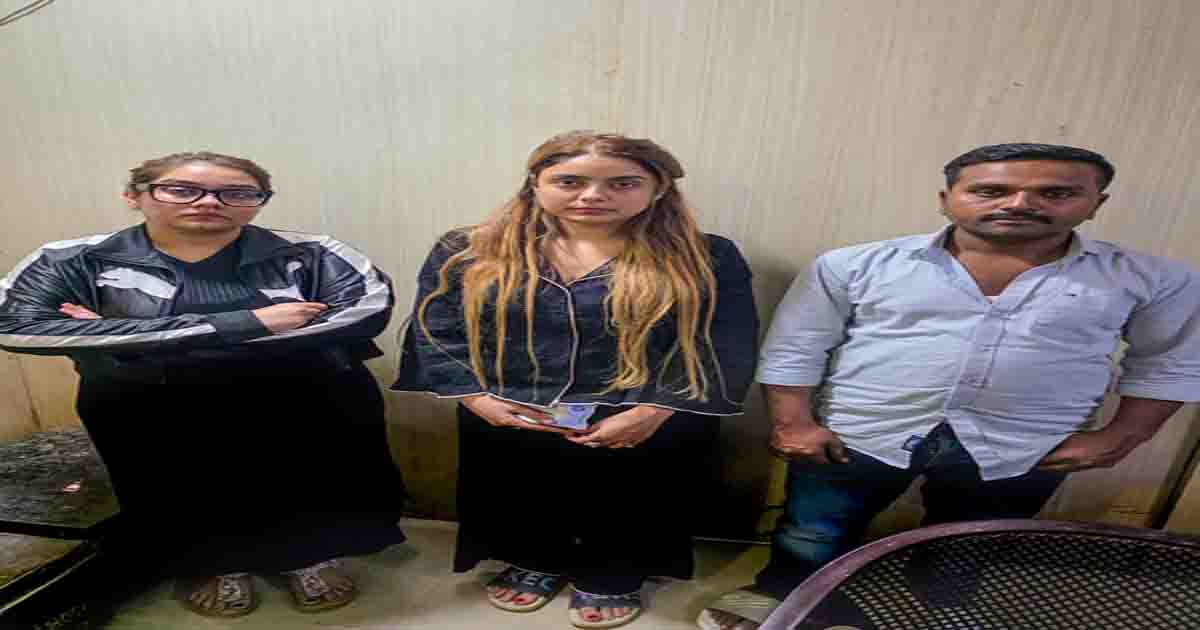
Model Shraddha Dubey, a key accused in the death of Lucknow-based businessman Shiva Sharma, has been arrested in Nagpur along with her sister Rashmi Dubey and driver Danish, Uttar Pradesh Police said on Tuesday.
The three accused, who had been absconding since the registration of the case, were apprehended by the Lucknow Police and the Uttar Pradesh Special Task Force (STF) with the assistance of Nagpur Police on Tuesday.
A reward of Rs 50,000 each had been announced for information leading to their arrest.
Following her arrest, Shraddha Dubey has been brought to Bell Road Police Station on Wardha Road in Nagpur, where she is currently being questioned.
Officials of the Uttar Pradesh STF and Nagpur Police are present at the police station and are jointly questioning her.
According to the police, a case under Section 103(1) of the Bharatiya Nyaya Sanhita (BNS) was registered at the Hazratganj Police Station on October 9 on the basis of a written complaint filed by Ranjana Sharma.
The accused are being taken through the necessary legal formalities before being brought to Lucknow for further investigation into Sharma’s death.
Meanwhile, fresh details have emerged about Dubey’s movements during her absconding period.
According to media reports, she stayed for nearly 24 hours at a hotel in Taj Nagari Phase-I in Agra.
The reports claimed that CCTV footage showed a vehicle allegedly linked to Dubey arriving at the hotel at 6:33 a.m. on October 17. Around 20 minutes later, at 6.53 a.m., a woman identified as Dubey reportedly entered the premises. The vehicle’s registration number was reported to be UP32RT8043.
During her absconding period, Dubey had released a video appealing against linking her name with influential individuals.
An earlier viral audio recording, purportedly featuring her threatening Sharma, had also surfaced, in which she was allegedly heard referring to complaining about him to a ‘sir’.
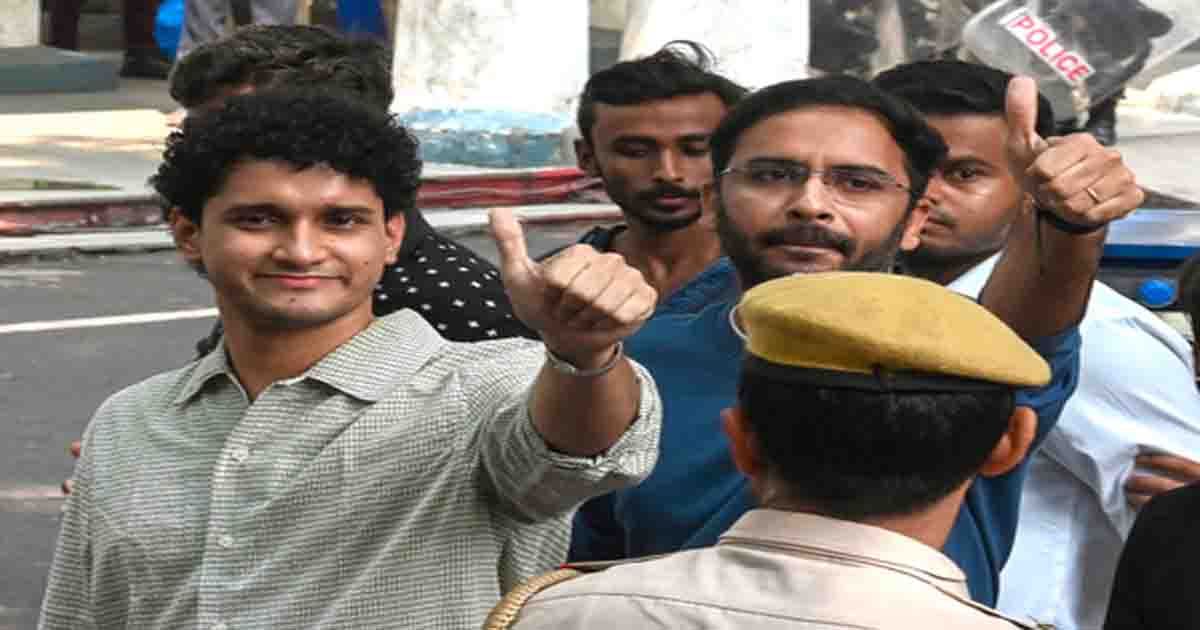
Cockroach Janata Party (CJP) leaders Saurav Das and Ashutosh Ranka are set to move the Delhi High Court seeking their release, challenging the Special Executive Magistrate (SEM) court’s order extending their judicial custody in connection with the Jantar Mantar trespassing case.
The move comes a day after the SEM court extended the judicial custody of the two till October 21, observing that their conduct “shows no respect for law” and reflects their “habitualness in calling protest at de-notified areas”.
The two CJP leaders were sent to judicial custody till October 21 by SEM Ritu Raj at Mandir Marg police station after their earlier five-day judicial custody ended on Monday.
In its order, the SEM court said the investigating officer had placed substantial material on record, raising concerns over the likelihood of a breach of peace and disturbance of public tranquillity.
It also recorded that the two leaders had allegedly breached the bonds furnished by them before the SEM, South-West District, on October 11 and subsequently committed a breach of peace in the present case.
The court further observed that their assurance that they would not repeat the alleged offence did not inspire confidence in view of their past conduct and the material placed on record by the investigating officer.
Das and Ranka, along with party member Ajinkya Shinde, were among 14 people detained on October 13 after they entered Jantar Mantar through private premises and obstructed police personnel from discharging their official duties.
The CJP members were protesting against alleged irregularities in the Special Intensive Revision (SIR) of electoral rolls and had raised slogans against Chief Election Commissioner (CEC) Gyanesh Kumar.
Delhi Police had justified their continued custody, citing repeated violations of law and apprehensions that their release could lead to further violations and instigation of others.
The SEM court had also found the sureties furnished on behalf of the two leaders unfit following an inquiry, citing discrepancies in identity documents and their inability to provide basic details about the persons for whom they stood surety. It directed them to furnish fresh sureties.

EAM Jaishankar and US counterpart Rubio discuss advancing ties, regional developments

Maha: Woman beaten to death with hammer over minor dispute in Palghar; two arrested

Woman arrested for extorting ₹4 crore by blackmailing victims with obscene videos

Major crackdown by Mumbai Crime Branch, 2 kg heroin worth ₹10 crore seized, three accused arrested.

Model Shraddha Dubey, wanted in businessman Shiva Sharma death case, arrested in Nagpur

Rahul, Cong ecosystem want to force regime change: BJP after Neha Bora praises B’desh Gen-Z protest

BJP pays tribute to ex-President Abdul Kalam, recalls his enduring influence on generations of India’s youth

Attack on democratic rights: INDIA Bloc leaders on detentions of anti-ECI protestors

INDIA bloc begins protest march against ECI

Maha Congress stages agitation against Gyanesh Kumar
-

 Crime4 years ago
Class 10 student jumps to death in Jaipur
-

 Maharashtra2 years ago
Mumbai Local Train Update: Central Railway’s New Timetable Comes Into Effect; Check Full List Of Revised Timings & Stations
-

 Maharashtra2 years ago
Mumbai To Go Toll-Free Tonight! Maharashtra Govt Announces Complete Toll Waiver For Light Motor Vehicles At All 5 Entry Points Of City
-

 Maharashtra2 years ago
False photo of Imtiaz Jaleel’s rally, exposing the fooling conspiracy
-

 National News2 years ago
Ministry of Railways rolls out Special Drive 4.0 with focus on digitisation, cleanliness, inclusiveness and grievance redressal
-

 Maharashtra2 years ago
Maharashtra Elections 2024: Mumbai Metro & BEST Services Extended Till Midnight On Voting Day
-

 National News2 years ago
J&K: 4 Jawans Killed, 28 Injured After Bus Carrying BSF Personnel For Poll Duty Falls Into Gorge In Budgam; Terrifying Visuals Surface
-

 Crime2 years ago
Baba Siddique Murder: Mumbai Police Unable To Get Lawrence Bishnoi Custody Due To Home Ministry Order, Says Report