
International News
Translate pillars of India’s vision for SCO into concrete outcomes: PM Modi

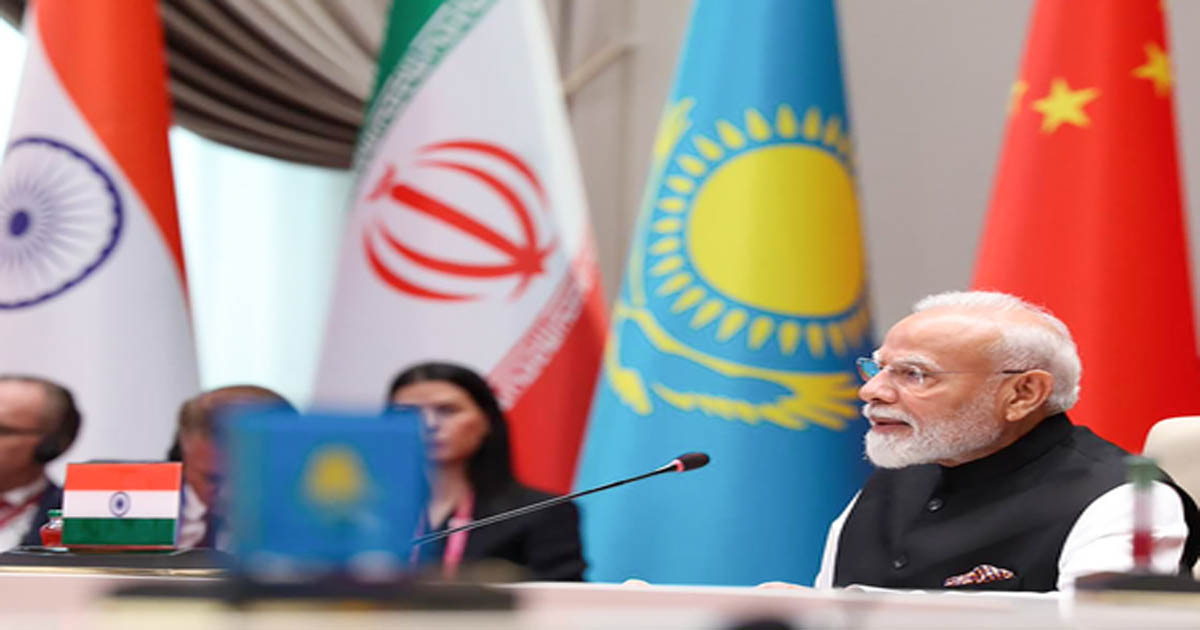
Bishkek, Sep 1: Prime Minister Narendra Modi on Tuesday urged the Shanghai Cooperation Organisation (SCO) member states to strengthen the three pillars of cooperation — security, connectivity and opportunity — and move from vision to measurable outcomes.
Addressing the 26th SCO Summit in Kyrgyzstan’s Bishkek, PM Modi noted that the 25th anniversary of the Summit was an opportune time to lay the roadmap for the next 25 years, building upon the strong tradition of dialogue and cooperation developed by SCO.
“At the previous meeting, I had outlined the three main pillars of India’s vision for the SCO: S – Security, C – Connectivity, and O – Opportunity. The time has come to move these three pillars beyond vision and translate them into concrete outcomes. The first and foremost requirement for this is peace and security,” he said.
“Terrorism continues to pose a serious challenge to humanity as a whole. In the fight against terrorism, we cannot remain confined to an action-reaction approach. We must dismantle the entire ecosystem of terrorist financing, recruitment, radicalisation, and safe havens. We must speak with one voice and make it clear that there can be no place for double standards on this serious issue,” added PM Modi.
In today’s interconnected world, PM Modi highlighted, the scope of security has become even broader.
“The crisis in West Asia has demonstrated that a conflict in one region does not remain confined to that region. Its impact is felt across the world, affecting energy security, maritime trade, and supply chains. The countries of the Global South bear the greatest brunt of such disruptions. Therefore, India has consistently called for all tensions and conflicts to be resolved not on the battlefield, but through dialogue and diplomacy,” he said.
Noting that security in the Eurasia region was closely linked to peace and stability in Afghanistan, he also highlighted India’s development and humanitarian assistance to the country.
“We must send a strong message to countries that use terrorism as an instrument of policy and provide safe haven and support to terrorists that terrorism can never be a strategic asset for anyone. Our shared aspiration for a peaceful and secure Eurasia is also closely linked to peace and stability in Afghanistan. India has been contributing to the development and provision of humanitarian assistance to the people of Afghanistan and will continue to do so,” mentioned PM Modi.
Prime Minister Modi further stated that strong and trusted connectivity initiatives were important for the group’s shared progress and prosperity. He spotlighted that, at a time when the world is passing through uncertainty and instability, shared geography should be transformed into shared opportunities to bring about a positive change in the lives of people.
Underlining that India supports connectivity efforts that link markets, enhance trade and open new opportunities for development, he reiterated that such efforts should respect sovereignty and territorial integrity of nations.
“From shared geography to shared opportunities, from vision to outcomes, and from government-driven cooperation to people-driven partnership. With the same belief and commitment, India is ready to contribute to the SCO family’s shared journey,” he assured the gathering of SCO leaders.
PM Modi mentioned that for India, the SCO is a confluence of great civilisations, cultures, and ideas. Over the next 25 years of the SCO, he said, people-to-people ties should remain at the heart of cooperation.
He further elaborated that technology, entrepreneurship, innovation, start-ups and people-to-people initiatives open immense opportunities for people in the SCO countries.
“Our cooperation in the SCO should not be merely government-driven; it should also be people-driven. I am pleased that, under Kyrgyzstan’s chairmanship, special emphasis has been placed on youth engagement within the SCO. India has taken initiatives such as the SCO Start-up Forum, Young Authors’ Conclave, and Young Scientists’ Forum.
“Last year, India proposed the SCO Civilizational Dialogue Forum. I am pleased that its first session will be held in India this year. I am confident that with the active participation of all of you, this forum will become a strong platform for vibrant dialogue within the SCO,” said PM Modi.

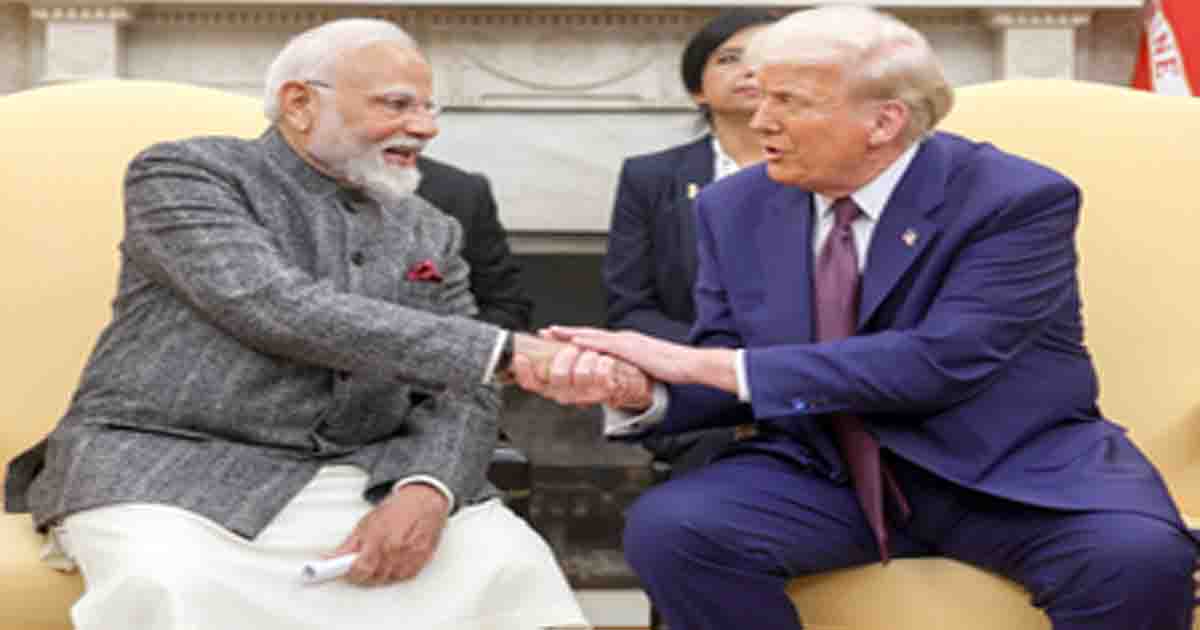
Washington, Oct 16: A long-awaited trade agreement between India and the United States is almost complete, with only one or two per cent of negotiations remaining, a senior US official said, signalling that the two countries are approaching a breakthrough after months of high-level discussions.
The official said the biggest issues had already been resolved and that negotiations were continuing at the highest political levels, including between President Donald Trump and Prime Minister Narendra Modi.
“The biggest items have been settled. I mean …., it’s pretty much done. We have that one, one or two per cent left,” the official told reporters during a State Department briefing on Friday.
The remarks came ahead of Secretary of State Marco Rubio’s scheduled visit to India, where he will hold discussions with Indian government officials and leading business executives in Mumbai and Jamnagar.
The official said the two governments remained in constant contact over the proposed agreement.
“We are actively engaged every single week,” the official said, adding that high-level discussions on the trade deal were taking place regularly.
The official cited recent diplomatic engagements involving US Trade Representative Jamieson Greer, India’s Commerce Minister Piyush Goyal and conversations between Trump and PM Modi as evidence of the momentum behind the negotiations.
However, the official also identified a significant complication that had delayed the agreement.
An earlier understanding had been linked to the International Emergency Economic Powers Act, or IEEPA, but the legal framework had to be reconsidered after the law was struck down, according to the official.
The development forced negotiators to revisit elements of the proposed agreement and contributed to several additional months of discussions.
Despite those complications, the official expressed optimism that the remaining differences could be resolved soon.
Rubio is scheduled to travel first to Uzbekistan for meetings with Central Asian leaders before proceeding to India.
In Mumbai, he will meet Indian government counterparts and senior executives from some of the country’s largest companies.
The official said the decision to visit Mumbai rather than New Delhi reflected the administration’s growing emphasis on commercial diplomacy and Indian investment in the United States.
Rubio will also travel to Jamnagar.
The official said Washington was seeking closer engagement with India across information technology, pharmaceuticals, defence cooperation and other sectors.
Further visits by senior American Cabinet officials are also anticipated next year as both governments seek to expand bilateral engagement.
International News
ISI hikes India espionage budget to Rs 1,300 cr; targets Navy, IAF via HUMINT network

New Delhi, Oct 16: Pakistan’s Inter-Services Intelligence (ISI) has reportedly raised its annual espionage budget targeting India to Rs 1,300 crore following last year’s Operation Sindoor, with funds focused on building a Human Intelligence (HUMINT) network within the Indian Navy and Indian Air Force, according to intelligence officials.
An Intelligence Bureau official said that before Operation Sindoor, the ISI’s budget for espionage against India was Rs 800 to Rs 900 crore.
“However, post Operation Sindoor, there has been a hike in this sum of up to Rs 1,300 crore. The reason why the budget has been hiked is that Pakistan wants to trap high-value targets within India’s defence forces,” the official said.
In recent months, the ISI has been specifically focusing on setting up a massive Human Intelligence (HUMINT) network within the Indian Navy and Air Force.
Offices handling sensitive information are targeted through honey-traps or by exploiting security vulnerabilities. The cost of establishing such networks has risen sharply over the past year, with high-value targets now being paid between Rs 15 lakh and Rs 25 lakh, compared with Rs 10 lakh to Rs 15 lakh before Operation Sindoor.
Another official said the ISI has long sought to establish a human intelligence (HUMINT) network within the Indian armed forces.
“While several such cases have been reported in the past, the current level of urgency and the intensity of efforts are significantly higher than in 2015, 2019 and 2021, when major espionage cases were busted in the Indian Navy,” the official said.
The official added that the espionage cases reported in October 2026 were the most worrying, underscoring the ISI’s intensified efforts to establish a HUMINT network within the Indian Navy.
Coordinated operations by the Andhra Pradesh police in Visakhapatnam, the National Investigation Agency (NIA) and the intelligence agencies have led to the arrest of 18 persons.
They were arrested for allegedly sharing secrets and other sensitive information of the Visakhapatnam Naval Dockyard with Pakistani Intelligence Operatives (PIOs).
What is alarming is that of the 18 arrested, 13 are Indian Navy personnel. The number of Navy personnel who have been trapped as part of this operation by Pakistan only suggests how deep Pakistan seeks to penetrate the system.
This also explains why Islamabad has raised its budgets so drastically to gather sensitive information about the Indian defence forces.
In 2016, there was a major ISI honey-trap crackdown after it was found that several junior-level naval personnel had passed on sensitive information.
In 2001, four naval personnel were arrested for sharing sensitive information. In December 2019, the agencies launched Operation Dolphin Nose to bust a Pakistan-linked honey trap network that was based out of the Eastern Naval Command in Visakhapatnam, the Western Naval Command in Mumbai, and Karwar.
Officials say that this time around the stakes are much higher. Islamabad wants to avenge the humiliation and losses it faced during Operation Sindoor.
During a series of high-level meetings, it was decided to hike spending for espionage-related activities in India. It was also decided that the biggest spending would be to set up a massive HUMINT network in the Indian defence forces.
While budgets to the tune of up to Rs 25 lakh per person were fixed for trapping defence personnel, funding has also been set aside for logistics and SIM card networks, CCTV surveillance modules, and digital and media propaganda.
Officials said the cost of recruiting and operating these networks ranges up to Rs 40,000 per person, depending on the operation. Pakistan is currently focusing heavily on the Indian Navy, followed by the Indian Air Force (IAF).
The aim is to observe the capabilities of both these arms of the Indian armed forces.
Officials say that the earmarking of a higher budget for espionage activities against India is a major cause for concern.
Earlier, a substantial portion of Pakistan’s defence budget was earmarked for such activities. However, these allocations are now under scrutiny and have drawn criticism from political leaders and the public.
“For the current year, Pakistan has allocated a staggering PKR 3 trillion for the defence forces, and this has been questioned by many. To avoid further scrutiny, the army and the ISI have decided to ramp up narcotics, arms and ammunition smuggling and counterfeiting so that it can be used for espionage activities in India,” the officials say.
Another official said that the creation of the HUMINT network within the Indian defence is worrying on various levels. Going by the modus operandi, it does not look like they trapped these personnel for one particular piece of information.
Pakistan wants to play the long game whereby it would keep paying these personnel, who in turn would give information on an almost day-to-day basis. The modus operandi is similar when it comes to the IAF, and Islamabad is looking to build up a major HUMINT network with the hope that its armed forces would have the operational advantage over India, the official said.
Kathmandu, Oct 15: Nepal and the International Bank for Reconstruction and Development (IBRD), part of the World Bank Group, have signed a mandate agreement to explore the development of a catastrophe bond that could help the Himalayan nation secure rapid access to funds in the event of a major natural disaster.
The agreement marks the beginning of a collaboration to assess the feasibility and potential structure of a catastrophe bond, under which Nepal could transfer part of its disaster risk to international capital markets and strengthen its financial preparedness for natural disasters, the World Bank said in a statement.
Under the agreement, the World Bank Group Treasury will work with the Nepal government and market participants to evaluate the proposed transaction.
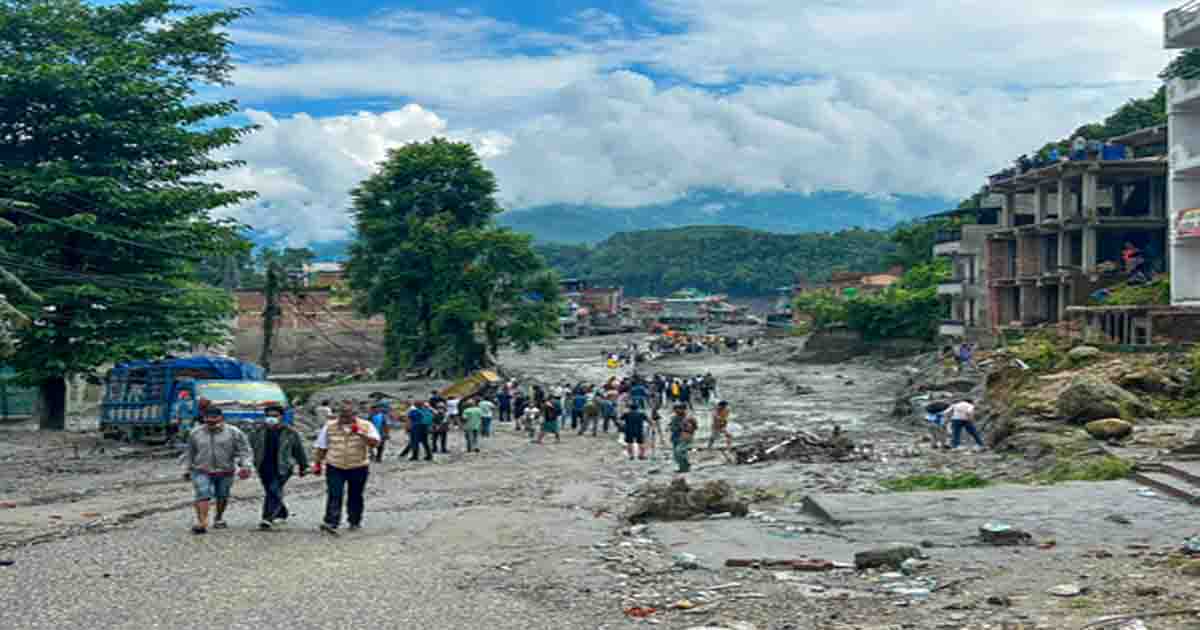
The initiative comes as Nepal seeks to strengthen its capacity to prepare for, withstand and recover from natural disasters in the wake of devastating floods in the Bhotekoshi and downstream Trishuli river basins on August 26. The floods have killed nearly 1,500 people, while more than 5,000 remain unaccounted for, according to the National Disaster Risk Reduction and Management Authority.
Triggered by an avalanche near the Nepal-China border that blocked the river’s flow, the floods swept away several human settlements, a dozen hydropower projects, a solar plant, and several roads and bridges. Physical damage is estimated at 1.66 billion US dollars, according to the World Bank’s Global Rapid Post-Disaster Damage Estimation report.
According to the World Bank, Nepal is highly vulnerable to earthquakes, floods, landslides and other climate-related hazards, which can cause extensive damage to infrastructure, disrupt economic activities and place considerable pressure on public finances.
A catastrophe bond is a financial instrument that allows governments or other entities to transfer specific disaster risks to investors. Depending on the terms of the bond, investors may lose some or all of their principal if a specified disaster occurs, allowing the funds to be used to support the affected entity.
“Such instruments can provide an alternative source of disaster financing, potentially enabling governments to access funds more quickly than relying solely on budget reallocations or post-disaster assistance,” the World Bank said.
The initiative is part of the World Bank Group’s established catastrophe bond programme, which has helped countries access international capital markets to transfer disaster risks and secure financial protection against natural hazards.
The World Bank helps countries increase their financial resilience to disasters by supporting disaster risk financing programmes and offering contingent financing and insurance solutions.
It also assists countries in designing, developing and implementing comprehensive disaster risk financing strategies.
“A risk financing strategy helps clients determine a balance between retaining risk, for example, through a contingent financing product, and transferring risk, for example, through an insurance product,” the World Bank said.
A range of financial products can be used to address the financial risks of disasters, and the optimal mix of approaches depends on the types of risks faced by a country and the frequency and severity of disaster events, it said.
Developing countries are particularly vulnerable to the economic and fiscal consequences of disasters because of factors such as gaps in insurance coverage, inadequate infrastructure resilience, and the concentration of populations and economic activities in exposed areas.
“Following a major disaster, governments often have to redirect budgetary resources towards emergency response, relief and reconstruction, potentially affecting other development priorities,” the World Bank said.

Kajol gives us a glimpse of today’s Anjali as ‘Kuch Kuch Hota Hai’ turns 28 years old

India-US trade deal 98-99 percent done: US official

CJP Tiranga march: Delhi Police circulate list of rules for respecting national flag

NHRC seeks reports on assault on woman in Gujarat, contaminated borewell water in Maharashtra

‘With arrival of SSR, SIR has become zero’: Akhilesh Yadav’s swipe at EC’s new revision exercise in 17 states

Rahul, Cong ecosystem want to force regime change: BJP after Neha Bora praises B’desh Gen-Z protest

BJP pays tribute to ex-President Abdul Kalam, recalls his enduring influence on generations of India’s youth

Mumbai Cyber Cell arrests 6 members of organized gang in major operation; Beware of cyber fraudsters; Digital arrest has no legal status; DCP Bajrang Bansode

INDIA bloc begins protest march against ECI

Maha Congress stages agitation against Gyanesh Kumar
-

 Crime4 years ago
Class 10 student jumps to death in Jaipur
-

 Maharashtra2 years ago
Mumbai Local Train Update: Central Railway’s New Timetable Comes Into Effect; Check Full List Of Revised Timings & Stations
-

 Maharashtra2 years ago
Mumbai To Go Toll-Free Tonight! Maharashtra Govt Announces Complete Toll Waiver For Light Motor Vehicles At All 5 Entry Points Of City
-

 Maharashtra2 years ago
False photo of Imtiaz Jaleel’s rally, exposing the fooling conspiracy
-

 National News2 years ago
Ministry of Railways rolls out Special Drive 4.0 with focus on digitisation, cleanliness, inclusiveness and grievance redressal
-

 Maharashtra2 years ago
Maharashtra Elections 2024: Mumbai Metro & BEST Services Extended Till Midnight On Voting Day
-

 National News2 years ago
J&K: 4 Jawans Killed, 28 Injured After Bus Carrying BSF Personnel For Poll Duty Falls Into Gorge In Budgam; Terrifying Visuals Surface
-

 Crime2 years ago
Baba Siddique Murder: Mumbai Police Unable To Get Lawrence Bishnoi Custody Due To Home Ministry Order, Says Report