
Maharashtra
The Holy Prophet came as a mercy to the world not only to humans but also to animals.

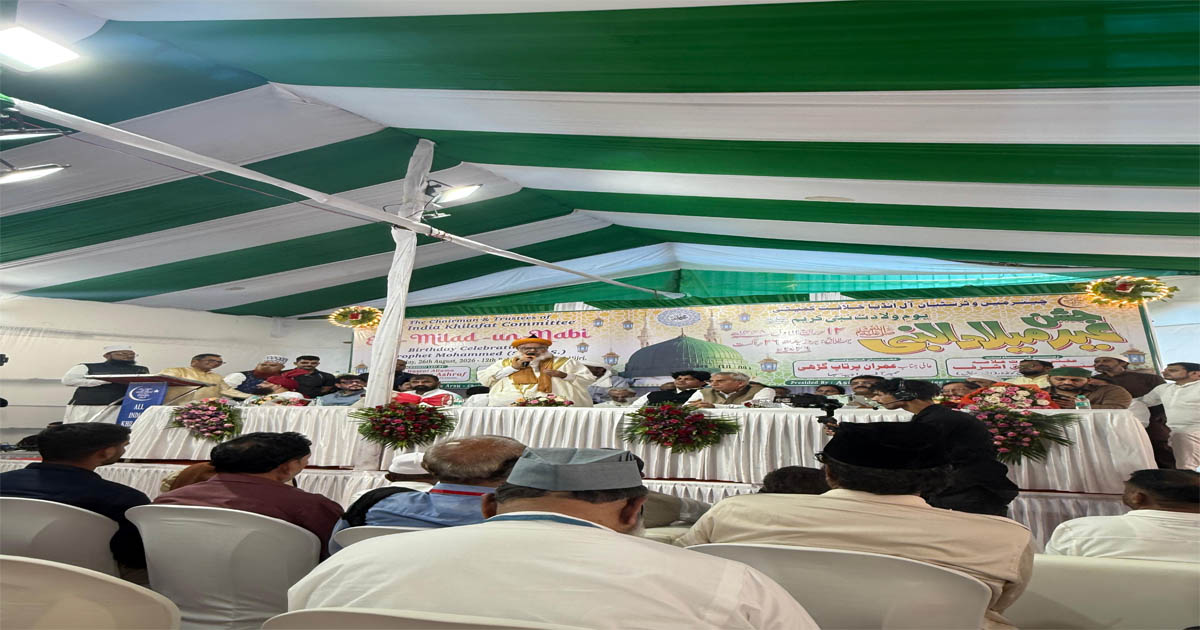
Mumbai: the arrival of the government, the arrival of the master, the arrival of the lord, the streets of Mumbai echoed with the loud slogans of “Welcome, welcome, welcome” when the historic Muhammadi procession was taken out from the Khalifat House. The procession was warmly welcomed at every place. The procession was accompanied by a convoy of lovers of the Prophet, reciting Naat and Manaqabat along the way, playing drums. The convoy of lovers of the Prophet passed through the Muslim-majority areas of Nagpara, Madnapura, Do Tanki and other highways and came to a peaceful end at Mastan Talab after reciting Naat, Manaqabat and prayers. Before the procession, a meeting was held at the Khalifat House, where scholars described the Holy Prophet (peace be upon him) as a mercy for the worlds and said that today the world has come to his aid. Addressing the gathering, Mufti Hazrat Allama Khaliq Ashraf, Principal of Darul Uloom Ashrafia Mazhar Uloom, said that until 40 years before the announcement of Prophethood, people were indeed human, but they did not have human qualities. He (PBUH) transformed the beasts, i.e., beasts, into humans on the land of Arabia. My Holy Prophet did not come as a mercy only for humans, but he came as a mercy for animals as well. When the Prophet (peace be upon him) visited the house of a deer owner, the deer said that it had two children and wanted permission to breastfeed them. The Prophet (peace be upon him) told the deer owner that this deer is the mother of two children and wants permission to breastfeed her children and will return after breastfeeding. The owner then asked who would guarantee that the deer would return. The Prophet (peace be upon him) guaranteed the return of the deer and the deer returned after breastfeeding. The Prophet (peace be upon him) expressed his desire to buy the deer. The deer owner gave the deer to the Prophet (peace be upon him) and then he untied its rope and set it free. The deer said that you are Muhammad Mustafa (peace be upon him), you were the only one who could set me free. You (peace be upon him) were merciful not only to humans but also to animals. This Muhammadan procession will be successful when humanity is shown in the procession. If an ambulance comes on the way, give way to it. Eid Priority should be given to welfare works on Milad-un-Nabi and good deeds should be done on the birth of Muhammad (peace be upon him). This will be our true tribute to the Holy Prophet (peace be upon him). Deputy Chairperson of the Legislative Council Sachin Ahir said that the Holy Prophet (peace be upon him) has spread the message of peace and is the standard bearer of justice and humanity. The message of brotherhood and peace is spread in the procession of Eid Milad-un-Nabi and unity is achieved. We are different, our ways of worship are unique, but our homeland is one and our goal is to promote unity. Member of Parliament Congress Senior Leader Imran Pratap Garhi started his speech with a poem and said that.
I respect all the people in the world, but after Mustafa, Imran Pratap Garhi narrated the history of the Khilafat Movement and said that Gandhiji had started the Non-Cooperation Movement along with the Khilafat Movement. When the Messenger of Allah was sent into the world, he was sent as a mercy for the whole world. India is like a bouquet and we have made countless sacrifices for the freedom of this country. Therefore, the unity and solidarity of this country is its specialty. Former MLA Waris Pathan said that this is not a political procession, by the grace of Allah Almighty, we have all gathered here to celebrate the birth anniversary of the Holy Prophet. MLA Amin Patel said that you (PBUH) have come to this earth as a mercy for the worlds and we, the lovers of the Holy Prophet (PBUH), celebrate his birth anniversary. Member of Assembly Manoj Jamsatkar said that the Khilafat Committee is of historical importance and the procession of Milad is taken out from here. You (PBUH) have broken the chains of ignorance, oppression and oppression and given a new life to humanity. After the meeting, after the prayers and greetings, the meeting took the form of a procession. In the procession, the leader of the procession, Allama Khaliq Ashraf, Congress leader and MP Imran Parpapgarhi, MP Amin Patel and others rode in an open jeep and led the procession. The procession was given a grand welcome by the Baikla Fruit Market. Before the vehicle of these leaders, a convoy of lovers of the Prophet was playing Naat and Manaqabat of the Prophet of Mercy in a respectful and respectful manner, which was very unique. The procession also included tableaux of the holy place, in which the attractions of Medina and Mecca were also included on trucks. In view of Eid Milad-un-Nabi, the police had also made strict security arrangements. Additional Commissioner Central Region Vikram Di Mane, along with the procession staff, was on duty to provide security for the procession. No untoward incident of any kind was reported during the procession and the procession ended peacefully.

Maharashtra
Maha govt forms task force to shape comprehensive transit network under ‘Viksit Maharashtra 2047’

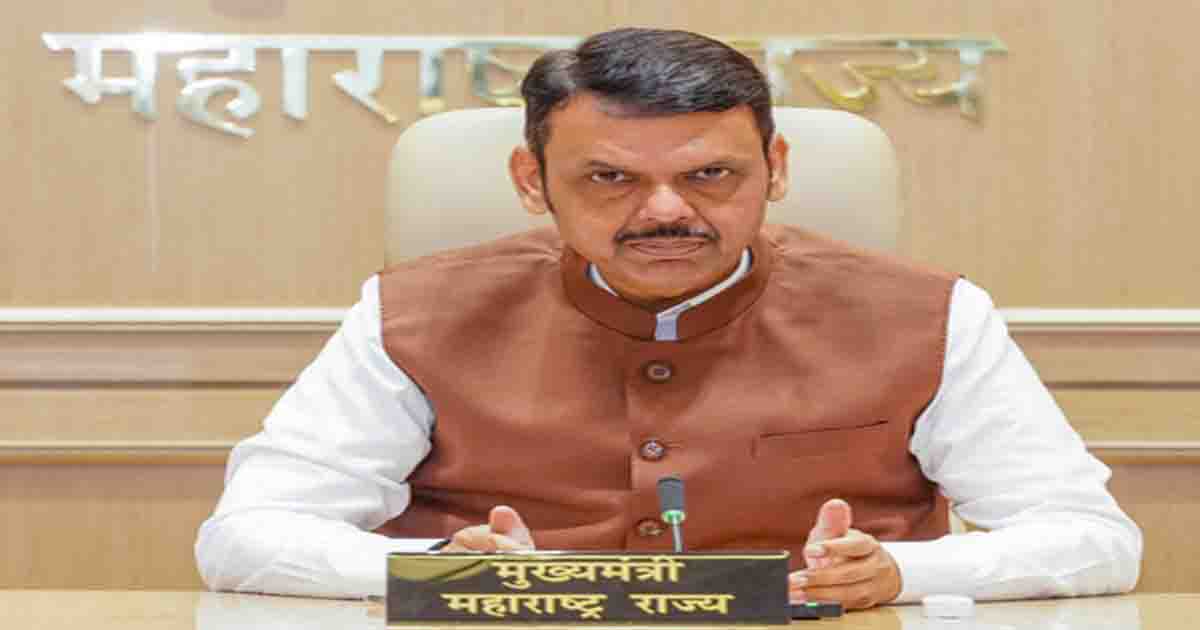
Mumbai, Oct 15: In a major step towards modernising urban mobility, the Maharashtra government has issued a Government Resolution (GR) to establish a high-level Task Force, which will draft a comprehensive framework for expanding railway networks, metro corridors, and Regional Rapid Transit Systems (RRTS) across the Mumbai Metropolitan Region (MMR) and other urban areas in the state.
The initiative aligns with the ‘Viksit Maharashtra 2047’ vision, which aims to plan and expand transit networks more effectively and systematically. The formation of the Task Force follows a high-level meeting held on October 7, under the chairmanship of the Additional Chief Secretary (Urban Development-1).
The newly established task force has been mandated to deliver its strategic recommendations and report within six months. Its core responsibilities include the formulation of policy recommendations and coordination measures to ensure seamless integration of public transit networks under the Viksit Maharashtra 2047 goals, conducting deep assessments regarding feasibility, suitability, and economic viability to determine which transport systems should be deployed in specific regions and the evaluation of the expansion of railway networks, the implementation of metro corridors, RRTS, and connecting major cities via semi-high-speed rail.
The task force comprises key leaders and planning chiefs from major infrastructure and urban development bodies.
Chaired by the Chairman and Managing Director, Mumbai Railway Vikas Corporation (MRVC), the Chief Manager (Planning), Mumbai Railway Vikas Corporation (MRVC), will be the member secretary. The task force’s members include Joint Secretary (UD-7), Urban Development Department; Director (Planning/Projects), Maharashtra Metro Rail Corporation Ltd. (Maha-Metro), Nagpur; Director (Projects), Maharashtra Metro Rail Corporation Ltd. (Maha-Metro), Pune; Director (Planning), Mumbai Metro Rail Corporation Ltd. (MMRCL), Mumbai; Head (Transport & Communications), Mumbai Metropolitan Region Development Authority (MMRDA), Mumbai.
The invitees (Planning Department Heads) include the representatives from CIDCO (Navi Mumbai), Pune Metropolitan Region Development Authority, Nashik Metropolitan Region Development Authority, Chhatrapati Sambhajinagar Metropolitan Region Development Authority, Nagpur Metropolitan Region Development Authority, and Maha Mumbai Metro Operation Corporation Limited.
The task force chairman is also empowered to invite additional members as necessary for deliberations.
The transit network in the Mumbai Metropolitan Region (MMR) comprises a massive, multi-modal public transport system that serves millions of daily commuters. It is anchored by the historic suburban railway grid, rapidly expanding metro lines, and feeder systems.
Spanning over 435 km, Mumbai’s suburban rail network is one of the oldest and busiest in Asia, carrying roughly 7.5 million passengers daily. It is structured mainly across three primary trunk routes — the Western Line, Central Line, and Harbour Line — extending from South Mumbai deep into the extended suburbs and neighbouring districts.
The network continues to undergo capacity upgrades, station improvements, and rolling stock modernisation (including widespread introduction of air-conditioned local train services) managed by the Central Railway, Western Railway, and other bodies, such as the Mumbai Railway Vikas Corporation (MRVC).
The Mumbai Metro network has seen substantial operational growth, scaling up to an operational length of roughly 80 km across key intersecting corridors. Line 1 (Blue Line): Versova to Ghatkopar (11.4 km, fully elevated, operational since 2014) while Line 2A (Yellow Line): Dahisar East to Andheri West (18.6 km), Line 7 (Red Line): Dahisar East to Gundavali (16.5 km) are operational and Line 3 (Aqua Line): Cuffe Parade to Aarey Colony (33.5 km, fully underground, completed in phases through late 2025, serving major commercial hubs like BKC and the airport).
Daily metro ridership has scaled past 1.6 million passengers, providing vital east-west and north-south links that complement the traditional north-south bias of the suburban rail network.
Over 120 km of additional metro tracks are currently in various phases of construction or approvals (including Line 2B, Line 4/4A Green Line, Line 5, Line 6, and extensions like Lines 9 and 12) to interconnect Thane, Navi Mumbai, Kalyan, and Mira-Bhayander.
A single monorail corridor operates in pockets of the city, though its integration and service reliability have faced historic bottlenecks. Extensive municipal and state transport bus fleets (BEST, TMT, KDMT, NMMT) serve as critical first- and last-mile connectors to railway and metro stations.
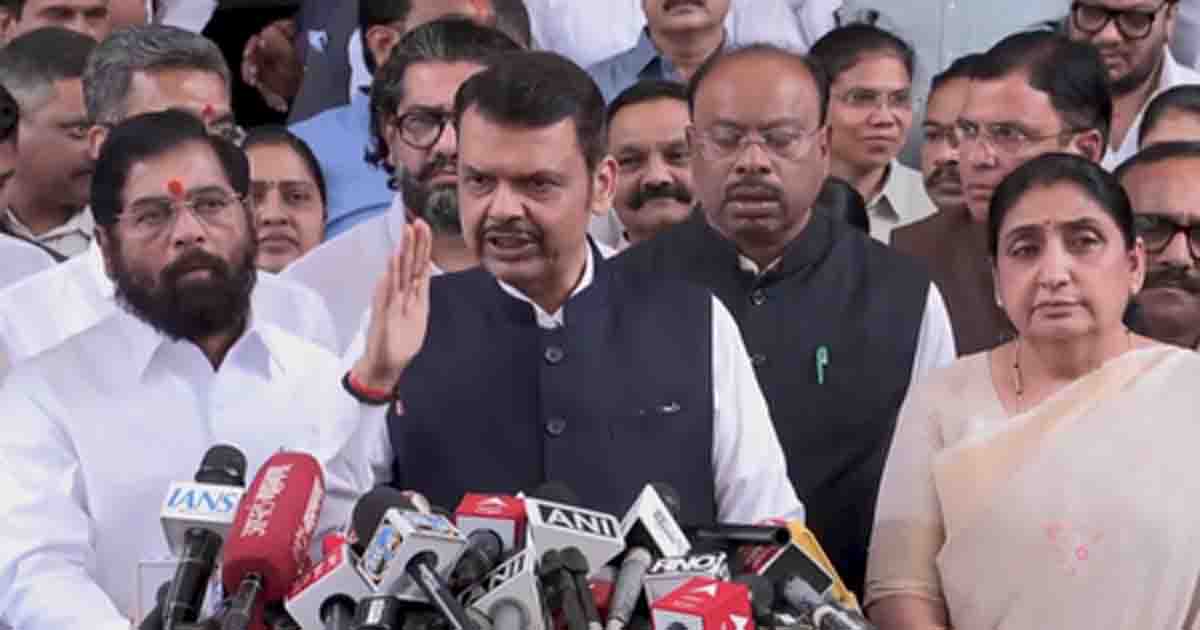
Mumbai, Oct 14: The Maharashtra Cabinet, chaired by Chief Minister Devendra Fadnavis, on Wednesday passed a unanimous resolution congratulating Prime Minister Narendra Modi on completing an unbroken 25 years of public service as head of government, spanning his tenures as Chief Minister and Prime Minister from October 7, 2001, to October 7, 2026.
The cabinet lauded PM Modi’s leadership in driving national transformation across good governance, inclusive development, infrastructure expansion, social empowerment, and national security.
Highlighting his philosophy of serving as “Pradhan Sevak”, the resolution emphasised how his policies have prioritised the welfare of the poor, exploited, deprived, and vulnerable sections of society.
Acknowledged the national goal of reaching a USD 5 trillion economy by 2029 and highlighted Maharashtra’s concurrent objective of building a USD 1-trillion economy backed by robust central support.
The resolution noted that infrastructure projects worth approximately Rs 12 lakh crore are currently underway in the state with central collaboration.
The 701 km Hindu Hrudaysamrat Balasaheb Thackeray Maharashtra Samruddhi Mahamarg expressway was completed, boosting economic development across Vidarbha, Marathwada, and North Maharashtra. There has been accelerated momentum for metro projects in Mumbai, Pune, and Nagpur, including the 33.5-km underground Mumbai Metro Line 8 (Colaba-Bandra-SEEPZ). The 22-km Mumbai Trans Harbour Link (Atal Setu) and the Navi Mumbai International Airport have become operational, while the construction of the Vadhavan Port in Palghar district and the Mumbai-Ahmedabad Bullet Train project are underway.
PM Modi-led government took the historic decision granting Classical Language status to Marathi on October 3, 2024, alongside the establishment of the Centre of Excellence for Classical Marathi Language Studies in Pune.
The resolution also recognised central initiatives, including celebrating Chhatrapati Shivaji Maharaj (including naval insignia inspired by the Rajmudra and UNESCO World Heritage status for 12 hill forts), the development of Panchteerth sites, land allocation for the Dr Babasaheb Ambedkar National Memorial at Indu Mill, and the nationwide celebrations for Mahatma Phule’s bicentenary alongside the Bhide Wada memorial project.
The resolution cited the implementation of 29 major and medium irrigation projects under the Pradhan Krishi Sinchayee Yojana (creating 4.49 lakh hectares of irrigation capacity by July 2026), the Baliraja Jal Sanjeevani Yojana (allocating Rs 15,000 crore for drought-prone regions), and the installation of 11.80 million solar agricultural pumps under the PM-KUSUM scheme alongside PM Surya Ghar free electricity initiatives.
Further, the resolution highlighted the reach of Ayushman Bharat (benefitting 4.40 crore citizens in Maharashtra), PM Kisan Samman Nidhi (supporting 91 lakh farmers), Jeevan Mission water connections, and extensive coverage under rural housing, Mudra loans, and financial inclusion schemes.
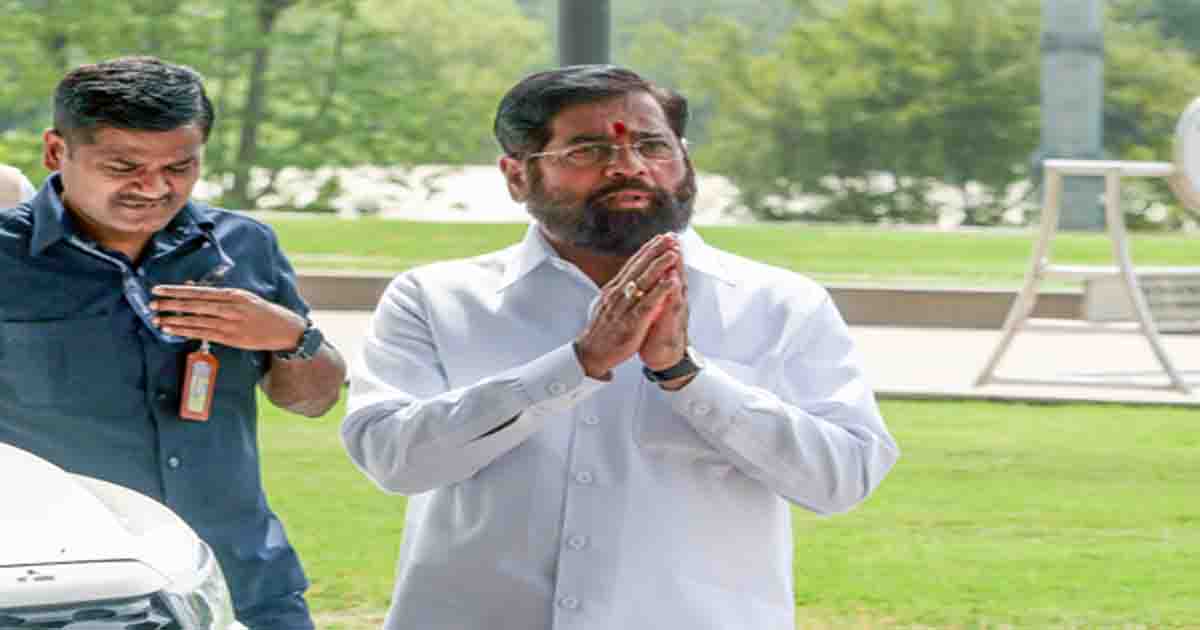
Mumbai, Oct 14: Launching a scathing attack on the Opposition INDIA Bloc, Maharashtra Deputy Chief Minister, Eknath Shinde, on Wednesday alleged that marching towards the Supreme Court to exert pressure on the judiciary is a direct insult to constitutional institutions.
Addressing the media after a weekly Cabinet meeting, he claimed, “Holding the Constitution in one hand while pressuring constitutional bodies with the other, is a clear attempt to create anarchy in the country, which will strictly not be tolerated.”
Shinde emphasised that organising protests to pressurise an apex constitutional body like the Supreme Court is a serious matter.
He noted that the Constitution provides independent status to institutions such as the Supreme Court and the Election Commission, and any attempt to undermine them amounts to disrespecting the constitutional framework itself.
“The possibility of foreign powers conspiring behind these demonstrations cannot be ruled out,” he alleged, warning the public to stay vigilant against forces attempting to instigate instability. He further stated that creating distrust against constitutional bodies to build false narratives is detrimental to national interest.
Shinde further informed that the Maharashtra Cabinet passed a congratulatory resolution honouring Prime Minister Narendra Modi on completing 25 years in public leadership (serving as Chief Minister and Prime Minister), which will be formally sent to him.
He highlighted that under PM Modi’s leadership, India’s global stature has soared, with 36 nations conferring their highest civilian honours upon him. Contrasting India’s economic trajectory, he noted that prior to 2014, India was counted among the ‘Fragile Five’ economies, whereas today it stands among the top five global economies and is advancing toward the fourth spot.
With the vision of Viksit Bharat by 2047, over 25 crore people have risen out of multidimensional poverty, and nearly 80 crore citizens receive food grain support.
Taking a swipe at the Congress, Shinde remarked that late Balasaheb Thackeray’s dreams of abrogation of Article 370 and building the Ram Mandir in Ayodhya remained pending under the Congress’ rule but were fulfilled under PM Modi.
“During Congress rule, terror attacks were met with mere diplomatic letters. Following Pahalgam, PM Modi’s leadership ensured the destruction of terror launchpads inside Pakistan, showing the world a new India that does not write letters but delivers a direct response,” he alleged.
Turning to the agricultural crisis in the state, Shinde informed that the severe drought situation led the government to expand the list of declared drought-hit talukas from 265 to 305. The state is offering 12 major relief concessions, including loan recovery stays, debt restructuring, student fee waivers, and fodder and water supply assistance. He announced that Rs 5,000 financial aid each will be deposited directly into the accounts of drought-affected farmers before Diwali.
“The primary right over the state treasury belongs to the farmers and we will not leave them in the lurch,” he assured.
A central team has already conducted inspections across affected areas, and PM Modi held a 30-minute discussion with Shinde, assuring full central support alongside Union Home Minister Amit Shah.
Questioning the Opposition’s priorities, Shinde asked, “In times of drought, what is more important—the farmers or protests against the Supreme Court?”
Concluding his address, he remarked, “Modi doesn’t care about detractors; he keeps working. A lion is not frightened by the noise of jackals,” reiterating that the nation’s path remains focussed on development, national security, and farmer welfare.

Building collapses in Varanasi due to firecracker explosion, two rescued

Take child sexual abuse material circulation on social media seriously, SC tells Centre

Kerala: 5,991 road accident deaths occurred on national highways in three years

SC refers Rajpal Yadav cheque bounce cases to mediation for amicable settlement

NEET-PG 2026: SC issues notice on plea seeking candidate-wise disclosure of questions, options, and answers

Rahul, Cong ecosystem want to force regime change: BJP after Neha Bora praises B’desh Gen-Z protest

Mumbai Cyber Cell arrests 6 members of organized gang in major operation; Beware of cyber fraudsters; Digital arrest has no legal status; DCP Bajrang Bansode

BJP pays tribute to ex-President Abdul Kalam, recalls his enduring influence on generations of India’s youth

INDIA bloc begins protest march against ECI

Maha Congress stages agitation against Gyanesh Kumar
-

 Crime4 years ago
Class 10 student jumps to death in Jaipur
-

 Maharashtra2 years ago
Mumbai Local Train Update: Central Railway’s New Timetable Comes Into Effect; Check Full List Of Revised Timings & Stations
-

 Maharashtra2 years ago
Mumbai To Go Toll-Free Tonight! Maharashtra Govt Announces Complete Toll Waiver For Light Motor Vehicles At All 5 Entry Points Of City
-

 Maharashtra2 years ago
False photo of Imtiaz Jaleel’s rally, exposing the fooling conspiracy
-

 National News2 years ago
Ministry of Railways rolls out Special Drive 4.0 with focus on digitisation, cleanliness, inclusiveness and grievance redressal
-

 Maharashtra2 years ago
Maharashtra Elections 2024: Mumbai Metro & BEST Services Extended Till Midnight On Voting Day
-

 National News2 years ago
J&K: 4 Jawans Killed, 28 Injured After Bus Carrying BSF Personnel For Poll Duty Falls Into Gorge In Budgam; Terrifying Visuals Surface
-

 Crime2 years ago
Baba Siddique Murder: Mumbai Police Unable To Get Lawrence Bishnoi Custody Due To Home Ministry Order, Says Report