
Maharashtra
Maha govt forms task force to shape comprehensive transit network under ‘Viksit Maharashtra 2047’

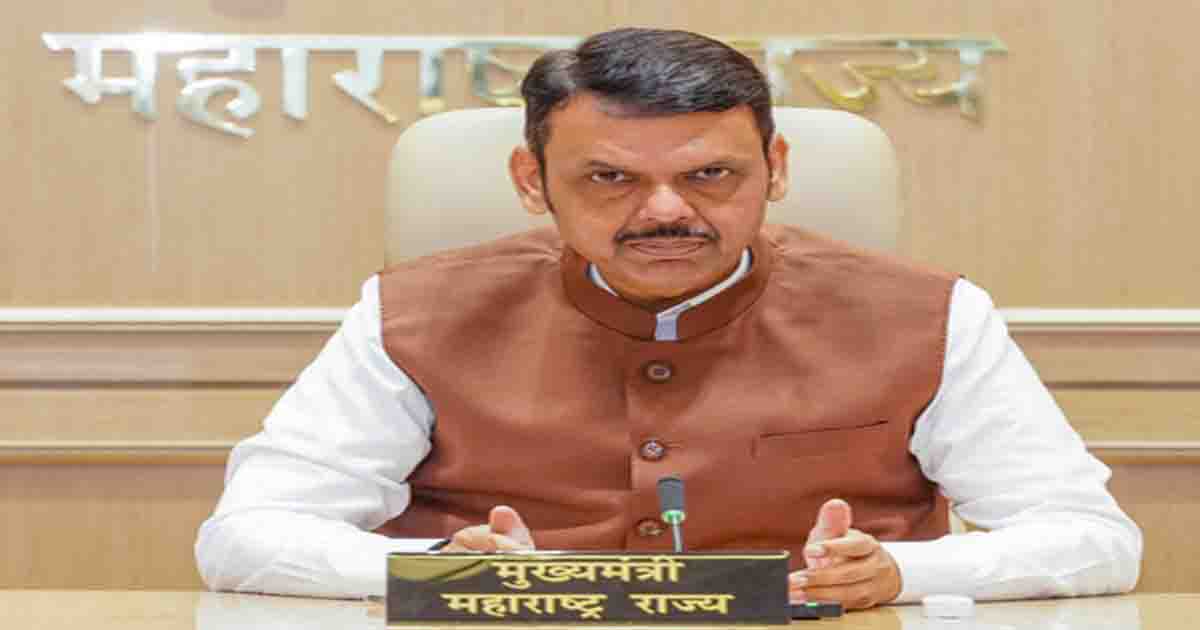
Mumbai, Oct 15: In a major step towards modernising urban mobility, the Maharashtra government has issued a Government Resolution (GR) to establish a high-level Task Force, which will draft a comprehensive framework for expanding railway networks, metro corridors, and Regional Rapid Transit Systems (RRTS) across the Mumbai Metropolitan Region (MMR) and other urban areas in the state.
The initiative aligns with the ‘Viksit Maharashtra 2047’ vision, which aims to plan and expand transit networks more effectively and systematically. The formation of the Task Force follows a high-level meeting held on October 7, under the chairmanship of the Additional Chief Secretary (Urban Development-1).
The newly established task force has been mandated to deliver its strategic recommendations and report within six months. Its core responsibilities include the formulation of policy recommendations and coordination measures to ensure seamless integration of public transit networks under the Viksit Maharashtra 2047 goals, conducting deep assessments regarding feasibility, suitability, and economic viability to determine which transport systems should be deployed in specific regions and the evaluation of the expansion of railway networks, the implementation of metro corridors, RRTS, and connecting major cities via semi-high-speed rail.
The task force comprises key leaders and planning chiefs from major infrastructure and urban development bodies.
Chaired by the Chairman and Managing Director, Mumbai Railway Vikas Corporation (MRVC), the Chief Manager (Planning), Mumbai Railway Vikas Corporation (MRVC), will be the member secretary. The task force’s members include Joint Secretary (UD-7), Urban Development Department; Director (Planning/Projects), Maharashtra Metro Rail Corporation Ltd. (Maha-Metro), Nagpur; Director (Projects), Maharashtra Metro Rail Corporation Ltd. (Maha-Metro), Pune; Director (Planning), Mumbai Metro Rail Corporation Ltd. (MMRCL), Mumbai; Head (Transport & Communications), Mumbai Metropolitan Region Development Authority (MMRDA), Mumbai.
The invitees (Planning Department Heads) include the representatives from CIDCO (Navi Mumbai), Pune Metropolitan Region Development Authority, Nashik Metropolitan Region Development Authority, Chhatrapati Sambhajinagar Metropolitan Region Development Authority, Nagpur Metropolitan Region Development Authority, and Maha Mumbai Metro Operation Corporation Limited.
The task force chairman is also empowered to invite additional members as necessary for deliberations.
The transit network in the Mumbai Metropolitan Region (MMR) comprises a massive, multi-modal public transport system that serves millions of daily commuters. It is anchored by the historic suburban railway grid, rapidly expanding metro lines, and feeder systems.
Spanning over 435 km, Mumbai’s suburban rail network is one of the oldest and busiest in Asia, carrying roughly 7.5 million passengers daily. It is structured mainly across three primary trunk routes — the Western Line, Central Line, and Harbour Line — extending from South Mumbai deep into the extended suburbs and neighbouring districts.
The network continues to undergo capacity upgrades, station improvements, and rolling stock modernisation (including widespread introduction of air-conditioned local train services) managed by the Central Railway, Western Railway, and other bodies, such as the Mumbai Railway Vikas Corporation (MRVC).
The Mumbai Metro network has seen substantial operational growth, scaling up to an operational length of roughly 80 km across key intersecting corridors. Line 1 (Blue Line): Versova to Ghatkopar (11.4 km, fully elevated, operational since 2014) while Line 2A (Yellow Line): Dahisar East to Andheri West (18.6 km), Line 7 (Red Line): Dahisar East to Gundavali (16.5 km) are operational and Line 3 (Aqua Line): Cuffe Parade to Aarey Colony (33.5 km, fully underground, completed in phases through late 2025, serving major commercial hubs like BKC and the airport).
Daily metro ridership has scaled past 1.6 million passengers, providing vital east-west and north-south links that complement the traditional north-south bias of the suburban rail network.
Over 120 km of additional metro tracks are currently in various phases of construction or approvals (including Line 2B, Line 4/4A Green Line, Line 5, Line 6, and extensions like Lines 9 and 12) to interconnect Thane, Navi Mumbai, Kalyan, and Mira-Bhayander.
A single monorail corridor operates in pockets of the city, though its integration and service reliability have faced historic bottlenecks. Extensive municipal and state transport bus fleets (BEST, TMT, KDMT, NMMT) serve as critical first- and last-mile connectors to railway and metro stations.

Maharashtra
Objection Even to the Birth of Muslim Children? Political Controversy Over Somaiya’s Remarks, Demand for a Population Control Committee.


Mumbai : BJP leader Kirit Somaiya has raised objections regarding the birth rate of Muslim children in Mumbai. Expressing concern over these figures, he claimed that by 2051, the Muslim population could surpass that of the majority community—the Hindus. On the platform ‘X’ (formerly Twitter), Somaiya stated that for every three Hindu children born, two Muslim children are born. He noted that over the past five years, 336,525 Hindu children and 220,754 Muslim children were born in Mumbai. Somaiya further stated that he has requested Chief Minister Devendra Fadnavis to establish a ‘Demographic Balance Committee’ to prevent Mumbai from becoming a “Muslim Mumbai.” In his tweet, he also alleged a conspiracy to transform Mumbai into a “Muslim Mumbai” and, citing deep concern over the birth rate of Muslim children, urged the Chief Minister to form a committee to implement population control measures.
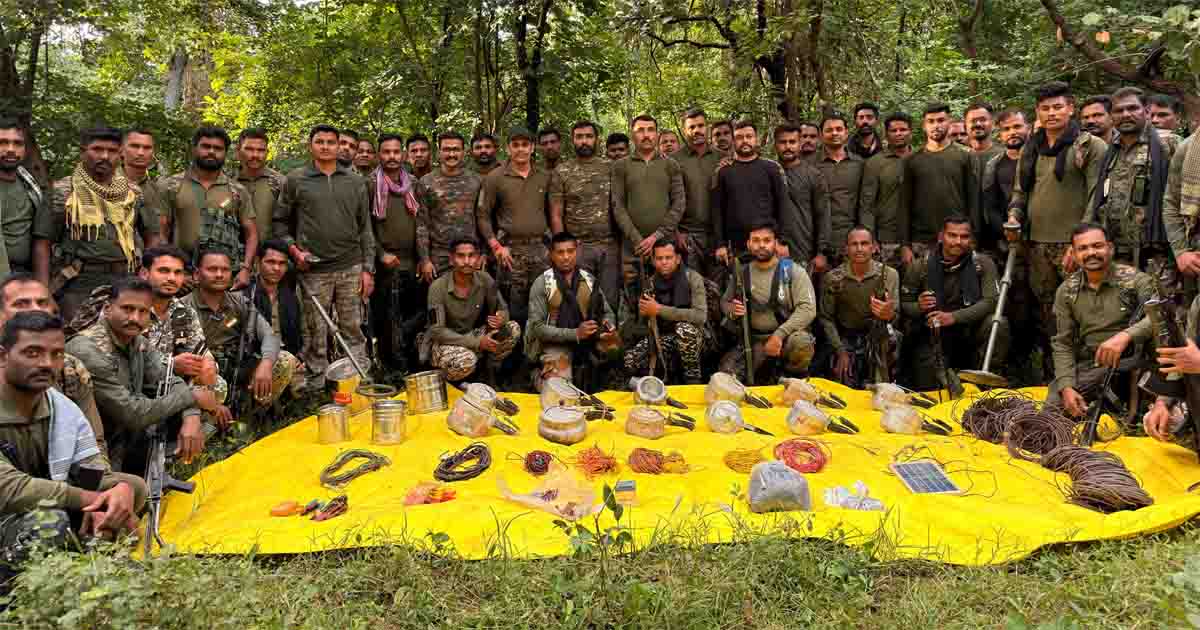
The Maoist ideology has now been eradicated from the Gadchiroli district, and its residents are finally free from the terror that once loomed over them. In the past, Maoists would use various weapons and explosive materials to threaten security forces and carry out subversive activities. Taking advantage of remote, forest-covered areas situated along state borders, they would prepare these materials and bury them underground in secret locations. Their objective was to use these stockpiles to launch attacks on security forces during specific periods—such as ‘Naxal weeks’—or throughout the electoral process. Taking decisive action against this threat, the Gadchiroli Police successfully recovered these hidden materials on November 4, 2026.
According to details, the Gadchiroli Police received intelligence that Maoists had concealed explosives in the forest area of ’Tavve,’ which falls under the jurisdiction of the Garapatti Police Station. Acting on this information, and under the guidance of Gadchiroli Superintendent of Police (SP) M. Ramesh, a search operation was launched on November 4, 2026. The operation involved four units from the ‘Special Operation Squad’ (covering Gadchiroli and Pranhita) and two teams from the ‘Bomb Detection and Disposal Squad’ (BDDS). During a search operation conducted by the ‘Special Operation Squad’ (SOS) and the ‘Bomb Detection and Disposal Squad’ (BDDS) in a forested area, the following items were recovered from the site: 1) 11 pressure cookers (intended for use as improvised explosive devices), 2) 3 bundles (100 feet) of Cordtex wire, 3) 3 kilograms of gunpowder, 4) 4 detonators, 5) a 12-volt battery, 6) 250 grams of pyrotechnic powder (used in fireworks), 7) 4 steel containers, 8) 8 bundles of wire, 9) a solar panel, along with other materials linked to Maoist activities.
The operation was successfully executed under the guidance and instructions of Gadchiroli Superintendent of Police (SP) M. Ramesh. It was carried out under the supervision of Additional SP (Operations) Kartik Madhera, Additional SP Shri Gokul Raj G., Additional SP Aheri (Pranhita) Harshvardhan B.J., and Deputy Superintendent of Police (Operations) Sunil Oike. Personnel from the ‘Special Operation Squad’ (Gadchiroli and Pranhita), the Intelligence Cell, and the ‘Bomb Detection and Disposal Squad’ (BDDS) participated in the operation. Gadchiroli Superintendent of Police M. Ramesh has commended the personnel who took part in the operation.
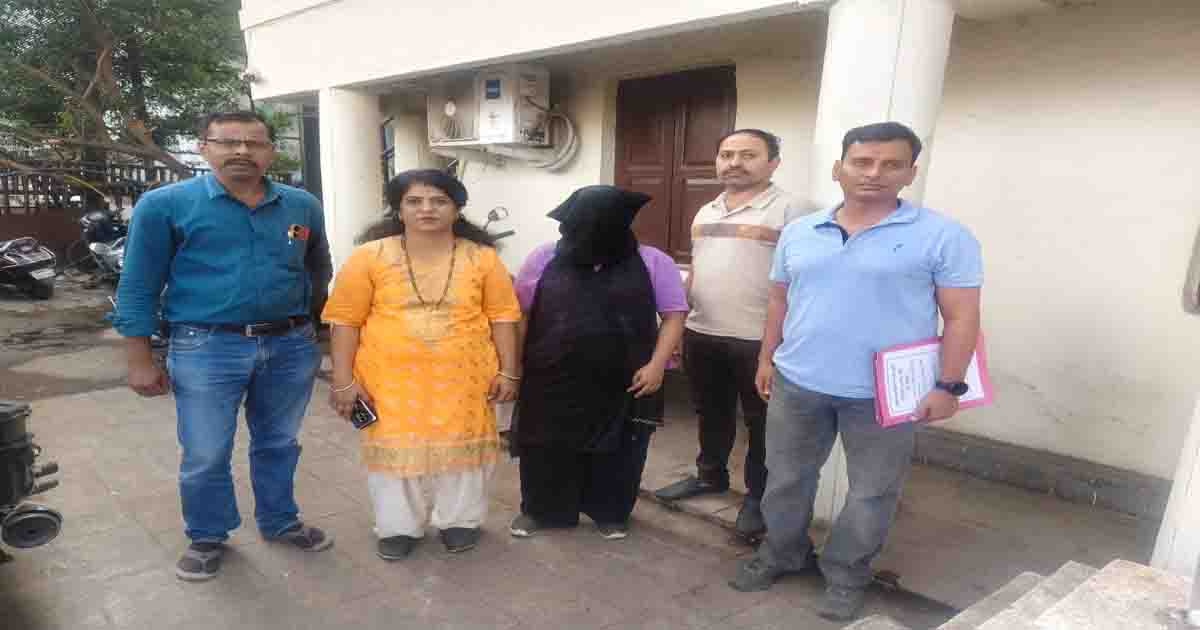
In Mumbai, a woman was taken into custody and arrested after police discovered a stash of Codeine Phosphate-based syrup bottles—intended for sale—stored in a room. The arrested individual has been identified as Haseena, a 38-year-old resident of Kurla, Mumbai. Authorities seized 460 bottles of the Codeine Phosphate-based narcotic syrup (100ml each), with an estimated value of ₹4,60,000. This successful operation was carried out by the Mumbai Police, under the guidance of Police Commissioner Deven Bharti, Joint Police Commissioner Anil Kumbhare, DCP (ANC) Poornima Chougule-Shringi, and the Bandra Unit.

Salman Khan has dismissed reports of government pressure to make changes to the script of ‘Matrubhumi’.

Fire breaks out at car showroom in Delhi, several vehicles gutted

Haryana CM invites Rahul Gandhi for debate on ‘vote chori’

Objection Even to the Birth of Muslim Children? Political Controversy Over Somaiya’s Remarks, Demand for a Population Control Committee.

IT Q2 results beat low expectations, but demand recovery pushed to FY28: Report

Rahul, Cong ecosystem want to force regime change: BJP after Neha Bora praises B’desh Gen-Z protest

BJP pays tribute to ex-President Abdul Kalam, recalls his enduring influence on generations of India’s youth

Attack on democratic rights: INDIA Bloc leaders on detentions of anti-ECI protestors

Congress trying to protect 3 crore Bangladeshi infiltrators in voter list: HM Shah

Online betting: ED conducts searches at 20 premises in Mumbai, Pune, Hyderabad
-

 Crime4 years ago
Class 10 student jumps to death in Jaipur
-

 Maharashtra2 years ago
Mumbai Local Train Update: Central Railway’s New Timetable Comes Into Effect; Check Full List Of Revised Timings & Stations
-

 Maharashtra2 years ago
Mumbai To Go Toll-Free Tonight! Maharashtra Govt Announces Complete Toll Waiver For Light Motor Vehicles At All 5 Entry Points Of City
-

 Maharashtra2 years ago
False photo of Imtiaz Jaleel’s rally, exposing the fooling conspiracy
-

 National News2 years ago
Ministry of Railways rolls out Special Drive 4.0 with focus on digitisation, cleanliness, inclusiveness and grievance redressal
-

 Maharashtra2 years ago
Maharashtra Elections 2024: Mumbai Metro & BEST Services Extended Till Midnight On Voting Day
-

 National News2 years ago
J&K: 4 Jawans Killed, 28 Injured After Bus Carrying BSF Personnel For Poll Duty Falls Into Gorge In Budgam; Terrifying Visuals Surface
-

 Crime2 years ago
Baba Siddique Murder: Mumbai Police Unable To Get Lawrence Bishnoi Custody Due To Home Ministry Order, Says Report