
National News
Telangana financially on a firm footing

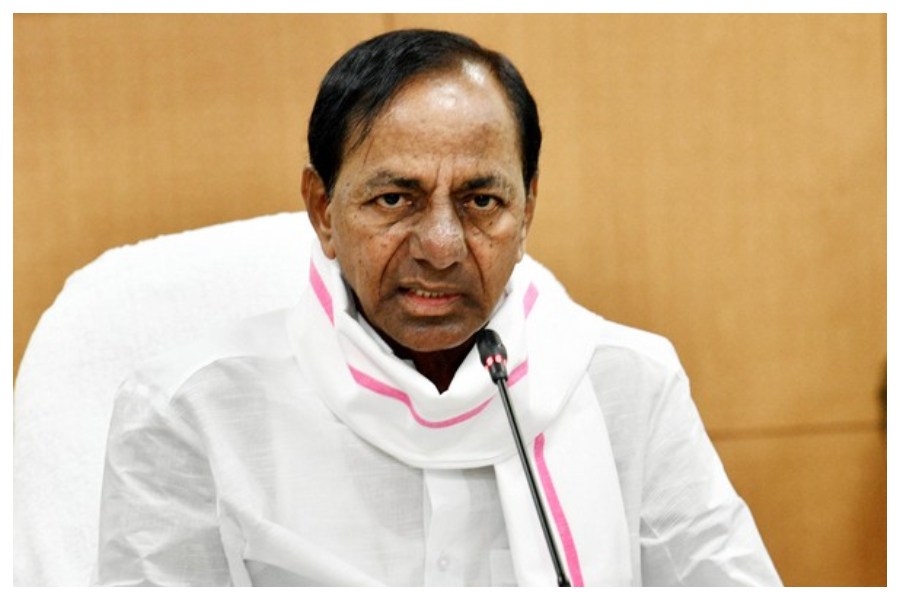
Despite the dent in revenues during the last two years due to Covid pandemic and lack of help from the Centre, Telangana financially appears to be on a firm footing.
With a higher growth rate and per capita income than many bigger states, India’s youngest state has become the fourth largest contributor to national GDP in a short span of less than eight years and claims to be a model for the entire country in welfare and development.
According to 2020-21 budget estimates, Telangana’s estimated outstanding public debt will be over Rs 2.86 lakh crore. However, the economists say the state has the capacity to manage debts.
According to a study paper released by the Reserve Bank of India (RBI) last month, Telangana’s debt-to-GSDP ratio is the lowest in the country, indicating the fiscal health of the state.
Based on the annual data between 2014-15 and 2018-19, the study paper revealed that the State Performance Composite Index (SPCI) of Telangana has improved. SPCI measures both the fiscal performance and market development of states.
The average debt to Gross State Domestic Product (GSDP) of Telangana from 2014-15 to 2018-19 was 16.1 per cent, which is the lowest among the states in the country.
According to state finance minister T. Harish Rao, Telangana is among the states having the lowest debt burden in the country, dismissing the claim by the opposition parties that the Telangana Rashtra Samithi (TRS) government has pushed the state into a debt trap.
Harish Rao had told the state Assembly last year that Telangana’s debt burden is only 22.8 per cent of GSDP, which is well within the permissible limits under the FRBM Act. Telangana was then at the third place from the bottom in the country.
“The Centre’s debt burden is 62.2 per cent of GDP while Telangana’s debt burden is just 22.8 per cent of GSDP,” he had stated.
The RBI also revealed recently that Telangana is the fourth largest contributor to the country’s economy. According to “Handbook of Statistics on the Indian Economy 2020-21” the Net State Value Added (NSVA) by Telangana at current prices to the country increased from Rs 4,16,930 crore in 2014-15 to Rs 8,10,503 crore in 2020-21.
Leaders of ruling TRS say this contribution is significant considering the fact that Telangana is the 11th largest state in terms of geographical area and 12th in terms of population.
According to Telangana State Statistical Abstract Report released this week, provisional estimates show the GSDP of Telangana at current prices in 2020-21 was Rs 9,80,407 crore. Between 2012-13 and 2020-21, the average annual GSDP growth of Telangana was 6.8 per cent and GDP of India was 5.1 per cent.
For 2021-22, the state presented a Rs 2.31 lakh crore budget despite the pandemic drastically impacting the state’s economy. For 2020-21 the budget size was Rs 1.82 lakh crore.
The budget for FY22 comprised revenue expenditure of Rs 1.69-lakh crore and capital expenditure of Rs 29,046 crore. The fiscal deficit went up to Rs 45,509 crore from Rs 33,191 crore in the previous financial year.
Telangana’s growth rate has been consistently higher. In 2018-19 it was 9.8 per cent against GDP growth rate of 6.5 per cent. The growth rate was 6 per cent in 2019-20 against GDP growth rate of 4 per cent. In 2020-21, it was -0.6 per cent against All India -7.3 per cent.
In another key performance indicator, the per capita income of Telangana increased from Rs 91,121 in 2011-12 to Rs 2,37,632 in 2020-21. This is against all India averages ranging from Rs 63,462 in 2011-12 to Rs 1,28,829 in 2020-21.
In another boost for Telangana, the latest data by the Centre for Monitoring Indian Economy revealed that the state has lowest unemployment at 0.7 per cent.
Economist Papa Rao believes that Telangana has no financial worries as it is performing well despite not receiving the support from the Centre. “Some debts were unduly raised but the state has the capacity to manage them. It can generate its own resources,” he said while pointing out that the state’s tax revenues have gone up during the current year. He, however, said the state should be cautious in raising new loans.
According to him, Telangana in a short span of time has emerged as a progressive state with Hyderabad as the growth engine attracting massive investments. The state created assets in the form of irrigation projects and Mission Bhagiratha which envisages drinking water supply to every house.
He, however, believes that Dalit Bandhu scheme launched by TRS government recently is not viable. Under the scheme claimed to be the only one of its kind in the country, the government plans to provide Rs 10 lakh grant to every Dalit family.
“There are 50 lakh Dalit families. Mobilizing such huge funds is very difficult. This may take many years and may not yield desired results,” Papa Rao said.
Pointing out that an overwhelming majority of Dalits are agriculture labourers, the economist said distribution of land rather than cash would have been more practical.
The state claims to be number one in welfare in the country with a welfare budget of over Rs 40,000 crore. It is implementing a plethora of welfare schemes from social security pensions to various categories to financial help for marriages of poor girls to Rythu Bandhu under which every farmer gets Rs 10,000 as annual investment support for every acre.
However, opposition Congress party leader Dasoju Srravan says that welfare programs should ultimately empower people. “Farmers’ suicides have not stopped despite Rythu Bandhu. During the last 4-5 years 8,000 farmers have ended their lives. Farmers do not want Bandhus, they want MSP for the hard work they put in and market support for agricultural produce,” he said.
The national spokesperson of the Congress party believes that the TRS government is focusing more on voter alluring programs but not voter empowerment programs. “As a result the state has landed into a serious debt trap and today we are a financially bankrupt state. We don’t have money for salaries and we don’t have money for repayment to contractors.”
He blamed lopsided priorities of the government, mismanagement, callous understanding of development for this situation. “On top of it is mysterious corruption in projects. TRS leadership has become extremely rich overnight,” he said.
The Congress leader alleged that the state government is making people addicted to liquor by opening more and more wine and bar shops across the state. “It is giving pensions and some money under Rythu Bandhu but draining their resources through sales tax on liquor. See how liquor revenue has increased in these 7-8 years,” he said.
The revenue from liquor sales, which was Rs 10,833 crore, has gone up to Rs 27,888 crore in 2020-21.
He alleged that the TRS government completely ignored sectors like education, health and employment generation
“The chief minister proudly says a private villa in Hyderabad costs Rs 25 crore and still people are coming and buying. Is that a development indicator? It is a third-rate governance indicator. In management we call it critical incident analysis while analyzing performance. The CM made critical comments reflecting his innate mindset and how he sees development,” Srravan said.

Mumbai Press Exclusive News
Employee arrested from UP for stealing from Mumbai spice shop, cash recovered

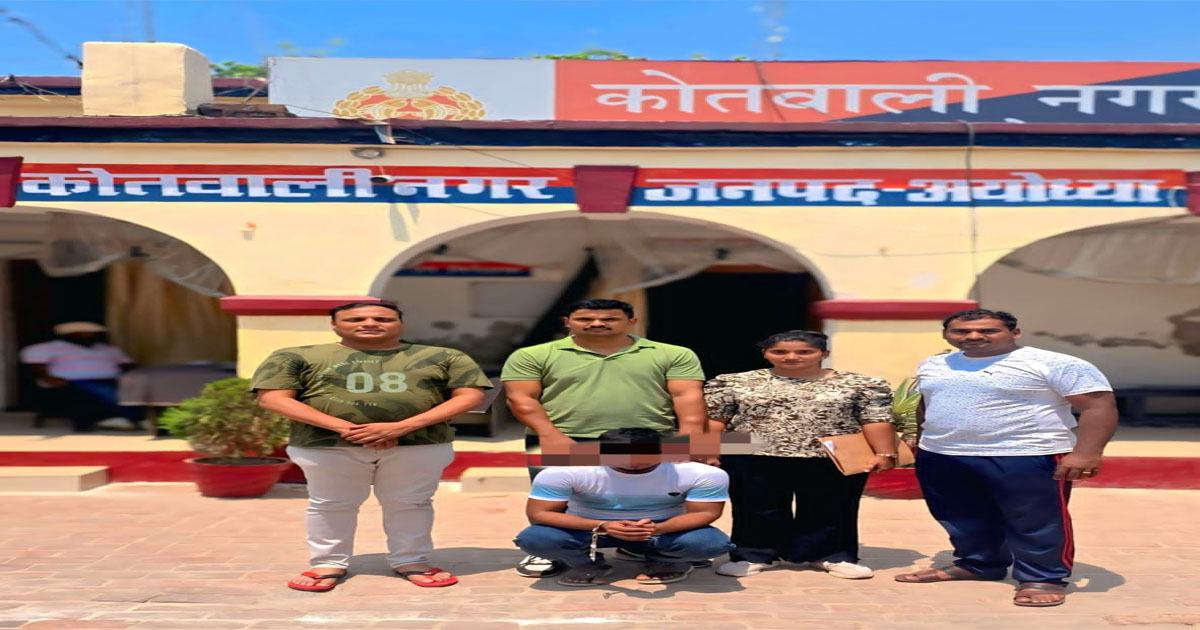
The police have claimed to have arrested an employee thief who stole Rs 13,86,200 from a spice shop in the Kala Chowki area of Mumbai from UP Ayodhya, Uttar Pradesh. The money collected for 8 days at the spice shop in the Kala Chowki area was kept in the grain and the next day the complainant shop owner searched for the money in the grain but did not find it. After that, he filed a report at the police station and the police conducted an inquiry and found that the employee working at the shop had been absent since morning, which made the police suspicious and the police arrested Ajay Kumar Shyam Sundar from Ayodhya, UP and recovered more than Rs 10 lakh in cash from his possession. This operation was solved by DCP Ragasudha on the instructions of Mumbai Police Commissioner Devin Bharti and the police have succeeded in arresting the accused from UP.
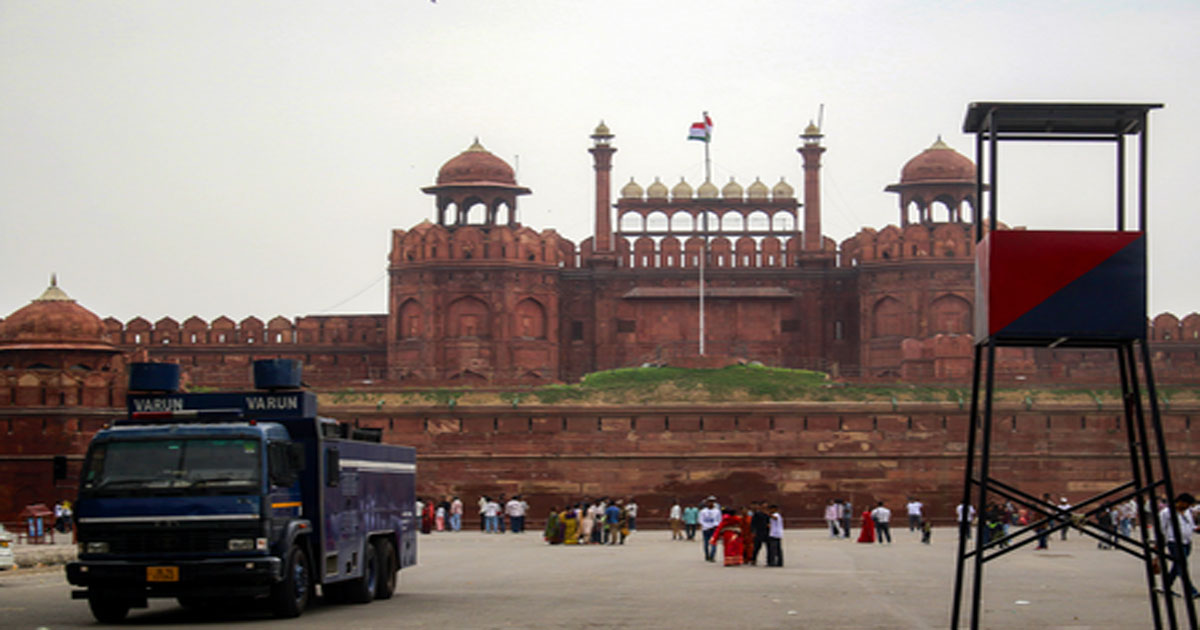
New Delhi, April 18: The Delhi Police Special Cell on Saturday revealed that it had arrested four youths from three states for online radicalising and recruiting others with the aim to establish an Islamic state through ‘jihad’, officials said. According to police, a connection to the Red Fort blast was also established, which had claimed 11 lives and injured several others.
One of the accused had visited various sensitive installations including the Red Fort in Delhi in December 2025. He also posted a photo of the historical place with a black flag atop it to radicalise others, police said.
The official statement highlighted that the youths were radicalised into joining terrorism-related activities. Police have also recovered material used for preparation of Improvised Explosive Devices (IED) from one of them. Along with this, the mobile phones of the accused were also seized.
A team of Delhi Police Special Cell, led by Inspectors Vinay Pal and Manoj Kumar, including ACP Ashish Kumar, arrested the four accused persons from Maharashtra, Odisha and Bihar. An FIR was registered under relevant Sections of BNS, 2023.
Among the arrested youths, Mosaib Ahmad, Jalaluddin Siddiqui and Mohammad Hammad were residents of Maharashtra. While Sheikh Imran belonged to Odisha and Mohammad Sohail hailed from Bihar.
Police confirmed that the accused were part of various closed groups on encrypted social media platforms. They were allegedly engaged in radicalising and recruiting others for establishing Islamic state through ‘jihad’.
The investigation revealed that two members of the module were in the process of collecting locally-sourced material for preparing a remote-controlled IED which could be used for a terrorist attack at an opportune time.
Revealing their modus operandi, officials said that one member of the module was exhorting others to collect weapons and explosives for participating in ‘Ghazwa-e-Hind’. He shared his bank account details on his social media channel for crowd funding in support of ‘jihad’.
Another accused promised to arrange arms training for the members of the module and asked other members to send money for the same.
One of the accused, Mosaib Ahmad, was a part of multiple online radicalised groups. Police said that he assisted co-accused Mohammad Hammad by opening the circuit of a remote-controlled toy car for IED making and sharing its image within a closed group.
Hammad, in turn, shared pictures of ball bearings, nails, remote-controlled toy cars and boxes as material for preparation of IEDs in a closed group. He handed them over to co-accused Mosaib Ahmad, who, being a mechanic by profession, was tasked with assembling the IED.
Born in Bhubaneswar, Sheikh Imran worked as a security guard and delivery boy. In year 2024, he began listening to lectures (takreers) of Tareeq Jameel, Israr Ahmed, Zakir Naik etc. and gradually developed radical beliefs. He joined his associates through social media. Investigators found that Imran discussed targeting Ram Mandir, Parliament and military installations. He was the one who recced the Red Fort.
A plumber by profession, Mohammad Sohail was also influenced by Israr Ahmed. He created multiple social media accounts and exhorted youth in the name of ‘jihad’. In March 2026, he incited followers of his channel to collect weapons and explosives for ‘Ghazwa-e-Hind’ and even shared bank details to collect money.
New Delhi, April 17: A high-level government committee, supported by the Petroleum and Natural Gas Regulatory Board (PNGRB), has recommended removing excise duty on Compressed Natural Gas (CNG) to lower prices and promote consumption of the green fuel to meet India’s target of achieving a 15 per cent share of natural gas in the fuel mix by 2030.
The key recommendations include removing the 14 per cent excise duty to make CNG a more attractive fuel option and also lowering GST on CNG vehicles to 5 per cent to bring them on par with electric vehicles to accelerate adoption.
The recommendations favour maintaining a competitive price difference between CNG and petrol so that consumers are encouraged to switch to the green fuel.
The tax relief on natural gas is anticipated to impact roughly 1.9 crore households and 38.41 lakh potential users.
These proposals aim to address the currently high taxes, such as the 14 per cent excise duty and state VAT, which have made CNG less competitive in certain regions, particularly in the southern states.
Meanwhile, the government has also been encouraging households to switch to piped natural gas (PNG) from LPG as the West Asia crisis has disrupted supply chains. The expansion of piped natural gas (PNG) has gained momentum, with about 4.58 lakh new PNG connections being gasified and about 5.1 lakh additional customers registering for new connections since March this year.
Till April 15, about 35,000 PNG consumers have surrendered their LPG connections via MYPNGD.in website. States have been advised to facilitate new PNG connections for domestic and commercial consumers.
The government is encouraging natural gas adoption through synergy between the PNGRB and states as part of India’s transition toward a cleaner and more sustainable energy future. As part of the strategy to increase the share of natural gas in the country’s energy mix, the expansion of the City Gas Distribution (CGD) network through Piped Natural Gas (PNG) connections has emerged as one of the key performing areas.
Spearheaded by entities authorised by the PNGRB, the CGD network now spans 307 geographical areas (GAs), covering nearly 100 per cent of the country’s geographical area except islands, touching around 784 districts across 34 states and Union Territories. The government has undertaken a series of policy and regulatory measures to catalyse growth in this sector.
These measures range from allocating administered price domestic gas and easing supply mechanisms to mandating PNG provisions in government and defence residential complexes, granting Public Utility status to CGD projects, and directing the CPWD and the NBCC to include PNG provisions in all government residential complexes.

Mumbai Municipal Corporation’s ‘Marg Pranali’ launched… will strengthen connectivity with Mumbaikars: Mayor Ritu Tawde

Action against Lenskart store BJP leader Nazia Elahi confirmed

Case registered for BJP rally blocking road in Worli

Navi Mumbai: PMC Cracks Down On Encroachments In Kamothe, New Panvel; Illegal Stalls, Nurseries Demolished

Mumbai: Raees Sheikh demands Devendra Fadnavis to scrap online registration requirement for power loom electricity concession

Mumbai: 28-Year-Old Ghatkopar Woman Killed By Speeding Tanker While Crossing Road, Driver Arrested

Dhurandhar 2 Box Office Collection Day 9: Ranveer Singh Starrer Earns ₹41.55 Crore On Its Second Friday; Enters ₹700 Crore Club

Bharti Airtel Receives ₹1,74,000 Penalty Notice From DoT For Subscriber Verification Lapses

Thane Horror: Man Slashed With Chopper In Naupada For Refusing ‘Vargani’, Caught On Camera

PM Modi & US President Donald Trump Hold Crucial Talks As West Asia Crisis Deepens; Musk Joins Call
-

 Crime4 years ago
Class 10 student jumps to death in Jaipur
-

 Maharashtra2 years ago
Mumbai Local Train Update: Central Railway’s New Timetable Comes Into Effect; Check Full List Of Revised Timings & Stations
-

 Maharashtra2 years ago
Mumbai To Go Toll-Free Tonight! Maharashtra Govt Announces Complete Toll Waiver For Light Motor Vehicles At All 5 Entry Points Of City
-

 Maharashtra2 years ago
False photo of Imtiaz Jaleel’s rally, exposing the fooling conspiracy
-

 National News2 years ago
Ministry of Railways rolls out Special Drive 4.0 with focus on digitisation, cleanliness, inclusiveness and grievance redressal
-

 Maharashtra1 year ago
Maharashtra Elections 2024: Mumbai Metro & BEST Services Extended Till Midnight On Voting Day
-

 National News2 years ago
J&K: 4 Jawans Killed, 28 Injured After Bus Carrying BSF Personnel For Poll Duty Falls Into Gorge In Budgam; Terrifying Visuals Surface
-

 Crime2 years ago
Baba Siddique Murder: Mumbai Police Unable To Get Lawrence Bishnoi Custody Due To Home Ministry Order, Says Report