
Business
Tata Motors to hike prices of passenger vehicles

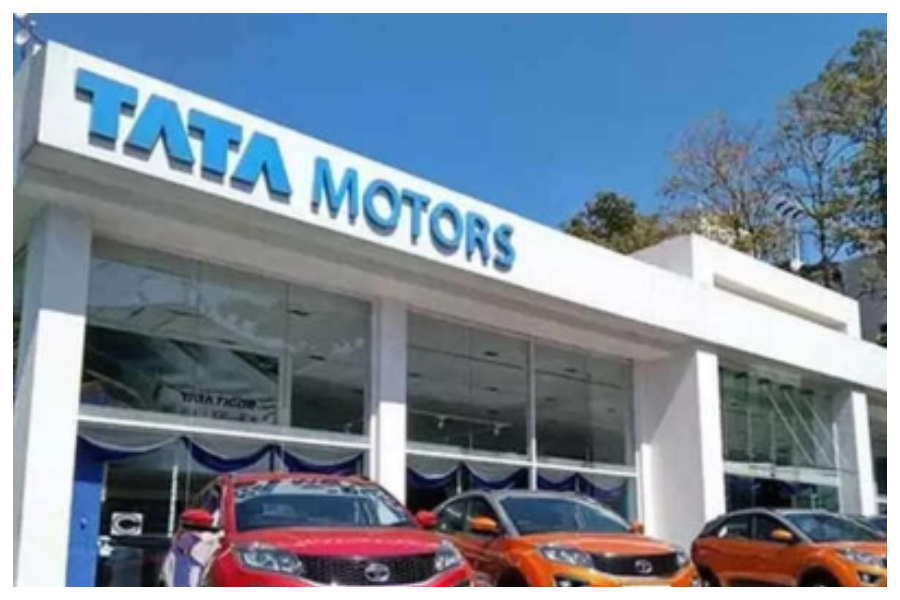
Automobile major Tata Motors Ltd on Saturday said it will be increasing the prices of its passenger vehicles effective from November 7.
The passenger car segment is logging good monthly growth for the industry players.
While Tata Motors did not specify the model wise price hike, it said the weighted average increase will be 0.9 per cent depending on the variant and the model.
“The company has been absorbing a significant portion of the increa sed costs but the steep rise in overall input costs has compelled it to pass on some proportion through this minimal price hike,” Tata Motors said.


Mumbai, April 23: The Indian equity markets posted sharp losses early on Thursday tracking cautious global cues and sustained foreign institutional selling, after the recent rally.
As of 9.25 am, Sensex lost 671 points, or 0.85 per cent, to reach 77,845 and Nifty dipped 179 points, or 0.74 per cent, to reach 24,198.
Main broad-cap indices showed divergence with the benchmark indices, as the Nifty Midcap 100 dipped 0.34 per cent, and the Nifty Smallcap 100 lost 0.16 per cent.
All sectoral indices traded in red except pharma as well as oil and gas up 0.71 per cent and 0.02 per cent. Nifty auto and consumer durables were the top losers down 1.03 per cent and 1.61 per cent respectively.
The immediate support zone of Nifty is placed at near 24,100–24,000, while resistance is observed in the 24,400–24,500 range.
In the previous session, benchmark indices on a weaker note after failing to sustain higher levels. Selling pressure was visible in banking and financial stocks following their recent outperformance.
IT stocks also remained weak, tracking subdued global cues and uncertainty in overseas markets. FMCG, Energy and other defensive sectors showed relative resilience.
The US markets gained after President Donald Trump extended a ceasefire with Iran, saying it was warranted due to Tehran’s “seriously fractured” government.
President Trump said the ceasefire will be in place until Iran submits a proposal or concludes talks, even as the US military continues its blockade of Iranian ports.
On the fundamental side, earnings remain a strong tailwind, with Q1 earnings growth tracking and forward EPS estimates seeing upward revision, market participants said.
In Asian markets, China’s Shanghai index lost 0.74 per cent, and Shenzhen dipped 1.48 per cent, Japan’s Nikkei lost 1.06 per cent, and Hong Kong’s Hang Seng Index declined 1.2 per cent. South Korea’s Kospi lost 0.91 per cent.
The US markets ended in green overnight as Nasdaq gained 1.64 per cent. The S&P 500 advanced 1.05 per cent, and the Dow Jones added 0.69 per cent.
On April 22, foreign institutional investors (FIIs) net sold equities worth Rs 2,078 crore in India, while domestic institutional investors (DIIs) were also net sellers of equities worth Rs 1,078 crore.
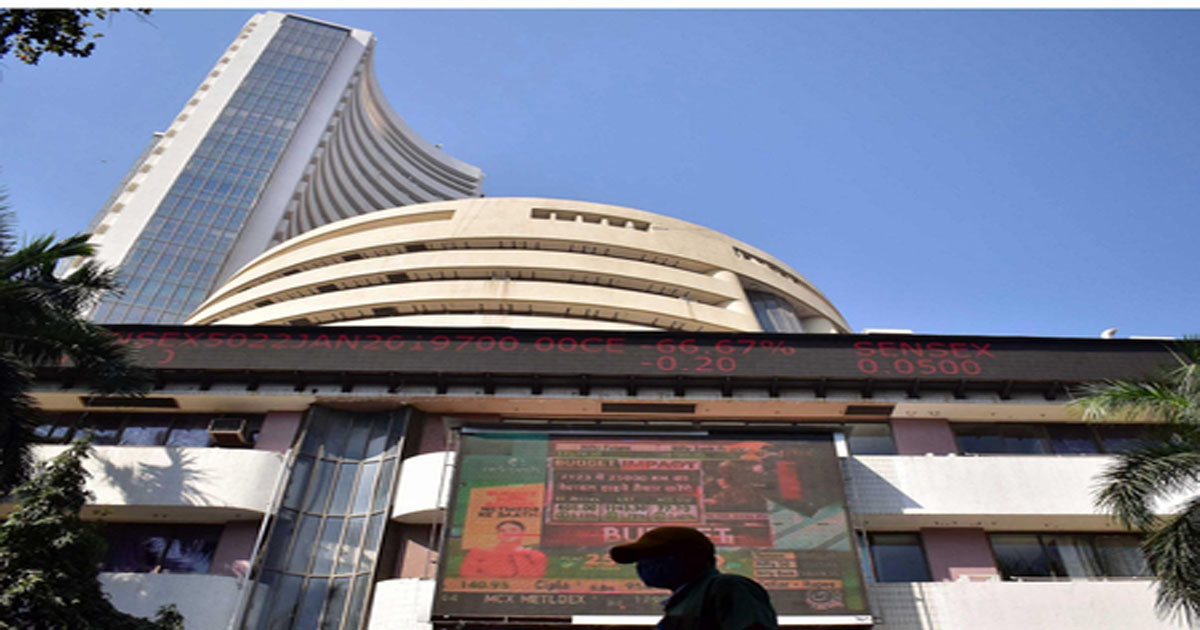
Mumbai, April 21: Indian equity benchmarks extended their gains for a third consecutive session on Tuesday, as investor sentiment improved amid expectations that the United States and Iran may prolong their ceasefire during upcoming talks.
The Nifty and the Sensex ended higher, supported by buying in select heavyweight stocks and optimism around easing geopolitical tensions in West Asia.
At the closing bell, the Nifty was at 24,576.60, up by 0.87 per cent or 211.75 points. The Sensex ended the intra-day session 0.96 per cent or 753.03 points higher at 79,273.33.
Commenting on Nifty technical outlook, experts said that the 24,600 level now acts as an immediate resistance where minor supply was observed.
“A decisive breakout and sustained move above this level could open further upside toward 24,850, followed by the key psychological level of 25,000, where stronger supply is expected,” an analyst stated.
“On the downside, the 24,350–24,400 range has now turned into an immediate support zone after acting as resistance earlier,” an analyst mentioned.
Among the top gainers on the Nifty were Nestle India, Trent, and Hindustan Unilever, which helped lift the benchmark index.
Broader markets also reflected positive momentum, with the Nifty MidCap index closing 0.49 per cent higher and the Nifty SmallCap index rising 0.88 per cent.
On the sectoral front, the Nifty FMCG and the Nifty Realty outperformed other indices, driven by strong buying interest.
In contrast, the Nifty Pharma lagged and emerged as the worst-performing sector for the day.
Investors remained cautiously optimistic about geopolitical developments, as both Iranian and US delegations, along with US Vice President JD Vance, are expected to participate in talks aimed at reaching a broader agreement to end hostilities in the region.
However, uncertainty persists as tensions between the two countries escalated ahead of the meeting.
Iran’s Parliament Speaker Mohammad Bagher Ghalibaf said in a post on X that Tehran does not support negotiations under threats and indicated that the country is prepared to respond strongly if required.
Earlier, US President Donald Trump warned that failure to reach an agreement before the ceasefire deadline could trigger fresh military escalation, stating that “a lot of bombs” could go off if talks collapse.
“Indian equities are expected to continue their gradual upmove, supported by improving macros, easing crude, and strong Q4 earnings momentum,” an analyst stated.
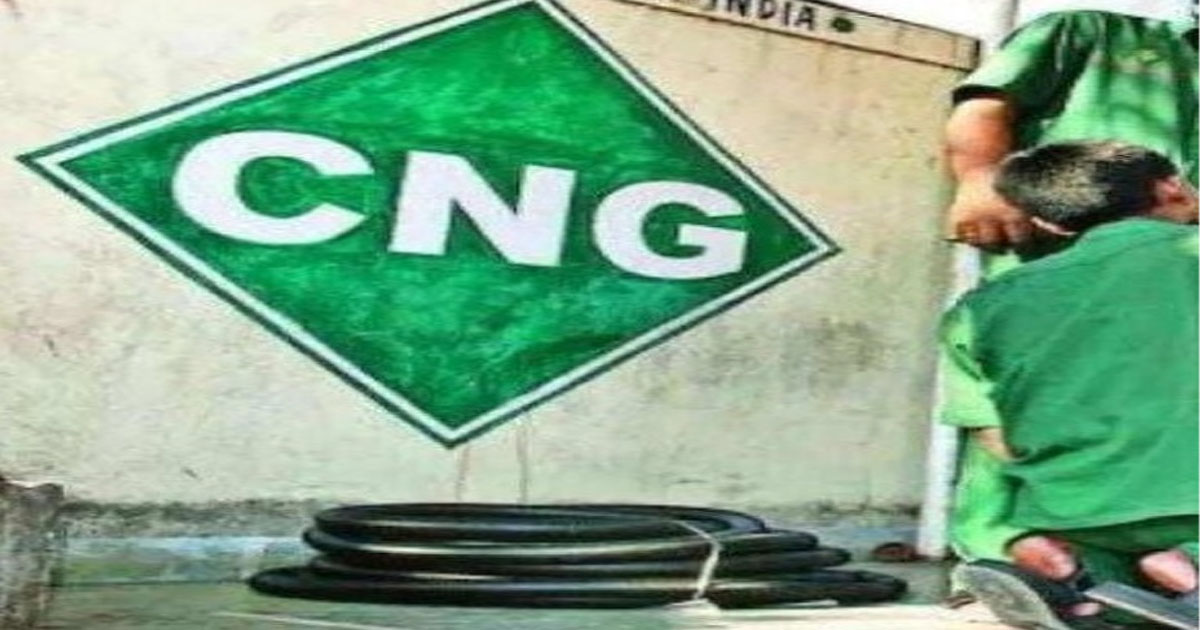
New Delhi, April 17: A high-level government committee, supported by the Petroleum and Natural Gas Regulatory Board (PNGRB), has recommended removing excise duty on Compressed Natural Gas (CNG) to lower prices and promote consumption of the green fuel to meet India’s target of achieving a 15 per cent share of natural gas in the fuel mix by 2030.
The key recommendations include removing the 14 per cent excise duty to make CNG a more attractive fuel option and also lowering GST on CNG vehicles to 5 per cent to bring them on par with electric vehicles to accelerate adoption.
The recommendations favour maintaining a competitive price difference between CNG and petrol so that consumers are encouraged to switch to the green fuel.
The tax relief on natural gas is anticipated to impact roughly 1.9 crore households and 38.41 lakh potential users.
These proposals aim to address the currently high taxes, such as the 14 per cent excise duty and state VAT, which have made CNG less competitive in certain regions, particularly in the southern states.
Meanwhile, the government has also been encouraging households to switch to piped natural gas (PNG) from LPG as the West Asia crisis has disrupted supply chains. The expansion of piped natural gas (PNG) has gained momentum, with about 4.58 lakh new PNG connections being gasified and about 5.1 lakh additional customers registering for new connections since March this year.
Till April 15, about 35,000 PNG consumers have surrendered their LPG connections via MYPNGD.in website. States have been advised to facilitate new PNG connections for domestic and commercial consumers.
The government is encouraging natural gas adoption through synergy between the PNGRB and states as part of India’s transition toward a cleaner and more sustainable energy future. As part of the strategy to increase the share of natural gas in the country’s energy mix, the expansion of the City Gas Distribution (CGD) network through Piped Natural Gas (PNG) connections has emerged as one of the key performing areas.
Spearheaded by entities authorised by the PNGRB, the CGD network now spans 307 geographical areas (GAs), covering nearly 100 per cent of the country’s geographical area except islands, touching around 784 districts across 34 states and Union Territories. The government has undertaken a series of policy and regulatory measures to catalyse growth in this sector.
These measures range from allocating administered price domestic gas and easing supply mechanisms to mandating PNG provisions in government and defence residential complexes, granting Public Utility status to CGD projects, and directing the CPWD and the NBCC to include PNG provisions in all government residential complexes.

Mumbai: Nasik TCS case targeting Nida Khan, police tarnishing its image: Social activist Niranjan Tiklay

Woman supplying drugs at Nesco music concert party exposed, crores of rupees deposited in woman’s account, 11 accused arrested so far

Mumbai : Fire Engulfs 10–12 Vehicles On Ghatkopar–Mankhurd Link Road, No Injuries Reported

The promise of the people of Bhiwandi has been fulfilled… The state government has approved the revised plan of Metro Route 5, comments MLA Raees Sheikh

Elphinstone Bridge Demolition: Last Hurdle Cleared As Haji Noorani Building To Be Razed From April 27, Making Way For Sewri–Worli Connector

Mumbai: 28-Year-Old Ghatkopar Woman Killed By Speeding Tanker While Crossing Road, Driver Arrested

Bharti Airtel Receives ₹1,74,000 Penalty Notice From DoT For Subscriber Verification Lapses

Dhurandhar 2 Box Office Collection Day 9: Ranveer Singh Starrer Earns ₹41.55 Crore On Its Second Friday; Enters ₹700 Crore Club

Thane Horror: Man Slashed With Chopper In Naupada For Refusing ‘Vargani’, Caught On Camera

PM Modi & US President Donald Trump Hold Crucial Talks As West Asia Crisis Deepens; Musk Joins Call
-

 Crime4 years ago
Class 10 student jumps to death in Jaipur
-

 Maharashtra2 years ago
Mumbai Local Train Update: Central Railway’s New Timetable Comes Into Effect; Check Full List Of Revised Timings & Stations
-

 Maharashtra2 years ago
Mumbai To Go Toll-Free Tonight! Maharashtra Govt Announces Complete Toll Waiver For Light Motor Vehicles At All 5 Entry Points Of City
-

 Maharashtra2 years ago
False photo of Imtiaz Jaleel’s rally, exposing the fooling conspiracy
-

 National News2 years ago
Ministry of Railways rolls out Special Drive 4.0 with focus on digitisation, cleanliness, inclusiveness and grievance redressal
-

 Maharashtra1 year ago
Maharashtra Elections 2024: Mumbai Metro & BEST Services Extended Till Midnight On Voting Day
-

 National News2 years ago
J&K: 4 Jawans Killed, 28 Injured After Bus Carrying BSF Personnel For Poll Duty Falls Into Gorge In Budgam; Terrifying Visuals Surface
-

 Crime2 years ago
Baba Siddique Murder: Mumbai Police Unable To Get Lawrence Bishnoi Custody Due To Home Ministry Order, Says Report