
Sports
T20 getting to be similar to a chess game


Cricket’s T20 format was an attempt to liven up the game and make it viewer friendly. This has proven to be a success and a lifeline for the game of cricket. Every match around the world is filled with loud, active and boisterous spectators bursting with enthusiastic energy. It reminds one of the Colosseum, where gladiators fought for their life and prestige during the days of the Roman Empire.
T20 cricket evokes a very similar attachment and emotion among the crowd, however, without the actual blood-thirsty response of yore.
The early days of T20 cricket was looked upon as a slam-bang version, wherein, thoughtless cross-bat heaves and stroke-play was the norm to follow. Yuvraj Singh, hitting 6 sixes off a Stuart Broad over, in the first ever T20 World Cup was the epitome of every batter’s desire. India, winning the Cup in 2007 was just the tonic that the doctor ordered to get the Indian fans activated.
The Indian Premier league (IPL) in 2008 had sceptics who felt that cricket was being sacrificed for commercial gains and that the sport will lose its character and the values that it stands for. The gentleman’s game that revelled in artistic stroke-play, would breed swatters who would do well killing flies. A brilliant 158 runs by Brendon McCullum from New Zealand off just 73 balls for Kolkata Knight Riders in the inaugural match of the IPL in 2008 was an eye opener. He played correct, conventional and courageous cricket shots, that not only made one admire his innings but it also became the precursor for others to follow. It gave just the boost required not only to the T20 format but also to the most lucrative cricket league in the world, the IPL.
Chris Gayle, the powerful and strong West Indian cricket star with his lusty hits, became the superstar of the IPL and one every batter wanted to emulate. Cricket changed from being a game of a number of runs scored to strike-rates, indicating the number of balls faced to get them.
Cricket, therefore, came alive with batters ready to strike and attack. The fast pace of the game forced cricketers to get more agile, fit and thereby look like well-sculptured athletes. The cameras at all corners of the field highlighted every move they made and the slow motion replays became a luxury to enjoy. A cricket match developed into a mystery story of an uncertain ending, as well as giving rise to heroes and villains as it progressed — an entertainment for the family to partake in.
The slam-bang approach of the initial T20 theory gradually gave way to a more planned and strategy-driven concept. Players, matches and conditions were being analysed to the ultimate degree by IT professionals and teams of skilled support staff, utilising the data and findings extensively for their use.
T20 cricket has gradually changed by leaps and bounds. It has become a chess match between two teams, each making moves and thinking steps ahead. Yuzvendra Chahal, the wily leg-spinner and a reputed chess player himself, in a recent interview, stated as to how he studies the batsman to outthink him. Interestingly, the game has become a mental battle between the batter and the bowler. Each one is trying to read the other to outsmart one another.
The batsman has a hint of what the bowler has in mind by the field placement put in place. However, many bowlers have outfoxed the batsman by playing a dummy move. A batter still has an advantage with bowlers having a width restriction as well as a restriction of fielders outside the 30-yard circle. The bowlers have also innovated in a major way. The variety of deliveries that many have now skilled themselves to bowl are quite remarkable and innovative.
Cricket has never had such a transformation like what it is going through in the last decade. Innovative and unimaginable strokes by the batters and varieties of variable deliveries being churned out by bowlers, has made cricket into a very different game from that in the past.
The chess board comes so much into prominence in the present T20 world of cricket. Many pawns are sacrificed and rooks, bishops and knights moved to strategise a victory. A Queen is an all-rounder who could, through batting or bowling, change the complexion of the game. The King is the citadel that every franchise team is protecting, through planned strategies and thoughtful moves to avoid a checkmate.
Cricket finally has become a game of brain as well as brawn — one that requires a cricketer to think correctly and to implement forcefully. The T20 format has totally revolutionised cricket for years to come.
One feels Test cricket will never be the same again. The modern cricketers are products of the fast changing digital world, wherein speed is important for progress. The laggards will be left behind.
Chess too has a ‘Rapid’ version to it. T10 cricket could be the next one to follow. One wonders what new innovation will come forth then.

Sports
‘My role was limited to unknowingly promoting a few brands…’: Shefali Bagga on alleged role in betting app case


New Delhi, Oct 8: Television sports presenter Shefali Bagga, who was under investigation for her alleged role in the Mahadev betting app case, issued a clarification on her involvement in the hight-profile case and said she ‘unknowingly’ promoted the betting app and has co-operated in the investigation with the authorities.
As per the latest Enforcement Directorate (ED) chargesheet, Shefali surrendered Rs 1.20 crore, the balance sum she is accused of receiving to promote betting apps on the Mahadev platform, after being questioned in the case.
“My role was limited to unknowingly promoting a few brands on social media similar to the promotional engagements undertaken by many public figures and celebrities. Beyond this, I had no involvement or association with any other activities or operations relating to those brands or any other entity. I have cooperated with the department’s investigation, surrendered the money and have full faith in our law,” Shefali told media.
According to the chargesheet, the ED found that Shefali had received around Rs 1.5 crore for making promotional videos for the Mahadev betting app syndicate. During the search at her residence in Delhi, ED officials seized Rs 30 lakh in cash, the agency said.
The Mahadev Book, also known as Mahadev Betting App, has emerged as one of the largest online betting platforms in India in recent years. It facilitates illegal betting worth crores of rupees on sports like cricket and football through mobile apps and websites.
The network has spread nationwide and reportedly involves several high-profile individuals. In previous investigations, the ED had seized property worth several crores and arrested individuals connected to the scam.
The Mahadev Betting App has grown into a sprawling illegal enterprise. The ED continues to expand its investigation into this nationwide betting network.
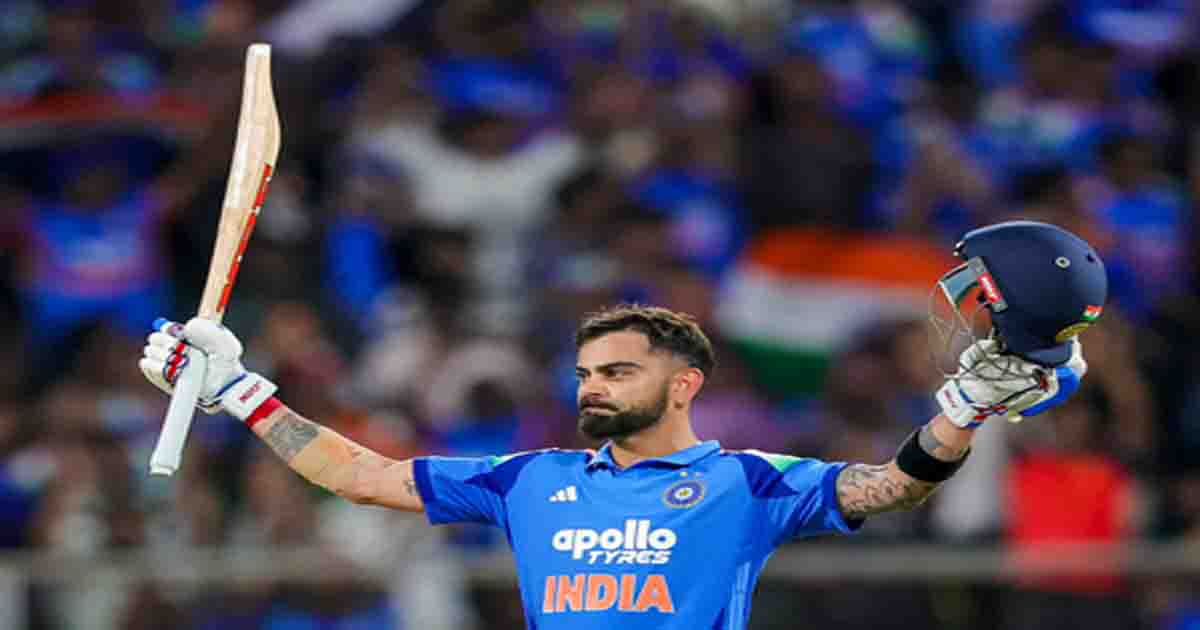
Thiruvananthapuram, Sep 28: Former West Indies fast bowler Ian Bishop believes the cricketing fraternity will only fully grasp the sheer magnitude of Virat Kohli’s monumental achievements once the Indian batting maestro calls time on his illustrious playing career.
Tearing into the West Indies bowling attack at the Greenfield International Stadium to give India a comfortable eight-wicket victory in the series opener, Kohli breached the 15,000-run mark in ODIs while making an unbeaten 139 on Sunday, while bringing up his 55th ton in the format – his third-fastest overall. He now stands as only the second player in history to cross 15,000 men’s ODI runs after the legendary Sachin Tendulkar.
“You have to love what you do to evolve as he has done over such a long period of time. I think this puts him in a rarefied atmosphere, given that he has achieved 15,000 runs in 74 fewer innings than the great Sachin Tendulkar, whom I hold in high regard, having played against him.
“Where his legacy will end, he certainly has to be one of the greatest, if not the greatest, batter in this format of the game. I mean, this is extraordinary. A lot of these fans watching on television and here on the ground appreciate it, but I don’t think we will fully appreciate it until some time after he concludes his playing days,” Bishop said on JioHotstar.
Bishop, the acclaimed commentator, was particularly left in awe of Kohli’s unmatched consistency and his legendary prowess in acing run-chases. “Virat is different in that respect, the appetite that he has for runs, his calculation of how to chase a total, I think that is unsurpassed in this game.
“Virat has a sense of occasion that he may not confess to, but again, that’s his evolution. I still can’t believe 15,000… I know Sachin got there, but that’s a heck of a lot of runs. So, if I had flowers right now, I’d give them to him because he certainly deserves his flowers,” he added.
Calling on the younger generation of cricketers to draw inspiration from Kohli’s work ethics, Bishop urged players across all disciplines to step outside their comfort zones and constantly refine their skills, regardless of age or experience.
“It’s something that we’re all very aware of, because I have grown tired of hearing players say, ‘This is the way I play,’ and people outside the game saying, ‘When you reach a certain age, you can’t learn new tricks.’
“If I were to take one thing away from what Virat Kohli has been doing over the years, it’s that he’s saying it’s never too late to evolve his attacking game, to adapt to how T20 or white-ball cricket has moved, to develop his power game and hit the number of sixes that he has done here at his age.
“It shows that where there is a will, many times, if you’re smart enough, you will find a way. And if any cricketer can take anything away from this, that is what I want them to remember: don’t stay in your comfort zone. Batter, bowler, fielder, captain, get out of your comfort zone,” he concluded.
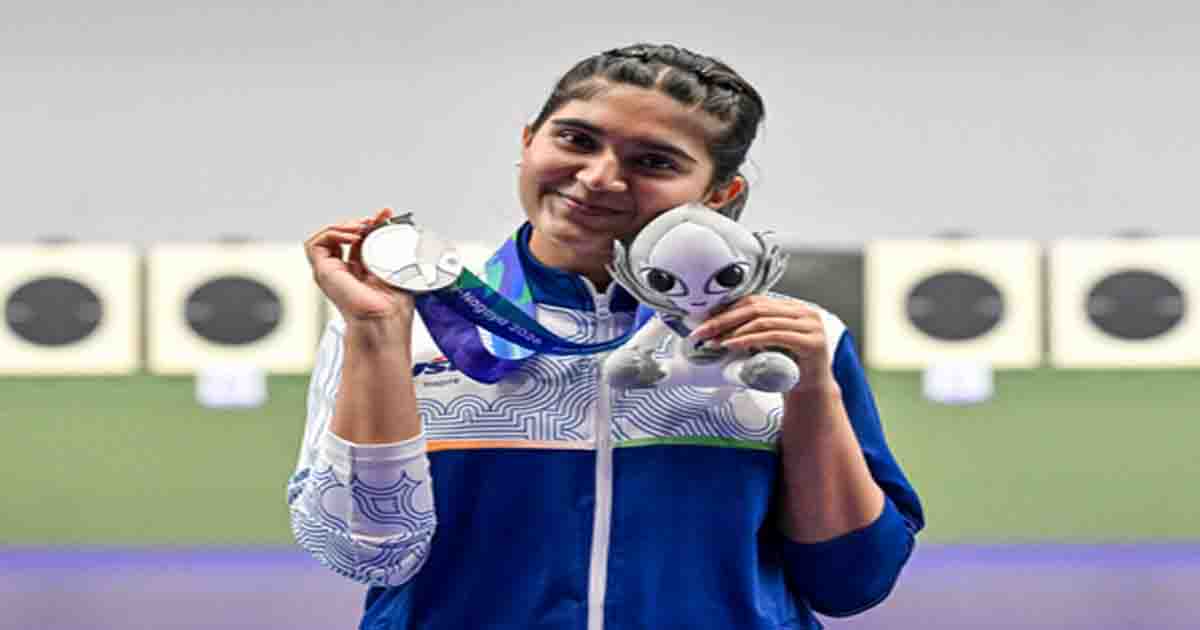
New Delhi, Sep 28: President of India Droupadi Murmu congratulated Esha Singh on Monday after the Indian shooter won the silver medal in the women’s 25m pistol event at the Asian Games 2026 in Aichi-Nagoya, praising her skill, precision and consistency after a dramatic final that featured multiple shoot-offs.
“I extend my heartiest congratulations to Esha Singh on winning the Silver Medal in the Women’s 25m Pistol event at the Asian Games 2026. Your exceptional performance has reflected great skill, precision and consistency. This medal is a proud addition to your sporting journey. My best wishes for many more laurels,” the President wrote on X.
Esha’s medal came after a tense contest in which she had to repeatedly fight to stay in contention. The Indian entered the final after qualifying eighth and eventually secured her place in the gold-medal shoot-off following a series of eliminations and shoot-offs.
The final stage brought Esha up against China’s Xiao Jiaruixuan. With the two separated by a single hit, Esha produced four hits to force a shoot-off. Both shooters then registered four hits apiece, sending the contest into another decisive exchange. Xiao eventually prevailed, leaving Esha with silver.
The result added another Asian Games medal to Esha’s record and drew praise from senior political leaders, with Murmu highlighting the performance as another significant milestone in the shooter’s career.
Defence Minister Rajnath Singh also hailed the Indian’s performance, pointing to the qualities behind her medal-winning display.
“A shining example of dedication and perseverance! Esha Singh has secured a silver medal women’s 25m pistol event at the Asian Games 2026. Her exceptional performance is a testament to her talent and hard work. Congratulations to her and best wishes for her future endeavours,” he said.
Uttar Pradesh Chief Minister Yogi Adityanath focused on Esha’s ability to withstand the pressure of the final, particularly during the shoot-offs.
“A fighting performance from Esha Singh in Shooting! Congratulations to Esha Singh on winning the silver medal in the women’s 25m pistol event at the Asian Games 2026. After battling through multiple shoot-offs, Esha held her nerve to secure another Asian Games medal in the event. A remarkable display of composure and determination,” he said.

EAM Jaishankar and US counterpart Rubio discuss advancing ties, regional developments

Maha: Woman beaten to death with hammer over minor dispute in Palghar; two arrested

Woman arrested for extorting ₹4 crore by blackmailing victims with obscene videos

Major crackdown by Mumbai Crime Branch, 2 kg heroin worth ₹10 crore seized, three accused arrested.

Model Shraddha Dubey, wanted in businessman Shiva Sharma death case, arrested in Nagpur

Rahul, Cong ecosystem want to force regime change: BJP after Neha Bora praises B’desh Gen-Z protest

BJP pays tribute to ex-President Abdul Kalam, recalls his enduring influence on generations of India’s youth

Attack on democratic rights: INDIA Bloc leaders on detentions of anti-ECI protestors

INDIA bloc begins protest march against ECI

Maha Congress stages agitation against Gyanesh Kumar
-

 Crime4 years ago
Class 10 student jumps to death in Jaipur
-

 Maharashtra2 years ago
Mumbai Local Train Update: Central Railway’s New Timetable Comes Into Effect; Check Full List Of Revised Timings & Stations
-

 Maharashtra2 years ago
Mumbai To Go Toll-Free Tonight! Maharashtra Govt Announces Complete Toll Waiver For Light Motor Vehicles At All 5 Entry Points Of City
-

 Maharashtra2 years ago
False photo of Imtiaz Jaleel’s rally, exposing the fooling conspiracy
-

 National News2 years ago
Ministry of Railways rolls out Special Drive 4.0 with focus on digitisation, cleanliness, inclusiveness and grievance redressal
-

 Maharashtra2 years ago
Maharashtra Elections 2024: Mumbai Metro & BEST Services Extended Till Midnight On Voting Day
-

 National News2 years ago
J&K: 4 Jawans Killed, 28 Injured After Bus Carrying BSF Personnel For Poll Duty Falls Into Gorge In Budgam; Terrifying Visuals Surface
-

 Crime2 years ago
Baba Siddique Murder: Mumbai Police Unable To Get Lawrence Bishnoi Custody Due To Home Ministry Order, Says Report