
Business
Supreme Court upholds delisting of ICICI Securities

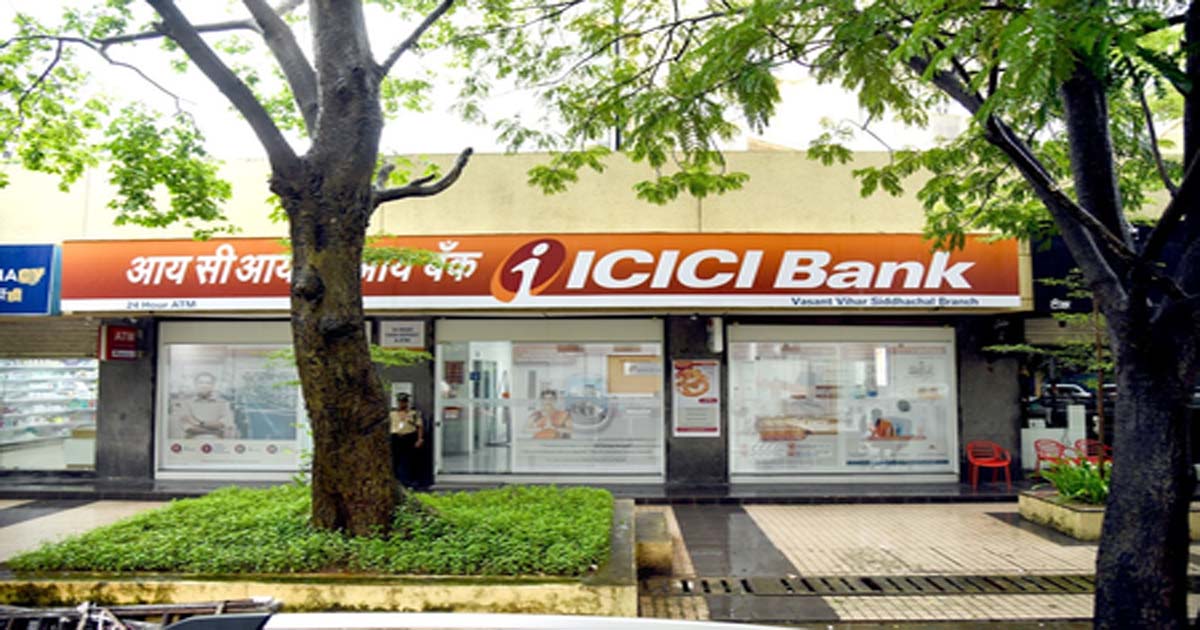
New Delhi, May 28: The Supreme Court on Wednesday upheld the delisting of ICICI Securities from the stock exchanges, rejecting a plea by an individual investor who challenged the share valuation process as being unfair.
The investor, Manu Rishi Gupta, had questioned the delisting on the ground that a reverse book building mechanism might have resulted in a better price for shareholders.
ICICI Securities was delisted in March last year, and it became a wholly-owned subsidiary of ICICI Bank.
Gupta’s counsel contended in the apex court that the delisting of ICICI Securities was done in an opaque and rushed manner and termed it “shocking”.
The counsel for ICICI Securities informed the Supreme Court that Gupta continued to indulge in buying and selling of shares of ICICI Securities, including as recently as August 2024 which undermined his claims of unfair treatment.
Nearly 72 per cent of shareholder votes were cast in favour of the scheme of arrangement for the merger of ICICI Securities with its promoter ICICI Bank, the private sector lender had stated in a regulatory filing with the stock exchanges.
The voting was conducted after a National Company Law Tribunal (NCLT) directive in February 2024, which mandated a shareholder meeting to approve the plan. The meeting was attended by 161 equity shareholders including authorised representatives.
Earlier, in March this year, the National Compay Law Apellate Tribunal (NCLAT) had upheld the delisting of ICICI Securities Ltd from the stock exchanges, dismissing the pleas filed by shareholders Quantum Mutual Fund and individual investor Manu Rishi Gupta against the move.
Quantum Mutual Fund had approached NCLAT in September to oppose ICICI Securities’ delisting, citing concerns over its impact on minority shareholders. Earlier, the Ahmedabad bench of the National Company Law Tribunal (NCLT) had approved the delisting, dismissing the fund’s objections.
ICICI Securities in June 2023 announced its plan to delist and merge with its parent company, ICICI Bank Ltd. Shareholders approved the plan in March 2024. As part of the delisting, Under the proposed share-swap arrangement, shareholders were to receive 67 shares of ICICI Bank for every 100 shares of ICICI Securities.


New Delhi, March 31: Gold loans have emerged as the leading segment in India’s retail credit market, accounting for loan volumes at 36 per cent and around 40 per cent by value, driven by rising gold prices and increasing consumer preference for secured borrowing, a report said on Tuesday.
The report by TransUnion CIBIL showed that the surge has been supported by a sharp increase in ticket sizes, with the average gold loan amount rising significantly over the past two years to around Rs 1.9 lakh in the December 2025 quarter.
The report also noted that the consumer market indicator (CMI) — a major gauge of credit market health — rose to 102 in the December 2025 quarter, up from 97 a year ago and 100 in the preceding September quarter which is the third consecutive quarter of improvement.
It further highlighted that gold prices have encouraged consumers to unlock value from their holdings, leading to a strong rise in both loan demand and disbursements.
Notably, gold loans are witnessing expansion beyond their traditional stronghold in southern India, with faster growth now seen in northern and western states such as Uttar Pradesh, Madhya Pradesh and Rajasthan.
The segment is also attracting a more diverse borrower base, with over half of the loans being availed by prime and above-category customers, indicating growing acceptance of gold loans as a mainstream credit product.
The report noted that while credit supply eased following festive demand and GST-related momentum, the moderation reflects seasonal trends rather than a structural slowdown.
Demand for credit remained strong, particularly in semi-urban and rural areas, with non-metro regions accounting for 54 per cent of the total borrower base, up three percentage points year-on-year. The share of new-to-credit consumers also increased to 15 per cent.
Meanwhile, auto loans saw stable volumes during the post-festive period, supported by demand in the affordable mid-segment category, while supply in the segment rose on a daily average basis compared to the previous year.

New Delhi, March 30: The government has approved the proposal of New Mangalore Port Authority (NMPA) for the redevelopment of Berth No. 9 for handling liquid bulk cargo on a Public-Private Partnership (PPP) basis under the DBFOT model, it was announced on Monday.
The approval for implementation was conveyed on March 25, 2026, in a major step towards augmenting India’s port infrastructure and strengthening maritime logistics, according to the Minister of Ports, Shipping and Waterways.
With an estimated project cost of Rs 438.29 crore, the redevelopment will be undertaken by a private concessionaire selected through an open competitive bidding process (single-stage, two-envelope system).
The project will have a capacity of 10.90 MTPA, and the concessionaire will commit to a Minimum Guaranteed Cargo (MGC) of 7.63 MTPA by the 5th year of operations. The construction period is 2 years, with a concession period of 30 years, inclusive of construction.
The project envisages the dismantling of legacy infrastructure and comprehensive redevelopment of Berth No. 9 to handle liquid bulk cargo such as crude oil, petroleum products (POL), and LPG.
“As part of the modernisation, the berth draft will be enhanced from the existing 10.5 metres to 14 metres, with a future-ready design provision up to 19.8 metres, enabling the port to accommodate vessels up to 2,00,000 DWT, including Very Large Gas Carriers (VLGCs),” said the ministry.
“This transformative project is a reflection of the visionary leadership of Prime Minister Narendra Modi, under whom India’s maritime infrastructure is being modernised at an unprecedented pace,” said Minister of Ports, Shipping and Waterways, Sarbananda Sonowal.
By replacing ageing facilities with world-class marine infrastructure, enhancing cargo handling capacity to 10.90 MTPA, and enabling the handling of larger vessels including VLGCs, “we are positioning our ports to meet future energy and trade demands while strengthening India’s role as a global maritime leader”, he added.
The project will replace nearly 50-year-old structures with modern marine infrastructure designed for a 50-year structural life, ensuring long-term sustainability and resilience.
The enhanced capacity will strengthen the port’s ability to meet the growing regional demand for liquid bulk cargo, particularly energy commodities.
By enabling the handling of larger vessels and VLGCs, the project will improve economies of scale, reduce logistics costs, and enhance overall port competitiveness, said the ministry.
Business
Bharti Airtel Receives ₹1,74,000 Penalty Notice From DoT For Subscriber Verification Lapses

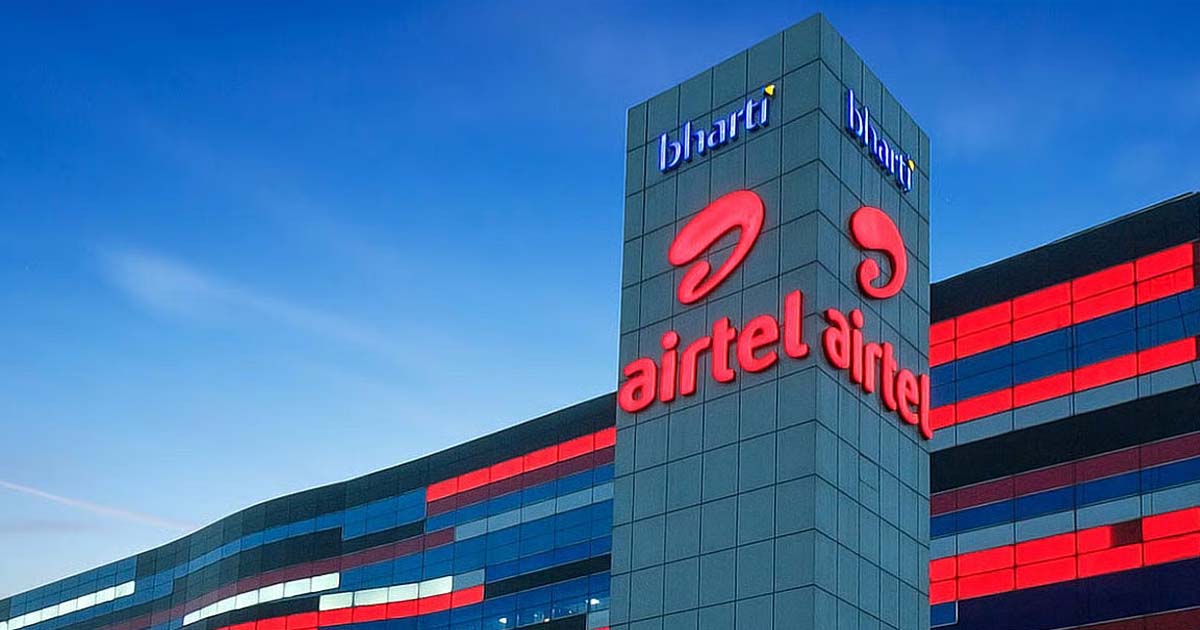
New Delhi: Bharti Airtel has disclosed a regulatory development involving a minor financial penalty tied to compliance checks on customer onboarding processes.
The Department of Telecommunications, Madhya Pradesh Licensed Service Area, has issued a notice imposing a penalty of Rs 1,74,000 on the company. The action relates to alleged non-compliance with subscriber verification requirements under telecom licensing conditions, as detailed in Annexure A on page 2.
The issue stems from a Customer Application Form audit conducted by the DoT for January 2026. These audits are carried out periodically to ensure telecom operators adhere to rules governing customer identity verification before activating services.
Under the license agreement, telecom operators are required to maintain strict verification processes when enrolling subscribers. The audit identified alleged gaps in meeting these standards, prompting regulatory action from the authority.
Bharti Airtel has decided not to contest the notice and will pay the penalty. The company clarified that the financial impact is limited to the amount levied, with no broader operational implications highlighted in the filing. The disclosure reflects routine regulatory oversight in the telecom sector, where periodic audits ensure adherence to compliance norms.

Japan deploys long-range counterstrike missiles for 1st time despite opposition

Mumbai: Fraudster targeting senior citizens at ATM centers arrested; 25 ATM cards and cash recovered.

Mumbai Metro 2B Inauguration On April 3: Know Route & How Corridor Will Help Ease Congestion & Improve Connectivity Between Chembur & Mankhurd

Gold loans top retail credit market in India, account for 36 pc volume: Report

Mumbai Local Train Tragedy: Fatal Accident Reported At Bhayandar Station’s Platform No 1 – Disturbing Video Surfaces

Married Mumbai Woman Mocked In Andheri Society Over ‘Lift Kissing’ CCTV Video, Files Police Complaint

LPG Crisis In Maharashtra: Cyber Crime On Rise Amid Shortage, 2 Women Lose ₹4 Lakh In ‘Gas Update’ Online Scam In Kalyan-Dombivli

Mahayoti’s big gift to the people of Mumbai… Now there is no tax for houses up to 500 square feet, the Municipal Corporation has increased this limit to 700 square feet.

Rashmika Mandanna-Vijay Deverakonda Wedding: Virosh Turn Modern Day Prince & Princess For Their Dreamy Sangeet Ceremony

Dhurandhar 2 Box Office Collection Day 1: Ranveer Singh Starrer Takes An Exceptional Opening; Crosses ₹100 Crore Mark
-

 Crime4 years ago
Class 10 student jumps to death in Jaipur
-

 Maharashtra1 year ago
Mumbai Local Train Update: Central Railway’s New Timetable Comes Into Effect; Check Full List Of Revised Timings & Stations
-

 Maharashtra1 year ago
Mumbai To Go Toll-Free Tonight! Maharashtra Govt Announces Complete Toll Waiver For Light Motor Vehicles At All 5 Entry Points Of City
-

 Maharashtra2 years ago
False photo of Imtiaz Jaleel’s rally, exposing the fooling conspiracy
-

 National News1 year ago
Ministry of Railways rolls out Special Drive 4.0 with focus on digitisation, cleanliness, inclusiveness and grievance redressal
-

 Maharashtra1 year ago
Maharashtra Elections 2024: Mumbai Metro & BEST Services Extended Till Midnight On Voting Day
-

 National News2 years ago
J&K: 4 Jawans Killed, 28 Injured After Bus Carrying BSF Personnel For Poll Duty Falls Into Gorge In Budgam; Terrifying Visuals Surface
-

 Crime1 year ago
Baba Siddique Murder: Mumbai Police Unable To Get Lawrence Bishnoi Custody Due To Home Ministry Order, Says Report