
General
Supreme Court calls for protecting ‘Shivling’ in Gyanvapi, no bar on namaz


The Supreme Court on Tuesday said the area within Gyanvapi mosque where the ‘Shivling’ has been found needs to be protected, but there should be no restriction on Muslims entering the mosque to offer namaz.
A bench of Justices D.Y. Chandrachud and P.S. Narasimha issued the notice on a plea filed by the Committee of Management Anjuman Intezamia Masajid Varanasi, against the Allahabad High Court’s April order, which dismissed a petition challenging a Varanasi court’s order to appoint an advocate as a Court Commissioner to inspect the Gyanvapi Masjid complex.
The top court, which is likely to take up the matter for further hearing later this week, said that the Shivling found inside the mosque during the survey needs to be protected, but the restrictions on Muslims entering the mosque to offer namaz is not correct.
It, however, did not entertain a plea for stay of proceedings before the trial court, which was scheduled to receive the Court Commissioner’s survey report.
Senior advocate Huzefa Ahmadi, representing the petitioner, contended that the trial court was not correct in ordering sealing of ‘wuzukhana’ – a place for washing hands, feet, and face before offering prayers – where the ‘Shivling’ has been purportedly found.
Citing the Places of Worship Act, he said the status quo has been changed and the wuzukhana has been used for time immemorial.
Ahmadi sought permission for use of the wuzukhana, saying it is usage is essential before namaz.
Solicitor General Tushar Mehta, representing the Uttar Pradesh government, however, said if anyone put his foot on the ‘Shivling’ during wuzu, it would disturb law and order, and urged the top court to seal the area.
After hearing arguments, the top court ordered sealing of the area.


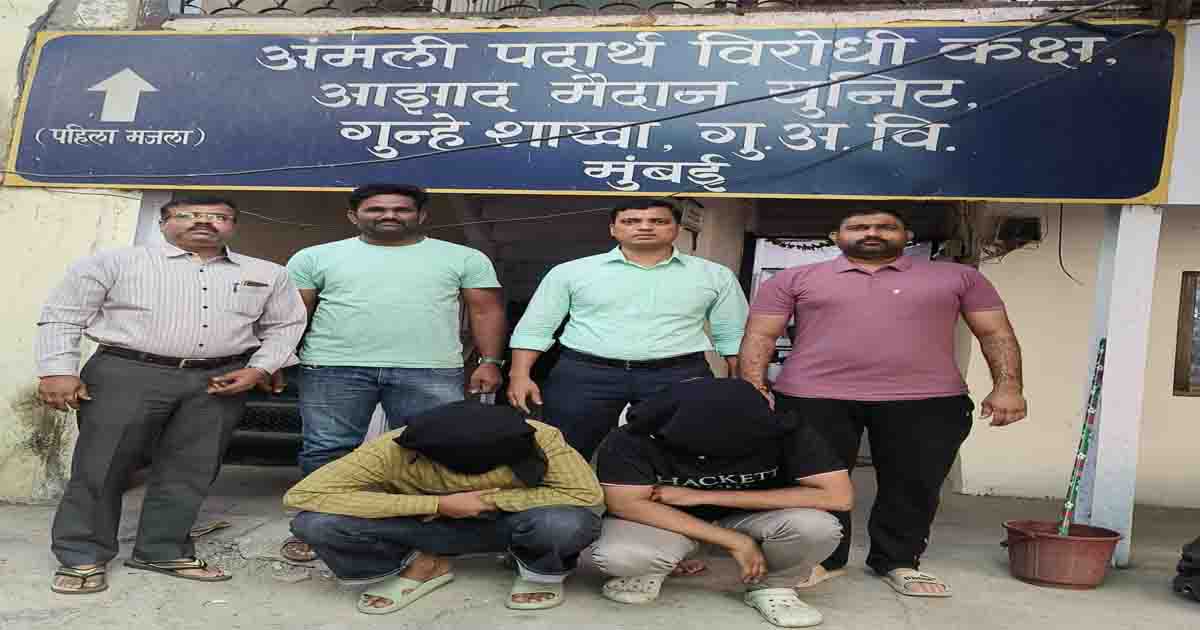
Mumbai: The Anti-Narcotics Cell (ANC) has claimed to have seized ‘hydro-ganja’ (a potent, hydroponically-grown variety of cannabis) during an operation in the Dongri area of Mumbai. Two individuals involved in the trafficking of this substance have also been arrested. According to details, on October 28, during an operation in the Dongri area, ANC personnel spotted two individuals moving about, each carrying a blue plastic bag. Upon questioning them regarding the suspicious items, it was discovered that the first suspect was in possession of 1.823 kg of hydro-ganja, while the second suspect held 1.749 kg—amounting to a total seizure of 3.563 kg. The value of this haul in the international market is estimated to exceed 10 million rupees (one crore). This operation was carried out under the supervision of Mumbai Police Commissioner Deven Bharti, Joint Commissioner of Police (Crime) Anil Kumbhare, Additional Commissioner of Police Krishnakant Upadhyay, and DCP (ANC) Poornima Chougule-Shringi. A case has been registered against the accused under the NDPS (Narcotic Drugs and Psychotropic Substances) Act. The ANC has initiated a stringent crackdown on drug traffickers, with ongoing raids and search operations.
Maharashtra
A bonus gift of 33,000 for Mumbai Municipal Corporation officers and employees for Diwali 2026.

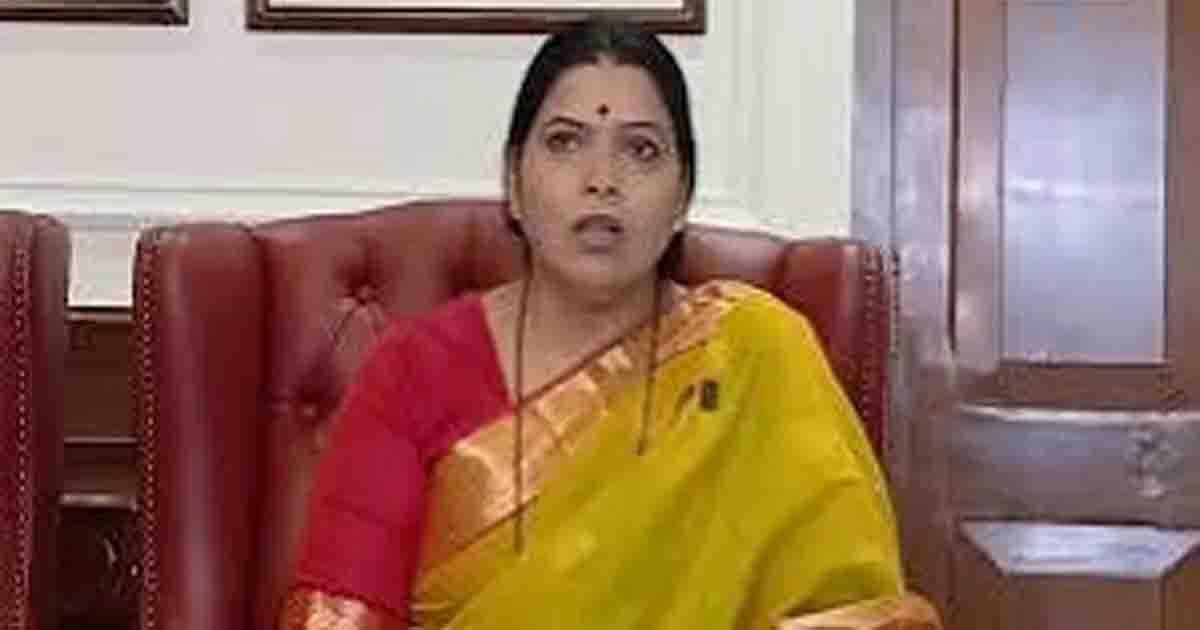
Mumbai Mayor Ritu Tawde announced today (October 28, 2026) that officers and employees of the Mumbai Municipal Corporation will receive a bonus of 33,000 rupees for Diwali 2026. To ensure that the Municipal Corporation’s staff can celebrate the festival of Diwali with joy, Mayor Ritu Tawde has directed the administration to disburse an ex-gratia grant of 33,000 rupees, to be paid alongside their regular salary for the month of November. A meeting regarding the provision of this ex-gratia grant for Diwali 2026 was held today (October 28, 2026) at the Mayor’s Hall. Attendees included Deputy Mayor Sanjay Gadi, Leader of the Opposition Kishori Pednekar, Leader of the House Ganesh Khankar, Indian National Congress Group Leader Ashraf Azmi, AIMIM Group Leader Vijay Obale, and Maharashtra Navnirman Sena Group Leader Yashwant Kaledar. Also present were Standing Committee Chairman Prabhakar Shinde, Education Committee Chairperson Rajeshri Sharwadkar, Joint Commissioner (Finance) Devidas Kshirsagar, Deputy Commissioner (General Administration) Kishor Gandhi, and office-bearers from the coordination committee representing the Municipal workers’ and employees’ unions. Mayor Ritu Tawde stated that a drought-like situation has emerged in the state due to low rainfall this year. Against this backdrop, the Government of Maharashtra has declared a drought—in accordance with established criteria—across 300 talukas in the state and has initiated various measures. Taking the overall situation in the state into account, the coordination committee—comprising municipal corporation group leaders, officials, the municipal administration, and employee unions—has unanimously decided to provide a ‘Diwali grant’ (ex-gratia payment). Officers and employees will receive this Diwali grant of 33,000 rupees, in addition to their regular salary.
Maharashtra
Waqf Property Report Pending for Three Years: Rais Shaikh Accuses NCP of Ignoring Muslim Community’s Issues
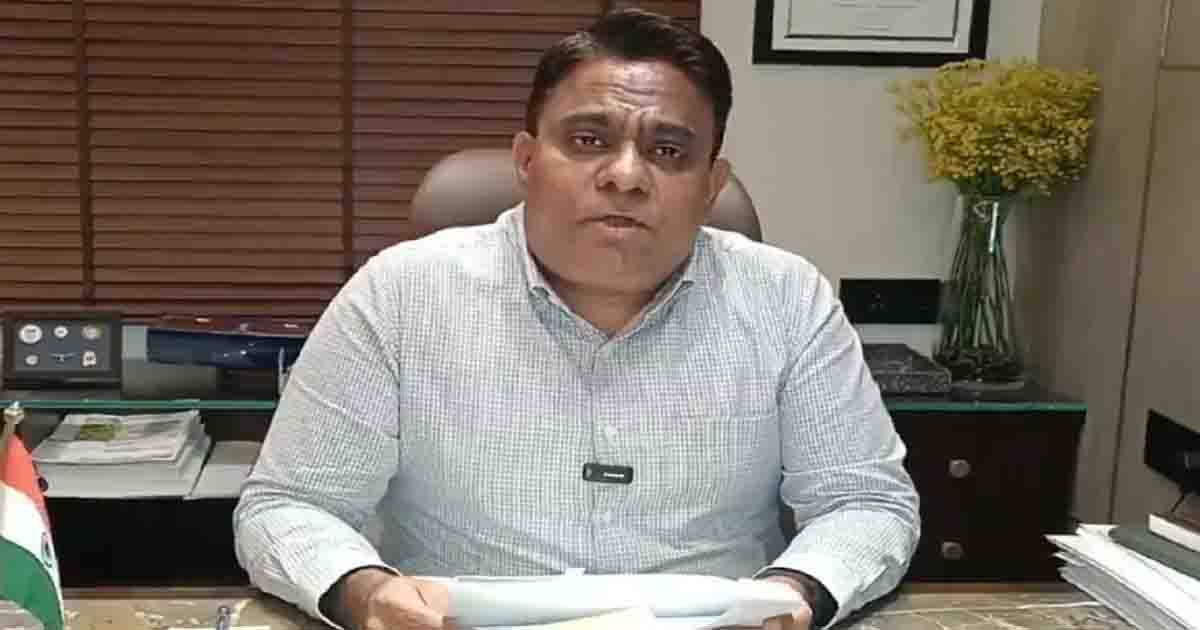
Mumbai – The report of a committee—formed to review the ‘7/12’ land record entries for ‘Waqf’ properties (valued at hundreds of billions of rupees) and to formulate a policy for the distribution of land acquisition compensation—has remained pending for over three years. Rais Shaikh, a Samajwadi Party Member of the Legislative Assembly (MLA) from Bhiwandi East, has expressed concern that the Minority Development Department and the ruling Nationalist Congress Party (NCP) have failed to address the issues faced by the Muslim community with the necessary seriousness. In a letter addressed to the Deputy Chief Minister and Minister for Minority Development, Supriya Pawar, MLA Rais Shaikh has demanded immediate action on this matter.
There are 23,566 registered ‘Waqf’ properties in the state, spanning an area of approximately 92,247 acres. These properties are subject to large-scale encroachment, and many private individuals claim ownership over them. On September 21, 2023, a meeting was held under the chairmanship of the then-Deputy Chief Minister, Ajit Pawar. The meeting addressed several key issues: reviewing the ‘7/12’ land record entries, formulating a policy for the distribution of land acquisition compensation, removing the names of private individuals from these records, and ensuring that the names of ‘Waqf’ institutions and the ‘Waqf Board’ are officially recorded.
Following this meeting, the Minority Development Department constituted a four-member committee on October 17, 2023, with instructions to submit its report within one month. However, the report has not been submitted, even long after the stipulated deadline has passed. MLA Rais Shaikh has raised the question: if reports are not submitted within the timeframe set by the government, then what is the purpose of forming committees and issuing administrative orders?
This delay in the report concerning ‘Waqf’ properties cannot be dismissed as mere administrative lethargy. MLA Rais Shaikh has demanded that the relevant department clarify the reasons for this delay and fix responsibility in the matter. Progress on issues related to ‘Waqf’ properties—which were brought to the fore through the initiative of the then-Deputy Chief Minister Ajit Pawar—should have continued even after he left his post. Yet, many issues faced by the Muslim community remain unresolved. In light of this, MLA Rais Shaikh has questioned, via a letter, whether the ruling Nationalist Congress Party (NCP) and the state government are according appropriate priority to the concerns of the Muslim community.
Matters such as the registration of ‘Waqf’ properties and the payment of compensation for land acquisition directly affect the property rights and financial interests of the concerned institutions. It is imperative to resolve the uncertainty surrounding these issues and reach a definitive conclusion. Rather than relying on mere verbal assurances, concrete decisions must be taken and effectively implemented.

Pradeep Purnekar murder case: Aaditya Thackeray accuses Eknath Shinde of protecting ‘conspirators’

Delhi Police register FIR against unknown persons in Jamia vandalism case

CBI conducts searches in SBI fraud case against Aaj Ka Anand Papers Pvt Ltd

MLC poll result calls for self-introspection: Maha Dy CM Pawar

Internal conflict escalates within Mahayuti following Maharashtra Legislative Council election results

Rahul, Cong ecosystem want to force regime change: BJP after Neha Bora praises B’desh Gen-Z protest

Attack on democratic rights: INDIA Bloc leaders on detentions of anti-ECI protestors

BJP pays tribute to ex-President Abdul Kalam, recalls his enduring influence on generations of India’s youth

INDIA bloc begins protest march against ECI

Gujarat govt to honour Flydubai captain Smit Machchhar with ‘Vishisht Gujarat Garima Award’, Rs 25 lakh reward
-

 Crime4 years ago
Class 10 student jumps to death in Jaipur
-

 Maharashtra2 years ago
Mumbai Local Train Update: Central Railway’s New Timetable Comes Into Effect; Check Full List Of Revised Timings & Stations
-

 Maharashtra2 years ago
Mumbai To Go Toll-Free Tonight! Maharashtra Govt Announces Complete Toll Waiver For Light Motor Vehicles At All 5 Entry Points Of City
-

 Maharashtra2 years ago
False photo of Imtiaz Jaleel’s rally, exposing the fooling conspiracy
-

 National News2 years ago
Ministry of Railways rolls out Special Drive 4.0 with focus on digitisation, cleanliness, inclusiveness and grievance redressal
-

 Maharashtra2 years ago
Maharashtra Elections 2024: Mumbai Metro & BEST Services Extended Till Midnight On Voting Day
-

 National News2 years ago
J&K: 4 Jawans Killed, 28 Injured After Bus Carrying BSF Personnel For Poll Duty Falls Into Gorge In Budgam; Terrifying Visuals Surface
-

 Crime2 years ago
Baba Siddique Murder: Mumbai Police Unable To Get Lawrence Bishnoi Custody Due To Home Ministry Order, Says Report