
Crime
From Rs 500 to Rs 10: ISI shifts fake currency strategy, floods India with counterfeit low-value notes

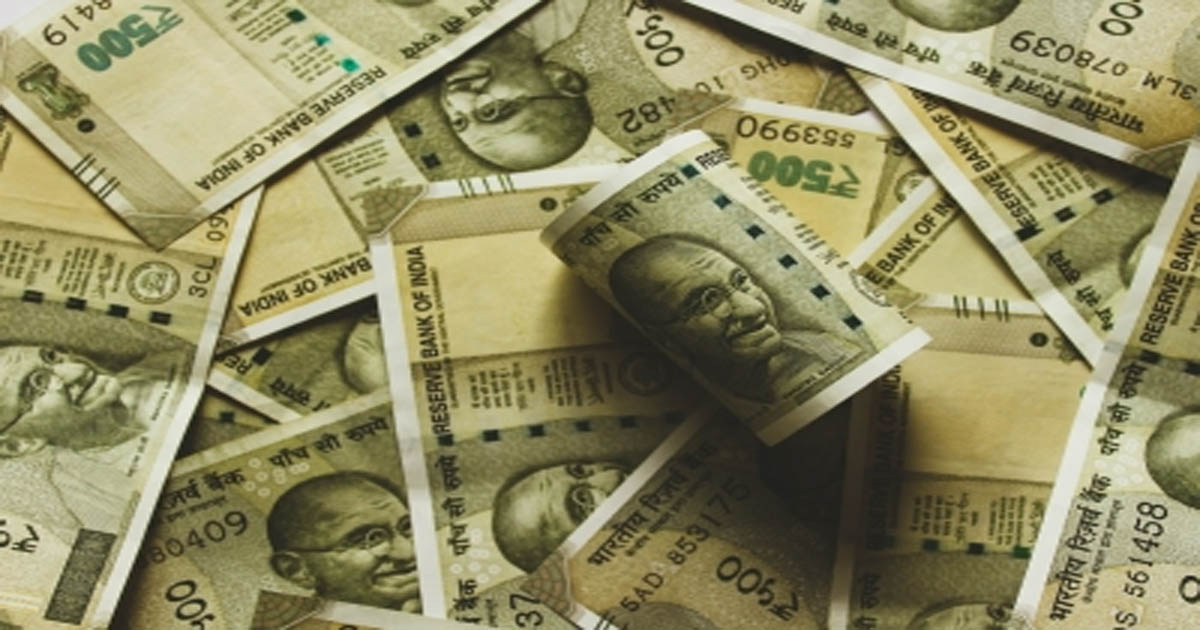
New Delhi, Aug 7: Criminal syndicates, including the network run by Dawood Ibrahim, have long been involved in circulating fake Indian currency notes.
Backed by Pakistan’s Inter-Services Intelligence (ISI), these networks have treated counterfeit currency as one of their most profitable operations for years.
Indian security agencies have now detected a significant shift in the way counterfeit currency is being pushed into the country. Investigators say the circulation of fake Rs 500 notes has declined sharply, pointing to a change in the strategy adopted by the counterfeit currency network.
Earlier, the network primarily focused on counterfeiting Rs 200 and Rs 500 notes. Agencies have now found that the emphasis has shifted to lower denominations, with fake Rs 10, Rs 20 and Rs 50 notes being circulated in large numbers.
The circulation of counterfeit currency not only finances these criminal syndicates but also poses a threat to India’s economic stability. Officials say this is one of the key reasons why Pakistan’s Inter-Services Intelligence (ISI) has continued to facilitate the trade, much of which is allegedly orchestrated through the Dawood Ibrahim syndicate.
An Intelligence Bureau official said there are credible intelligence inputs indicating that Pakistan’s ISI is planning to flood the market with counterfeit currency in lower denominations. According to the official, the strategy is to circulate fake Rs 10, Rs 20 and Rs 50 notes in much larger volumes than before.
“There are multiple reasons behind this newfound strategy. These elements are aware that people are extremely cautious about notes above Rs 100 denomination and will conduct a detailed check before accepting them. However, that is not the case when it comes to smaller denomination notes,” the official said.
People are generally less cautious when handling Rs 10, Rs 20 or Rs 50 notes and rarely stop to check whether they are genuine or counterfeit. That is precisely what these networks are seeking to exploit, the official said.
Officials said the syndicates believe lower denomination counterfeit notes are less likely to attract attention, making them easier to circulate in large numbers without raising suspicion.
Another official said that the period up to April 2027 will be crucial.
The biggest push would be made by these gangs to circulate fake notes of smaller denominations during these months. India plans to roll out polymer or plastic bank notes by 2028. The Reserve Bank of India (RBI) has said that polymer bank notes in the denominations of Rs 10 and 20 will be rolled out in 2028.
While the primary objective of introducing polymer notes is to increase their lifespan to nearly four times that of existing paper currency, they are also expected to offer significantly stronger security features. Officials say the enhanced anti-counterfeiting measures will make the notes far more difficult to replicate.
The plastic substrate allows for advanced security integrations which are impossible on paper. These new notes would have transparent windows, specialised metallic links and micro-optic holograms which would make them extremely difficult to forge.
Before this roll out, it is suspected that the ISI-backed gangs may look to ramp up circulation of counterfeit notes of the smaller denominations in the country.
Officials say that these gangs would focus increasingly on notes of smaller denominations. Once the rollout is complete in 2028, these syndicates would look to target the Rs 50 and 100 notes more compared with the notes of the Rs 500 denomination, the agencies warned.
The RBI has repeatedly issued instructions on how to spot a counterfeit note. The apex bank says that the small denominations may not have a high value, but are used more frequently in daily transactions. This makes them a common target for fraud, and hence citizens must be more careful while dealing with such currency, officials point out.



Jalgaon, Oct 11: A shocking incident has come to light in Maharashtra Jalgaon district, where a newlywed woman attempted to kill her husband and three members of his family by mixing rat poison into their food just two days after their wedding, officials said on Sunday.
Police have arrested two women, including the bride, who were allegedly attempting to flee after the incident. The case came to light after the affected family members fell ill, prompting police to launch an investigation into the suspected poisoning and the circumstances surrounding the women’s disappearance.
The incident took place in Velhane village in Parola taluka of Jalgaon district. According to officials, the couple got married on October 7, and the alleged poisoning occurred on October 9, the third day of their wedding celebrations.
Police said the bride allegedly mixed rat poison into the food prepared for her husband and his family members. After the food was consumed, she reportedly left the house with another woman, taking some jewellery and the money received during the wedding with her.
The incident came to light when members of the family began experiencing health problems after consuming the food. The elders of the house were subsequently admitted to a government hospital in Dhule for treatment, officials said.
After receiving information about the suspected poisoning, police reached the spot and initiated an investigation into the incident.
The incident triggered anger among the family members and local residents, who gathered outside the police station and blocked the road. They demanded that the two women be arrested and that appropriate charges be filed against them.
The police intensified their efforts to locate the accused. The two women, who were allegedly trying to escape, were eventually detained near Nimgul village in Dhule district, officials said.
After their arrest, preliminary details emerged about the accused women’s backgrounds. Police found that the bride, identified as Suman Subhash Sahni, was a resident of Jharkhand. The other woman, identified as Aarti Suryaksh Patel, was also reportedly from Jharkhand.
It was also reported that the man had married Suman after paying Rs 2.5 lakh.
Police are investigating the allegations and gathering further details to establish the exact circumstances of the incident.

Ahmedabad/Valsad, Oct 11: The Gujarat Anti-Terrorism Squad (ATS) and Valsad Special Operations Group (SOG) have arrested three men wanted in connection with the murder of social media influencer and makeup artist Madhu Sudan Singh alias Mad Sandhu, who was shot dead in Punjab Amritsar earlier this month.
The three accused, identified as Harsimranjit Singh alias Simu Singga, Fateh Singh and Arman Singh, were detained in Vapi in Valsad district following a joint operation by the state police units.
According to the Gujarat ATS, Mad Sandhu was shot dead by two unidentified persons near a car washing centre on Lorahka Road in Amritsar on October 3.
“A case was subsequently registered at Cantonment Police Station in Amritsar City,” officials said.
The ATS received information about the suspects from senior officials of the Crime Investigation Agency (CIA) in Punjab, who shared details of the case with their counterparts in Gujarat.
Following instructions from senior officers, an investigation was initiated under the supervision of Superintendent of Police (SP) K. Siddharth, with Deputy Superintendent of Police (DySP) Harsh Upadhyay and Police Inspector Krupesh Patel leading the investigation.
The inquiry revealed that the three men allegedly involved in the murder were in Vapi.
Harsimranjit Singh, Fateh Singh, and Arman Singh, are all originally from Sange village under Sadar Police Station in Tarn Taran district of Punjab.
Given the possibility that the suspects could leave the area, the ATS shared their profiles, location details and other relevant information with the Valsad SOG.
Police Inspector D.D. Parmar and his team subsequently detained all three men in Vapi.
A Gujarat ATS team comprising Police Inspector J.N. Chavda, Police Sub-Inspector M.L. Solanki, Police Sub-Inspector K.R. Patel, Police Sub-Inspector V.B. Khant and other personnel then brought them to the ATS office for questioning.
“During interrogation, investigators gathered details about the alleged roles of the three accused in the murder, the reconnaissance conducted before the shooting and other aspects of the case,” the ATS said.
The Punjab Police was subsequently informed of their detention.
On October 10, a Punjab Police team arrived at the Gujarat ATS office, took custody of the three accused and transported them to Punjab for further legal proceedings.
The investigation into the murder is being pursued by the Punjab Police.
Earlier, the Ahmedabad Crime Branch arrested Parminder Prasad alias Parminder Kaka, the alleged main shooter in the murder, in the Vadaj area of Ahmedabad on October 8, following an input from the Amritsar Police.
According to Crime Branch officials, Parminder allegedly opened fire on Mad Sandhu and arranged the motorcycle used in the attack.
Punjab Police subsequently took him to Amritsar for further investigation, while investigators were also probing the suspected links of the killing with the network of foreign-based gangster Goldy Dhillon.

Guwahati, Oct 11: The NCB arrested two drug traffickers and seized 53.937 kg of Methamphetamine/WY Tablets, suspected to be originating from Myanmar and valued at approximately Rs 43 crore in the illicit market, in Guwahati, an official said on Sunday.
The Narcotics Control Bureau (NCB), Guwahati, achieved a significant breakthrough on October 6 in its sustained campaign against organised narcotics trafficking with the help of an intelligence input, said an official statement.
Officers of the NCB intercepted two trucks and subjected them to intensive and systematic searches and detected specially fabricated concealed cavities inside the fuel tanks of both vehicles, it said.
The tanks were ingeniously modified to facilitate the clandestine transportation of narcotics and evade detection by enforcement agencies, it said.
The operation led to the recovery of the contraband and the on-the-spot arrest of two drug traffickers, both residents of Bishnupur, Manipur, it said, adding that the investigation indicated that the seized consignment originated from Myanmar.
The seizure has disrupted a major trafficking attempt, and the investigation is being pursued to identify the international suppliers, domestic receivers, financiers, transporters, handlers and other associates involved, with the objective of tracing the entire supply chain and dismantling the network in its entirety, said the NCB.
Meanwhile, under the special “Absconder Drive Fortnight” aimed at apprehending accused persons wanted in various NDPS cases, the NCB Guwahati apprehended six key accused, said the NCB.
Of those arrested, two are residents of Assam, while one each hails from Bihar, Madhya Pradesh, Manipur and Tripura. The apprehensions mark a significant step towards bringing persons evading the legal process to justice, said the NCB.
The focused drive underscores NCB’s resolve to pursue wanted accused beyond geographical boundaries and strengthen investigations and prosecution through sustained follow-up in pending NDPS cases.
The NCB’s enforcement strategy in Assam and the North Eastern Region goes beyond individual seizures, focusing on identifying and dismantling the entire drug trafficking network, including international sources, transit routes, financiers, logistics providers, distributors and key operators, said the statement.
Recognising the organised and cross-border nature of drug trafficking, the NCB continues to strengthen intelligence sharing and coordinated action with State Police, ANTFs, Assam Rifles, BSF, CRPF, SSB, Customs, DRI, NIA, ED and other agencies to target trafficking networks and their financial and logistical infrastructure, it said.

Regime change certain in 2027: Akhilesh lashes out at BJP, Election Commission

Newlywed poisons husband, 3 family members in Maharashtra Jalgaon

Nana Patekar death: Final post-mortem report out, rules out foul play

Gujarat Police nab three more accused in Punjab’s Mad Sandhu murder case

FairPoint: Rahul-Priyanka aggressive street shows in Oppn power game

Gift to President Putin part of PM Modi bid to globally display India’s heritage

PM Modi’s warm camaraderie with Putin, Xi on full display at BRICS Summit

INDIA bloc begins protest march against ECI

Complaint against Netflix & Mukesh Chhabra for inappropriate language on ‘India’s Got Latent 2’

School bus driver shot at in MP’s Dabra; 50 terrified children on board witness crime
-

 Crime4 years ago
Class 10 student jumps to death in Jaipur
-

 Maharashtra2 years ago
Mumbai Local Train Update: Central Railway’s New Timetable Comes Into Effect; Check Full List Of Revised Timings & Stations
-

 Maharashtra2 years ago
Mumbai To Go Toll-Free Tonight! Maharashtra Govt Announces Complete Toll Waiver For Light Motor Vehicles At All 5 Entry Points Of City
-

 Maharashtra2 years ago
False photo of Imtiaz Jaleel’s rally, exposing the fooling conspiracy
-

 National News2 years ago
Ministry of Railways rolls out Special Drive 4.0 with focus on digitisation, cleanliness, inclusiveness and grievance redressal
-

 Maharashtra2 years ago
Maharashtra Elections 2024: Mumbai Metro & BEST Services Extended Till Midnight On Voting Day
-

 National News2 years ago
J&K: 4 Jawans Killed, 28 Injured After Bus Carrying BSF Personnel For Poll Duty Falls Into Gorge In Budgam; Terrifying Visuals Surface
-

 Crime2 years ago
Baba Siddique Murder: Mumbai Police Unable To Get Lawrence Bishnoi Custody Due To Home Ministry Order, Says Report