
International
Striking Iranian regime targets with unprecedented force: Israel Defence Minister

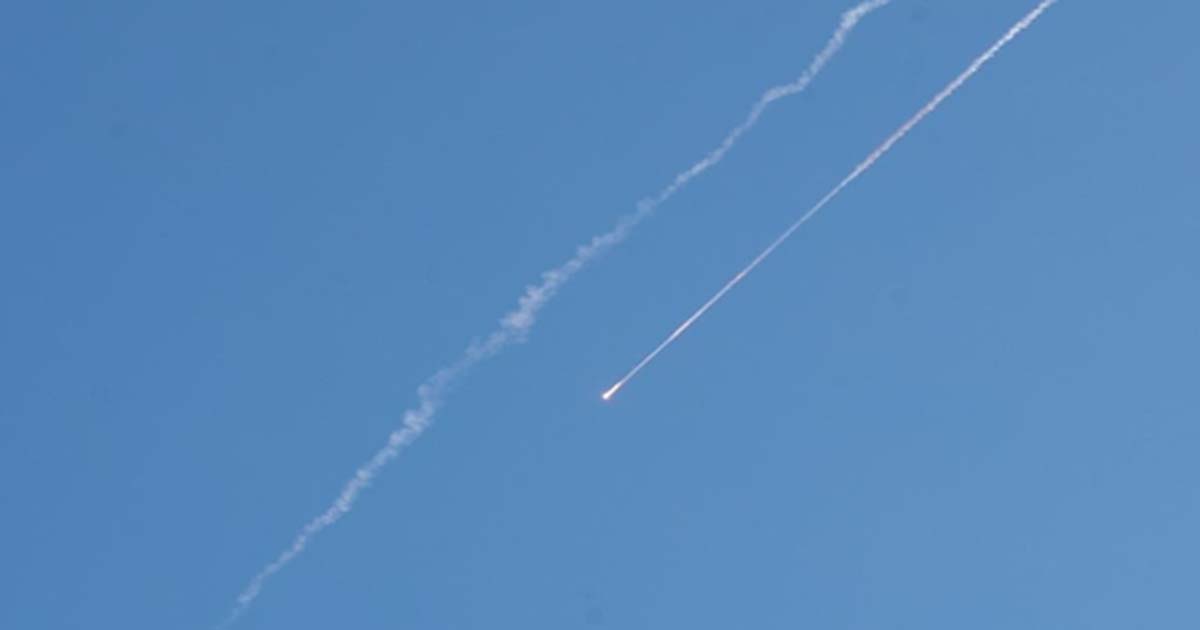
New Delhi, June 23: Israel’s Defence Minister Israel Katz announced Monday that the Israel Defence Forces (IDF) are currently striking with “unprecedented force” regime targets and governmental repression bodies in the heart of Tehran.
“In accordance with the directives of Prime Minister Benjamin Netanyahu and myself, the IDF is now attacking with unprecedented force regime targets and government repression bodies in the heart of Tehran, including the Basij headquarters, Evin prison for political prisoners and regime opponents, the ‘Israel Destruction’ clock in Palestine Square, the Revolutionary Guards’ internal security headquarters, the ideology headquarters, and other regime targets,” Katz posted on X.
He added, “For every shot fired at the Israeli home front, the Iranian dictator will be punished. The attacks will continue with full force. We will keep acting to protect the home front and defeat the enemy until all war goals are achieved.”
Meanwhile, Iran’s Supreme Leader Ayatollah Ali Khamenei on Monday issued a stern warning in his first reaction following US strikes on Iranian nuclear sites.
“The Zionist enemy has made a big mistake, committed a big crime; it must be punished, and it is being punished right now,” Khamenei said on X, calling the attacks “a big crime.”
The US strikes came after Israeli attacks on June 13 that targetted various locations in Iran, including nuclear and military sites, resulting in the deaths of senior commanders and nuclear scientists.
In response, Iran also launched missile and drone strikes on Israel.
Earlier that day, Israeli Prime Minister Benjamin Netanyahu reiterated the country’s determination to press on with its operations.
“Israel will continue to operate at full tilt in both Iran and Gaza,” he said, adding, “We will not stop this historic operation before we achieve our goals.”

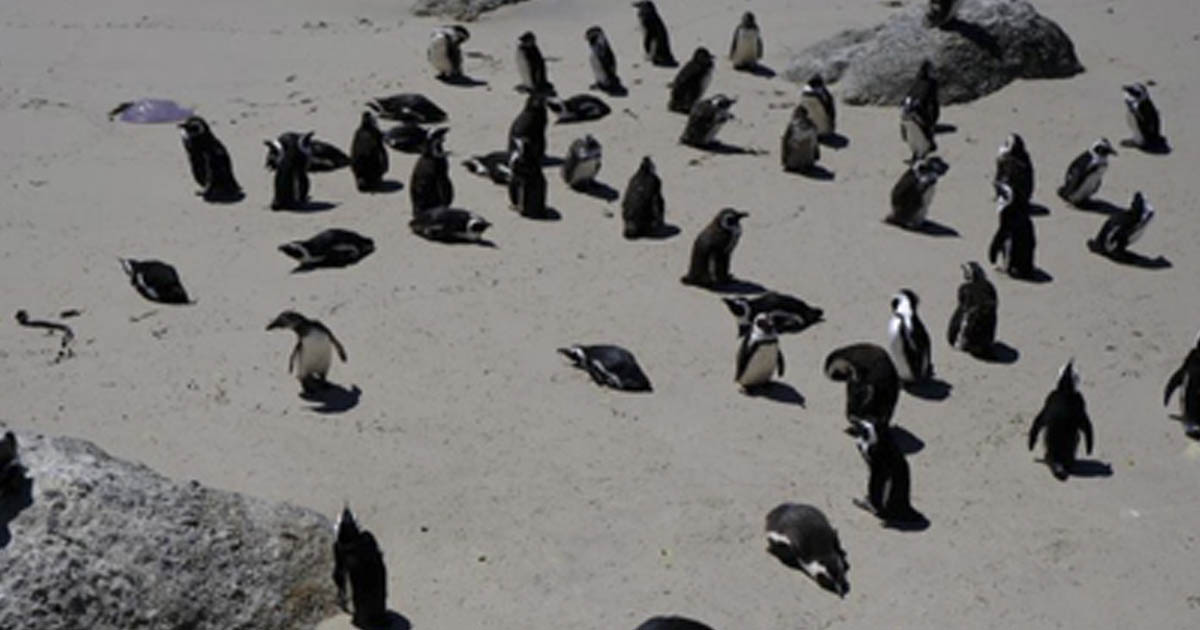
A flock of 28 penguins that were found dead on an island off the coast of the Australian state of Tasmania will be tested for the H5N1 strain of avian influenza, authorities said on Thursday.Tasmania’s Department of Natural Resources and Environment said that 28 penguins and three greater crested terns were found dead by surveillance teams on King Island, about 100 km off Tasmania’s northwest coast, on Wednesday.
Incident controller Wes Ford said that samples from the birds have been sent to be tested for the H5N1 strain and that the birds would be collected on Thursday to reduce the risk of transmission, reports Xinhua news agency.”Tasmanians care deeply about our wildlife, and particularly our penguins, so we understand that reports like these may be distressing for the community,” he said.
The island state reported its first case of the highly pathogenic strain on Aug. 13, almost two months after it was first detected on the Australian mainland in June.Ford said there had been 11 confirmed H5N1 cases in Tasmania as of Thursday, all in the state’s northwest or on King Island.
“We expect to continue receiving reports of sick and dead birds on King Island, along the northwest coast and in other parts of Tasmania,” he said.He urged Tasmanians to keep cats indoors and to walk dogs on leads to minimise their infection risks and to avoid contact with sick or dead animals.According to the federal Department of Agriculture, Fisheries and Forestry, there have been 262 confirmed positive H5N1 bird flu events in Australian wildlife as of Aug. 18, but there have been no detections in poultry or the agriculture industry.
International
Trump doubles down on 10 per cent tariff for BRICS; threatens 200 per cent tariff on pharma

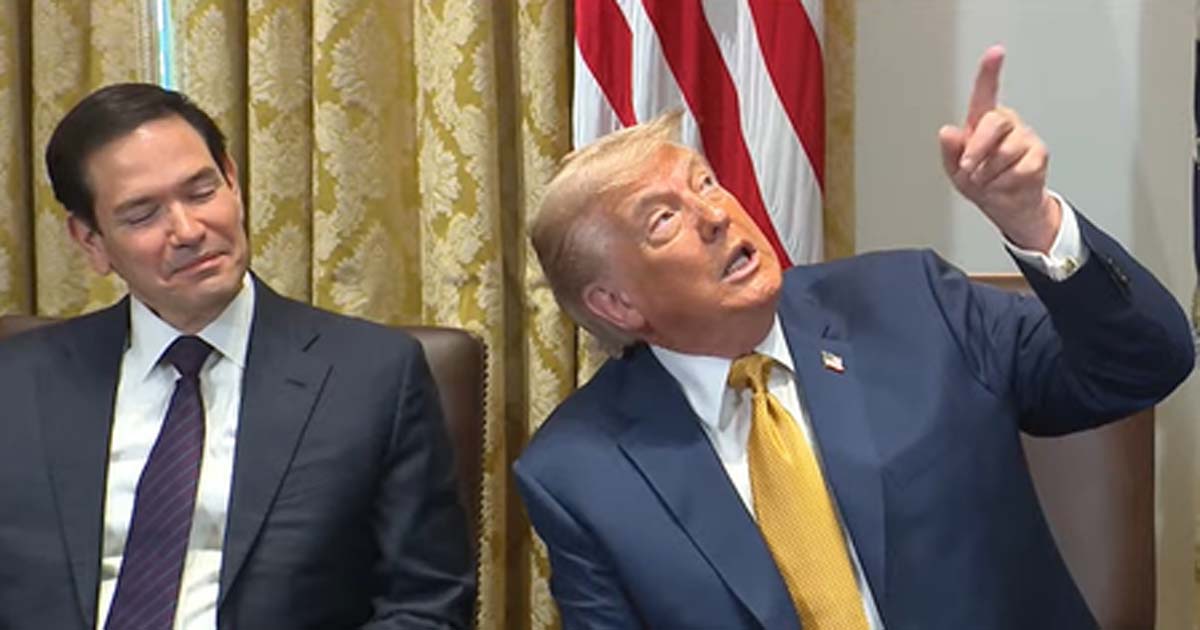
New York, July 9: US President Donald Trump doubled down on his threat to charge BRICS members an additional 10 per cent tariff and alleged that the group was “set up to degenerate our dollar”.
Speaking to reporters as he presided over a Cabinet meeting on Tuesday, Trump said: “Anybody that’s in BRICS is getting a 10 per cent charge” — and that would include India.
On another trade issue that could affect India, Trump said that a 200 per cent tariff on pharmaceuticals would come soon, but added he would “give people about a year, year and a half”.
“We’ll give them a certain period of time to get their act together,” he said about the pharmaceutical companies.
India’s pharmaceutical exports to the US last year was nearly $9 billion.
A reporter recalled that he had said Monday night that trade deal was coming with India soon and asked him about the applicability of the proposed BRICS tariff.
He said: “Anybody that’s in BRICS is getting a ten per cent charge. If they’re member of BRICS, they’re gonna have to pay per cent tariff just for that one thing, and they won’t be a member for long.”
India has opposed a BRICS currency for trade to compete with the dollar and exercised a virtual veto on the proposal.
Laying out India’s policy, External Affairs Minister S Jaishankar said in March: “I don’t think there’s any policy on our part to replace the dollar.”
Affirming the importance of the dollar to the world’s and India’s economy, he added: “At the end of the day, the dollar as the reserve currency is the source of international economic stability, and right now, what we want in the world is more economic stability, not less.”
The letter he sent to BRICS member South Africa on Monday said only that it would face a 30 per cent tariff starting next month, but made no mention of BRICS penalty.
Trump said the BRICS tariff would come “soon”.
Despite India’s so far successful efforts to stop the creation of a BRICS currency, Trump continued to complain about a BRICS conspiracy.
“BRICS was set up to hurt us. BRICS was set up to degenerate our dollar and take our dollar as the standard, take it off as the standard,” he said.
He said that he would oppose it because it would be like losing a war, he said.
“And that’s okay if they want to play that game, but I can play that game too,” he said.
He said he thought BRICS “largely broke up” with only a couple of countries hanging around.
“BRICS is not, in my opinion, a serious set-up,” he said.
But he said that they want to destroy the dollar “so that another country can take over and be the standard, and we’re not going to lose the standard”.
In fact, opposition from India to a BRICS currency is because of the threat of China manipulating it to its benefit.
New Delhi/Washington, July 7: US President Donald Trump’s country-specific tariffs are now scheduled to take effect from August 1, offering a temporary reprieve as trade talks intensified with several countries, including India.
Earlier, the US tariffs were set to take effect from July 9.
Commerce Secretary Howard Lutnick announced the tariff reprieve on Sunday (US time) while speaking to the media. He noted that President Trump was “setting the rates and the deals right now”.
Trump told reporters that “I think we’ll have most countries wrapped up by July 9, either through letters or finalised agreements”, adding that notification letters warning of upcoming tariff hikes would begin going out from Monday (US time), with more expected to follow on Tuesday.
Trump said that sending notices would be much easier than “sitting down and working 15 different things…this is what you have to pay, if you want to do business with the United States.”
In April, Trump announced a base tariff of 10 per cent on most of America’s trading partners and thereafter additional duties ranging up to 50 per cent.
The US has announced trade deals with the United Kingdom and Vietnam so far, with some more trade deals apparently in the pipeline.
“President Trump’s going to be sending letters to some of our trading partners saying that if you don’t move things along, then on August 1 you will boomerang back to your April 2 tariff level. So I think we’re going to see a lot of deals very quickly,” US Treasury Secretary Scott Bessent told CNN.
India’s high-level official delegation led by chief negotiator Rajesh Agrawal has returned from Washington after the trade talks with US officials without reaching a final agreement on the sensitive issue of trade in agricultural and dairy products that the US is pushing for.
Meanwhile, Trump has announced that an additional 10 per cent tariff will be imposed on countries that “align themselves with the anti-American policies of BRICS”.

Adani Power Q2 profit jumps 141 pc to Rs 7,019 crore on strong demand

BJP’s days are numbered, SP certain to win 2027 UP elections: Abu Azmi

Centre expects anti-cancer drug prices to fall 20-70 per cent under proposed trade margin cap

Delhi Police cracks two home burglary cases with arrest of two men; stolen jewellery, Rs 42,670 recovered

Maha MLC polls: Voting underway for five seats; Mahayuti, MVA both assert wins

Rahul, Cong ecosystem want to force regime change: BJP after Neha Bora praises B’desh Gen-Z protest

BJP pays tribute to ex-President Abdul Kalam, recalls his enduring influence on generations of India’s youth

Attack on democratic rights: INDIA Bloc leaders on detentions of anti-ECI protestors

INDIA bloc begins protest march against ECI

Maha Congress stages agitation against Gyanesh Kumar
-

 Crime4 years ago
Class 10 student jumps to death in Jaipur
-

 Maharashtra2 years ago
Mumbai Local Train Update: Central Railway’s New Timetable Comes Into Effect; Check Full List Of Revised Timings & Stations
-

 Maharashtra2 years ago
Mumbai To Go Toll-Free Tonight! Maharashtra Govt Announces Complete Toll Waiver For Light Motor Vehicles At All 5 Entry Points Of City
-

 Maharashtra2 years ago
False photo of Imtiaz Jaleel’s rally, exposing the fooling conspiracy
-

 National News2 years ago
Ministry of Railways rolls out Special Drive 4.0 with focus on digitisation, cleanliness, inclusiveness and grievance redressal
-

 Maharashtra2 years ago
Maharashtra Elections 2024: Mumbai Metro & BEST Services Extended Till Midnight On Voting Day
-

 National News2 years ago
J&K: 4 Jawans Killed, 28 Injured After Bus Carrying BSF Personnel For Poll Duty Falls Into Gorge In Budgam; Terrifying Visuals Surface
-

 Crime2 years ago
Baba Siddique Murder: Mumbai Police Unable To Get Lawrence Bishnoi Custody Due To Home Ministry Order, Says Report