
International News
Singhvi says don’t rely on Chinese media, Cong embarrassed

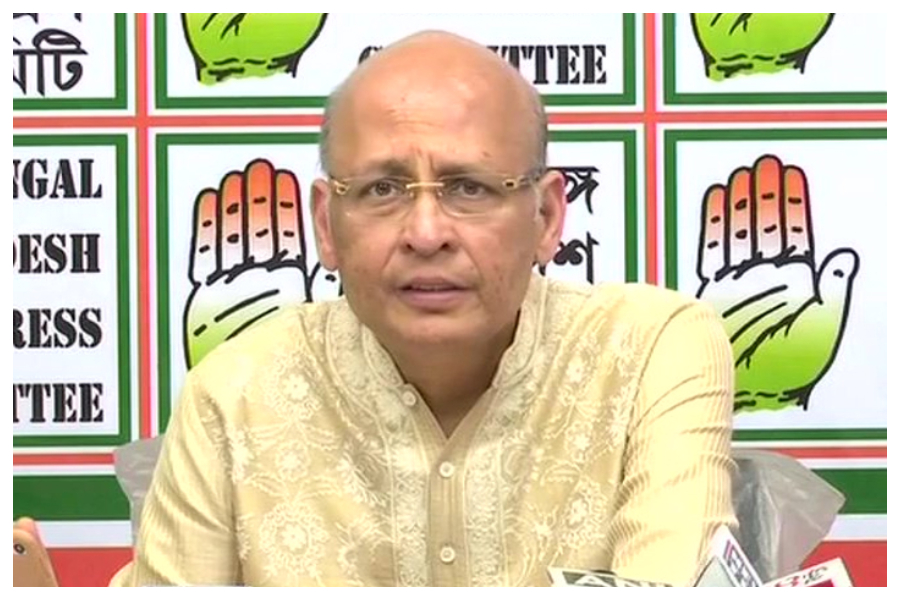
In a major embarrassment to the party, Congress leader Abhishek Manu Singhvi on Tuesday said that Indian media should not fall for Chinese propaganda after few reports emerged that Chinese have hoisted flag which turned out to be fake.
Singhvi said, “Would urge the Indian media not to take the CCP & Global Times propaganda machinery seriously. They are nothing but an absolute joke especially in the digital age, a psy ops that can be easily busted by few minutes of Google search.”
But his own party on Monday attacked the government on the same report and former Congress President Rahul Gandhi too criticized the government.
The Congress on Monday slammed the government over reports that Chinese troops are celebrating new year at Galwan Valley. “How dare China raise the Chinese flag over Galwan Valley, where only the Indian Tri-colour can be flown, unfurled proudly. How dare Chinese continue to occupy Indian territory in Depsang plains up to ‘Y junction’ and our Prime Minister remains mum? How dare China continue to illegally occupy Indian Territory in Gogra, Hot Springs and our government doesn’t utter a word?” Randeep Surjewala, Congress spokesperson had said.
Now it is clear the PLA was not present at the the disputed area of Galwan Valley on the new year eve, which is now a demilitarized zone after the June 2020 clash between the two militaries and subsequent series of talks between India & China through proper diplomatic channels.
It all started after a video surfaced on social media, shared by the Chinese media, showing PLA troop celebrating new year and unfurled the Chinese national flag, with a caption, ‘China’s national flag rises over Galwan Valley on the New Year Day of 2022’, which read further ‘the flag was special since it once flew over Tiananmen Square in Beijing’.

International News
Iran rules out compromise on nuclear enrichment rights, slams US ‘warmongering’ in Hormuz

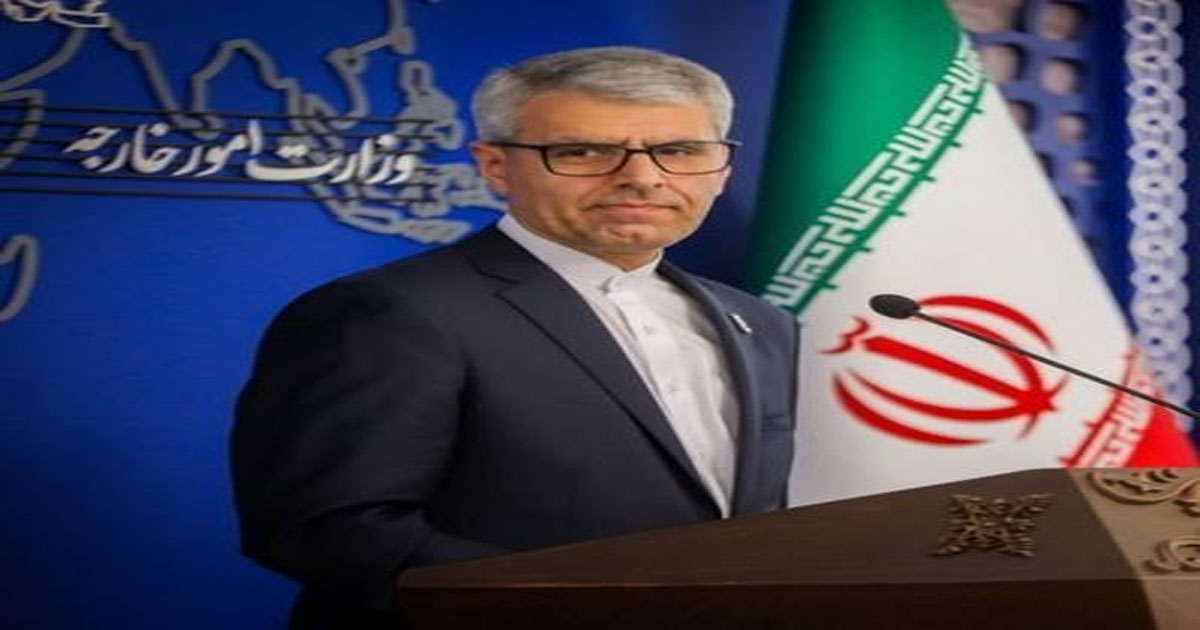
Tehran, April 16: Iran will not compromise on its nuclear enrichment rights, said the country’s Foreign Ministry spokesperson, Esmaeil Baqaei, adding that its entitlement to nuclear energy is firmly grounded in international law and the Nuclear Non-Proliferation Treaty (NPT), state media reported on Thursday.
Addressing a press conference in Tehran, Baqaei dismissed what he described as baseless speculation in Western media regarding Iran’s enrichment programme, stressing that the country’s legitimate rights, as recognised under international law, are non-negotiable, reports the country’s official news agency IRNA.
He underlined that the right to peaceful enrichment is neither a favour nor a concession granted by any external power that can be withdrawn under pressure or during times of conflict.
As long as Iran remains a signatory to the NPT, he said, it must be able to fully benefit from the treaty’s provisions.
Responding to reports about alleged enrichment-related discussions during recent Iran-US negotiations held in Pakistan, Baqaei clarified that any potential agreement must first establish a comprehensive framework. He noted that until the broader terms are settled, discussions on specifics — particularly on sensitive matters involving war and peace between Iran and the United States — would be premature.
In another part of his remarks, Baqaei rejected claims that Iran had reduced or halted its support for the Lebanese resistance. He stated that Iran has consistently backed what he termed the country’s legitimate resistance and that ending the war in Lebanon was a key component of the ceasefire understanding discussed during the Islamabad talks.
He alleged that the other side, referring to Israel, failed to honour that aspect of the ceasefire from the outset. However, Iran has remained committed to its position and continues to pursue the issue seriously in ongoing diplomatic engagements, he said.
Baqaei further explained that under any agreement, if one party violates its commitments, the other party is entitled to proportionately scale back its own obligations. He described as “completely false” any claims suggesting that Iran has neglected resistance fronts in Lebanon despite its stated commitments under the ceasefire understanding.
Commenting on a European proposal to establish a United Nations-led coalition to secure the Strait of Hormuz, Baqaei said Iran, as a littoral state, along with regional partners, is fully capable of ensuring the security of the vital waterway.
He added that Iran has historically acted as a guardian of security in the Strait of Hormuz and claimed that the only disruptions witnessed in the past 40 days have stemmed from what he described as an imposed war involving the United States and Israel.
Baqaei cautioned that any foreign intervention in regional affairs would further complicate the situation. He also expressed satisfaction that several European countries have not, in his view, fallen into what he termed a trap set by the US and Israel, reports IRNA.
He reiterated that Iran, in cooperation with regional nations, can maintain stability in the Strait of Hormuz, provided that US involvement and what he described as warmongering in the region come to an end.
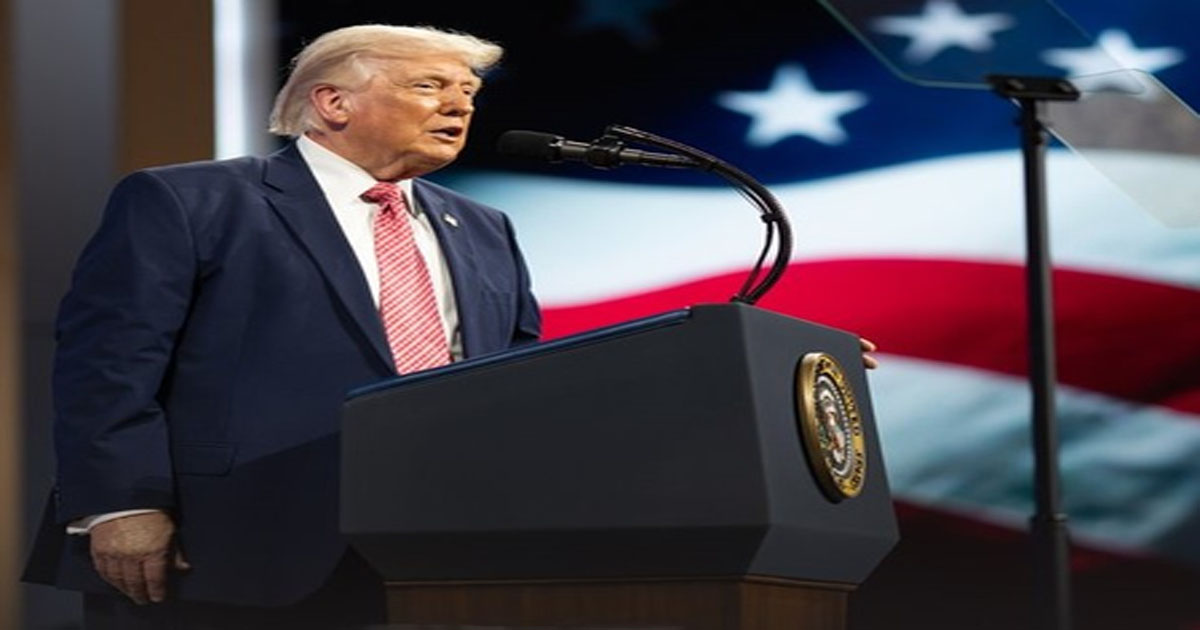
Washington, April 15: US President Donald Trump said a second round of direct talks with Iran could take place “over the next two days,” signalling a possible diplomatic opening even as the United States presses ahead with a naval blockade targeting Iranian-linked shipping.
In an interview with The New York Post, Trump said negotiations could happen soon and pointed to Pakistan as a possible venue. “Something could be happening over the next two days, and we’re more inclined to go there,” he said, referring to Islamabad.
The comments came after an earlier round of talks failed to yield a breakthrough. Trump suggested initial plans had pointed to Europe before shifting towards Pakistan.
The diplomatic push comes alongside heightened tensions in the Gulf. US Central Command said that no ships from Iranian ports passed through its blockade in the first 24 hours. Six merchant vessels complied with US instructions and turned back towards Iranian ports in the Gulf of Oman.
Shipping data showed a more mixed picture. Several Iran-linked vessels were tracked moving through the Strait of Hormuz after the blockade began, though some appeared to stop or change course after entering open waters.
More than 20 commercial ships not linked to Iran transited the strait in the same period, including tankers and cargo vessels. That suggests traffic through the key waterway has not been fully disrupted.
Vice President JD Vance said in Georgia that Washington is seeking a broader agreement with Tehran. He said the United States wants Iran to prosper economically, but only if it commits to not developing a nuclear weapon.
Diplomatic activity is also under way elsewhere in the region. Israel and Lebanon agreed to “launch direct negotiations” after rare face-to-face talks in Washington, in a move seen as part of wider efforts to stabilise tensions linked to the Iran conflict.
The United Nations has urged continued engagement. Secretary-General António Guterres said talks between Washington and Tehran are likely to resume and called for sustained diplomatic efforts.
Markets reacted quickly to the prospect of renewed talks. US crude futures fell nearly 8 per cent to their lowest level in weeks, reflecting hopes that tensions could ease and energy flows stabilise.
Still, uncertainty remains over the blockade and its enforcement. The Strait of Hormuz carries a significant share of global oil shipments, making it a critical chokepoint for energy markets.
The US-Iran standoff follows decades of strained relations centred on Tehran’s nuclear programme and regional role. Previous efforts to curb Iran’s nuclear activity in exchange for sanctions relief have repeatedly stalled.
Any sustained disruption in the Strait of Hormuz has historically led to volatility in oil prices and raised concerns about global energy security.
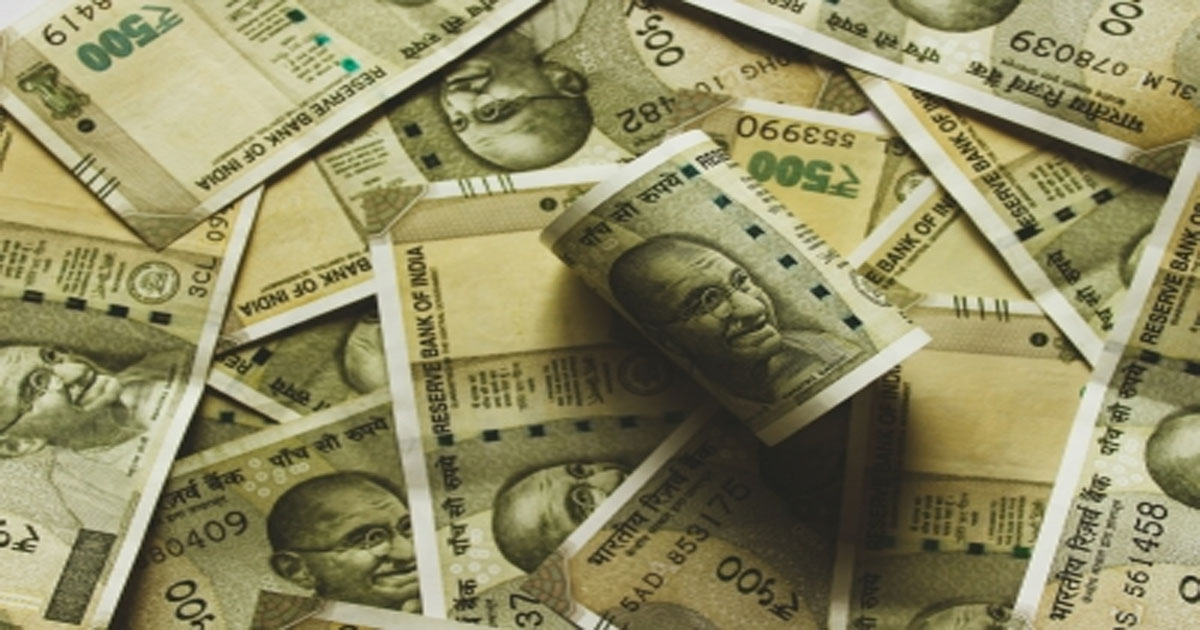
New Delhi, April 14: Indian agencies have reported a sharp rise in counterfeit currency seizures, pointing to a renewed push by organised networks to expand operations.
Investigators say the syndicate linked to Dawood Ibrahim, operating from Pakistan, is increasingly directing operatives in India to print fake notes locally instead of relying on cross-border smuggling routes through Pakistan and Bangladesh.
The trend points to a deliberate attempt to scale up production, with signs of a coordinated effort to undermine the Indian economy. Recent months have seen multiple seizures in border regions due to tighter security. At the same time, attempts to drop counterfeit currency using drones are being detected and intercepted with increasing frequency.
An Intelligence Bureau official said that the syndicate is now directing its operatives in India to print fake notes locally and circulate them within the market. They have been advised to keep operations small but frequent to maintain overall volume while avoiding attention.
“To reduce the risk of detection, members are also shifting bases regularly, making it difficult for agencies to track and pin down a single location,” the official added.
The route through the Bangladesh border has also become increasingly difficult for smugglers to use. Enhanced security measures have tightened surveillance, making it harder for operatives to push counterfeit currency into India.
Another official said the strategy now is to expand printing across multiple states, including Gujarat, Uttar Pradesh, Rajasthan, and Punjab. In the past, the syndicate had set up a localised unit in Malda, West Bengal, where high-quality counterfeit notes were produced and were difficult to detect.
“However, after the unit was uncovered, intensified action by agencies led to a sharp decline in operations,” the official said.
Another official said printing capacity in Malda has dropped by more than half after agencies, including the National Investigation Agency (NIA), intensified investigations and enforcement.
Officials added that efforts are underway to push in raw materials needed to set up fresh units to expand local production. If these consignments reach operatives in India, output could increase again. Even as the focus shifts to domestic printing, attempts to move counterfeit currency across the border using drones are expected to continue.
Last month, the Border Security Force (BSF) and Amritsar Police seized counterfeit currency worth Rs 2.5 lakh, which officials believe may have been a trial run. While drones have been intercepted carrying drugs, arms, and ammunition on several occasions, their use for moving fake currency has emerged as a growing concern.
Agencies said the syndicate is now relying on smaller consignments that are harder to detect on radar and surveillance systems. An official noted that operatives are adopting varied methods to increase the circulation of counterfeit notes.
Even as local production gathers pace, the use of drones is expected to continue. The broader objective, officials said, is to generate funds for terror activities and to inflict economic damage through the sustained circulation of fake currency.

Sensex, Nifty open higher as geopolitical tensions ease

BMC Shake-Up: Mumbai Civic Body Commissioner Ashwini Bhide Orders Key Transfers Within 15 Days Of Taking Charge

Iran rules out compromise on nuclear enrichment rights, slams US ‘warmongering’ in Hormuz

Amravati Sexual Abuse Case: Waris Pathan Refutes Mohammad Ayaz AIMIM Link, Says ‘Have No Connection With Him, But Cannot Run Bulldozer…’

Mumbai Crime: Man Arrested For Stalking, Harassing Minor Girls In Housing Society In Chembur

Dhurandhar 2 Box Office Collection Day 1: Ranveer Singh Starrer Takes An Exceptional Opening; Crosses ₹100 Crore Mark

Mumbai Police Busts Fake Apple Accessories Racket In Ghatkopar, ₹16.33 Lakh Goods Seized; Six Booked

Dhurandhar 2 Box Office Collection Day 9: Ranveer Singh Starrer Earns ₹41.55 Crore On Its Second Friday; Enters ₹700 Crore Club

Bharti Airtel Receives ₹1,74,000 Penalty Notice From DoT For Subscriber Verification Lapses

Mumbai: 28-Year-Old Ghatkopar Woman Killed By Speeding Tanker While Crossing Road, Driver Arrested
-

 Crime4 years ago
Class 10 student jumps to death in Jaipur
-

 Maharashtra2 years ago
Mumbai Local Train Update: Central Railway’s New Timetable Comes Into Effect; Check Full List Of Revised Timings & Stations
-

 Maharashtra2 years ago
Mumbai To Go Toll-Free Tonight! Maharashtra Govt Announces Complete Toll Waiver For Light Motor Vehicles At All 5 Entry Points Of City
-

 Maharashtra2 years ago
False photo of Imtiaz Jaleel’s rally, exposing the fooling conspiracy
-

 National News2 years ago
Ministry of Railways rolls out Special Drive 4.0 with focus on digitisation, cleanliness, inclusiveness and grievance redressal
-

 Maharashtra1 year ago
Maharashtra Elections 2024: Mumbai Metro & BEST Services Extended Till Midnight On Voting Day
-

 National News2 years ago
J&K: 4 Jawans Killed, 28 Injured After Bus Carrying BSF Personnel For Poll Duty Falls Into Gorge In Budgam; Terrifying Visuals Surface
-

 Crime2 years ago
Baba Siddique Murder: Mumbai Police Unable To Get Lawrence Bishnoi Custody Due To Home Ministry Order, Says Report