
National News
Shah chairs top security meet of DGPs, IGPs, intel officials


Union Home Minister Amit Shah on Monday presided over the National Security Strategy Conference (NSSC) through video conferencing to discuss the prevailing security situation in the country.
Top police sources said all the Director Generals of Police of states, Inspector Generals, selected field officers of the rank of Superintendents of Police and Inspector Generals, heads of Central Police Forces, intelligence agencies and police organisations are participating in this closed-door conference.
Apart from these police officials, the National Security Advisor Ajit Doval, Intelligence Bureau (IB) Chief Arvind Kumar and other officials of the IB, the DGPs of border guarding forces BSF, ITBP, and the SSB are also present at the NSSC along with the DG of CRPF, sources said.
According to the officials in the security agencies, during the meeting the prevailing security situation in the country is being discussed and strategy will be chalked out in view of the emerging new challenges threatening the national security.
They also said that the Kashmir situation will be discussed threadbare in the wake of recent individual killings of non-Kashmiris in the Valley and to discuss possible counter measures to effectively prevent these attacks.
The Maoist insurgency in the country will also be part of the discussion, sources added.
The crucial strategic conference gains significance amid several internal security challenges and it is expected that some new guidelines will be formulated to deal with these new challenges, including cross border crimes, drugs and issues threatening the national security at large.
Apart from the J&K issue, presentations prepared by the states on the emerging security challenges in their respective areas will also be discussed in details, a source in the security set up said, adding that many southern states like Kerala, Karnataka, Tamil Nadu have received terror inputs by the central agencies, especially after the Taliban take over of Afghanistan in August this year.
The meeting started at 3 p.m. and is likely to continue till late evening, sources said.


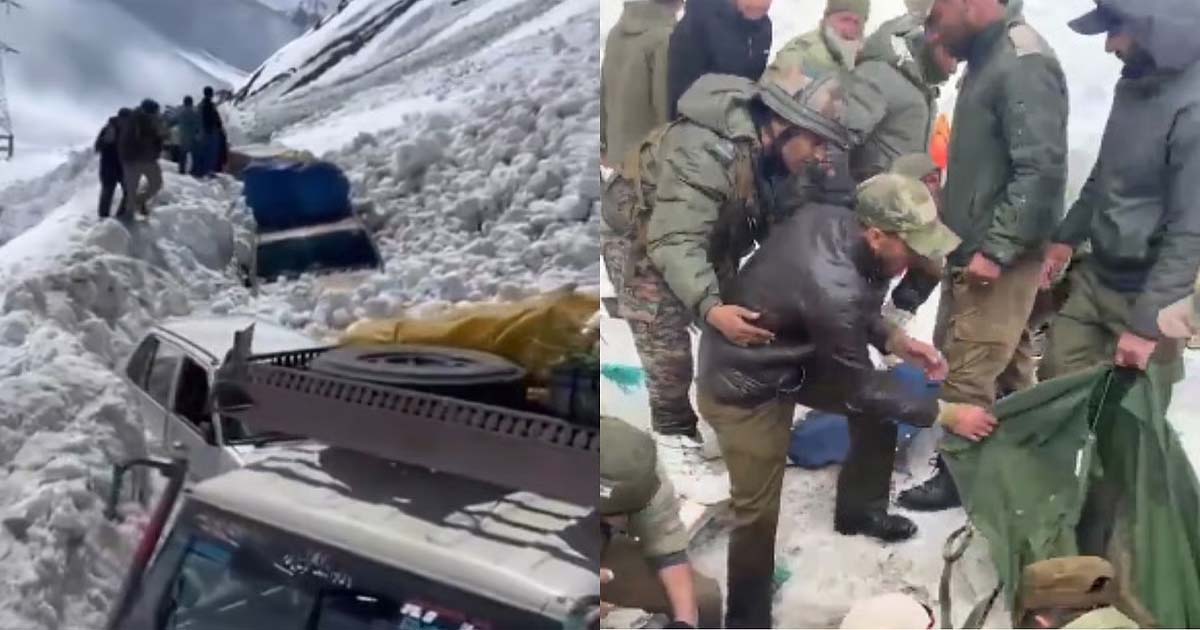
At least six people lost their lives and five others sustained injuries after a series of avalanches struck the Srinagar-Leh National Highway on Friday, burying nearly a dozen vehicles under heavy snow.
Officials confirmed that the incident occurred along the stretch between Zero Point and Minimarg near Zoji La during the afternoon hours. The sudden snow slides trapped multiple cars, leading to casualties and injuries.
Following the tragedy, VK Saxena said he is closely overseeing the situation. He stated that district authorities and senior police officials in Kargil have been instructed to rush to the site and coordinate rescue operations.
Emergency response teams, including disaster relief forces and the Border Roads Organisation, have been placed on high alert to assist in relief efforts and clear the affected highway stretch. Rescue operations are currently underway as authorities work to locate any survivors and restore connectivity.
National News
PM Modi & US President Donald Trump Hold Crucial Talks As West Asia Crisis Deepens; Musk Joins Call

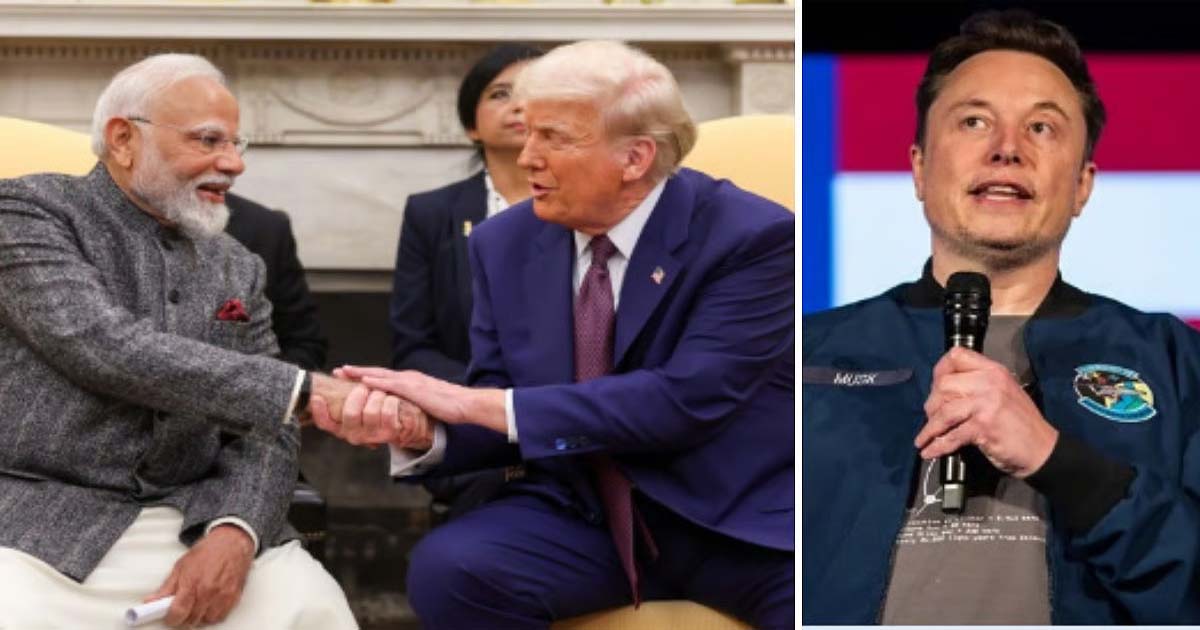
Washington: US President Donald Trump had a productive conversation with Prime Minister Narendra Modi, the White House said on Friday, referring to the talks between the two leaders on Tuesday.
The New York Times reported that billionaire businessman Elon Musk joined the phone call between Modi and Trump on Tuesday when the two leaders discussed the situation in West Asia.
“President Trump has a great relationship with Prime Minister Modi, and this was a productive conversation,” White House Press Secretary Karoline Leavitt said in a statement.
Elon Musk participated in a phone call on Tuesday with President Trump and Prime Minister Narendra Modi of India, an unusual appearance by a private citizen on a call between two heads of state during a wartime crisis.
the inclusion of Musk, confirmed by two US officials, suggests that the world’s richest man is back on better terms with the president.
Trump and Musk had a falling out last year following the billionaire’s departure from the government, where he had been tasked with slashing the work force.
The report said it is unclear why Musk was on the call or whether he spoke.
It was the first conversation between the two leaders since the West Asia conflict began on February 28.
During the conversation, Prime Minister Modi underlined the importance of ensuring that the Strait of Hormuz remains open, secure and accessible, noting that it is vital for global peace, stability and economic well-being.
National News
PM Modi to launch key drinking water project in north Gujarat’s Banaskantha on March 31
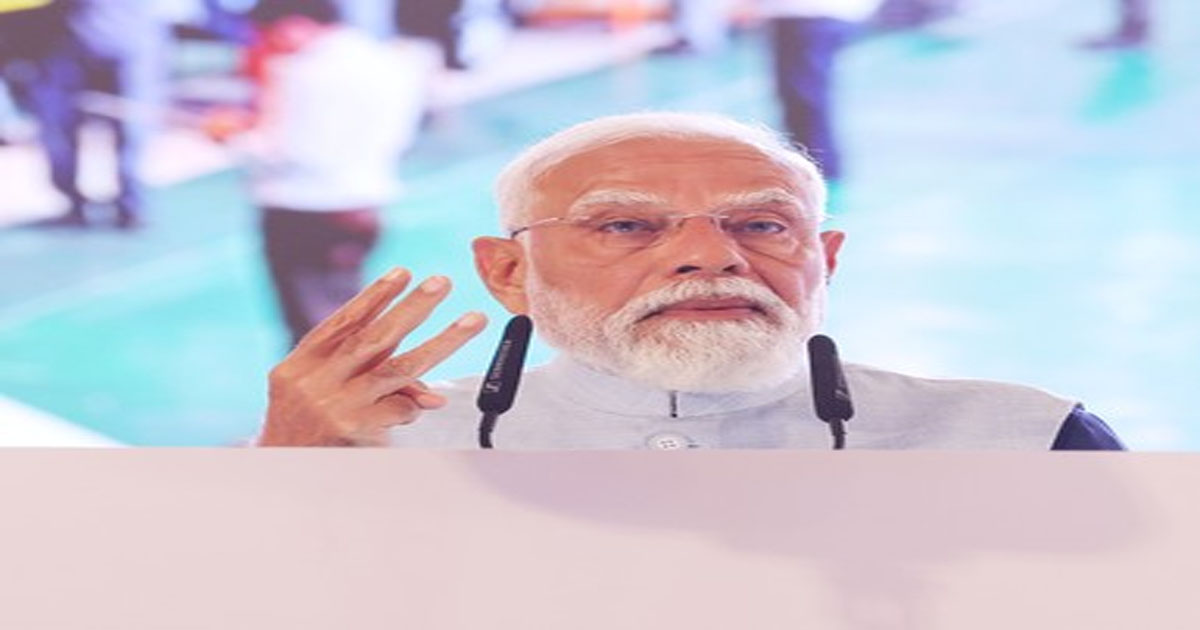
Banaskantha (Gujarat), March 27: Prime Minister Narendra Modi will visit Gujarat on March 31 to lay the foundation stone and launch multiple development projects, including a major drinking water scheme for the pilgrimage town of Ambaji and adjoining tribal areas, according to an official statement issued on Friday.
The Prime Minister will inaugurate Part I and Part II of the Rs 141-crore Ambaji drinking water project, which is expected to benefit around 78,000 residents across 34 villages and Ambaji town in Banaskantha district.
The scheme covers villages in Danta and Amirgadh talukas, regions that have long struggled with reliable access to drinking water due to their hilly and rocky terrain. At present, many of these areas are dependent on groundwater sources.
Officials from the Water Supply Department said the project marks a significant shift from groundwater dependence to a surface water-based supply system, which is likely to bring substantial public health benefits along with improved water availability.
The project has also been planned with future demand in mind, given the growing footfall at the Ambaji Temple, a prominent pilgrimage destination. Authorities said the infrastructure has been designed to cater to both current needs and anticipated expansion in the region.
Highlighting the broader policy framework, the department noted that Gujarat has been steadily advancing in water management through sustained planning and infrastructure development. The initiative forms part of the state’s larger push to expand access under the ‘Statewide Water Supply Grid’.
Under this grid, more than 3,300 km of bulk pipelines have already been laid, enabling surface water supply to over 15,000 villages and 251 urban centres, benefiting an estimated population of over five crore people.
Officials added that the state has significantly reduced its reliance on groundwater by implementing water supply schemes based on rivers, canals and reservoirs.
Further momentum is expected under Phase II of the Jal Jeevan Mission, which aims to expedite water connectivity in the remaining rural areas. For grievance redressal, a 24-hour rural helpline has also been put in place to address water-related complaints promptly.

Abu Asim Azmi Foundation organizes grand “Career Guidance and Counseling Session 2026” in Mankhurd Shivaji Nagar, along with education, skills are also the key to success : Abu Asim

Those spreading lockdown rumours will be in trouble After a meeting with the Prime Minister, strict action has been ordered: Devendra Fadnavis

Mumbai: Case Registered in Navi Mumbai Against NCB’s Amit Ghoute and Two Others on Complaint by Construction Company Owner’s Wife, Alleging Abetment to Suicide.

Bharti Airtel Receives ₹1,74,000 Penalty Notice From DoT For Subscriber Verification Lapses

Dhurandhar 2 Box Office Collection Day 9: Ranveer Singh Starrer Earns ₹41.55 Crore On Its Second Friday; Enters ₹700 Crore Club

Married Mumbai Woman Mocked In Andheri Society Over ‘Lift Kissing’ CCTV Video, Files Police Complaint

Mumbai: JBCN International School In Borivali Gets Bomb Threat, Search Reveals Hoax, Students Safe

LPG Crisis In Maharashtra: Cyber Crime On Rise Amid Shortage, 2 Women Lose ₹4 Lakh In ‘Gas Update’ Online Scam In Kalyan-Dombivli

Mahayoti’s big gift to the people of Mumbai… Now there is no tax for houses up to 500 square feet, the Municipal Corporation has increased this limit to 700 square feet.

Rashmika Mandanna-Vijay Deverakonda Wedding: Virosh Turn Modern Day Prince & Princess For Their Dreamy Sangeet Ceremony
-

 Crime4 years ago
Class 10 student jumps to death in Jaipur
-

 Maharashtra1 year ago
Mumbai Local Train Update: Central Railway’s New Timetable Comes Into Effect; Check Full List Of Revised Timings & Stations
-

 Maharashtra1 year ago
Mumbai To Go Toll-Free Tonight! Maharashtra Govt Announces Complete Toll Waiver For Light Motor Vehicles At All 5 Entry Points Of City
-

 Maharashtra2 years ago
False photo of Imtiaz Jaleel’s rally, exposing the fooling conspiracy
-

 National News1 year ago
Ministry of Railways rolls out Special Drive 4.0 with focus on digitisation, cleanliness, inclusiveness and grievance redressal
-

 Maharashtra1 year ago
Maharashtra Elections 2024: Mumbai Metro & BEST Services Extended Till Midnight On Voting Day
-

 National News2 years ago
J&K: 4 Jawans Killed, 28 Injured After Bus Carrying BSF Personnel For Poll Duty Falls Into Gorge In Budgam; Terrifying Visuals Surface
-

 Crime1 year ago
Baba Siddique Murder: Mumbai Police Unable To Get Lawrence Bishnoi Custody Due To Home Ministry Order, Says Report