
National News
Service to people is real religion: Venkaiah Naidu


Vice President M. Venkaiah Naidu on Sunday said that service to people is the real religion.
He said that the essence of religion is to serve and that going to a temple and to serve the needy is equally important.
While visiting a temple gives ‘punya’, serving the people gives immense satisfaction, he said in his address at the 20th annual celebration of Swarna Bharat Trust founded by him, at Venkatachalam in his native district Nellore. Union Home Minister Amit Shah also attended the event.
Naidu said he invited central ministers and other leaders so that they can see the activities of the Trust and motivate others to take up similar works.
The Vice President said in spite of his being in various positions at various levels, he always attended Swarna Bharat Trust programmes.
He underlined the need to reduce the divide between rural and urban areas and called for focussing on agriculture and farmers. “Not only the government, people should also focus on agriculture. We all owe agriculture and farmers,” he said.
Naidu described youth as the future of the country and said giving them skill training and helping them secure loans for self-employment and making them stand on their feet gives immense happiness.
Stating that women are 50 per cent of the population, he said more needs to be done for their empowerment. He also called for putting an end to atrocities on women and for ensuring equal share in property.
Naidu, who is also the Rajya Sabha Chairman, described passing of the Bill to repeal Article 370 as a historic moment in his life. “Repeal of Article 370 was my life ambition and mission. We always believe Kashmir is an integral part of India and there should be no question mark over it. Each inch of Kashmir belongs to India and all people are equal citizens. People’s wish was not respected for so many years but under the leadership of Narendra Modiji and Amit Shahji, the Bill was passed,” he said.
The Vice President recalled that though there was tension and there were also apprehensions that there will be violence, no such thing happened and the Bill was passed after detailed discussion.
He also revealed that a day before Prime Minister Narendra Modi had come to his house and requested that the Bill be taken up first in Rajya Sabha. “The entire night, me and officials worked out the programme for the next day. My wife and children were worried about my health,” he said.
Shah was all praise for Venkaiah Naidu for staying connected to his roots irrespective of the positions he held and always leading a disciplined life.
He said that it was during Naidu’s tenure as BJP’s President that the party went back to basics. He recalled that Naidu used to come to the party office at 9 a.m. every day, and described him as an ideal for him and thousands of party workers.

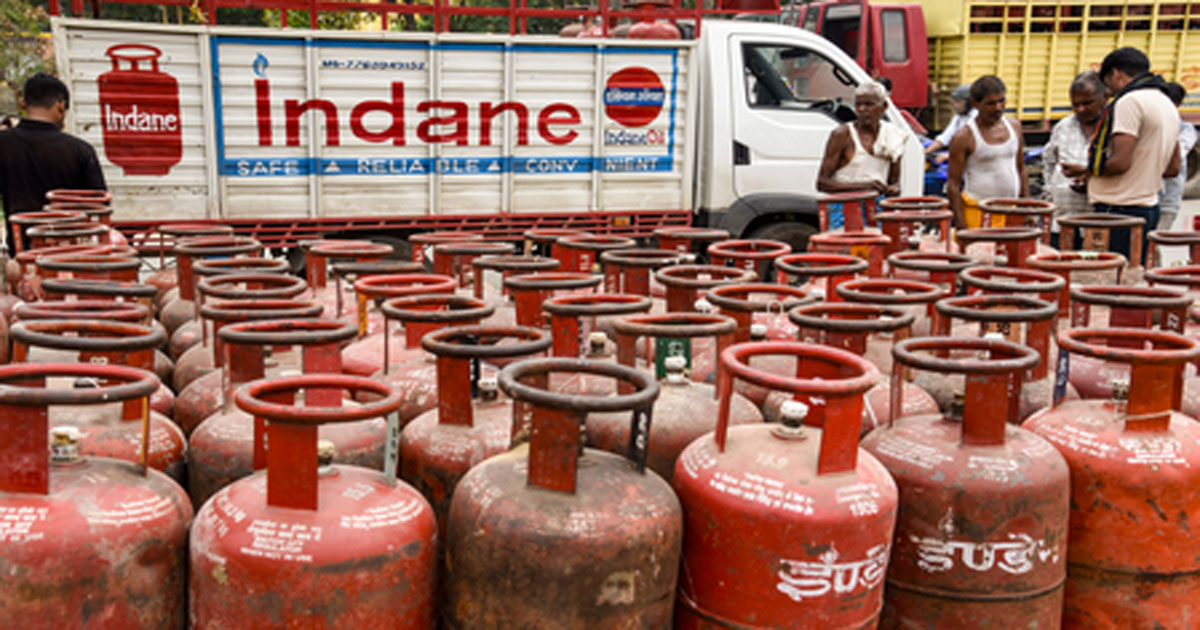
New Delhi, April 7: The Centre has decided to double the daily allocation of 5-kg free trade LPG (FTL) cylinders available for distribution to migrant labourers across states, according to an official communication.
The Petroleum Ministry said in a notification the enhanced allocation will be based on the average daily supply of cylinders provided to migrant workers.
The revised allocation goes beyond the earlier cap of 20 per cent specified in March announcement.
The government also said that the additional 5-kg FTL cylinders will be placed at the disposal of state governments and their Food and Civil Supplies Departments for distribution exclusively to migrant labourers with the assistance of oil marketing companies (OMCs).
Earlier, the government had said it was making all efforts to ensure adequate availability of petrol, diesel and LPG amid the prevailing geopolitical situation, while advising citizens to avoid panic buying and rely only on official sources for information.
Consumers were also encouraged to use digital modes for LPG bookings and minimise visits to distributors unless necessary.
The government has prioritised domestic LPG and PNG supplies, along with critical sectors such as hospitals and educational institutions.
It has also implemented several demand and supply-side measures, including enhancing refinery output and increasing LPG booking intervals to 25 days in urban areas and up to 45 days in rural areas.
To ease pressure on LPG demand, alternate fuels such as kerosene and coal have been made available, while states have been advised to expand PNG connections.
The government also said there has been no disruption in LPG supply affecting migrant workers.
According to official data, around 51 lakh domestic LPG cylinders were delivered recently, with online bookings rising to 95 per cent and delivery authentication-based distribution increasing significantly to curb diversion.
New Delhi, April 7: The Delhi Police on Tuesday rescued a 17-year-old minor girl and arrested an accused in a swift operation carried out by the women patrolling team of Mahila Chowki, Central District, preventing a serious crime as the victim was lured to Delhi on the pretext of getting her a job.
According to officials, the incident came to light on April 2, at around 10:00 AM, when a police team from Kamla Market Police Station comprising SI Kiran Sethi, W/Ct Khushboo, and W/Ct Pooja was on routine patrol duty near S.N. Marg. During patrolling, a minor girl approached the team seeking immediate help.
The police personnel acted promptly, ensured her safety, and recorded her statement. The victim, a resident of Darbhanga district in Bihar, revealed that she had left her home on March 14 following a domestic dispute and travelled to Delhi on the advice of a friend.
Upon her arrival at New Delhi Railway Station, she was received by Shivji Das (52), an acquaintance of her friend. He took her to his residence in Nehru Vihar, where she stayed from March 15 to April 2 under the pretext of being offered domestic work.
The victim alleged that during this period, especially in the absence of the accused’s wife, Shivji Das outraged her modesty, made inappropriate advances, and threatened her with defamation if she disclosed the incidents to anyone.
On April 2, the accused brought the girl to S.N. Marg area and asked her to wait in a parking lot, claiming he was arranging a job for her. Sensing danger and feeling unsafe in the suspicious surroundings, the victim sought help from the women police team passing by.
Acting on her complaint, the police immediately apprehended the accused at the spot. During further enquiry, when officers visited nearby shops to gather statements, it emerged that the accused was attempting to negotiate a deal to sell the minor. The alleged plan was foiled due to the timely intervention of the police team.
Based on the victim’s statement, an FIR (No. 95/2026) was registered at Kamla Market Police Station under relevant provisions of the Bharatiya Nyaya Sanhita and the POCSO Act.
The victim has undergone medical examination and was produced before the Child Welfare Committee. She is currently safe and staying in a shelter home.
Police confirmed that the accused, Shivji Das, a native of Darbhanga, Bihar, has been arrested, and further investigation into the case is underway.
International News
West Asia conflict Trump’s ‘personal war’, says Iran Supreme Leader’s representative

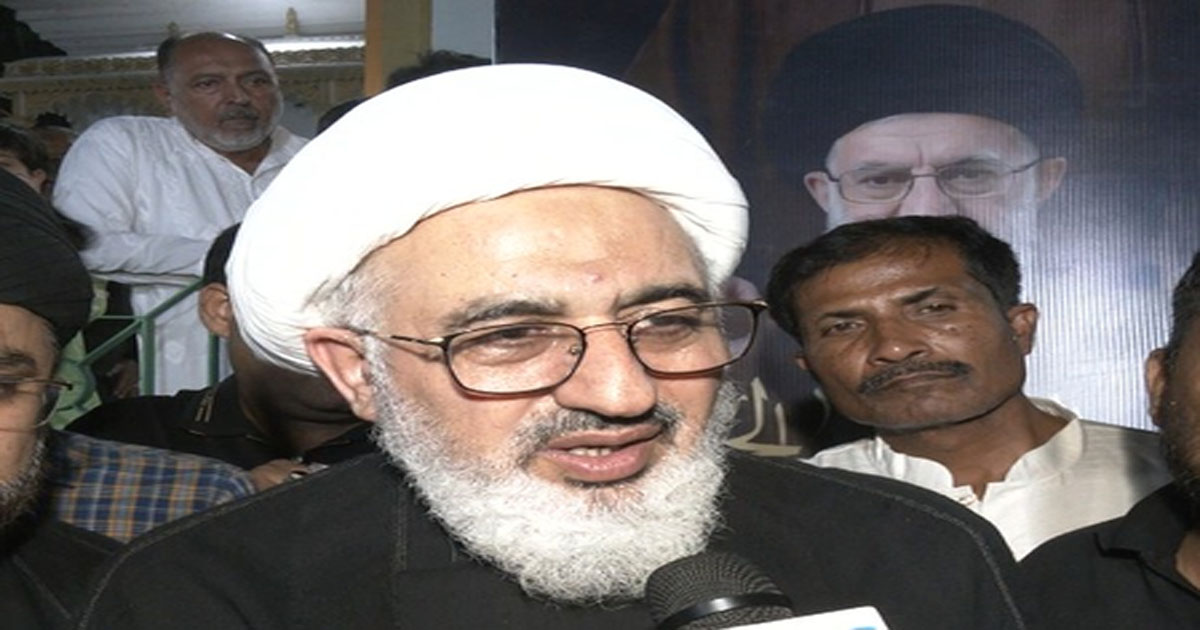
Patna, April 6: Abdulmajid Hakim Elahi, Representative of Iran’s Supreme Leader to India, has said that the Strait of Hormuz has historically remained under Iranian control for thousands of years and that disruptions began only after the recent conflict involving the United States and Israel, which he described as a personal war driven by President Donald Trump against Iran.
The US and Israel carried out joint strikes on February 28, resulting in the death of Ayatollah Ali Khamenei. In response, Iran launched retaliatory strikes targeting Israel, as well as US bases in neighbouring Gulf countries, leading to a broader regional escalation that has led to the Strait of Hormuz crisis and disrupted significant oil and energy supplies.
Speaking to media, Abdulmajid Hakim Elahi said, “This war is President Trump against Iran. Everyone knows that, because this war is not in the interest of Americans. This was his personal war, and now Americans are handling it. And they want out, but they don’t know how they can get out of it.”
On the question of reopening the Strait of Hormuz, he emphasised Iran’s longstanding control over the strategic waterway and blamed the ongoing crisis on the conflict.
“The Strait of Hormuz has been there for thousands of years; it’s under control and dominated by Iran. Iran will continue to do the same now. There wasn’t any crisis or problem before this war. But now they (the US and Israel) have created this war, and they have created a lot of crises and problems through the Strait of Hormuz. We hope that it will finish very soon,” he said.
Elahi also underlined the historical ties between Iran and India, describing the relationship as deeply rooted and longstanding.
“We have a very tight relationship and friendship with India, which dates back over 5000 years,” he said.
Recalling the global response following Khamenei’s death, he said the Iranian leader was respected across communities and faiths.
“Ayatollah Ali Khamenei was a spiritual leader not only for Muslims but also a religious figure and a voice for the voiceless. He is not just for Shia people but also those from other communities, including many Hindus and Christians, who also respected and admired him. When the news of his martyrdom spread, everyone came out in respect and paid their respects and shed their tears, mourning his death,” he added.

Mumbai Shocker! Thief Steals Mobile During Jumma Namaz In Govandi Mosque, Act Caught On CCTV

Mumbai: 6-Year-Old Girl Killed By Dumper In Kandivali, Locals Block Road In Protest

10 arrested in communal violence at Dandoshi, FIR registered after drugs recovered from accused’s house

Maha Cabinet approves new dept for electronics, IT, AI and listing of Mahavitaran

Thane-Borivali Twin Tunnel Work Launched; Here’s How TBM Nayak Will Transform Travel For Mumbaikars

Married Mumbai Woman Mocked In Andheri Society Over ‘Lift Kissing’ CCTV Video, Files Police Complaint

LPG Crisis In Maharashtra: Cyber Crime On Rise Amid Shortage, 2 Women Lose ₹4 Lakh In ‘Gas Update’ Online Scam In Kalyan-Dombivli

Dhurandhar 2 Box Office Collection Day 1: Ranveer Singh Starrer Takes An Exceptional Opening; Crosses ₹100 Crore Mark

Thane Horror: Man Slashed With Chopper In Naupada For Refusing ‘Vargani’, Caught On Camera

Mumbai Police Busts Fake Apple Accessories Racket In Ghatkopar, ₹16.33 Lakh Goods Seized; Six Booked
-

 Crime4 years ago
Class 10 student jumps to death in Jaipur
-

 Maharashtra2 years ago
Mumbai Local Train Update: Central Railway’s New Timetable Comes Into Effect; Check Full List Of Revised Timings & Stations
-

 Maharashtra1 year ago
Mumbai To Go Toll-Free Tonight! Maharashtra Govt Announces Complete Toll Waiver For Light Motor Vehicles At All 5 Entry Points Of City
-

 Maharashtra2 years ago
False photo of Imtiaz Jaleel’s rally, exposing the fooling conspiracy
-

 National News1 year ago
Ministry of Railways rolls out Special Drive 4.0 with focus on digitisation, cleanliness, inclusiveness and grievance redressal
-

 Maharashtra1 year ago
Maharashtra Elections 2024: Mumbai Metro & BEST Services Extended Till Midnight On Voting Day
-

 National News2 years ago
J&K: 4 Jawans Killed, 28 Injured After Bus Carrying BSF Personnel For Poll Duty Falls Into Gorge In Budgam; Terrifying Visuals Surface
-

 Crime1 year ago
Baba Siddique Murder: Mumbai Police Unable To Get Lawrence Bishnoi Custody Due To Home Ministry Order, Says Report