
Business
Sensex, Nifty open lower after recent rally; IT shares drag


Indian equity benchmarks opened lower on Friday as investors turned cautious after a recent rally amid rising crude oil prices and global trade uncertainties.
Sensex started the trading session at 84,093.24, down 0.28 per cent or about 200 points, while Nifty opened at 25,839.25, down 45.25 points or 0.17 per cent.
Among sectoral indices, metal stocks emerged as top gainers as Nifty Metal rose nearly 2 per cent.
Consumer durables, cement, realty and healthcare indices gained up to 0.87 per cent.
On the other hand, information technology (IT) stocks remained under pressure with Nifty IT declining nearly 1 per cent.
Meanwhile, market experts said that the domestic market continues to display resilience, largely due to sustained foreign institutional investor (FII) buying and improving fundamentals.
“The market is exhibiting resilience imparted mainly by sustained FII buying, supported by improving fundamentals. Since domestic institutional investors (DIIs) are also receiving consistent fund inflows, they too have remained active buyers in the market. This institutional support from both FIIs and DIIs augurs well for equities,” they said.
On the technical front, analysts said the Nifty’s move into the 25,900-26,000 zone has encountered resistance. A break below the 25,750 level could expose the index to further downside towards 25,300, while sustaining above 25,850 may pave the way for a sharp move towards 26,300.
On Thursday, foreign investors extended their buying streak for a 12th consecutive session, purchasing equities worth Rs 5,843 crore on a net basis. Domestic institutional investors also remained aggressive buyers, investing Rs 5,630 crore in Indian equities.
However, analysts cautioned that several macroeconomic headwinds continue to weigh on investor sentiment.
Brent crude oil has climbed above $96 per barrel amid escalating tensions in the Middle East, raising concerns over imported inflation for India.
In addition, fresh tariff proposals from the US have added to uncertainty surrounding global trade, prompting investors to adopt a cautious stance.
“Given these headwinds, there is limited room for a sustained market rally. A consolidation phase appears likely in the near term,” the market experts noted.
In addition, Asian markets extended their recovery, supported by renewed investor interest in artificial intelligence-related stocks after weeks of volatility.



German software giant SAP is considering cutting at least 10,000 jobs as it recalibrates its business strategy in response to the rapid adoption of artificial intelligence (AI), according to a report.
A report by Financial Times — citing sources — said the company is evaluating a reduction of roughly one-tenth of its workforce as part of a broader restructuring effort.
The deliberations are still at an early stage and have not yet been formally presented to employee representatives, it added.
The decision would make SAP the latest major European company to examine significant workforce reductions amid changing market dynamics driven by AI adoption and economic pressures.
In addition, several large corporations have announced restructuring measures in recent months as they navigate slowing demand and intensifying global competition.
The reported review also comes as global technology firms increasingly seek operational efficiencies from AI.
Major US software companies such as Microsoft, Oracle and Salesforce have announced workforce reductions over the past year while accelerating investments in artificial intelligence technologies.
SAP has been undergoing a strategic transformation focused on expanding its cloud-based services and integrating AI capabilities across its software portfolio.
The company has shifted away from its traditional software licensing model toward subscription-based cloud offerings and AI-enabled enterprise solutions.
The software maker previously carried out a major restructuring programme in 2024 that resulted in around 10,000 job reductions.
However, subsequent hiring initiatives restored the company’s overall workforce to approximately 113,000 employees, according to the Financial Times report.
The report also quoted SAP Chief Financial Officer Dominik Asam as recently indicating that future workforce adjustments should not be ruled out as the company adapts to evolving industry trends.
The company has posted third-quarter revenue of 10.3 billion euros, an increase of 13 per cent from a year earlier, while cloud services generated 6.7 billion euros in sales.
Its net profit rose 11 per cent year-on-year to 2.3 billion euros.
However, SAP — which is Europe’s largest software company by market value — has not issued any official statement regarding the job cut report.

Indian stock markets traded higher in early deals on Thursday, supported by sustained foreign fund inflows and gains in information technology (IT) stocks even as global investors continued to grapple with volatility in artificial intelligence-related shares.
Sensex rose 388.12 points or 0.46 per cent to 84,326.40, while Nifty advanced 60.75 points or 0.23 per cent to 25,880 by around 9:20 am.
Technology stocks led the gains as Nifty IT surged over 2 per cent. Metal and private banking indices also traded in positive territory, helping offset weakness in sectors such as media, cement, oil and gas and automobiles.
India continues to benefit from a shift in global investment flows amid concerns surrounding AI-linked trades elsewhere in Asia, market experts said.
“The weakening trend in AI stocks globally continues. FIIs are avoiding the concentration risks in AI trade, particularly in South Korea and Taiwan. This weakening of the AI trade, along with the impressive revival in earnings growth in India, is powering the FII inflows into India,” they said.
Foreign institutional investors (FIIs) have invested about $14.15 billion in Indian equities so far this month, helping the rupee strengthen to around 92.21 against the US dollar.
Analysts attributed the inflows to stronger-than-expected corporate earnings, with Nifty companies reporting robust profit growth during the second quarter, reinforcing India’s position as one of the best-performing major equity markets globally.
On Wednesday, FIIs remained net buyers for the 11th consecutive session, purchasing equities worth Rs 4,479 crore, while domestic institutional investors (DIIs) also turned buyers and invested Rs 4,018 crore.
Asian markets moved higher after bargain buying helped Wall Street recover from steep intraday losses overnight.
US stocks ended lower on Wednesday as an AI-led selloff persisted, although late-session buying ahead of the Thanksgiving holiday helped major indices rebound from their lows.
Meanwhile, investors also monitored trade developments after the United States proposed tariffs on a number of countries, including India.
The Indian government said concerns raised by US authorities regarding alleged structural excess capacity were being examined and reiterated that all trade-related issues should be addressed through the ongoing negotiations for a bilateral trade agreement.
However, market analysts said that the tariff proposals are unlikely to have a significant near-term impact on Indian equities, with earnings momentum and foreign inflows remaining the primary drivers of sentiment.
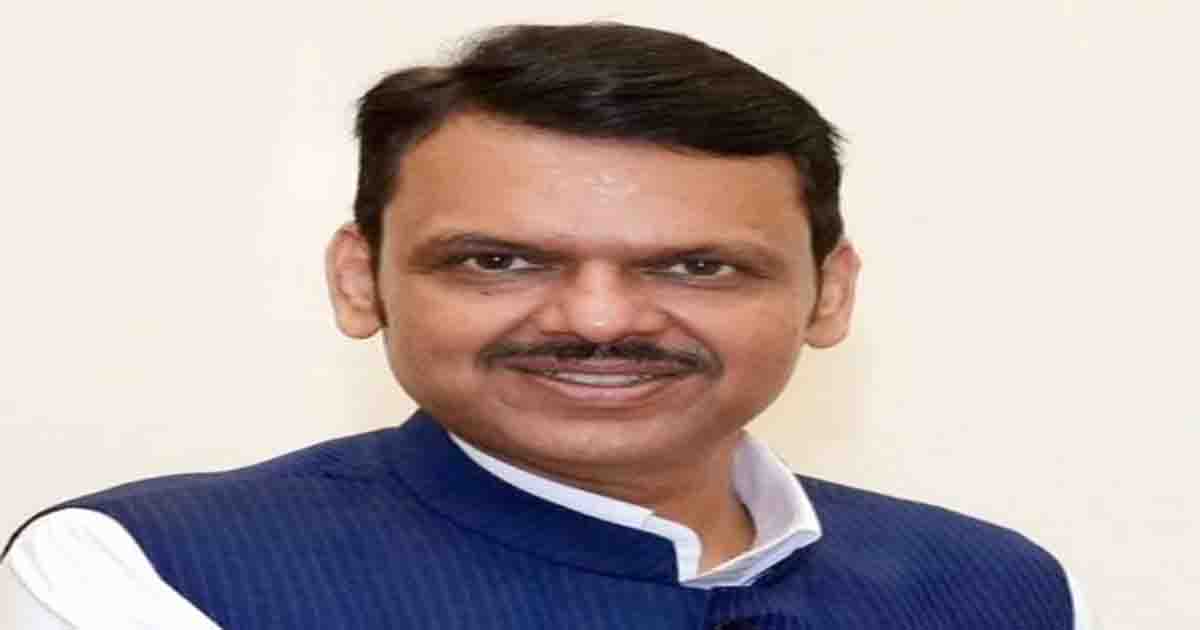
Chief Minister Devendra Fadnavis announced on Wednesday that the Maharashtra government has set an ambitious target to attract $100 billion in infrastructure investments over the next five years.
As part of this vision, approximately $50 billion is being invested in the Mumbai Metropolitan Region (MMR) to develop metro networks, roads, flyovers, tunnels, and other civic infrastructure.
Additionally, the state plans to develop a ‘Third Mumbai’ around the Navi Mumbai airport area and a ‘Fourth Mumbai’ along the Virar-Vadhavan belt.
Addressing the Third World Mayors’ Conference in Mumbai—organised to mark the centenary year of the All India Institute of Local Self-Government—CM Fadnavis emphasised the need to view cities not as problems, but as engines of economic growth.
The event was attended by Union Minister of State for Housing and Urban Affairs Tokhan Sahu, Mumbai Mayor Ritu Tawde, and mayors, municipal administrators, and urban development representatives from India and abroad.
Highlighting the economic weight of urban centres, CM Fadnavis noted that cities contribute roughly 65% to the country’s GDP, and more than half of Maharashtra’s population resides across nearly 400 cities.
Planned urban development, he said, can simultaneously drive economic progress and improve living standards. Reflecting on past policies, he stated that earlier attempts to curb urbanisation led to unplanned growth, slums, inadequate civic amenities, water shortages, and waste management issues.
He credited Prime Minister Narendra Modi for shifting the narrative after 2014 to view urbanisation as an opportunity for development.
Planned around the Navi Mumbai International Airport, CM Fadnavis informed that Third Mumbai will feature dedicated hubs including an Edu-City, Sports City, Medi-City, Innovation City, and a Global Capability Centre (GCC) City. The educational hub will accommodate around one lakh students and host campuses of 12 world-class universities, seven of which have already commenced operations.
According to the CM, the Virar-Vadhavan corridor is slated to become the Fourth Mumbai. One of the country’s largest ports is being constructed at Vadhavan, which Fadnavis expressed confidence would rank among the top 10 ports globally. The region will be connected to Mumbai via the bullet train and a super expressway. Over $50 billion is being poured into MMR for a 300-km-plus metro network, roads, tunnels, water supply, and sewage treatment projects.
CM Fadnavis pointed out that the 22-km Atal Setu has already reduced travel time to the Navi Mumbai airport to about 40 minutes, with plans to bring it down to 30 minutes next year.
Referring to the Dharavi redevelopment project, the Chief Minister stated that residents will be provided with well-equipped housing. Within the next decade, Dharavi is projected to transform into a major commercial hub, complementing the Bandra-Kurla Complex (BKC). Alongside building new cities, the state has adopted a policy of redeveloping and rejuvenating older urban centres across Mumbai, Pune, Nagpur, Nashik, and Chhatrapati Sambhajinagar, he said.
CM Fadnavis noted that global capital is readily available, but attracting investment requires political willpower, determination, and viable, high-quality projects rather than funding alone.
Chief Minister—drawing from his own experience as the Mayor of Nagpur—reminded mayors that they are the first point of accountability for citizens regarding roads, water, sanitation, and basic amenities. He urged municipalities to study and replicate successful urban models from cities like Indore, Ahmedabad, and Mumbai.
Concluding his address, CM Fadnavis assured delegates that the state government would positively review and implement actionable recommendations emerging from the conference’s discussions.

‘We will not surrender our party to SP’: Imran Masood strongly opposes 26-seat offer

Putin lauds PM Modi’s ‘Make in India’ vision in interaction with 16-year-old ‘AI kid of India’

Six Bangladeshi nationals caught living in capital without valid papers, their movement ‘restricted’

‘Criminals no longer fear police’: Uddhav Sena attacks Fadnavis over law and order in Maharashtra

SAP may cut nearly 10 pc of workforce amid AI restructuring: Report

Congress trying to protect 3 crore Bangladeshi infiltrators in voter list: HM Shah

Red Fort car blast probe exposes blueprint for spread of terror modules across India

Trump flags Iran targets as talks continue

‘Conspiracy, not accident’: NCP on Ajit Pawar death

BJP, Shiv Sena slam Mallikarjun Kharge for terming Diwali ‘Khushiyon ka Eid’
-

 Crime4 years ago
Class 10 student jumps to death in Jaipur
-

 Maharashtra2 years ago
Mumbai Local Train Update: Central Railway’s New Timetable Comes Into Effect; Check Full List Of Revised Timings & Stations
-

 Maharashtra2 years ago
Mumbai To Go Toll-Free Tonight! Maharashtra Govt Announces Complete Toll Waiver For Light Motor Vehicles At All 5 Entry Points Of City
-

 Maharashtra2 years ago
False photo of Imtiaz Jaleel’s rally, exposing the fooling conspiracy
-

 National News2 years ago
Ministry of Railways rolls out Special Drive 4.0 with focus on digitisation, cleanliness, inclusiveness and grievance redressal
-

 Maharashtra2 years ago
Maharashtra Elections 2024: Mumbai Metro & BEST Services Extended Till Midnight On Voting Day
-

 National News2 years ago
J&K: 4 Jawans Killed, 28 Injured After Bus Carrying BSF Personnel For Poll Duty Falls Into Gorge In Budgam; Terrifying Visuals Surface
-

 Crime2 years ago
Baba Siddique Murder: Mumbai Police Unable To Get Lawrence Bishnoi Custody Due To Home Ministry Order, Says Report