
Sports
Schwarzenegger sees working out as ‘survival’ mechanism; hits gym 320 days a year

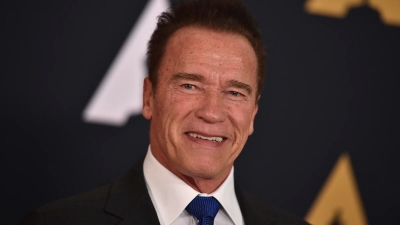
Hollywood star Arnold Schwarzenegger considers workouts to be a “survival” mechanism.
The 75-year-old actor became an award-winning bodybuilder in the years before he became a Hollywood star and explains that he still tries to work out “almost every day” because he wants to keep his physique for as long as possible, reports aceshowbiz.com.
“I bicycle down, it gives me a nice warm up, it’s like a half an hour ride and then I work out for another half an hour or 45 minutes. I try to come (to the gym) every day, but by trying every day I end up doing maybe 320 days a year,” he told CNN.
“It never stops. I do a combination, some days I go from one machine to the other but some days it’s leg day, then it’s the back, then it’s shoulders then it’s arms and it and it’s calves. Just like the old days but with less weight, it’s the same kind of draining.”
“It doesn’t feel the same as it did in the olden days, I have to say because now it’s about survival. It’s about keeping as long as I can to keep what I have.”
The ‘Terminator’ star, who was born in Austria but moved to the US in 1968, was speaking from Gold’s Gym in Venice Beach where he used to train during his heyday and explained that the establishment gave him the chance to train with the best equipment and people which led him to become an “unbeatable” heavyweight champion.
He added: “I was the first member who trained for free and was called balloon belly. They thought my stomach was too big to be champion. I was embarrassed but then I realised that I was top of the world for European standards but for American standards, it was a new standard. It gave me the ability to train with the best equipment, with the strongest people and it made the greatest bodybuilder at that time and I was unbeatable until I retired.”

Sports
Pep Guardiola Sparks Tension With Antonio Rudiger After Manchester City’s Shocking Champions League Defeat Against Real Madrid

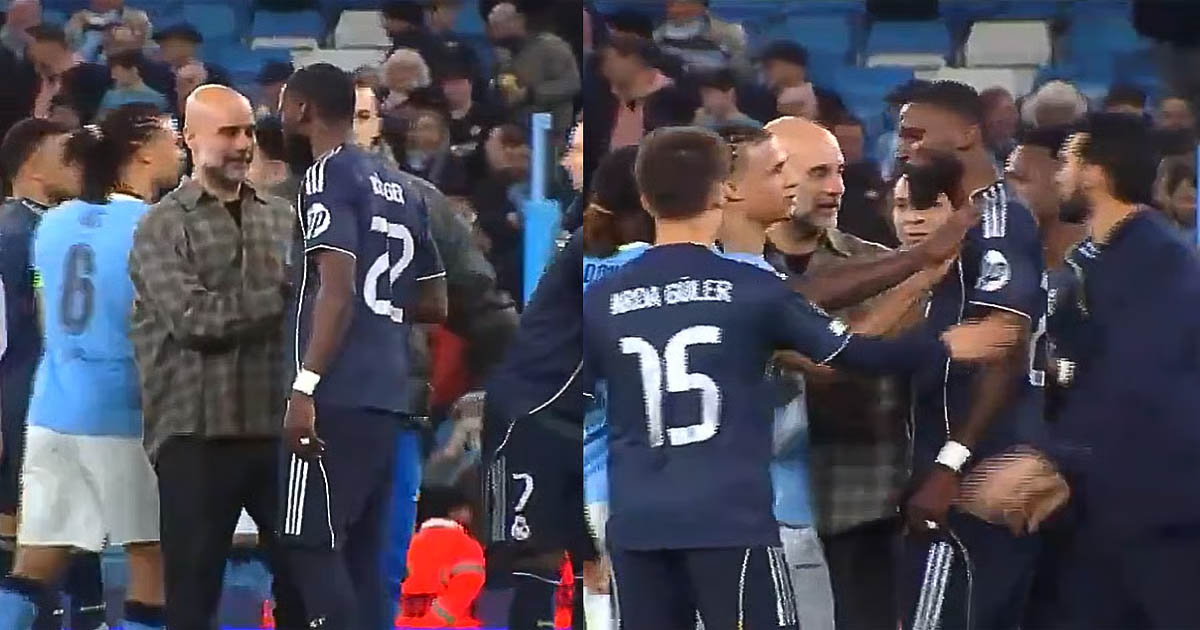
In the wake of a disappointing exit from the UEFA Champions League, tensions surfaced between Pep Guardiola and Antonio Rudiger following Manchester City’s 1–2 loss to Real Madrid at the Etihad Stadium.
As the final whistle blew and the Spanish manager greeted the victorious Real Madrid players, a brief but heated moment unfolded between Guardiola and Rudiger. What began as a routine handshake quickly shifted in tone, with City defender Rudiger appearing visibly agitated.
Manchester City’s defeat ended their hopes in Europe this season, with Real Madrid advancing 5–1 on aggregate. Guardiola later addressed the loss, acknowledging the Champions League’s difficulty and urging his team to shift focus toward domestic targets, including the League Cup final. He emphasized the disappointment but maintained that the competition’s rigors require resilience and learning from setbacks.
Although football rivalries often carry emotional weight, incidents like the Guardiola–Rudiger moment highlight how passion and frustration can surface in intense matches. Both clubs now prepare for upcoming fixtures, with Manchester City looking to regroup and Real Madrid celebrating a significant European progression.
Vinicius Junior once again found himself at the center of attention, not just for his footballing brilliance but for a bold and emotional celebration that left fans stunned during a high-voltage UEFA Champions League clash against Manchester City.
The Real Madrid forward lit up the night with a crucial goal. However, it was what followed that truly ignited conversations across the football world. As the ball hit the back of the net, Vinicius turned towards the crowd and performed a ‘cry’ gesture, mocking his critics and seemingly responding to the hostile atmosphere inside the stadium.
The reaction inside the ground was immediate. Manchester City supporters were left in disbelief, many visibly stunned by the Brazilian’s audacity. The gesture, interpreted by many as a direct message to opposition fans who had been jeering him throughout the match, added another layer of intensity to an already fiery encounter.
Vinicius has often been a polarizing figure in European football, frequently targeted by opposition fans but equally known for his fearless personality. This celebration appeared to be a culmination of pent-up emotion, a statement that he thrives under pressure and refuses to be intimidated on the biggest stage.
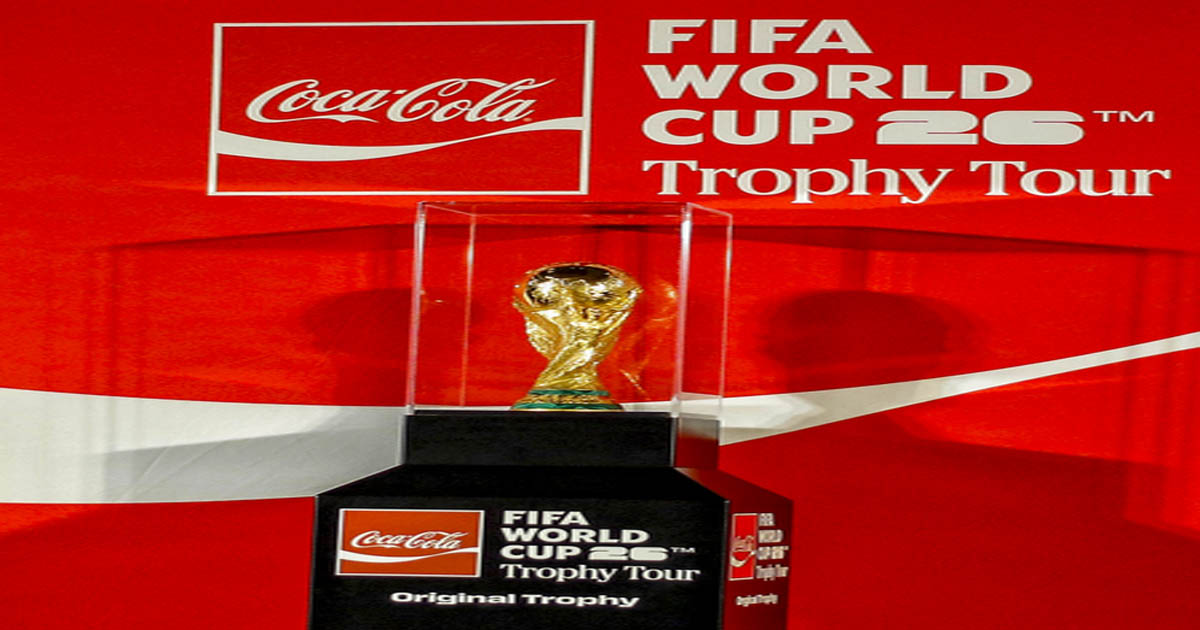
New Delhi, March 17: Iran’s participation in the FIFA World Cup 2026 is uncertain as the country’s football federation are in talks with FIFA to move its scheduled matches in the United States to Mexico due to rising security concerns.
Iranian football president Mehdi Taj confirmed this development. He stated that safety assurances are a major issue. “When [US President Donald] Trump has said he cannot ensure the security of the Iranian national team, we will certainly not travel to America,” Taj said in a post shared via the Iranian embassy in Mexico’s X account. “We are negotiating with FIFA to hold Iran’s World Cup matches in Mexico.”
These concerns arise from the ongoing conflict following the US-Israel airstrikes on Iran in 2026, which started in late February and has heightened regional tensions. Iran’s sports minister previously indicated the seriousness of the situation, mentioning that the national team might not be able to take part in the tournament as planned.
Earlier, US President Donald Trump stated that Iran would be allowed to participate but recognized the sensitivity of the matter. He said the team is welcome but suggested it might not be suitable for them to play in the United States “for their own life and safety.”
Iran had easily qualified for the expanded 48-team tournament co-hosted by the United States, Mexico, and Canada. They became the first Asian team to secure their spot on March 25, 2025. According to the current schedule, they are set to play two group matches in Los Angeles and one in Seattle.
However, the worsening geopolitical situation raises the possibility of a dramatic withdrawal. This would be unprecedented in the modern era of the World Cup and could require FIFA to make a last-minute replacement decision.
For now, the Asian Football Confederation has said it has not received any official communication about a withdrawal. It added that the Iranian federation has confirmed its intention to participate, although the rapidly changing situation continues to create uncertainty about their final decision.
Sports
‘Crores Of Indians Await Victory’: Eknath Shinde Wishes Team India Ahead Of T20 Cricket World Cup Final In Ahmedabad Against NZ

Mumbai: Maharashtra Deputy Chief Minister Eknath Shinde on Sunday extended his best wishes to Team India ahead of the ICC Men’s T20 World Cup 2026 final, where India will take on New Zealand at the Narendra Modi Stadium in Ahmedabad later in the day.
In a message shared on X (formally Twitter), Shinde expressed confidence in the Indian side and said the team, led by Suryakumar Yadav, will enter the summit clash with determination and the hopes of millions of fans across the country.
Wishing the Men in Blue success in the crucial match, Shinde said crores of supporters across India are eagerly awaiting the final and are ready to celebrate the team’s victory. He added that fans across the nation are hopeful that India will secure the title and create history in the tournament.
India secured their place in the final after defeating England in the semi-final on March 6 at the Wankhede Stadium in Mumbai. The win helped the Suryakumar Yadav-led side advance to the title clash, setting up a highly anticipated contest against New Zealand.
The final is scheduled to take place on Sunday, March 8, at the Narendra Modi Stadium in Ahmedabad, which is expected to witness a massive turnout of cricket fans. The stadium, known as the largest cricket venue in the world, is likely to see strong support for the Indian team as they take the field in pursuit of the championship.
The match also presents India with an opportunity to script history in the T20 World Cup. If the team lifts the trophy on Sunday, it will achieve two rare milestones in the tournament’s history.
India are currently the defending champions of the T20 World Cup, and a victory in the final would make them the first team to successfully retain the title. At the same time, the win would also mark the first instance of a host nation winning the T20 World Cup.
With two historic records at stake, fans across the country will be hoping that the Men in Blue rise to the occasion and deliver a memorable performance in Ahmedabad, turning the night into a celebration for cricket lovers across the nation.

Mumbai Police Anti-Narcotics Cell Seizes Drugs Worth ₹2.21 Crore; Nigerian National Arrested In Khar

Mumbai Local Train Chaos! Mega Block Disrupts Central Line; Passengers Seen Walking On Tracks At Kopar, Thakurli

Iran says ‘progress’ in US talks, but ‘far from final discussion’

NESCO Concert Drug Deaths Case: Mumbai Police Arrests Nigerian National, Seizes Cocaine & MDMA Worth Crores In Khar Raid

Massive Fire Breaks Out At Mumbai’s Crawford Market Shop, No Injuries Reported

Dhurandhar 2 Box Office Collection Day 9: Ranveer Singh Starrer Earns ₹41.55 Crore On Its Second Friday; Enters ₹700 Crore Club

Mumbai: 28-Year-Old Ghatkopar Woman Killed By Speeding Tanker While Crossing Road, Driver Arrested

Bharti Airtel Receives ₹1,74,000 Penalty Notice From DoT For Subscriber Verification Lapses

Thane Horror: Man Slashed With Chopper In Naupada For Refusing ‘Vargani’, Caught On Camera

Chilling Highway SCAM In Maharashtra! Mumbai Man Cornered By Fake Recovery Agents Claiming ₹10 Lakh Dues Near Lonavala
-

 Crime4 years ago
Class 10 student jumps to death in Jaipur
-

 Maharashtra2 years ago
Mumbai Local Train Update: Central Railway’s New Timetable Comes Into Effect; Check Full List Of Revised Timings & Stations
-

 Maharashtra2 years ago
Mumbai To Go Toll-Free Tonight! Maharashtra Govt Announces Complete Toll Waiver For Light Motor Vehicles At All 5 Entry Points Of City
-

 Maharashtra2 years ago
False photo of Imtiaz Jaleel’s rally, exposing the fooling conspiracy
-

 National News2 years ago
Ministry of Railways rolls out Special Drive 4.0 with focus on digitisation, cleanliness, inclusiveness and grievance redressal
-

 Maharashtra1 year ago
Maharashtra Elections 2024: Mumbai Metro & BEST Services Extended Till Midnight On Voting Day
-

 National News2 years ago
J&K: 4 Jawans Killed, 28 Injured After Bus Carrying BSF Personnel For Poll Duty Falls Into Gorge In Budgam; Terrifying Visuals Surface
-

 Crime2 years ago
Baba Siddique Murder: Mumbai Police Unable To Get Lawrence Bishnoi Custody Due To Home Ministry Order, Says Report