
National News
SC to examine whether electoral bonds case needs to be heard by a constitution bench

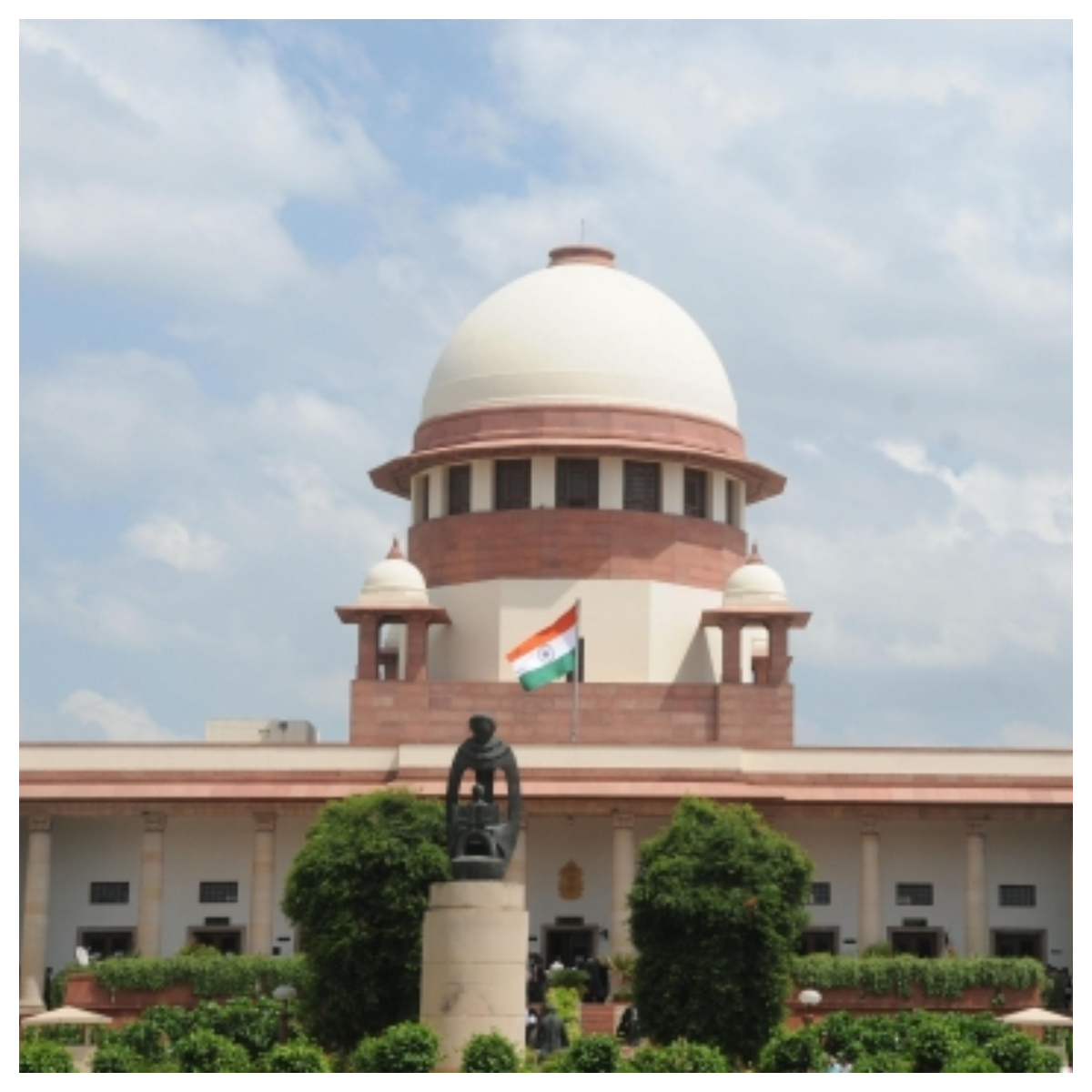
The Supreme Court on Tuesday agreed to take up the petitions challenging the electoral bonds scheme on April 11 to examine whether the matter should be heard by a constitution bench.
Advocate Shadan Farasat, representing a petitioner, contended before a bench headed by Chief Justice of India D.Y. Chandrachud that the aspect in this matter deals with core of the finances of political parties and this issue requires an authoritative pronouncement. Pointing at the questions framed by him for the consideration of the court, Farasat said the court may consider this matter having been heard by a constitution bench. Senior advocate Dushyant Dave, also representing one of the petitioners, said, “we will only benefit, if it is a constitution bench. It will not harm anybody. Yes, this issue goes to the core of our democratic existence. Rs 12,000 till now and the largest party gets more than two-third”.
The bench, also comprising justice P.S. Narasimha, asked the Centre’s counsel, whether she is ready to argue on the aspect of referring the matter to a constitution bench. The counsel replied that the Attorney General R. Venkataramani, who was not present in the courtroom during the hearing, would have to argue whether a reference should be made to the constitution bench or not.
After hearing submissions, the top court scheduled the matter for hearing on April 11, to examine whether petitions should be referred to a constitution bench.
In October last year, the Centre had told the Supreme Court that the electoral bonds scheme is an absolutely transparent mode of political funding.
The top court was hearing a batch of petitions led by NGO Association for Democratic Reforms (ADR), that have challenged the validity of the Centre’s electoral bonds scheme as a source of political funding.
The apex court, in March 2021, declined to entertain two stay applications moved by ADR to stop the sale of the electoral bonds ahead of elections in West Bengal, Tamil Nadu, Assam, Kerala, and Puducherry.
The top court had noted that there was no justification to block sale of electoral bonds over concerns of anonymity in political party funding or apprehensions of their misuse.
In April 2019, the apex court directed all political parties to submit details of receipts of the electoral bonds to the Election Commission of India (EC) in a sealed cover.

National News
Eradicating Naxalism a mark of honour for tribal community, says BJP chief Nitin Nabin

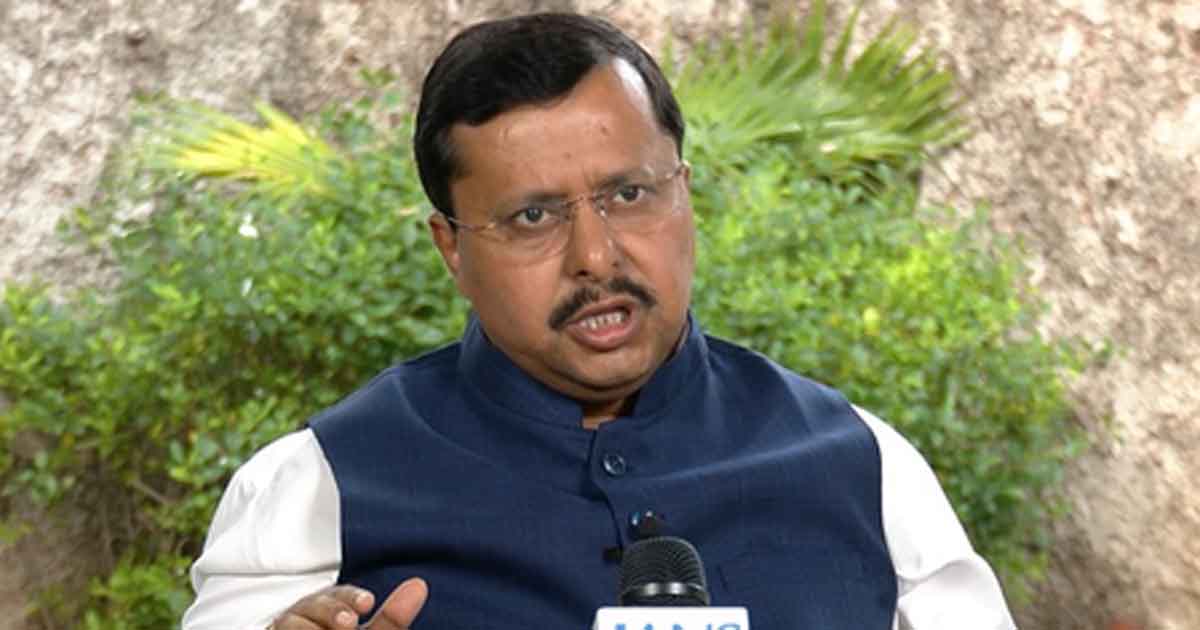
Bharatiya Janata Party (BJP) National President Nitin Nabin, on Sunday, paid tributes to the 151st birth anniversary of freedom fighter Birsa Munda, saying that the eradication of Naxalism from the country is a “mark of honour” for the tribal community.
Speaking to reporters here, Nabin said: “On the occasion of the birth anniversary of Bhagwan Birsa Munda, I extend my heartiest congratulations to all countrymen, especially the Tribal community.”
Noting that the day is observed as ‘Janjatiya Gaurav Diwas’, he said, “The way continuous efforts are being made for the progress of the community under the leadership of Prime Minister Narendra Modi, it is clear that we envision the development of this country together with the tribal community.”
“We will be able to fulfil the resolution of a developed India, only through our resolve to take the tribal community forward. Completely eradicating Naxalism from its roots in 2026 is something I view as a mark of honour for the tribal community,” he added.
The BJP chief further said, “PM Modi had taken oath that Naxalism will be eliminated from its roots from regions like parts of Chhattisgarh, Odisha, Telangana or Jharkhand. This year, when the Prime Minister went to celebrate Diwali with soldiers in Jharkhand’s Bastar, it was a message that Naxalism has been completely eradicated.”
Reiterating the government’s commitment to continue efforts towards integrating the Tribal community into the mainstream, he said, “Earlier, guns were raised in Bastar, but today the place is discussed for its contribution to sports.”
Pointing out that President Droupadi Murmu hails from the community, Nabin said, “As we celebrate Janjatiya Gaurav Diwas, we can proudly say that today several leaders belonging to tribal communities are heading several states as well as the country.”
Earlier in the day, Prime Minister Narendra Modi highlighted the strides the country has made in eliminating Maoism and said that the mothers and sisters of the tribal communities are blessing the government for this achievement.
“There used to be hundreds of violent incidents every year. Thousands of innocent people, a large number of them were tribals, lost their lives. However, people affected by Naxalism-Maoism were abandoned by the then governments, their rights were snatched away, and everybody remained silent,” he said while virtually addressing the Janjatiya Gaurav Diwas programme, being organised in Maharashtra’s Gadchiroli.
Contrasting the situation with this year, PM Modi said, “Children were taken away from their mothers by these Naxals; our daughters were taken away, and no one was able to do anything. However, today, when Naxalism-Maoism has been eliminated, mothers and sisters in the tribal community are giving us their blessings.”
Business
NITI Aayog to launch national workshop series on lessons from 25 years of PM Modi’s leadership
NITI Aayog will launch a series of five national workshops on Tuesday to draw lessons from 25 years of Prime Minister Narendra Modi as Head of Government, with the series studying this quarter century of public leadership so that its lessons become part of the nation’s shared knowledge, according to an official statement issued on Sunday.
It will document the experiences of those who were part of this journey and translate them into knowledge that benefits all, according to an official statement issued on Sunday.
The Prime Minister assumed office as Chief Minister of Gujarat on October 7, 2001. After serving for more than 12 years in that office, he assumed office as Prime Minister in May 2014 and is now serving his third successive term. With the completion of 25 years on October 7, 2026, this marks the longest continuous tenure at the head of an elected government in India. Throughout this period, governance has been anchored in the idea of the ‘Pradhan Sevak’, under which every office of government exists to serve the citizens.
Antyodaya has set the measure of progress at the last person. Jan Bhagidari has made development a people’s movement. The principle of Sabka Saath, Sabka Vikas, Sabka Vishwas, Sabka Prayas has further strengthened this as a shared national undertaking. The goal of Viksit Bharat by 2047 has provided this approach a long horizon, asking every institution to plan and act for India as it approaches the centenary of Independence, the statement said.
Much of what India has learnt about governing at this scale is held in the experience of the officers, institutions, and citizens who took and carried through these decisions. The series will record their first-hand accounts and examine them with academic rigour. It will develop them into institutional learning material, including case studies, research papers and teaching material, for civil servants, training institutions, universities, students and the wider public.
The five national workshops will focus on the following governance themes: “Leadership as Mission” in November 2026, “Governance as Delivery” in January 2027, “Development as Inclusion” in April 2027, “Civilisational Identity” in July 2027, and “India as a Global Force” in September 2027.
The first national workshop, “Leadership as Mission”, will be held at Bharat Mandapam, in the national capital on November 17. It will study leadership through the specific decisions in which it becomes visible and the manner in which those decisions are translated into outcomes for citizens.
Around 900 participants are expected to attend the workshop, of whom 250 will participate directly in the deliberations. These will include 150 government officers, including Secretaries and senior officers of the Union and state governments and District Collectors of Aspirational Districts. The participants will also include 25 students of leading institutions and universities, and 50 community partners and beneficiaries of national flagship schemes. The group discussions will be guided by 25 case facilitators trained under the Amrit Gyaan Kosh initiative of the Capacity Building Commission. The proceedings will be streamed on the iGOT Karmayogi platform.
National News
NHRC summons Punjab chief Secy over Tarn Taran bus tragedy; had flagged serious safety risks
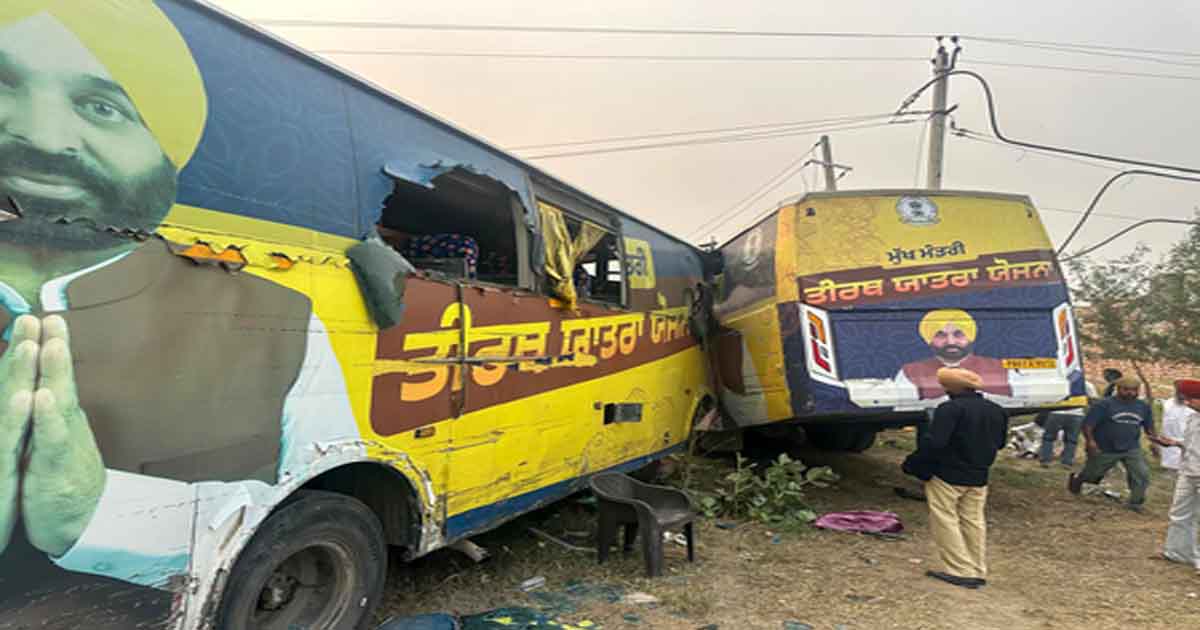
The National Human Rights Commission (NHRC) has issued a conditional summons to the Punjab government over “serious safety violations” in buses operating under the Mukhyamantri Tirth Yatra Yojana.
The summons was issued by a Bench presided over by member Priyank Kanoongo to the Chief Secretary, Government of Punjab.
Five people were killed, and 16 others sustained injuries after two buses carrying pilgrims collided head-on on the Tarn Taran-Bathinda National Highway near Naushehra Pannuan village in Punjab’s Tarn Taran district on Saturday.
The NHRC, in a press statement on Saturday, said that in its earlier proceedings, it had flagged recurring fatal accidents involving passenger and sleeper buses, structural deficiencies and violations of CIRT guidelines, and had called for urgent preventive measures.
“A subsequent complaint by the Network for Access to Justice & Multidisciplinary Outreach Foundation highlighted serious safety concerns in buses deployed under Punjab’s Mukhyamantri Tirth Yatra Yojana, including alleged unauthorised structural modifications, obstruction of emergency exits, and deficiencies in fire safety and emergency evacuation arrangements,” it said.
The NHRC had directed the Punjab government to inspect all buses operating under the scheme and immediately withdraw vehicles that failed to meet mandatory safety standards.
“However, the state government failed to demonstrate effective action on these directions,” the statement mentioned.
The NHRC said that despite the specific and time-bound directions of the Commission, the Chief Secretary, Government of Punjab, “has not submitted the requisite Action Taken Report. No report indicating the inspections conducted, safety deficiencies identified, corrective measures undertaken or accountability fixed has been received from the State Government till date.”
“The subsequent collision between two buses under the same scheme in Tarn Taran on 14 November 2026, resulting in four reported deaths and injuries to around 30 people, has brought these concerns into sharp focus,” it added.
Taking serious note of the continued non-compliance and the reported tragedy, the Commission deplored the “lackadaisical approach of the authorities” and issued a conditional summons to the Chief Secretary, Punjab, directing him to appear before the Commission.
“The Commission observed that ensuring the safety of passengers, particularly senior citizens and other vulnerable persons travelling under a Government-sponsored welfare scheme, is a direct responsibility of the State and the competent regulatory authorities. Such schemes cannot be implemented at the cost of human life, and compliance with mandatory vehicle safety standards cannot be reduced to a mere procedural formality. The continued failure to respond to the Commission’s directions, particularly when the very risks highlighted in the complaint have now reportedly culminated in a fatal accident, is viewed with utmost seriousness,” the NHRC statement said.
The NHRC has directed the Chief Secretary to submit details of bus inspections, safety compliance, corrective measures, action against non-compliant vehicles and a detailed report on the Tarn Taran accident. “Failure to submit comprehensive reports by the stipulated deadline will require the Chief Secretary to appear before the Commission. The Commission has reiterated that passenger safety, particularly that of senior citizens and other vulnerable persons, is the direct responsibility of the State and regulatory authorities,” it said.

Eradicating Naxalism a mark of honour for tribal community, says BJP chief Nitin Nabin

Nifty above 25,000 keeps bullish trend intact despite Friday’s dip: Market experts

NITI Aayog to launch national workshop series on lessons from 25 years of PM Modi’s leadership

IndiGo flight returns safely to Pune after landing gear snag

Mumbai: Man Arrested for Illegal Possession of Firearms with 2 Firearms and 19 Live Cartridges Seized.

Attack on democratic rights: INDIA Bloc leaders on detentions of anti-ECI protestors

Congress trying to protect 3 crore Bangladeshi infiltrators in voter list: HM Shah

Online betting: ED conducts searches at 20 premises in Mumbai, Pune, Hyderabad

Red Fort car blast probe exposes blueprint for spread of terror modules across India

Tiger Shroff attack: Bihar family denies accused is their son
-

 Crime4 years ago
Class 10 student jumps to death in Jaipur
-

 Maharashtra2 years ago
Mumbai Local Train Update: Central Railway’s New Timetable Comes Into Effect; Check Full List Of Revised Timings & Stations
-

 Maharashtra2 years ago
Mumbai To Go Toll-Free Tonight! Maharashtra Govt Announces Complete Toll Waiver For Light Motor Vehicles At All 5 Entry Points Of City
-

 Maharashtra2 years ago
False photo of Imtiaz Jaleel’s rally, exposing the fooling conspiracy
-

 National News2 years ago
Ministry of Railways rolls out Special Drive 4.0 with focus on digitisation, cleanliness, inclusiveness and grievance redressal
-

 Maharashtra2 years ago
Maharashtra Elections 2024: Mumbai Metro & BEST Services Extended Till Midnight On Voting Day
-

 National News2 years ago
J&K: 4 Jawans Killed, 28 Injured After Bus Carrying BSF Personnel For Poll Duty Falls Into Gorge In Budgam; Terrifying Visuals Surface
-

 Crime2 years ago
Baba Siddique Murder: Mumbai Police Unable To Get Lawrence Bishnoi Custody Due To Home Ministry Order, Says Report