
Crime
SC refuses urgent hearing on plea for direction for uniform divorce procedure

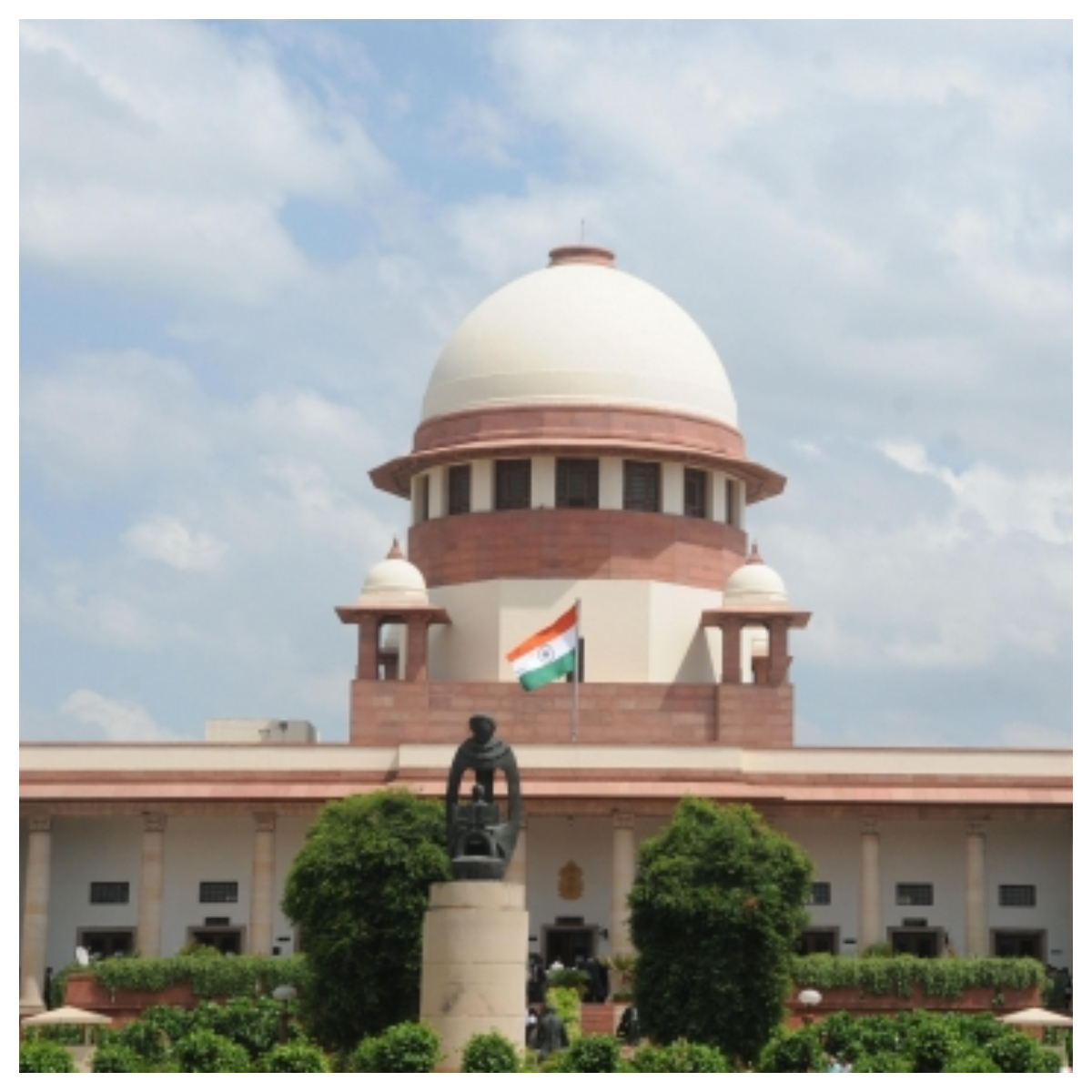
The Supreme Court on Monday declined to urgently list a plea against the practice of Talaq-e-Hasan, under which a man can divorce his wife by pronouncing “talaq” once a month for three months, and all other forms of unilateral extra-judicial talaq.
Senior advocate Pinky Anand, representing a Muslim woman, mentioned the matter before a vacation bench of Justices Ajay Rastogi and B.V. Nagarathna.
As she submitted that two notices have already been sent to her client and sought urgent hearing in the matter, the bench asked the senior counsel to mention the matter before the court’s mentioning registrar.
Anand contended that the petition was filed at the beginning of this month and her client has been twice granted notices of divorce. “The lady is with a child. The first notice was given on April 19 and the second notice was issued on May 19,” she said.
At this, the bench said: “Make a request to the registrar and if he does not listen then come to us.”
Last week, Anand had mentioned the matter before a vacation bench headed by Justice D.Y. Chandrachud.
The plea, filed through advocate Ashwani Kumar Dubey, sought a direction to declare “Talaq-e-Hasan and all other forms of unilateral extra-judicial talaq”, unconstitutional for being arbitrary, irrational, and violative of Articles 14, 15, 21, 25 of the Constitution.
The plea also sought a direction to the Centre to frame guidelines for neutral uniform grounds of divorce and uniform procedure of divorce for all citizens.
The petitioner, who claimed to be a victim of “unilateral extra-judicial Talaq-e-Hasan”, also submitted a complaint to the Delhi Commission for Women in February this year and also lodged an FIR in April, but claimed that the police told her that Unilateral Extra Judicial Talaq-e-Hasan is permitted under Sharia.
The plea said: “The Muslim Personal Law (Shariat) Application Act, 1937, by providing for the application of Muslim personal law in matters relating to marriage where the parties are Muslims, conveys a wrong impression that the law sanctions Talaq-e-Hasan and all other forms of unilateral extra-judicial talaq, which is grossly injurious to the fundamental rights of married Muslim women and offends Articles 14, 15, 21 and 25 of the Constitution of India and the international conventions on civil and human rights.”
The plea contended that the Constitution neither grants any absolute protection to the personal law of any community, nor exempts personal laws from the jurisdiction of the legislature or the judiciary.
The plea argued that the practice of Talaq-e-Hasan and other forms of unilateral extra-judicial talaq is neither harmonious with the modern principles of human rights and gender equality, nor an integral part of Islamic faith.
“Many Islamic nations have restricted such practice, while it continues to vex the Indian society in general and Muslim women like the petitioner in particular. It is submitted that the practice also wreaks havoc to lives of many women and their children, especially those belonging to the weaker economic sections of the society,” it added.

Crime
Mumbai Airport Customs Arrest Kerala Man Smuggling Hydroponic Weed Worth ₹12.68 Crore From Bangkok

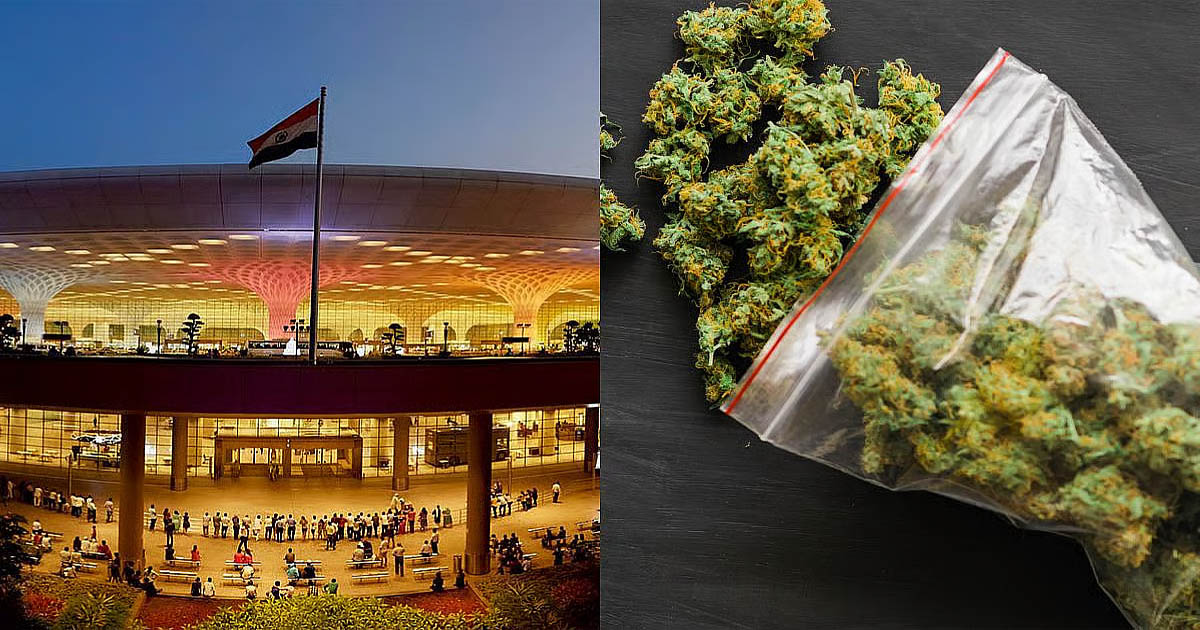
Mumbai: The Mumbai Airport Customs officials on Sunday arrested a 28-year-old man for allegedly smuggling drugs worth Rs 12.68 crore sourced from Bangkok.
According to the Customs sources, on the basis of spot profiling, a passenger Noushad Olappulan, a resident of Kerala, was intercepted on Sunday after he arrived at the international airport in Mumbai from Bangkok.
The Customs officials then examined his bag and found it to be containing clothes and Upon removing the clothes, 12 packets containing green coloured dry leafy substance in lump form were found. The said material tested positive for the presence of narcotic drug purported to be hydroponic weed, a substance covered under Narcotic Drugs and Psychotropic Substances Act.
The officials recovered and seized total 12688 grams of hydroponic weed valued at Rs 12.68 crore. In his statement, he admitted non-declaration, concealment, recovery and seizure of the narcotics substance that is fruiting and flowering-top of plant purported to be hydroponic weed having net weight 12688 grams from his bag.
“The accused stated that he was getting handsome amount of quick money for drugs. The investigations in the case are at a very preliminary stage and efforts are also being made to identify and apprehend key associates of the accused. We are probing who had supplied drugs to the accused in Bangkok and who was supposed to receive the same in Mumbai,” said a Customs official.
The DRI in its recent report had stated policy changes permitting the cultivation and sale of cannabis in Thailand have increased accessibility, creating new opportunities for traffickers. This has led to rising instances of hydroponic weed being smuggled into India through airports and courier routes. Most cases involved smuggling from Bangkok to various Indian airports, following a common modus operandi wherein carriers conceal weed in vacuum-sealed packets.
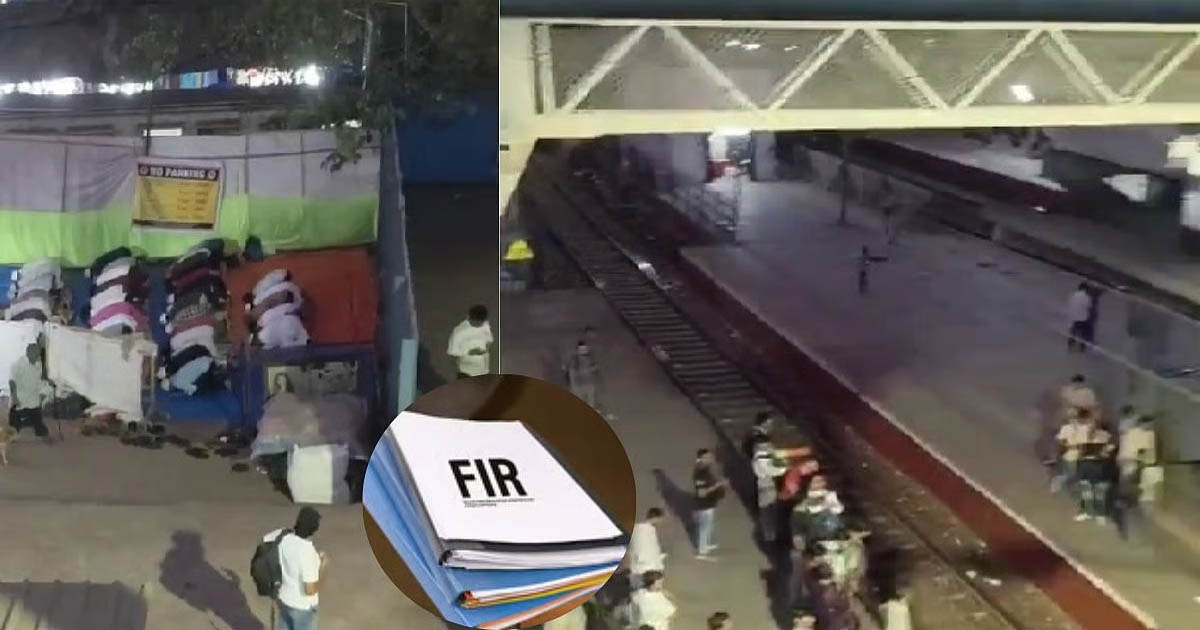
Mumbai: An FIR was filed against three hawkers after a video of them offering namaz at Malad railway station went viral online, the railway police said.
The RPF registered a case under Section 147 of the Railway Act for trespass, while the GRP filed another under BNS Section 168 following the station master’s complaint. After the video went viral, BJP leader Kirit Somaiya had also demanded action.
Slamming the viral video, BJP leader Kirit Somaiya had said that an FIR will be filed regarding all this. While speaking to news agency Media, “Openly, at Malad railway station in Mumbai, on top of the station platform, a small mandap-like structure has been made and namaz has started being offered there… An FIR will be filed regarding all this.”

Mumbai: Nearly four decades after a knife attack case was registered in Sakinaka, a sessions court has acquitted a 58-year-old Mumbai resident who had been accused of being part of the group involved in the assault. The court cited the absence of convincing evidence while clearing the accused.
Additional Sessions Judge Amit A. Laulkar acquitted Nasir Ibrahim Dadan of charges of attempt to murder and causing grievous hurt. The case had remained pending for nearly 37 years, during which several key witnesses either passed away or could not be traced.
The incident occurred on September 30, 1987, when a group of accused persons allegedly attacked Manor Naidu with a knife in Sakinaka. The group was also accused of assaulting two others, identified as Sayyed Amir and Shankar Tayde, leaving them seriously injured. Police registered a First Information Report (FIR) the following day and subsequently filed a chargesheet in 1988.
Despite this, the trial began only decades later. During the long pendency of the case, two of the accused died, while another remained absconding for several years before eventually being arrested. Charges in the matter were framed only in August 2025, and the trial commenced in February 2026.
In its judgment delivered on Friday, the court observed that the prosecution’s case had weakened significantly because it failed to produce crucial witnesses. During the trial, only one witness, police constable Amit Chowdhary, was examined, and his testimony did not support the prosecution’s version.
The court noted that Chowdhary’s evidence was largely based on hearsay. It emphasised that in a case involving allegations of attempted murder, the testimony of the injured victims and the complainant was essential, but the prosecution failed to secure their presence before the court.
The judge further pointed out that other important evidence had not been proved during the trial. Medical reports and forensic material were not formally exhibited, and the investigating officer was also not examined.
In view of these shortcomings, the court held that the prosecution had failed to establish the charges beyond reasonable doubt.
“Material ingredients of offence posed against the accused are not proved beyond all probable doubts… no offence can be legally sustained without any credible evidence against the accused.”
The court subsequently acquitted Dadan and cancelled his bail bonds. It also disposed of the case against the absconding accused, noting that there was “not much evidence” to justify continuing the proceedings.

US targets Iran’s military positions near Chabahar Free Trade Zone: Report

Shahapur’s Bhumika Shirke Honoured At Maharashtra Assembly For Pioneering Women-Led Sustainable Agriculture

Dubai Airport temporarily suspends all flights after drone hits fuel tank

India has tax buffer to avoid retail fuel price hike up to $110 a barrel: Report

RS polls: BJP says NDA will secure majority, BJD hopeful of ‘good result’

Salim Khan hospitalised following complaints of swelling

Mulund Horror: Maharashtra CM Devendra Fadnavis Expresses Grief After 1 Killed In Mumbai Metro 4 Slab Collapse; ₹5 Lakh Aid Announced For Deceased

Mumbai: JBCN International School In Borivali Gets Bomb Threat, Search Reveals Hoax, Students Safe

Former Arsenal Star Mesut Ozil’s Convoy Gets Involved In Road Accident During Bangladesh Visit

Gold and silver surge on safe haven demand, margin cut
-

 Crime4 years ago
Class 10 student jumps to death in Jaipur
-

 Maharashtra1 year ago
Mumbai Local Train Update: Central Railway’s New Timetable Comes Into Effect; Check Full List Of Revised Timings & Stations
-

 Maharashtra1 year ago
Mumbai To Go Toll-Free Tonight! Maharashtra Govt Announces Complete Toll Waiver For Light Motor Vehicles At All 5 Entry Points Of City
-

 Maharashtra1 year ago
False photo of Imtiaz Jaleel’s rally, exposing the fooling conspiracy
-

 National News1 year ago
Ministry of Railways rolls out Special Drive 4.0 with focus on digitisation, cleanliness, inclusiveness and grievance redressal
-

 Maharashtra1 year ago
Maharashtra Elections 2024: Mumbai Metro & BEST Services Extended Till Midnight On Voting Day
-

 National News1 year ago
J&K: 4 Jawans Killed, 28 Injured After Bus Carrying BSF Personnel For Poll Duty Falls Into Gorge In Budgam; Terrifying Visuals Surface
-

 Crime1 year ago
Baba Siddique Murder: Mumbai Police Unable To Get Lawrence Bishnoi Custody Due To Home Ministry Order, Says Report