
Business
Rumy Jafry: Don’t think ‘Chehre’ will benefit or suffer due to Rhea


The presence of actress Rhea Chakraborty, who courted controversy last year after the demise of her boyfriend and actor Sushant Singh Rajput, will not affect upcoming film ‘Chehre’, feels director Rumy Jafry.
Talking about the same, Jafry told IANS: “Rhea plays a very important role in the film and she has done a very good job. Our film was made way before all this controversy happened. The film would have released in April last year had the pandemic not started. I don’t feel our film will have any added benefit or suffer a loss due to her presence.”
Jafry also feels the situation of negativity and hatred which the actress faced last year is changing.
“I think people’s mindset is gradually changing. You can see Rhea is not being so heavily trolled on social media these days like she used to be last year,” said the director.
He added: “Sushant’s death was extremely sad but whatever happened across the country surrounding Rhea and her family, that’s also very sad. Let the court decide who is guilty and who is not. Last year Rhea was called names like ‘witch’ and ‘gold-digger’ but the situation has changed in one year.”
Talking about what his upcoming film ‘Chehre’ deals with, the director informed: “Every person has a ‘chehra’ (face) which others can see and another face which we cannot see. That’s what we have tried to show in the film.”
Jafry also expressed that he has tried to reinvent himself with ‘Chehre’ and he is hopeful that if the film tastes success, it will increase people’s faith in him.
“I have tried to do something new and reinvent myself with this film. I wanted to do something which will make people think that okay Rumy Jafry is capable of doing something like this also! The person who can write ‘Bade Miyan Chote Miyan’ can make a film like ‘Chehre’ also.”
“I have worked very hard and sacrificed a lot for this film. If ‘Chehre’ gets appreciated, then producers and actors will have more confidence in me. So I just hope and pray that this film works,” he signed off with a tone of optimism.
Starring Amitabh Bachchan, Emraan Hashmi, Annu Kapoor, Krystle D’Souza, Dhritiman Chatterjee, Raghuvir Yadav, Siddhanth Kapoor, and Rhea Chakraborty, ‘Chehre’ hits theatres on August 27.


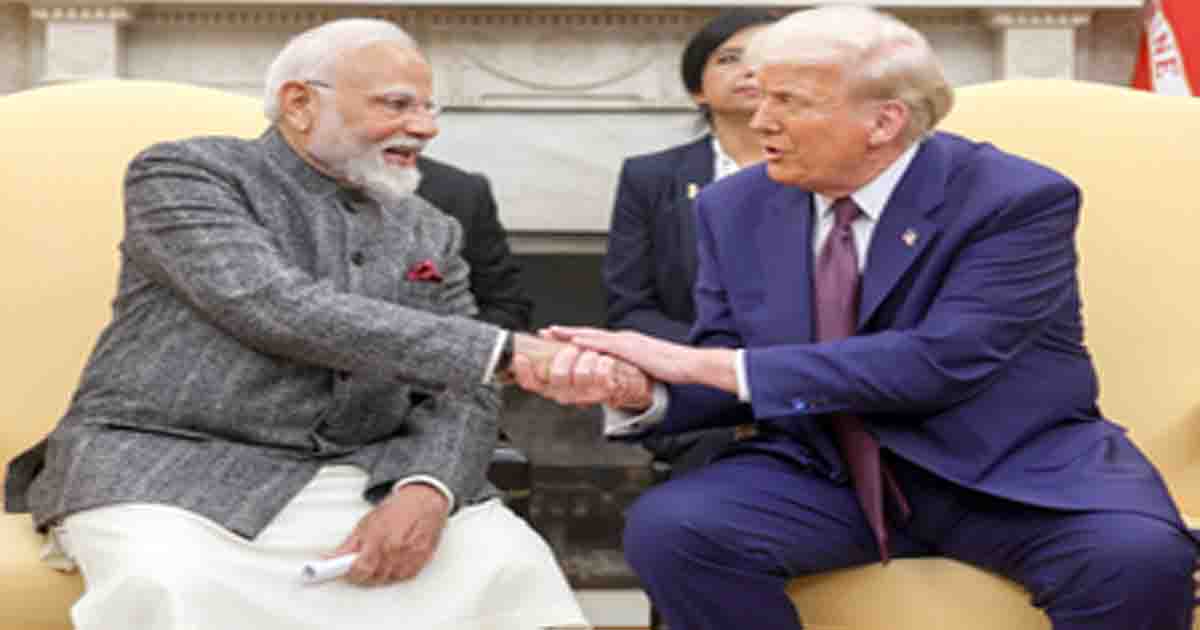
Washington, Oct 16: A long-awaited trade agreement between India and the United States is almost complete, with only one or two per cent of negotiations remaining, a senior US official said, signalling that the two countries are approaching a breakthrough after months of high-level discussions.
The official said the biggest issues had already been resolved and that negotiations were continuing at the highest political levels, including between President Donald Trump and Prime Minister Narendra Modi.
“The biggest items have been settled. I mean …., it’s pretty much done. We have that one, one or two per cent left,” the official told reporters during a State Department briefing on Friday.
The remarks came ahead of Secretary of State Marco Rubio’s scheduled visit to India, where he will hold discussions with Indian government officials and leading business executives in Mumbai and Jamnagar.
The official said the two governments remained in constant contact over the proposed agreement.
“We are actively engaged every single week,” the official said, adding that high-level discussions on the trade deal were taking place regularly.
The official cited recent diplomatic engagements involving US Trade Representative Jamieson Greer, India’s Commerce Minister Piyush Goyal and conversations between Trump and PM Modi as evidence of the momentum behind the negotiations.
However, the official also identified a significant complication that had delayed the agreement.
An earlier understanding had been linked to the International Emergency Economic Powers Act, or IEEPA, but the legal framework had to be reconsidered after the law was struck down, according to the official.
The development forced negotiators to revisit elements of the proposed agreement and contributed to several additional months of discussions.
Despite those complications, the official expressed optimism that the remaining differences could be resolved soon.
Rubio is scheduled to travel first to Uzbekistan for meetings with Central Asian leaders before proceeding to India.
In Mumbai, he will meet Indian government counterparts and senior executives from some of the country’s largest companies.
The official said the decision to visit Mumbai rather than New Delhi reflected the administration’s growing emphasis on commercial diplomacy and Indian investment in the United States.
Rubio will also travel to Jamnagar.
The official said Washington was seeking closer engagement with India across information technology, pharmaceuticals, defence cooperation and other sectors.
Further visits by senior American Cabinet officials are also anticipated next year as both governments seek to expand bilateral engagement.

New Delhi, Oct 16: Domestic equity benchmark indices traded lower on Friday, tracking mixed global cues, while information technology (IT) shares supported the market with gains.
In early deals, Sensex was trading 0.29 per cent or 221.89 points lower at 74,093, hitting an intraday low. Similarly, Nifty recorded an intraday low of 22,942, down 0.24 per cent or 55.19 points.
Earlier in the day Sensex opened 0.03 per cent or 25.47 points higher at 74,341.08 against its previous close of 74,315.61. While the 50-scrip basket began the trading session at 23,065.10, up 0.29 per cent or 67.75 points from its previous close of 22,997.35.
In morning trade, Nifty IT, Nifty Media, Nifty PSU Bank and Nifty Metal surged up to 1.59 per cent. In contrast, Nifty Oil & Gas, Nifty MidSmall IT & Telecom and Nifty FMCG declined up to 0.86 per cent.
Meanwhile, realty and auto sectoral indices were also trading lower, while pharma, cement, healthcare and private bank saw marginal declines.
According to market experts, India has significantly outperformed other markets this week with 668-point gains in Nifty 50 in the last three days.
The outperformance is driven by a weakening AI trade, expectations of major changes in LTCG taxation in the coming Budget, and positive fallout from Q2 results that have been better than expected so far.
They further noted that good results from IT majors and positive management commentary have led to a smart 9 per cent revival in the IT index, contributing to the resilience of the Nifty.
“Q2 results of telecom, banking, automobiles and metals like copper, aluminium and zinc are expected to be impressive and provide fundamental support to the market,” they added.
“Another positive development is the sharp decline in the US 10-year bond yield to 5.07 per cent. This, along with strength in the rupee, can restrain FII selling to some extent,” according to the experts.
However, FIIs are likely to continue selling so long as the 10-year yield remains above 5 per cent and Brent trades above $100.
While maintaining a 23,200-23,600 view, analysts expect mean reversion moves while below 23,070, given the sharp rise in the previous session. Dips are expected to find buying interest as long as they do not stretch beyond 22,780.
On global cues, Asian equities traded higher in early hours, mirroring US markets. The S&P 500 closed 0.33 per cent higher after recovering from early losses, while the tech-heavy Nasdaq ended flat, up 0.08 per cent.
Kathmandu, Oct 15: Nepal and the International Bank for Reconstruction and Development (IBRD), part of the World Bank Group, have signed a mandate agreement to explore the development of a catastrophe bond that could help the Himalayan nation secure rapid access to funds in the event of a major natural disaster.
The agreement marks the beginning of a collaboration to assess the feasibility and potential structure of a catastrophe bond, under which Nepal could transfer part of its disaster risk to international capital markets and strengthen its financial preparedness for natural disasters, the World Bank said in a statement.
Under the agreement, the World Bank Group Treasury will work with the Nepal government and market participants to evaluate the proposed transaction.
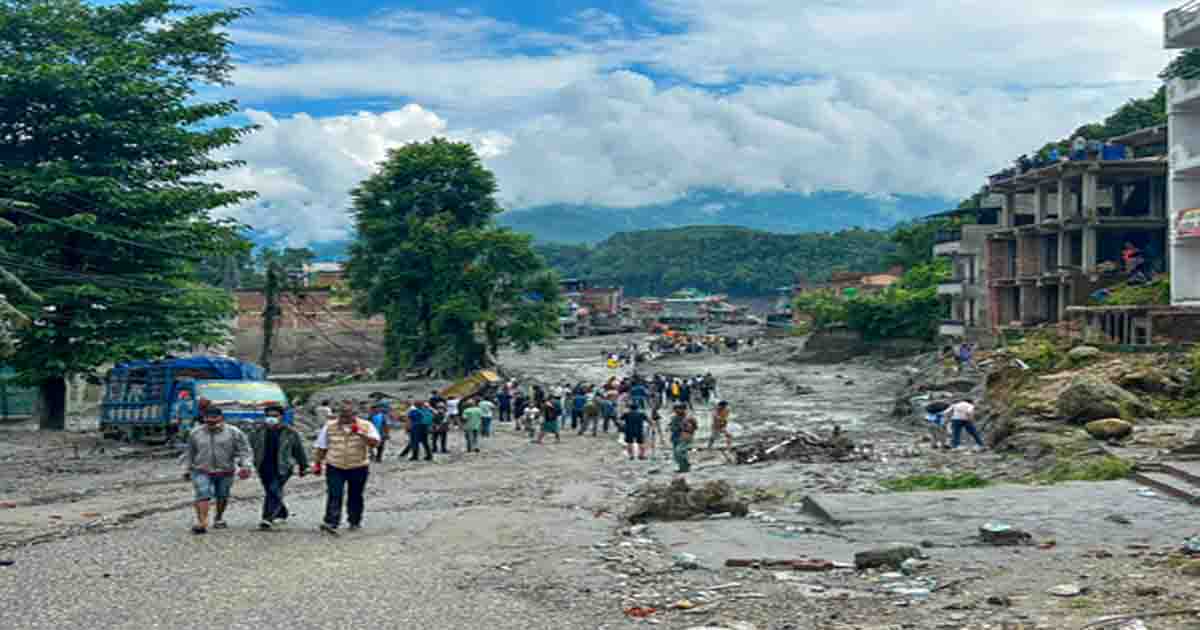
The initiative comes as Nepal seeks to strengthen its capacity to prepare for, withstand and recover from natural disasters in the wake of devastating floods in the Bhotekoshi and downstream Trishuli river basins on August 26. The floods have killed nearly 1,500 people, while more than 5,000 remain unaccounted for, according to the National Disaster Risk Reduction and Management Authority.
Triggered by an avalanche near the Nepal-China border that blocked the river’s flow, the floods swept away several human settlements, a dozen hydropower projects, a solar plant, and several roads and bridges. Physical damage is estimated at 1.66 billion US dollars, according to the World Bank’s Global Rapid Post-Disaster Damage Estimation report.
According to the World Bank, Nepal is highly vulnerable to earthquakes, floods, landslides and other climate-related hazards, which can cause extensive damage to infrastructure, disrupt economic activities and place considerable pressure on public finances.
A catastrophe bond is a financial instrument that allows governments or other entities to transfer specific disaster risks to investors. Depending on the terms of the bond, investors may lose some or all of their principal if a specified disaster occurs, allowing the funds to be used to support the affected entity.
“Such instruments can provide an alternative source of disaster financing, potentially enabling governments to access funds more quickly than relying solely on budget reallocations or post-disaster assistance,” the World Bank said.
The initiative is part of the World Bank Group’s established catastrophe bond programme, which has helped countries access international capital markets to transfer disaster risks and secure financial protection against natural hazards.
The World Bank helps countries increase their financial resilience to disasters by supporting disaster risk financing programmes and offering contingent financing and insurance solutions.
It also assists countries in designing, developing and implementing comprehensive disaster risk financing strategies.
“A risk financing strategy helps clients determine a balance between retaining risk, for example, through a contingent financing product, and transferring risk, for example, through an insurance product,” the World Bank said.
A range of financial products can be used to address the financial risks of disasters, and the optimal mix of approaches depends on the types of risks faced by a country and the frequency and severity of disaster events, it said.
Developing countries are particularly vulnerable to the economic and fiscal consequences of disasters because of factors such as gaps in insurance coverage, inadequate infrastructure resilience, and the concentration of populations and economic activities in exposed areas.
“Following a major disaster, governments often have to redirect budgetary resources towards emergency response, relief and reconstruction, potentially affecting other development priorities,” the World Bank said.

Kajol gives us a glimpse of today’s Anjali as ‘Kuch Kuch Hota Hai’ turns 28 years old

India-US trade deal 98-99 percent done: US official

CJP Tiranga march: Delhi Police circulate list of rules for respecting national flag

NHRC seeks reports on assault on woman in Gujarat, contaminated borewell water in Maharashtra

‘With arrival of SSR, SIR has become zero’: Akhilesh Yadav’s swipe at EC’s new revision exercise in 17 states

Rahul, Cong ecosystem want to force regime change: BJP after Neha Bora praises B’desh Gen-Z protest

BJP pays tribute to ex-President Abdul Kalam, recalls his enduring influence on generations of India’s youth

Mumbai Cyber Cell arrests 6 members of organized gang in major operation; Beware of cyber fraudsters; Digital arrest has no legal status; DCP Bajrang Bansode

INDIA bloc begins protest march against ECI

Maha Congress stages agitation against Gyanesh Kumar
-

 Crime4 years ago
Class 10 student jumps to death in Jaipur
-

 Maharashtra2 years ago
Mumbai Local Train Update: Central Railway’s New Timetable Comes Into Effect; Check Full List Of Revised Timings & Stations
-

 Maharashtra2 years ago
Mumbai To Go Toll-Free Tonight! Maharashtra Govt Announces Complete Toll Waiver For Light Motor Vehicles At All 5 Entry Points Of City
-

 Maharashtra2 years ago
False photo of Imtiaz Jaleel’s rally, exposing the fooling conspiracy
-

 National News2 years ago
Ministry of Railways rolls out Special Drive 4.0 with focus on digitisation, cleanliness, inclusiveness and grievance redressal
-

 Maharashtra2 years ago
Maharashtra Elections 2024: Mumbai Metro & BEST Services Extended Till Midnight On Voting Day
-

 National News2 years ago
J&K: 4 Jawans Killed, 28 Injured After Bus Carrying BSF Personnel For Poll Duty Falls Into Gorge In Budgam; Terrifying Visuals Surface
-

 Crime2 years ago
Baba Siddique Murder: Mumbai Police Unable To Get Lawrence Bishnoi Custody Due To Home Ministry Order, Says Report