
International News
Rockets fired into Israel, military responds with airstrikes

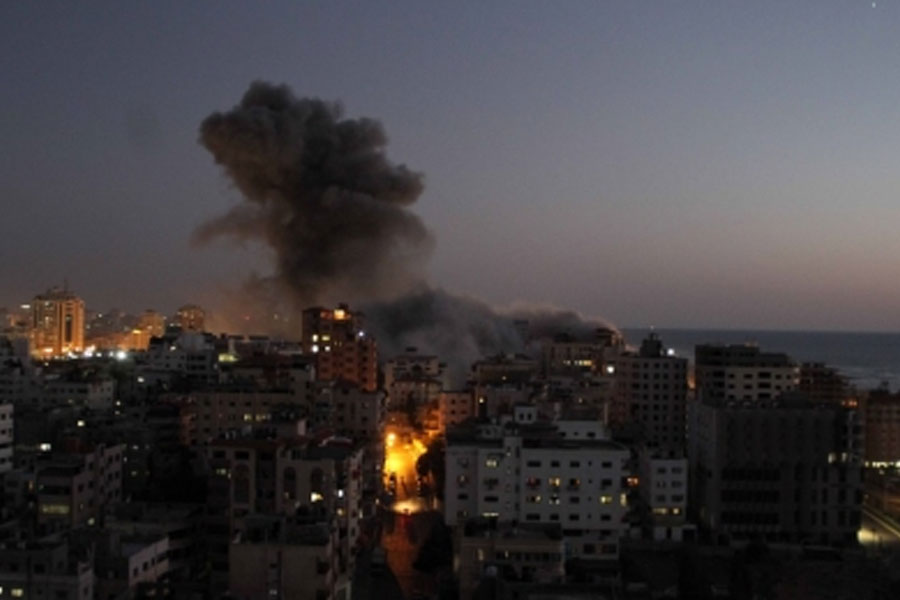
Palestinian militants fired four rockets from the Gaza Strip into Israeli territory early Saturday. There were no casualties or damage as a result of the attacks.
Israeli Defence Forces (IDF) responded with an airstrike against targets in Gaza, Xinhua news agency reported.
According to a statement released by the Israeli military, it’s retaliatory airstrikes targeted “Hamas weapons manufacturing sites.”
The exchange of fire came hours after US President Joe Biden visited Israel and the Palestinian territories.

International News
‘We allowed India to pass through Hormuz’: Iran says 5 ‘friendly’ nations get safe passage

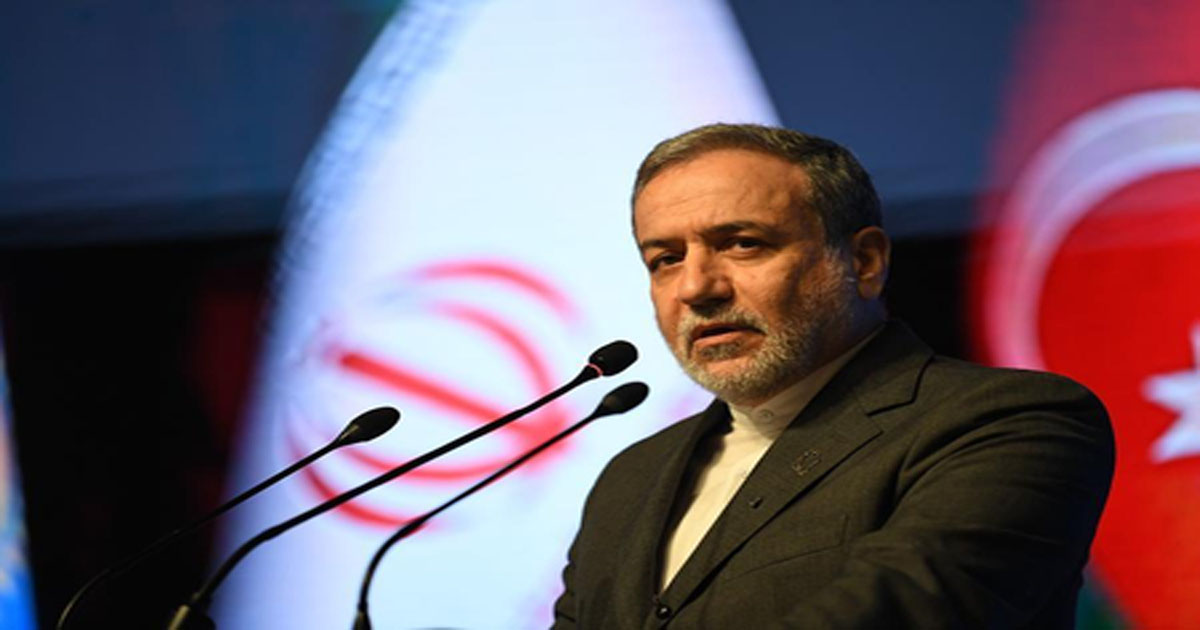
Tehran, March 26: As the conflict in West Asia continues to escalate, Iran has announced that it will not impose restrictions on vessels belonging to five “friendly” countries, including India, allowing them to pass through the strategically crucial Strait of Hormuz even as access remains limited for others.
Along with India, ships from Russia, China, Pakistan and Iraq have been granted safe passage through the key maritime chokepoint despite the ongoing conflict in the region.
In an interview with Iranian state television, Foreign Minister Abbas Araghchi clarified that the Strait of Hormuz has not been completely shut and that certain countries with which Iran maintains friendly relations have been exempted from restrictions.
“There is no reason to allow the enemy to pass through the strait. We have permitted certain countries that we consider friendly to pass through; we allowed China, Russia, India, Iraq, and Pakistan to transit,” Araghchi was quoted as saying by Iran’s official news agency.
At the same time, he indicated that vessels linked to countries seen as adversaries or those involved in the ongoing conflict would not be allowed passage. He said ships from the United States, Israel and certain Gulf nations playing a role in the current crisis would not be given clearance to transit through the strait.
Araghchi also expressed satisfaction over Iran’s control over the vital waterway, stating that the country has demonstrated its authority in the region after decades.
He noted that when Iran initially announced a partial blockade of the Strait of Hormuz, many observers had dismissed it as a bluff. However, he said that subsequent developments have underscored Iran’s capability to enforce its position and assert control over one of the world’s most critical energy transit routes.
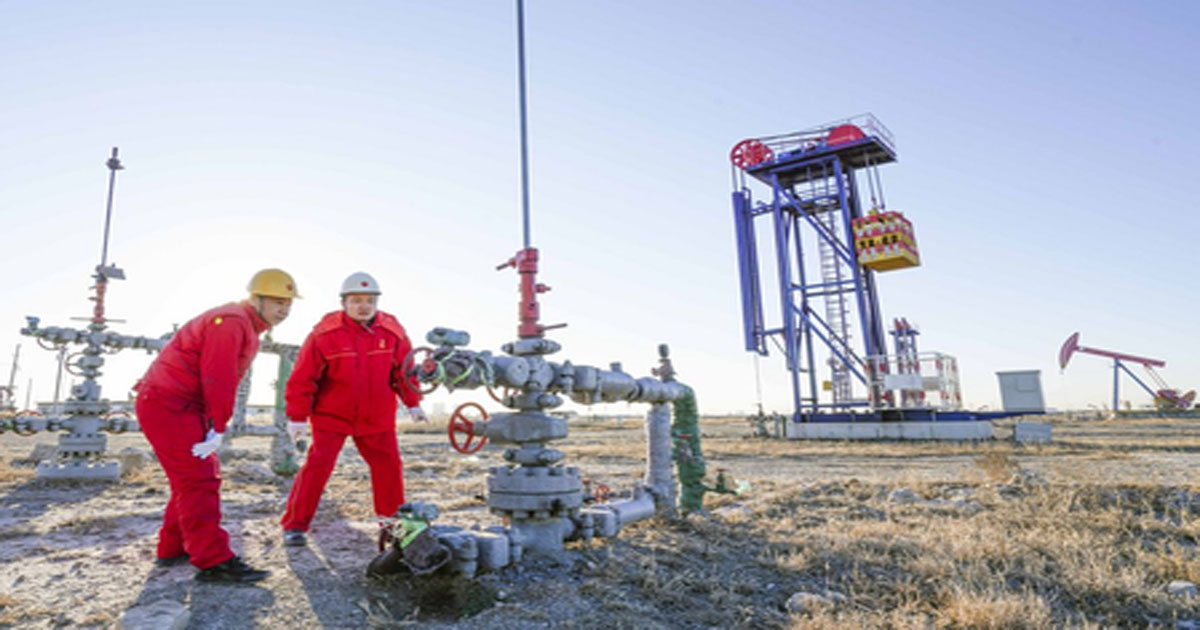
Tokyo, March 26: Japan began releasing 30 days’ worth of oil from state reserves on Thursday to cushion the impact of the West Asia conflict on its economy, as concerns over supply mount and oil prices soar, local media reported.
The move came after the country started drawing down 15 days’ worth of oil from private-sector stockpiles last Monday, reports Xinhua news agency
The government plans to sell a total of about 8.5 million kiloliters of oil from 11 storage bases across the country, according to Kyodo News.
Japan will also begin to tap joint oil reserves held in the country by three Middle Eastern nations, including the United Arab Emirates, with five days’ worth to be released by next Tuesday for supply to oil wholesalers.
Japan relies on the Middle East for more than 90 per cent of its crude oil imports, leaving it highly vulnerable to the effective closure of the Strait of Hormuz following the outbreak of the Middle East conflict in late February. The disruption has driven sharp rises in both crude oil and retail gasoline prices in the country.
In addition to tapping oil reserves, the Japanese government also resumed gasoline subsidies to cap fuel costs for consumers. The measure has brought the average retail price for regular gasoline down to 177.7 yen (about 1.11 US dollars) per litre from a record high of 190.8 yen last week, according to Kyodo News.
As of the end of 2025, Japan held an oil reserve equivalent to 254 days of domestic demand.
The impact of the tensions in West Asia is being seen in several nations.
Meanwhile, in the Philippines, President Ferdinand Romualdez Marcos on Wednesday signed a law allowing the government to temporarily suspend or cut fuel excise taxes on petroleum when global oil prices reach a set threshold.
Republic Act No. 12316 authorises the president, upon the recommendation of the Development Budget Coordination Committee and in coordination with the Secretary of the Department of Energy, to act when the average price of Dubai crude oil reaches or exceeds 80 U.S. dollars per barrel for one month.
Under the law, any suspension or reduction of fuel excise taxes may be implemented for up to three months at a time, but not exceeding a total of one year.
The tax rates will automatically revert to their original levels either one week after the one-month average Dubai crude price falls below 80 US dollars per barrel, or after three months have elapsed, whichever comes first.
The measure is designed to give the government a flexible tool to cushion the impact of rising fuel costs on consumers and the broader economy.
The act will take effect in 15 days, and the authority granted to the president under the measure will remain in effect until December 31, 2028.
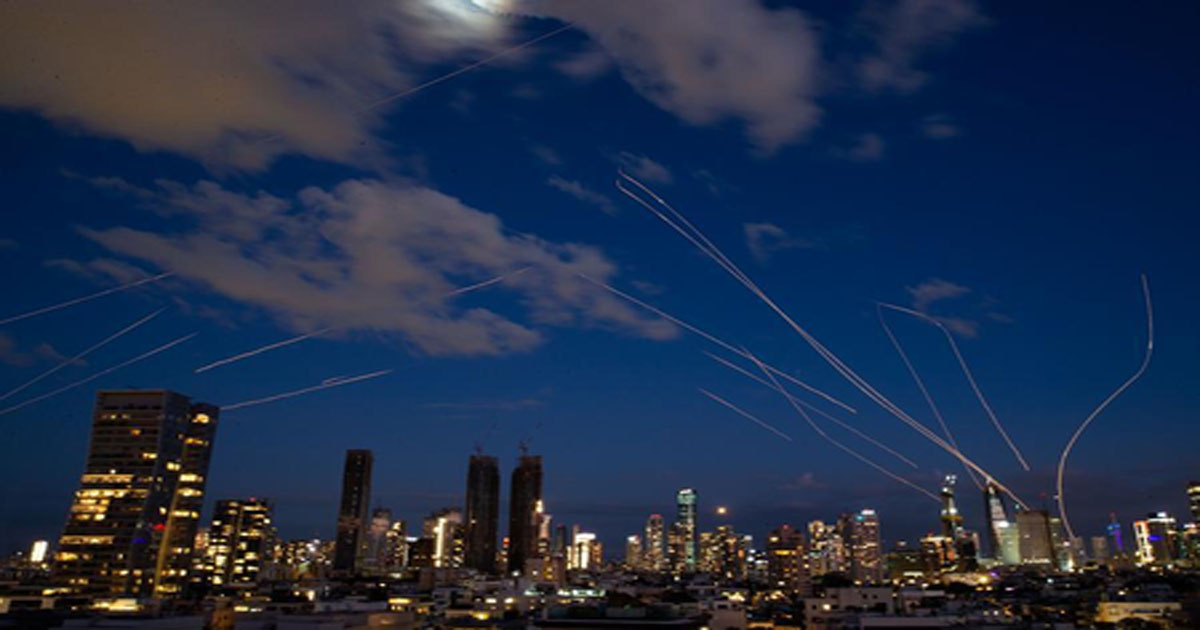
Canberra, March 25: Only 26 per cent of Australians approve of the US and Israel’s strikes on Iran and half the population would oppose the deployment of Australian troops, a poll has found.
The latest edition of The Essential Report, a monthly poll on social and political issues conducted by independent firm Essential Research, found that 10 per cent of Australians strongly approve and 16 per cent approve of the US and Israel’s decision to initiate strikes on Iran, Xinhua news agency reported.
By comparison, 27 per cent of respondents said they strongly disapprove of the war and 15 per cent said they disapprove, with the remaining participants either neutral or unsure.
Asked about Australia’s involvement in the ongoing conflict, 50 per cent of participants in the poll said they would oppose sending troops to support US-Israeli ground operations in Iran, compared to 21 per cent who said they would support such a move.
Respondents were also more likely to oppose than support Australia sending weapons and equipment to support third-party nations impacted by Iranian retaliatory strikes, such as the United Arab Emirates.
A clear majority of respondents, 60 per cent, were supportive of Australia working with international organizations to help peace talks and prevent further escalation.
In terms of diplomatic and trade relationships, 34 per cent of participants in the poll said that Australia should be working less closely with the United States, up from 14 per cent in 2021.
The poll of 1,008 people last week found 43 per cent disapproved of the US and Israeli bombardment of Iran, while just 26 per cent backed the move. Some 31 per cent were unsure or responded “don’t know”.

Mumbai: Controversy while removing the idol of Lord Shiva in Malad! Slogans were raised from both sides, case registered, situation peaceful, security tightened

Amendment to Section 154 of the Mumbai Municipal Corporation Act, 1888 for collection of property tax, Bill passed in Legislative Assembly and Council

India has 60 days of crude reserves, 1 full month of LPG supply firmly arranged: Govt

Private fuel retailer Nayara hikes petrol by Rs 5, diesel by Rs 3

Mumbai Metro 11 Update: JICA To Lend ₹5,500 Crore; Know How Corridor Will Make Travel Easy & Improve Connectivity Between Wadala To South Mumbai

Married Mumbai Woman Mocked In Andheri Society Over ‘Lift Kissing’ CCTV Video, Files Police Complaint

Mumbai: JBCN International School In Borivali Gets Bomb Threat, Search Reveals Hoax, Students Safe

Mahayoti’s big gift to the people of Mumbai… Now there is no tax for houses up to 500 square feet, the Municipal Corporation has increased this limit to 700 square feet.

LPG Crisis In Maharashtra: Cyber Crime On Rise Amid Shortage, 2 Women Lose ₹4 Lakh In ‘Gas Update’ Online Scam In Kalyan-Dombivli

Rashmika Mandanna-Vijay Deverakonda Wedding: Virosh Turn Modern Day Prince & Princess For Their Dreamy Sangeet Ceremony
-

 Crime4 years ago
Class 10 student jumps to death in Jaipur
-

 Maharashtra1 year ago
Mumbai Local Train Update: Central Railway’s New Timetable Comes Into Effect; Check Full List Of Revised Timings & Stations
-

 Maharashtra1 year ago
Mumbai To Go Toll-Free Tonight! Maharashtra Govt Announces Complete Toll Waiver For Light Motor Vehicles At All 5 Entry Points Of City
-

 Maharashtra1 year ago
False photo of Imtiaz Jaleel’s rally, exposing the fooling conspiracy
-

 National News1 year ago
Ministry of Railways rolls out Special Drive 4.0 with focus on digitisation, cleanliness, inclusiveness and grievance redressal
-

 Maharashtra1 year ago
Maharashtra Elections 2024: Mumbai Metro & BEST Services Extended Till Midnight On Voting Day
-

 National News2 years ago
J&K: 4 Jawans Killed, 28 Injured After Bus Carrying BSF Personnel For Poll Duty Falls Into Gorge In Budgam; Terrifying Visuals Surface
-

 Crime1 year ago
Baba Siddique Murder: Mumbai Police Unable To Get Lawrence Bishnoi Custody Due To Home Ministry Order, Says Report