
Business
Relief for Vodafone Idea as SC allows Centre to reconsider AGR dues issue


New Delhi, Oct 27: In a relief for Vodafone Idea, the Supreme Court on Monday allowed the Centre to reconsider the issue of Adjusted Gross Revenue (AGR) dues worth Rs 9,450 crore to ease the burden of the loss-making telecom company. The court reasoned that this matter falls in the Union’s policy domain.
The Supreme Court noted that the decision was made keeping in mind the interest of 20 crore consumers of the telecom company.
In a landmark 2019 verdict, the Supreme Court endorsed the Centre’s definition of AGR and allowed the Centre to collect dues worth Rs 92,000 crore which came as a huge setback for telecom majors such as Vodafone and Bharti Airtel.
Vodafone’s latest petition flagged a fresh AGR demand of Rs 9,450 crore raised by the Department of Telecommunications. The petition contended that a substantial portion of the demand pertained to the pre-2017 period, which had already been settled by the Supreme Court.
Solicitor General of India Tushar Mehta told the court that “there is a huge change in circumstances” of the case because the government has infused equity in Vodafone.
“The government’s interest is public interest. There are 20 crore consumers. If this company is to suffer, it would lead to issues for consumers,” he said.
The Supreme Court noted in its order that the Centre is willing to examine the issue. “The government is also willing to reconsider and take an appropriate decision if the court permits. In the peculiar facts, we see no impediment in government reconsidering the issue. We clarify that this is a matter of policy, there is no reason as to why the Union should be prevented from doing so,” the apex court said.
AGR refers to a fee-sharing mechanism under which telecom operators must share a part of their revenue with the Centre as licensing fees and spectrum usage charges. There was a longstanding dispute between telecom companies and the Centre over the definition of AGR. While the telecom giants stressed that AGR should be based just on core services, the Centre argued it should also factor in non-telecom services provided by the telecom giants.



Mumbai, April 16: The Indian stock markets opened on a higher note on Thursday, with the equity benchmarks mirroring global cues amid hopes of easing geopolitical tensions between Washington and Tehran.
Sensex opened 566 points or 0.73 per cent higher at 78,677 in opening trade, while Nifty began the session at 24,385, up 154 points or 0.64 per cent. Sectorally, gains were led by realty, media, consumer durables and financial stocks.
Category-wise, small-cap and mid-cap stocks were the top gainers, with the Nifty Smallcap 100, Nifty Smallcap 250 and Nifty Midcap 100 rising up to 1 per cent in early trade.
On Wednesday, FIIs remained net buyers to the tune of approximately Rs 666 crore, while DIIs turned net sellers with outflows of around Rs 569 crore.
According to analysts, volatility could pick up again depending on global developments and upcoming triggers.
After the recent sharp rally, the market may witness some consolidation or profit booking at higher levels, they added.
In contrast, oil commodities traded on a firm note, with Brent crude futures at $94.92 per barrel, down 0.03 per cent, while US WTI crude traded at $91.52, up 0.25 per cent.
On the global front, both US and Asian markets showed positive momentum. Japan’s Nikkei was trading over 2 per cent higher, Hang Seng climbed more than 1 per cent, and South Korea’s KOSPI was up about 2 per cent.
In the US overnight, Wall Street’s major indices — the S&P 500 and the Nasdaq — ended 0.80 per cent and 1.6 per cent higher, respectively.
Meanwhile, the US President said that China is ‘very happy’ with the permanent opening of the Strait of Hormuz.
“I am doing it for them also – and the world. This situation will never happen again. They have agreed not to send weapons to Iran,” he said on his social media platform, Truth Social.
However, the war has resulted in the largest-ever disruption of global oil and gas supplies by choking traffic through the strait, pushing crude prices to nearly $120 per barrel.

Mumbai, Gold prices remained largely steady on Wednesday as improving prospects of easing geopolitical tensions between the United States and Iran kept investor sentiment in check.
During early trade, MCX gold May futures were marginally higher by 0.02 per cent at Rs 1,53,305 per 10 grams.
Commenting on gold technical outlook, experts said that a sustained move above Rs 1,55,000 could revive momentum toward Rs 1,57,000-Rs 1,58,000.
“On the downside, a break below Rs 1,54,000 may lead to a corrective move toward Rs 1,52,000 and further to Rs 1,50,000,” an analyst stated.
Silver prices, however, saw stronger buying interest, with MCX silver May futures rising 0.83 per cent to Rs 2,54,842 per kg.
“Resistance is placed at Rs 2,60,000–Rs 2,63,000, with further upside toward Rs 2,68,000–Rs 2,70,000,” a market expert said.
“A sustained move above these levels could strengthen momentum and support further gains. On the downside, a break below Rs 2,48,000 may lead to a corrective move toward the Rs 2,44,000–Rs 2,40,000 range,” as per an analyst.
In the previous session, gold had ended flat at Rs 1,53,216 per 10 grams, while silver futures slipped 0.1 per cent to Rs 2,25,499 per kg.
Globally, the yellow metal held on to its recent gains amid optimism that Washington and Tehran could move towards a negotiated settlement to the conflict that began on February 28.
The easing of tensions has reduced fears of a sharp energy-supply shock, which had earlier raised concerns about inflationary pressures.
Spot gold hovered near $4,850 an ounce after rising as much as 0.6 per cent during the session. The metal had surged over 2 per cent in the previous trading session on expectations that the US and Iran may soon hold a second round of ceasefire talks.
US President Donald Trump has indicated that negotiations could resume “over the next two days,” further boosting hopes of a diplomatic breakthrough.
Despite the recent stability, gold has faced pressure in recent weeks, falling nearly 8 per cent since the conflict began.
Early in the crisis, a liquidity squeeze prompted investors to offload bullion holdings to cover losses in other asset classes.
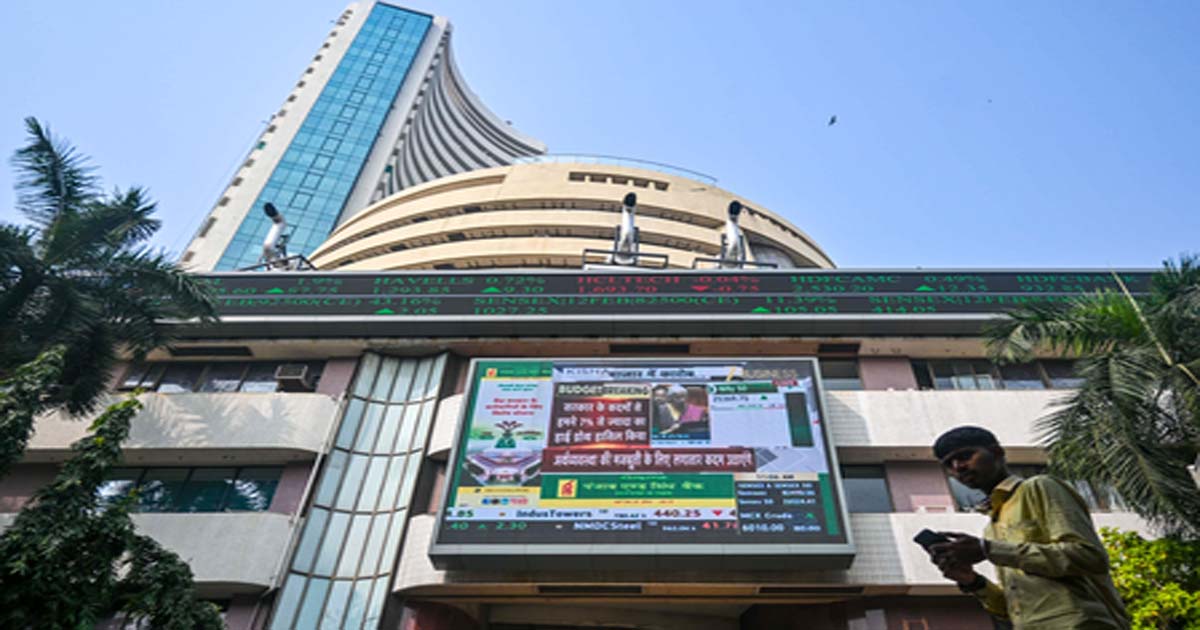
Mumbai, The Indian stock markets witnessed a strong rebound last week after six consecutive weeks of decline, supported by favourable global cues, according to analysts.
Sentiment remained buoyant amid optimism surrounding a temporary US–Iran ceasefire, although lingering geopolitical uncertainties capped the pace of gains as the week progressed.
“The rally was further aided by a stable domestic macro backdrop, with broader markets outperforming the benchmarks. Despite elevated volatility marked by sharp mid-week gains and subsequent profit booking, indices trended higher,” said Ajit Mishra – SVP, Research, Religare Broking Ltd.
The Nifty and Sensex gained around 6 per cent to close near the week’s highs at 24,050.60 and 77,550.25, respectively.
According to analysts, global developments remained a key influence, with the temporary ceasefire between the US and Iran improving risk appetite, though uncertainty around its sustainability persisted.
Meanwhile, a sharp decline in crude oil prices below the $100 mark eased domestic concerns and triggered a strong rebound across markets.
On the domestic front, the RBI maintained the repo rate at 5.25 per cent and retained a neutral stance, highlighting the need to balance inflation risks with growth support.
The central bank also revised FY26 GDP growth upward to 7.6 per cent while projecting FY27 growth at 6.9 per cent.
Inflation projections were raised to 4.6 per cent for FY27, reflecting risks from elevated energy prices and potential weather-related disruptions.
Market watchers said that overall sentiment remains balanced but cautious, shaped by global cues, crude oil price movements and ongoing foreign investor activity.
Downside appears to be relatively contained, but upside momentum remains constrained, pointing to a recovery that is still tentative and low in conviction, they added.
Economic indicators showed signs of moderation, with the Services PMI easing to 57.5 and the Composite PMI to 57.0 in March.
However, global agencies remained constructive, with the World Bank raising India’s growth outlook, supported by strong domestic demand and structural factors, said analysts.

Reconstruction work of Sion Railway Flyover should be completed by July 15, 2026, directs Municipal Commissioner Ashwini Bhide

Domino’s Pizza Outlet In Thane Raided; 140 LPG Gas Cylinders Worth ₹4.59 Lakh Seized In Major Crackdown

Last rites of small animals and birds begin at Deonar Slaughterhouse and Mahalakshmi, availability of facilities will help local people: Additional Municipal Commissioner

Considering running Mankhurd Shivaji Nagar CBSE School in two shifts, the school will soon function in two shifts: Abu Asim Azmi

ATS and NIA also involved in the investigation of Nashik TCS case, police sends letters to agencies

Dhurandhar 2 Box Office Collection Day 1: Ranveer Singh Starrer Takes An Exceptional Opening; Crosses ₹100 Crore Mark

Mumbai Police Busts Fake Apple Accessories Racket In Ghatkopar, ₹16.33 Lakh Goods Seized; Six Booked

Dhurandhar 2 Box Office Collection Day 9: Ranveer Singh Starrer Earns ₹41.55 Crore On Its Second Friday; Enters ₹700 Crore Club

Bharti Airtel Receives ₹1,74,000 Penalty Notice From DoT For Subscriber Verification Lapses

Mumbai: 28-Year-Old Ghatkopar Woman Killed By Speeding Tanker While Crossing Road, Driver Arrested
-

 Crime4 years ago
Class 10 student jumps to death in Jaipur
-

 Maharashtra2 years ago
Mumbai Local Train Update: Central Railway’s New Timetable Comes Into Effect; Check Full List Of Revised Timings & Stations
-

 Maharashtra2 years ago
Mumbai To Go Toll-Free Tonight! Maharashtra Govt Announces Complete Toll Waiver For Light Motor Vehicles At All 5 Entry Points Of City
-

 Maharashtra2 years ago
False photo of Imtiaz Jaleel’s rally, exposing the fooling conspiracy
-

 National News2 years ago
Ministry of Railways rolls out Special Drive 4.0 with focus on digitisation, cleanliness, inclusiveness and grievance redressal
-

 Maharashtra1 year ago
Maharashtra Elections 2024: Mumbai Metro & BEST Services Extended Till Midnight On Voting Day
-

 National News2 years ago
J&K: 4 Jawans Killed, 28 Injured After Bus Carrying BSF Personnel For Poll Duty Falls Into Gorge In Budgam; Terrifying Visuals Surface
-

 Crime2 years ago
Baba Siddique Murder: Mumbai Police Unable To Get Lawrence Bishnoi Custody Due To Home Ministry Order, Says Report