
Business
Ready to risk their lives for 15 seconds of YouTube fame

Gone are the days when people needed pure talent and special skills to become famous. Todays generation wants instant fame and to achieve this they are ready to go to any extent by using various social medical platforms.
Such is the craze of getting noticed on social media that the youth are willing to even risk their lives not to talk about being booked by law enforcing agencies, landing behind bars or drawing the ire of the society. Experts say the sheer reach of social media is prompting youth to do something unusual, crazy or even dangerous to get instant prominence.
They pointed out that in the past, individuals used to gain fame for pure and raw talent or by developing skills in fields like music, dance, acting, art and literature but today social media has created pathways for those who do not possess any unique talent to get fame.
By making videos of a few seconds and uploading it on platforms like Facebook, YouTube and Instagram, the youth want to rise to fame quicker than making instant coffee. Many believe that various social media tools offer them an opportunity to become overnight celebrities globally.
While YouTubers and some others who have their presence on various social media platforms for the last few years continue to explore newer ways to increase their subscribers or get more likes, there are others who look to grab the fame with just one video of their daredevilry or even any unusual act.
The Telugu states of Telangana and Andhra Pradesh have recently witnessed several instances in which the youth resorted to something dramatic for instant fame.
The craze to shoot a video of him walking close to a high-speed train nearly cost the life of a 17-year-old youth in Telangana’s Hanamkonda district last month.
The 12th class student sustained grievous injuries when he was hit by the train while posing for a video. In the video, which went viral on social media but not in the way the youth wanted, he is seen perilously walking along the railway track near Kazipet railway station, heedless of the lurking danger from behind.
With his hands in pockets, the youth who was obsessed with shooting for a video, is seen walking along the track with a train approaching from behind. Within seconds the train hit him and he was thrown aside. His friend who was recording the video on a mobile phone is heard warning the youth before he was knocked down.
Chintakula Akshay Raju wanted to shoot a video with high-speed train in the background to upload the same on Instagram. This obsession, however, cost him nearly his life. He sustained injuries to his leg and hand.
In July, a video of a girl dancing inside the Hyderabad metro train went viral on social media.
Grooving to the Tamil song �Ra Ra’, the young girl filmed dance reels for Instagram.
As photography and videography is not permitted on the train or on the platform, Hyderabad Metro officials said they would take action against her for violating the rules.
The girl’s act drew mixed responses on social media. While some praised her for her guts, others called her act a nuisance and demanded action.
“Height of shamelessness… These girls behave publicly like this then what society we are living in. Stop this nonsense in public places, metro take action,” wrote a user.
In neighbouring Andhra Pradesh, five youths were arrested in July when they entered a wild boar enclosure in Visakhapatnam. Aged between 19 to 21 years, they entered the enclosure and began teasing animals to create an Instagram video. They wanted to increase their follower count.
The five accused jumped over the guard rail to enter the enclosure at the Indira Gandhi Zoological Park. The video of the incident went viral on social media. The youth teased and chased the wild boar for a few minutes.
One boar charged straight at the men and knocked one of them down. He was then seen scaling the enclosure wall to get out
The youth were arrested under the Wildlife Protection Act 1972.



Tesla has scheduled its annual shareholder meeting for December 3, where investors will vote on the re-election of Chief Executive Elon Musk and other directors, along with an advisory resolution on executive compensation and the appointment of the company’s auditor.
According to a proxy filing with the US Securities and Exchange Commission, Tesla has nominated Musk, Chair Robyn Denholm and director JB Straubel for new three-year terms on the board.
Shareholders will also be asked to approve, on a non-binding basis, executive compensation for 2025 and ratify PricewaterhouseCoopers as Tesla’s independent auditor for the fiscal year ending December 31.
Moreover, the proxy statement disclosed executive compensation attributed to Musk for 2025 of about $158.36 billion, consisting entirely of stock-based awards.
The figure reflects the accounting value assigned to performance-linked equity grants and does not represent cash compensation received by the billionaire entrepreneur.
Tesla said the awards remain contingent on the achievement of specified market capitalisation and operational targets.
The company previously reported in May that Musk’s realised compensation for 2025 was zero with none of the 12 tranches tied to the incentive program having been earned.
The equity package comprises roughly 423.7 million restricted shares that vest only after predetermined milestones are met.
In addition, any earned shares are generally subject to a five-year holding requirement, with limited exceptions.
The annual meeting will be held at Tesla’s Gigafactory Texas facility in Austin at 3 pm. However, Central Time and will also be accessible online.
Additionally, the filing highlighted several board-level links between Tesla and SpaceX.
However, the proxy statement did not reference any potential merger involving Tesla and SpaceX.
Apart from that, Elon Musk-backed SpaceX is scheduled to announce its third-quarter results on Tuesday after its shares fell nearly 35 per cent from their post-listing high.
This will be the company’s second quarterly earnings report since going public in June, following a volatile stretch for the stock.
The stock has dropped around 35 per cent from the record high it hit soon after its debut.
The independent Oversight Board on Tuesday criticised Meta, saying the social media firm must improve the transparency and consistency of its election-related enforcement after a series of moderation failures involving political accounts in the United States and Brazil.
In a statement, the Board said it remained concerned by what it described as recurring shortcomings in Meta’s election integrity efforts and warned that mistakes in content moderation risk either suppressing legitimate political speech or undermining public confidence in electoral processes.
It pointed to the removal of political activist accounts linked to the ‘No Kings’ movement in the United States and restrictions placed on accounts associated with Brazilian President Luiz Inacio Lula da Silva during election periods as examples of enforcement actions that fuelled concerns about electoral interference.
According to the Board, the erroneous action against the No Kings Instagram account should have been detected by Meta’s safeguards designed to prevent moderation mistakes.
Meanwhile, it also questioned why the accounts were not included in Meta’s Cross-Check program which provides additional human review for high-profile civic and political entities before actions are taken that could affect participation in major public events.
The Board said Meta’s enforcement of fraud-related policies against ad accounts linked to Lula during Brazil’s presidential election campaign similarly represented a failure that should have been escalated to specialist reviewers.
The comments revisit concerns raised by the board following Brazil’s 2022 presidential election, when it called on Meta to establish measurable benchmarks for assessing the effectiveness of its election integrity programs and to publish relevant performance data.
While Meta regularly discloses broad statistics such as the number of advertisements archived or accounts removed, the Board said the company has yet to provide public metrics that adequately measure the effectiveness of its enforcement systems or identify significant shortcomings.
Moreover, the Board also warned that the wrongful removal of political content ahead of elections could have a chilling effect on political participation and potentially undermine electoral integrity.
“Automated enforcement tools must take language, nuance, and political context into account to better protect political speech that does not incite violence,” according to Oversight Board.
Meta had pledged in 2025 to reduce moderation errors while allowing greater freedom of expression around elections and political debate.
The Board said recent incidents suggest further improvements are needed for the company to meet that commitment.
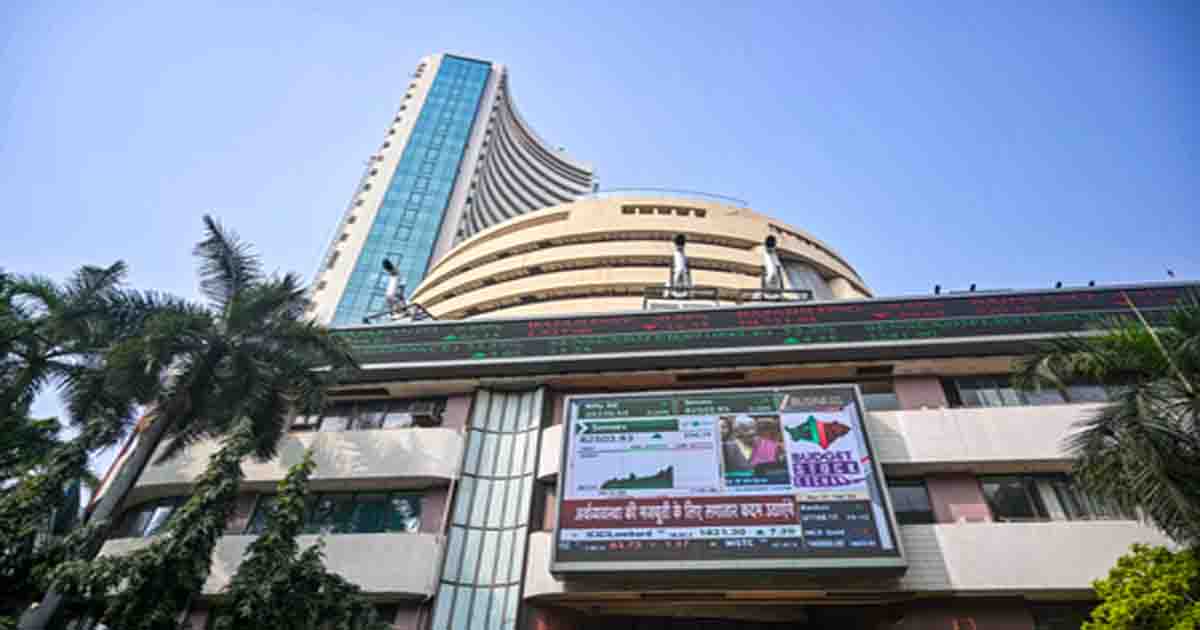
Indian stock markets will remain closed on Tuesday on account of Dussehra with trading suspended across major segments on the Bombay Stock Exchange (BSE) and National Stock Exchange (NSE).
Trading in equities, equity derivatives, securities lending and borrowing (SLB), currency derivatives and interest rate derivatives will remain closed for the day on both exchanges, according to them.
Notably, normal trading on NSE and BSE will resume on Wednesday.
However, the commodity derivatives segment will follow a different schedule. Trading will remain suspended during morning session from 9 am to 5 pm before resuming in evening. The session will continue till 11:30 pm or 11:55 pm depending on contract.
Multi Commodity Exchange of India (MCX) will not remain closed for entire day. Exchange will suspend trading during morning session from 9 am to 5 pm and reopen for evening session from 5 pm.
Investors will be able to trade commodities such as gold, silver, crude oil and base metals during evening session.
Meanwhile, National Commodity and Derivatives Exchange (NCDEX) will remain closed for both sessions on account of Dussehra.
Following Dussehra holiday, three regular trading holidays remain on NSE and BSE calendars for rest of 2026 — November 10, Tuesday, Diwali-Balipratipada; November 24, Tuesday, Prakash Gurpurb Sri Guru Nanak Dev; and December 25, Friday, Christmas.
In addition, exchanges have also scheduled a special Muhurat Trading session for November 8, 2026 on occasion of Diwali Laxmi Pujan. Timings for special session will be announced separately.
Notably, in the last session equity benchmarks closed in negative territory amid selling pressure in the banking and information technology (IT) sector stocks.
Sensex decreased over 850 points or 1 per cent to settle at 73,852.90 on Monday. Similarly, Nifty closed 257.20 points or 1.11 per cent lower at 22,888.95.

EAM Jaishankar and US counterpart Rubio discuss advancing ties, regional developments

Maha: Woman beaten to death with hammer over minor dispute in Palghar; two arrested

Woman arrested for extorting ₹4 crore by blackmailing victims with obscene videos

Major crackdown by Mumbai Crime Branch, 2 kg heroin worth ₹10 crore seized, three accused arrested.

Model Shraddha Dubey, wanted in businessman Shiva Sharma death case, arrested in Nagpur

Rahul, Cong ecosystem want to force regime change: BJP after Neha Bora praises B’desh Gen-Z protest

BJP pays tribute to ex-President Abdul Kalam, recalls his enduring influence on generations of India’s youth

Attack on democratic rights: INDIA Bloc leaders on detentions of anti-ECI protestors

INDIA bloc begins protest march against ECI

Maha Congress stages agitation against Gyanesh Kumar
-

 Crime4 years ago
Class 10 student jumps to death in Jaipur
-

 Maharashtra2 years ago
Mumbai Local Train Update: Central Railway’s New Timetable Comes Into Effect; Check Full List Of Revised Timings & Stations
-

 Maharashtra2 years ago
Mumbai To Go Toll-Free Tonight! Maharashtra Govt Announces Complete Toll Waiver For Light Motor Vehicles At All 5 Entry Points Of City
-

 Maharashtra2 years ago
False photo of Imtiaz Jaleel’s rally, exposing the fooling conspiracy
-

 National News2 years ago
Ministry of Railways rolls out Special Drive 4.0 with focus on digitisation, cleanliness, inclusiveness and grievance redressal
-

 Maharashtra2 years ago
Maharashtra Elections 2024: Mumbai Metro & BEST Services Extended Till Midnight On Voting Day
-

 National News2 years ago
J&K: 4 Jawans Killed, 28 Injured After Bus Carrying BSF Personnel For Poll Duty Falls Into Gorge In Budgam; Terrifying Visuals Surface
-

 Crime2 years ago
Baba Siddique Murder: Mumbai Police Unable To Get Lawrence Bishnoi Custody Due To Home Ministry Order, Says Report