
disaster
Rajasthan Tragedy Update: 8 People Killed, 35 Injured, 40 Vehicles Charred As LPG Tanker Explodes On Jaipur-Ajmer Highway; Visuals Surface

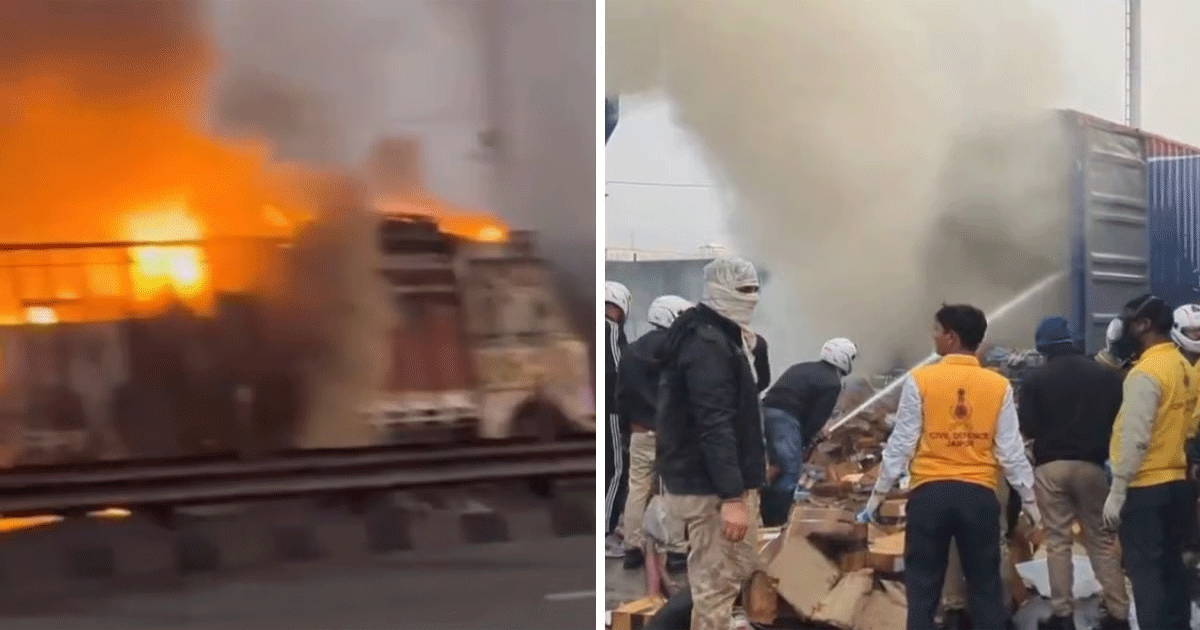
Jaipur: A massive fire accident took place on the Jaipur—Ajmer Highway when a tanker filled with LPG gas exploded on Friday morning as a truck hit the gas tanker. The explosion reached a sleeper bus coming from Udaipur to Jaipur and claimed eight lives, while 35 people suffered burn injuries. The number of deaths is likely to increase as some of the injured are reported to be critical.
As per the officials, the tanker-filled LPG was coming from Ajmer to Jaipur. At around 5.44 in the morning, while taking a U-turn, a truck coming from Jaipur collided with the tanker and within no time, the entire area became a ball of fire. The fire engulfed over 30 vehicles and thick black smoke filled the sky.
The sleeper bus running behind the tanker had 34 passengers on board and as per information 20 of them suffered burn injuries. The bus left Udaipur at 9 pm on Thursday night. At that time, there were 35 passengers in the bus. A passenger had deboarded at Ajmer. The bus was to reach Jaipur at around 6.30 am, but met with the accident at 5.45 am.
There is a crude oil pipeline and two petrol pumps near the accident site, but all are safe.
Dr. Sushil Bhati, Superintendent of SMS Hospital of Jaipur said that there 42 persons have been admitted in hospital while eight have been died. Out of these 4 were brought dead. Among the admitted patients, there are 10 to 12 patients who have suffered more than 60% burns. 6 patients are currently on ventilator.
How Did The Accident Happen?
The tanker filled with LPG was coming from Ajmer to Jaipur. The tanker was taking a U-turn in front of DPS school in Bhankrota. The truck coming from Jaipur hit the nozzle of the gas tanker. About 18 tons of gas spread into the air from the nozzle, and an area of 200 meters became a gas chamber. A few seconds later, there was a massive explosion in the tanker and fire spread to the nearby vehicles.
The gas spreading rapidly in the air made the accident horrifying. People living nearby told many people were trying to take off their burning clothes. Mohan Lal, a family member of one of the injured, said that many people became unconscious due to the gas. The fire was so severe that we turned away. What happened on the spot was not known. Hundreds of birds are lying burnt within a radius of about 400 meters from the accident site.
Rajasthan CM Bhajanlal Sharma tweets, “I am deeply saddened to hear the sad news of casualties of citizens in the gas tanker fire incident on Jaipur-Ajmer National Highway. As soon as the information about the incident was received, I went to SMS Hospital and directed the doctors to provide immediate necessary medical facilities and take proper care of the injured. Rescue work by the administration is continuing. The local administration and emergency services are working with full readiness. I pray to God to grant the departed souls a place in his supreme abode, give the bereaved families strength to bear this immense loss and provide speedy recovery to the injured.”


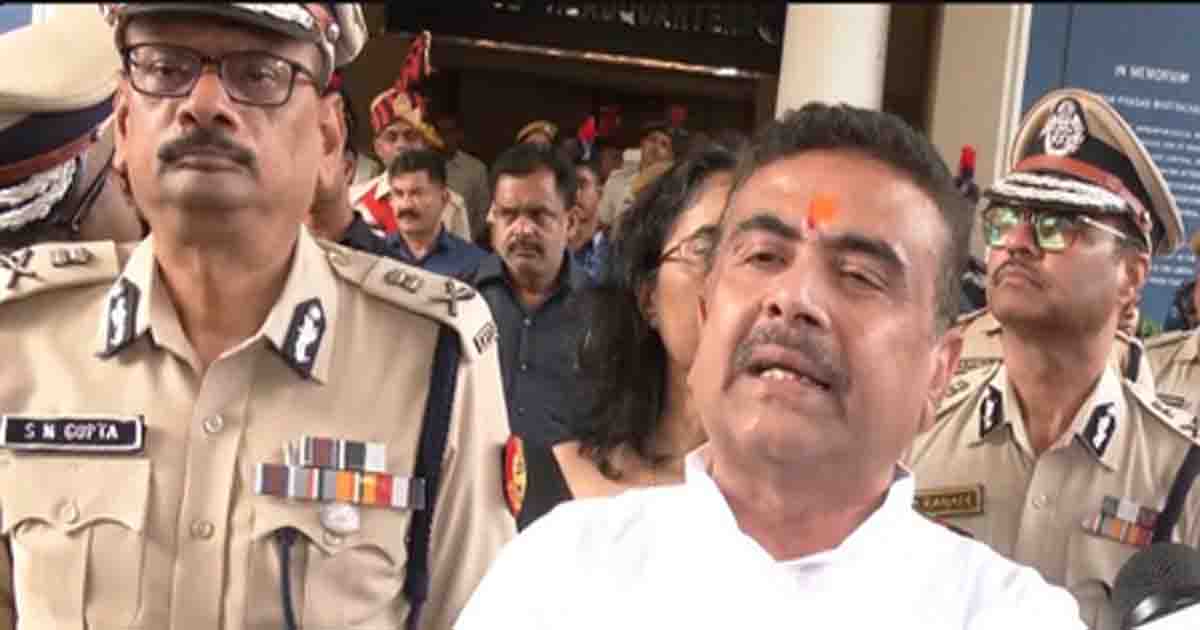
West Bengal Chief Minister Suvendu Adhikari on Sunday chaired a high-level meeting at Bhabani Bhawan and announced that he will visit families of those killed in the Durga Puja pandal stampede to hand over compensation cheques on October 20 and 21.
He also informed that personnel from the Kolkata Police, Kolkata Municipal Corporation (KMC), State Fire Services Department have been kept out of the Special Investigation Team (SIT) to probe their role in the stampede. According to him, one out of 19 dead was from Bihar.
“One of the 19 deceased is from Bihar. The process of handing over the bodies has begun. Two of the injured admitted to the ICU have suffered bone fractures, while the remaining 23 are fit for discharge. I will visit the family of every deceased person within two days and personally hand over the compensation cheque,” said CM Adhikari.
He continued, “After an incident like this, the necessary precautions should be taken. This is a large state with a population of 10.5 to 11 crore, and everyone is celebrating the puja festival. We must ensure the safety of others. The lapses have been reviewed. Of the 19 people who died, 18 were residents of West Bengal. For every deceased person, a team comprising a civil administration official, a police administration official and the local MLA will stay with the family until the cremation.”
On the arrangements at the puja pandal, CM Adhikari said, “These are people (civic volunteers) recruited in 2024-25. They (the administration) hire people every year, and this time they were taken from the old list. No new person was brought in. We have asked for the list, and it should be scrutinised. It would not be right to blame them without examining the facts. It started raining, and the rope was released. There were no proper two-lane arrangements there. A temporary passage had been created using ropes, forming a chain. That chain broke, and everyone got mixed up.”
Elaborating on the steps that have been taken so far following the incident, CM Adhikari said, “Seven individuals have been arrested and are currently in police custody under the provisions of the Bharatiya Nyaya Sanhita (BNS). The Governor visited the hospital, as did the Union Home Minister. I am personally monitoring the situation with the assistance of the Chief Secretary, the Commissioner of Police, the Home Secretary, the Director General of Police (DGP), and others. The entire government is actively engaged. We are not celebrating the holiday, nor are we posting anything on social media. We are not making statements to the press assigning blame to others.”
The Chief Minister further said, “An SIT (Special Investigation Team) is also being formed, which will operate under the leadership of a sitting judge. The Chief Secretary will write to the Chief Justice of the Calcutta High Court. If permission is granted, we will constitute the SIT as soon as possible.”
CM Adhikari added that on October 26, during the Bijaya Sammilani event, the government will pay tribute to the 19 people who lost their lives and cheques of Rs 5 lakh each will also be handed over to the families of the 25 injured people at the same event.
The police on Sunday arrested seven people, including organisers, in connection with the stampede at the Chorebagan Sarbojanin Durga Puja Pandal in Kolkata, which claimed 19 lives.
A large number of devotees were injured following a stampede at the Chorebagan Sarbojanin Durga Puja pandal in north Kolkata as an excessive crowd flocked into the pandal arena to catch a glimpse of the idols. Chaos erupted at the Puja pandal after a portion of the exit gate structure collapsed. The injured were immediately rushed to Calcutta Medical College and Hospital and two other state hospitals. About 17 people were declared brought dead at Calcutta Medical College and Hospital, while 25 injured were admitted for treatment. The death toll reached 19 on Sunday.

Singrauli, Oct 17: Mild earthquake tremors were felt in the Singrauli district of Madhya Pradesh on Saturday, India Meteorological Department (IMD) officials said.
According to preliminary data, the intensity of the earthquake was measured at 3.5 on the Richter scale.
The epicentre was located at a depth of around 10 km below the surface, officials added.
The tremor was recorded on Saturday at 2:12 p.m.
Officials monitoring seismic activity confirmed that the quake had an intensity of 3.5, with the focus situated around 10 km beneath the earth’s surface.
The information is based on initial readings and remains subject to further verification by scientific agencies.
Residents in parts of Singrauli reported feeling the mild shaking during the afternoon hours.
While the intensity was relatively low, the sudden tremor caused momentary concern among people in the affected areas.
No immediate reports of damage to buildings or injuries have been received so far.
Earthquake monitoring agencies are examining the preliminary data to determine the exact location of the epicentre and assess any aftershock possibilities.
A magnitude of 3.5 is generally classified as a light earthquake, which is often felt by people nearby but rarely causes significant structural damage, especially when the focus is at a moderate depth of around 10 km.
Authorities in Singrauli have advised the public to remain calm and follow standard safety guidelines in case of any further seismic activity.
Local administration is closely tracking the situation and is in coordination with relevant scientific bodies for updated information.
This is not the first time the region has experienced mild seismic activity, though such events of low intensity usually pass without major incident.
Experts note that earthquakes of this magnitude are relatively common in various parts of the country and typically do not pose a serious threat when the depth is around 10 km.
Further details are awaited as agencies continue to analyse the complete data set.
Kathmandu, Oct 15: Nepal and the International Bank for Reconstruction and Development (IBRD), part of the World Bank Group, have signed a mandate agreement to explore the development of a catastrophe bond that could help the Himalayan nation secure rapid access to funds in the event of a major natural disaster.
The agreement marks the beginning of a collaboration to assess the feasibility and potential structure of a catastrophe bond, under which Nepal could transfer part of its disaster risk to international capital markets and strengthen its financial preparedness for natural disasters, the World Bank said in a statement.
Under the agreement, the World Bank Group Treasury will work with the Nepal government and market participants to evaluate the proposed transaction.
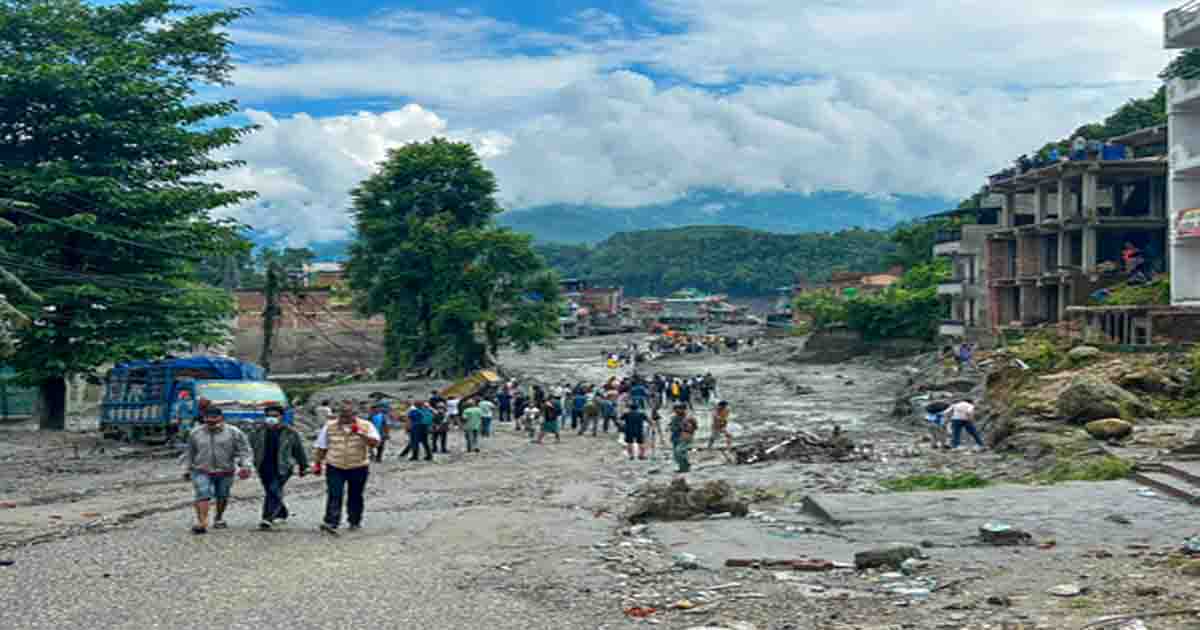
The initiative comes as Nepal seeks to strengthen its capacity to prepare for, withstand and recover from natural disasters in the wake of devastating floods in the Bhotekoshi and downstream Trishuli river basins on August 26. The floods have killed nearly 1,500 people, while more than 5,000 remain unaccounted for, according to the National Disaster Risk Reduction and Management Authority.
Triggered by an avalanche near the Nepal-China border that blocked the river’s flow, the floods swept away several human settlements, a dozen hydropower projects, a solar plant, and several roads and bridges. Physical damage is estimated at 1.66 billion US dollars, according to the World Bank’s Global Rapid Post-Disaster Damage Estimation report.
According to the World Bank, Nepal is highly vulnerable to earthquakes, floods, landslides and other climate-related hazards, which can cause extensive damage to infrastructure, disrupt economic activities and place considerable pressure on public finances.
A catastrophe bond is a financial instrument that allows governments or other entities to transfer specific disaster risks to investors. Depending on the terms of the bond, investors may lose some or all of their principal if a specified disaster occurs, allowing the funds to be used to support the affected entity.
“Such instruments can provide an alternative source of disaster financing, potentially enabling governments to access funds more quickly than relying solely on budget reallocations or post-disaster assistance,” the World Bank said.
The initiative is part of the World Bank Group’s established catastrophe bond programme, which has helped countries access international capital markets to transfer disaster risks and secure financial protection against natural hazards.
The World Bank helps countries increase their financial resilience to disasters by supporting disaster risk financing programmes and offering contingent financing and insurance solutions.
It also assists countries in designing, developing and implementing comprehensive disaster risk financing strategies.
“A risk financing strategy helps clients determine a balance between retaining risk, for example, through a contingent financing product, and transferring risk, for example, through an insurance product,” the World Bank said.
A range of financial products can be used to address the financial risks of disasters, and the optimal mix of approaches depends on the types of risks faced by a country and the frequency and severity of disaster events, it said.
Developing countries are particularly vulnerable to the economic and fiscal consequences of disasters because of factors such as gaps in insurance coverage, inadequate infrastructure resilience, and the concentration of populations and economic activities in exposed areas.
“Following a major disaster, governments often have to redirect budgetary resources towards emergency response, relief and reconstruction, potentially affecting other development priorities,” the World Bank said.

Suspicious passenger apprehended at Delhi Jama Masjid Metro Station after trying to flee during screening

Tiger Shroff attack: Bihar family denies accused is their son

Bollywood in the Crosshairs After Firing at Tiger Shroff; Legal Action Initiated Against Bishnoi Gang, Three Shooters Arrested

E-Office System Implemented in Mumbai Municipal Corporation; 14,000 Users to Be Integrated in Phases to Make Administration More Transparent and Efficient

Bihar MLC election: Three FIRs filed against Anant Singh, Jan Suraaj candidate Anuj Singh

Rahul, Cong ecosystem want to force regime change: BJP after Neha Bora praises B’desh Gen-Z protest

BJP pays tribute to ex-President Abdul Kalam, recalls his enduring influence on generations of India’s youth

Attack on democratic rights: INDIA Bloc leaders on detentions of anti-ECI protestors

INDIA bloc begins protest march against ECI

Maha Congress stages agitation against Gyanesh Kumar
-

 Crime4 years ago
Class 10 student jumps to death in Jaipur
-

 Maharashtra2 years ago
Mumbai Local Train Update: Central Railway’s New Timetable Comes Into Effect; Check Full List Of Revised Timings & Stations
-

 Maharashtra2 years ago
Mumbai To Go Toll-Free Tonight! Maharashtra Govt Announces Complete Toll Waiver For Light Motor Vehicles At All 5 Entry Points Of City
-

 Maharashtra2 years ago
False photo of Imtiaz Jaleel’s rally, exposing the fooling conspiracy
-

 National News2 years ago
Ministry of Railways rolls out Special Drive 4.0 with focus on digitisation, cleanliness, inclusiveness and grievance redressal
-

 Maharashtra2 years ago
Maharashtra Elections 2024: Mumbai Metro & BEST Services Extended Till Midnight On Voting Day
-

 National News2 years ago
J&K: 4 Jawans Killed, 28 Injured After Bus Carrying BSF Personnel For Poll Duty Falls Into Gorge In Budgam; Terrifying Visuals Surface
-

 Crime2 years ago
Baba Siddique Murder: Mumbai Police Unable To Get Lawrence Bishnoi Custody Due To Home Ministry Order, Says Report