
International News
Putin to visit India, ‘one of the great powers of our time’, soon: Lavrov

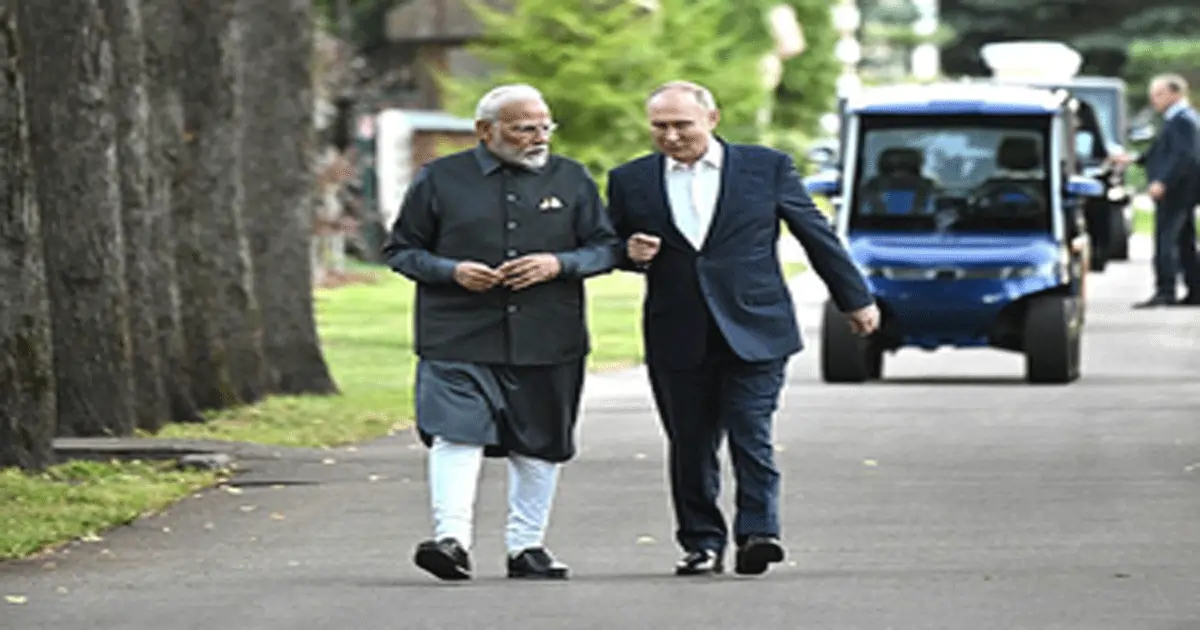
Moscow, March 27: Citing that the political dialogue between India and Russia is “developing dynamically” and is facilitated by the fact that Moscow and New Delhi “have close or even coinciding views on the objectively emerging multipolar world order”, Russian Foreign Minister Sergei Lavrov has said that preparations are being made for Russian President Vladimir Putin’s upcoming visit to India.
“Relations between our countries have a long history. It can be said that they have stood the test of time more than once. Today, Russia and India are developing equal cooperation based on sincere, mutual respect and consideration of each other’s interests,” Lavrov told the participants of the first international conference ‘Russia and India: Towards a New Agenda for Bilateral Relations’ which was also addressed by External Affairs Minister (EAM) S. Jaishankar.
“It is difficult to overestimate the contribution of our leaders to this process. It is symbolic that Prime Minister Narendra Modi made his first bilateral foreign visit after his re-election last year to Russia. Now it is our turn. Russian President Vladimir Putin accepted the invitation of the head of the Indian government. The visit of the head of the Russian state to the Republic of India is being prepared,” he added.
Earlier, Kremlin aide Yury Ushakov had confirmed that Putin is expected to visit India in early 2025 following an invitation from Prime Minister Modi.
The visit is being planned as part of the ongoing commitment to annual meetings between the two leaders.
“Our leaders have an agreement to meet once a year. This time, it is our turn,” Ushakov had said during a press briefing.
The last visit by the Russian President to India took place on December 6, 2021, during the 21st India-Russia Annual Summit in New Delhi.
Meanwhile, PM Modi held two high-profile visits to Russia last year, attending the 22nd Russia-India Summit in July and later participated in the BRICS Summit held in Kazan in October.
Addressing the gathering during the Russia-India conference, Lavrov highlighted how the relations between both countries have a solid material base.
“Trade and economic cooperation is steadily expanding. We are successfully overcoming the attempts of certain ill-wishers to prevent this. In 2024, bilateral trade turnover exceeded $60 billion. This is the highest result in the entire modern history of relations. But, of course, this is not the limit. We continue to work to achieve the goal set by the leaders at last year’s July summit: to bring trade turnover to $100 billion by 2030. The increase in practical cooperation reflects not only the existing potential of Russian-Indian trade, but also the great interest of the business circles of our countries in its full development, including the implementation of joint investment projects,” he said.
The Russian Foreign Minister stated that, along with partner India, Russia advocates for the democratization of international relations, for an increased role for the Global South in economic governance mechanisms, respect for the cultural and civilizational identity of all peoples of the world, and their right to independently determine their own development paths.
“We highly value and welcome the ability of Indian diplomacy to implement an independent, multi-vector foreign policy course. We believe that India has every reason to have the status of one of the great powers of our time, one of the influential centres of the multipolar world. We share the philosophy of the Indian foreign policy concept “The whole world is a family”, aimed at ensuring international cooperation for the benefit of all mankind based on a balance of interests of all states. We value joint work in the UN , the G20 , BRICS , SCO and other multilateral platforms,” he mentioned.
“I would like to separately express gratitude to the Russian side for the fact that India, and Prime Minister Narendra Modi personally, consistently takes a balanced position with regard to the Ukrainian crisis and advocates its resolution through dialogue and the elimination of the root causes of this conflict,” he added.

International News
Iran’s draft proposal for US talks; demands ending war, removing sanctions, lifting naval blockade

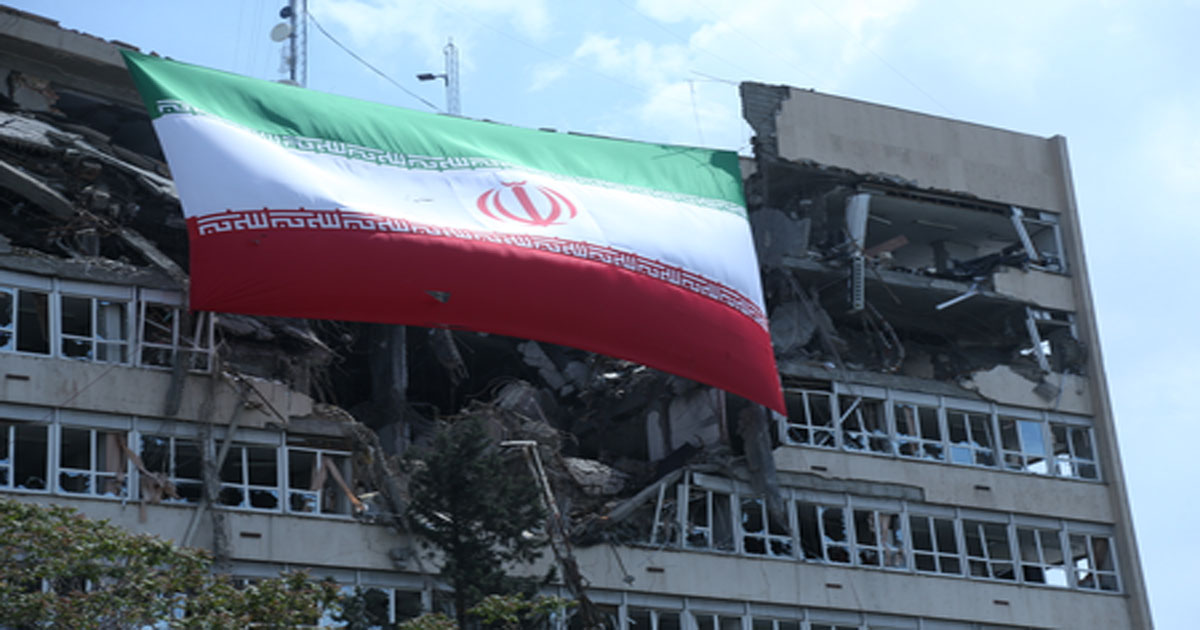
Tehran, May 11: Iran’s latest draft proposal for talks with the United States calls for an immediate cessation of conflict on all fronts, a guarantee for no more “aggression” against Iran, and the lifting of US sanctions and naval blockade, the semi-official Tasnim news agency reported.
“The proposal highlights the need to immediately end the war, provide guarantees for the non-repetition of the aggression against Iran, and certain other issues within a political agreement,” Tasnim cited an informed source as saying.
It also demands a 30-day window for rescinding US sanctions on Iranian oil sales, and the release of Iran’s frozen assets following the preliminary agreement, it reported.
The United States and Israel conducted joint strikes on Tehran and other Iranian cities on February 28, killing Iran’s then Supreme Leader Ali Khamenei, senior Iranian officials and civilians. Iran responded with missile and drone attacks against Israel and US interests in the region and tightened control over the Strait of Hormuz, Xinhua news agency reported.
A ceasefire between the warring parties took effect on April 8, which was followed by talks between Iranian and US delegations in Pakistan’s Islamabad on April 11 and 12 that ended without an agreement. Later, the United States imposed its own blockade on the strait.
Over the past weeks, the two sides have reportedly exchanged several proposed plans outlining conditions for ending the conflict through Pakistan.
Earlier on Sunday, Iran’s official news agency IRNA reported that Iran’s response to the latest US proposal was sent to Pakistan. On Sunday evening, US President Donald Trump wrote on his Truth Social that the response is “totally unacceptable.”
“I have just read the response from Iran’s so-called ‘Representatives.’ I don’t like it — TOTALLY UNACCEPTABLE!” Trump wrote on his Truth Social, without elaborating.
Meanwhile, US Secretary of State Marco Rubio has said Iran needs to “make it clear” that they do not seek a nuclear weapon, which Washington sees as crucial to a peace deal.
International News
Operation Sindoor: Pakistan’s fake victory spectacle couldn’t hide crisis within terror groups
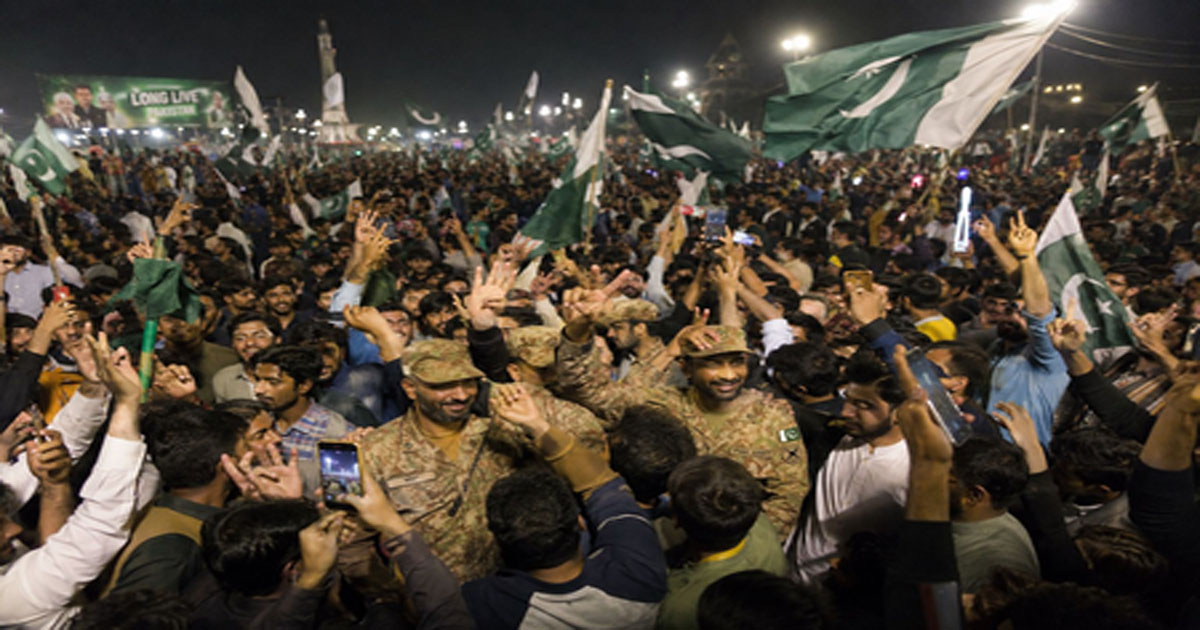
New Delhi, May 8: For Pakistan, ‘Operation Sindoor’ resulted in a loss of face. After terror infrastructure was hit hard by the Indian armed forces who were avenging the Pahalgam terror attack, Pakistan set out a fake narrative of emerging victorious.
Rallies and processions were taken out to create an impression that the Pakistan Army had hit back and won the battle. While the perception was created, the reality was something different.
An official said that events were strategically planned across Pakistan to commemorate fake victory. On the other hand, social media handles run by Pakistanis worked overtime to put out false narratives.
Following the conclusion of ‘Operation Sindoor’, Pakistan’s Army chief instructed the Shehbaz Sharif government to release Rs 500 crore. This money was then distributed evenly to federal governments, business and religious groups. All were asked to organise massive rallies across Pakistan. The programme mandate by the Pakistan Army was titled ‘Ashra-e-Tashakur Fateh-E-Muneeb,’ which means ten days of gratitude for a decisive victory.
To cement the fake claim further, Asim Munir even pressured the Sharif government to make him Field Marshal.
An Intelligence Bureau official said that while these rallies took place on a grand scale for ten days, something more serious was brewing within. Some of the rallies even focussed on thanking the Jaish-e-Mohammad and Lashkar-e-Tayiba for the so-called victory.
However, within the ranks of these two terror groups something serious was simmering. Both Hafiz Saeed and Masood Azhar had started to question the Pakistan Army and the ISI. They wanted to know what happened to the guarantees and protection that they had been assured. These groups have been operating with ease only due to the funds and protection that the Army and the ISI offer them.
During ‘Operation Sindoor’, the Jaish-e-Mohammad lost its Bahawalpur headquarters. Its chief Masood Azhar even lost most of his family members and several other cadres. The Muridke camp, which is the Lashkar-e-Tayiba’s primary training facility was blown to pieces during the Indian operation.
Both these terror groups, which have wrecked havoc in India, had not witnessed such a huge hit. There have been encounters and terrorists have been killed on Indian soil. However never have they been struck so hard and that, too, deep inside Pakistan.
Another official said that the impression that the Pakistan establishment sought to create in the aftermath of the operation worked among a few people, but clearly their proxies were not impressed. They knew what they had lost and the fact that the Army could not even defend them is what left them completely disgruntled. The official also said that many cadres, too, had started questioning their own leadership.
Officials say that all these factors led to rifts within these two terror groups and this explains why they are taking so long to rebuild.
During the numerous processions, the Army insisted that the cadres of the Lashkar-e-Tayiba and Jaish-e-Mohammad should take part. Many of them did, but in their minds, they knew what the reality was. In this desperation to show that Pakistan was victorious, the Army ended up showcasing to the world that globally banned terror groups such as the Jaish-e-Mohammad and Lashkar-e-Tayiba are welcome within the ecosystem of the establishment, the official added.
Pakistan watchers point out that it was nothing but desperation on part of the Army. It had to indulge in this circus and claim a false victory. In reality, the Pakistan Army and its chief were the hardest hit thanks to ‘Operation Sindoor’, the experts also point out.
International News
Tehran ready to pursue diplomacy to end war if rights safeguarded: Iran’s president
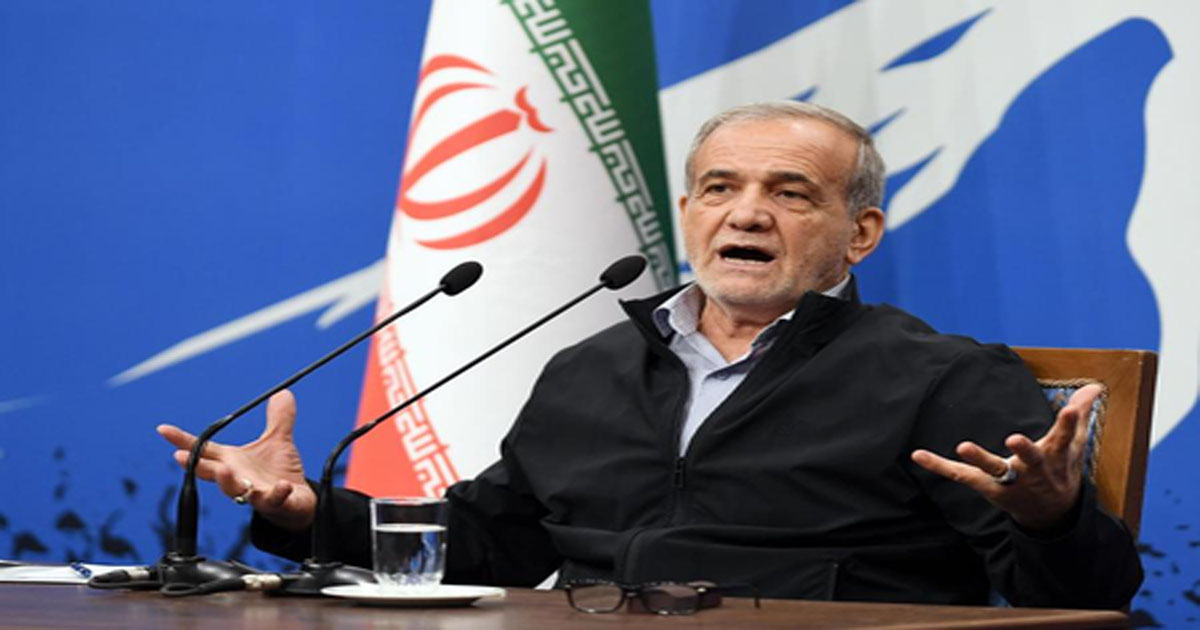
Tehran, May 7: Iran’s President Masoud Pezeshkian has said the country is ready to pursue diplomatic paths to end the war with the United States and Israel, while insisting on safeguarding the Iranian nation’s rights.
In a call with French President Emmanuel Macron on Wednesday (local time), Pezeshkian expressed deep distrust of the United States, citing recent hostile actions, including two attacks on Iran during bilateral talks, which he described as “stabbing Iran in the back,” according to a statement published on the website of his office.
The phone conversation came as Axios reported earlier in the day that the United States and Iran are closing in on a one-page memo to end their war, reports Xinhua news agency.
It said a potential deal would involve Iran committing to a moratorium on nuclear enrichment, and the United States agreeing to lift sanctions, with both sides lifting restrictions on transit through the Strait of Hormuz.
Iran, the United States and Israel reached the ceasefire on April 8 after 40 days of fighting that started with the US and Israeli attacks on Feb. 28.
Following the truce, Iran and the United States held one round of peace talks in Pakistan’s capital, Islamabad, on April 11 and 12, which failed to lead to an agreement.
Over the past weeks, the two sides have exchanged a number of proposed plans to end the war, with the latest one currently being reviewed by Iran.
Additionally, Iran has said it has not exchanged any new written messages with the United States, pushing back against reports that the two sides are close to a one-page agreement to end hostilities.
The semi-official Fars news agency called recent media reports “fabricated,” saying they were designed to influence global markets and drive down oil prices rather than reflect the situation on the ground.
Fars, citing two unnamed sources, said Iran has not yet responded to the latest US message, which was delivered through Pakistan. Iranian Foreign Ministry spokesman Esmaeil Baghaei said Tehran is still reviewing the US proposal and will respond after completing its assessment, according to the Iranian Students’ News Agency.

Gold, silver prices surge up to 8 pc after import duty hike

BMC Chief Ashwini Bhide Conducts Surprise Inspection At Kanjurmarg Waste Management Project In Mumbai To Review Odour-Control Measures

Osama Bin Laden is reborn in Owaisi! Nitesh Rane once again strongly criticizes AIMIM leader Asaduddin Owaisi

Instead of increasing parking fees by 40%, BMC should focus on affordable parking and traffic discipline, Raees Sheikh writes to Mumbai Municipal Commissioner

Shocking Video! Man Gets Trapped Between Train & Platform At Andheri Station; Commuters Panic

‘Son Falsely Implicated, We Are Well-Educated’: Father Of Accused Tausif Attar Defends Son After Skullcap, Namaz Coercion Allegations Rock TCS Nashik

Mumbai: 15th arrest in Rohit Shetty shooting case, shooter identified, arrested, more arrests possible

Maharashtra Shock: 22-Year-Old Arrested For Exploiting & Blackmailing Multiple Women In Kolhapur; Love Jihad Angle Suspected

27 Years After Gangster Sadiq Kalia’s Encounter By Daya Nayak, His Nephew Arrested For Alleged Revenge Killing In Mumbai

Google to invest up to $40 billion in Anthropic amid global AI race
-

 Crime4 years ago
Class 10 student jumps to death in Jaipur
-

 Maharashtra2 years ago
Mumbai Local Train Update: Central Railway’s New Timetable Comes Into Effect; Check Full List Of Revised Timings & Stations
-

 Maharashtra2 years ago
Mumbai To Go Toll-Free Tonight! Maharashtra Govt Announces Complete Toll Waiver For Light Motor Vehicles At All 5 Entry Points Of City
-

 Maharashtra2 years ago
False photo of Imtiaz Jaleel’s rally, exposing the fooling conspiracy
-

 National News2 years ago
Ministry of Railways rolls out Special Drive 4.0 with focus on digitisation, cleanliness, inclusiveness and grievance redressal
-

 Maharashtra1 year ago
Maharashtra Elections 2024: Mumbai Metro & BEST Services Extended Till Midnight On Voting Day
-

 National News2 years ago
J&K: 4 Jawans Killed, 28 Injured After Bus Carrying BSF Personnel For Poll Duty Falls Into Gorge In Budgam; Terrifying Visuals Surface
-

 Crime2 years ago
Baba Siddique Murder: Mumbai Police Unable To Get Lawrence Bishnoi Custody Due To Home Ministry Order, Says Report