
National News
Punjab CM Bhagwant Mann to get first Council of Ministers on March 19

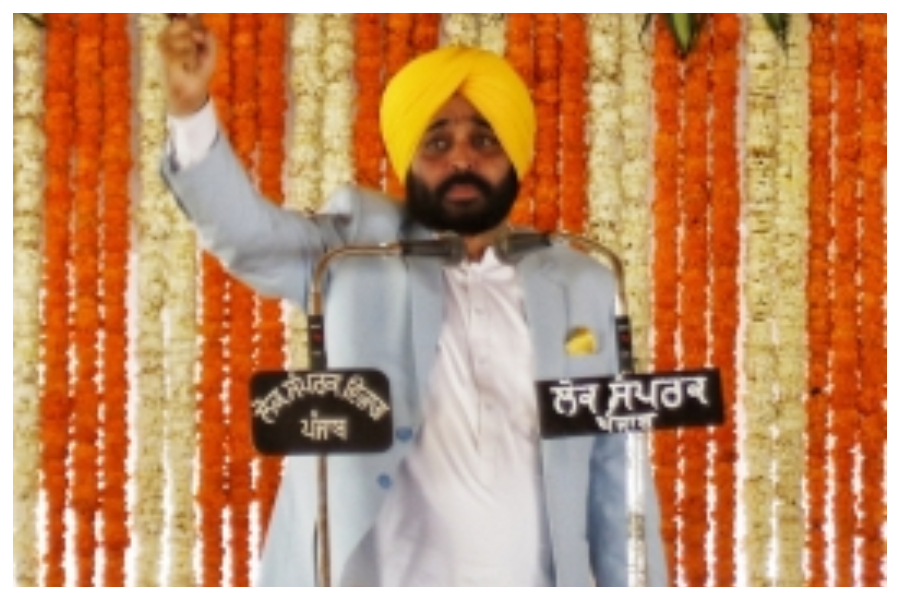
Two days after taking oath as Punjab Chief Minister, Bhagwant Mann is set to get his first Council of Ministers, all first-timers, on Saturday.
Former Leader of the Opposition and a prominent Dalit face Harpal Singh Cheema may be inducted as the deputy chief minister. Cheema retained his Dirba seat.
The other probables in the Cabinet are Aman Arora, Kultar Sandhwan, Harjot Bains, Sarvjit Kaur Manuke, Baljinder Kaur, Gurmeet Singh Khudian, Neena Mittal and Kunwar Vijay Pratap.
It is learnt the party leadership is keen to induct six to seven ministers in the Council of Ministers that has space for 17 ministerial posts, excluding the Chief Minister’s.
The remaining ministers will be inducted after a few months, a senior party leader told IANS.
Sunam MLA Aman Arora is a prominent Hindu face of the party and is known for his proximity with Mann. In 2018, when Mann had resigned from the post of the state president after Arvind Kejriwal apologised to Shiromani Akali Dal (SAD) leader Bikram Singh Majithia on allegations of drug trade, Arora too had quit AAP. Both of them later rejoined the party.
Arora defeated Congress’ Jaswinder Singh Dhiman by a record margin of 75,277 votes, state’s highest.
First-timer Jivan Jyot Kaur, who emerged as the ‘giant slayer’ by showing the door to two political heavyweights — Navjot Singh Sidhu of the Congress and Majithia, who were busy in mudslinging against each other, is likely to inducted a minister.
Another first-time Kunwar Vijay Prartap, who once served as the Amritsar SSP, is AAP’s big face who registered a victory in Amritsar North by defeating his closest rival and SAD’s Anil Joshi by a margin of 28,313 votes.
Party’s state co-in-charge Raghav Chadha has already clarified that the induction of the Council of Ministers in government is the prerogative of Bhagwant Mann, seting aside speculations that Arvind Kejriwal will be taking the final call from Delhi.
The party is trying to maintain a balance in the Cabinet from the state’s Malwa, Majha and Doaba regions.
The Malwa belt can get more ministers as the party owns 66 out of the 69 seats in the region. In Doaba, AAP won 10 out of 23 seats, while in Majha, it won 16 out of 25.
Also, this time AAP sent eight women legislators, five doctors, the richest legislator — Kulwant Singh with assets of Rs 238 crore and won from Mohali — and the youngest — Narinder Kaur Bharaj, 27, to the Assembly.
The AAP recorded a thumping win by claiming 92 of the Assembly’s 117 seats. The ruling Congress won 18, down from 77 in 2017.



New Delhi, May 11: The Enforcement Directorate (ED) on Monday opposed Bollywood actor Jacqueline Fernandez’s plea seeking to turn approver in the Rs 200 crore money laundering case linked to alleged conman Sukesh Chandrashekhar, telling a Delhi court that her conduct during the investigation was “not satisfactory” and that she failed to fully cooperate with the probe.
Appearing before the Patiala House Court, the federal anti-money laundering agency contended that Jacqueline did not make a “full and true disclosure” in her statements recorded under Section 50 of the Prevention of Money Laundering Act (PMLA).
The ED said that during the course of the investigation, Jacqueline’s conduct was not cooperative as she “consistently failed to make full and truthful disclosures” in connection with the proceeds of crime allegedly generated by Chandrashekhar.
Opposing her plea to become a prosecution witness, the ED further alleged that Jacqueline continued to remain in regular contact with Chandrashekhar even after becoming aware of his criminal antecedents.
According to the probe agency, Chandrashekhar had arranged “all benefits, gifts and valuables” for Jacqueline out of the proceeds of crime generated through the alleged money laundering activities.
After hearing the submissions, the Patiala House Court granted time to Jacqueline Fernandez’s counsel to file a rejoinder to the ED’s reply and posted the matter for further hearing on May 12.
The ED has accused Jacqueline of allegedly receiving luxury gifts worth around Rs 7 crore from Chandrashekhar. However, the actor has consistently maintained that she had no knowledge about his alleged criminal activities or the source of the money used for those gifts.
In September last year, the Supreme Court had declined to entertain Jacqueline Fernandez’s plea seeking the quashing of the money laundering proceedings initiated against her by the ED.
Senior advocate Mukul Rohatgi, appearing for Jacqueline before the apex court, had argued that she could not be prosecuted under Sections 3 and 4 of the PMLA as she had no knowledge that the gifts received from Chandrashekhar were proceeds of crime.
The Justice Datta-led Bench, however, referred to the Supreme Court’s judgment in the Vijay Madanlal Choudhary case, upholding the ED’s powers under the PMLA and observed that allegations at the stage of framing of charges must be accepted as they stand.
The ED has filed multiple charge sheets in the case and named Jacqueline Fernandez as an accused in a supplementary prosecution complaint, while another Bollywood actor, Nora Fatehi, was examined as a witness.
The probe agency has alleged that Chandrashekhar’s aide Pinky Irani facilitated the delivery of luxury gifts and expensive items to Jacqueline on his behalf.
The money laundering case stems from allegations that Chandrashekhar cheated the wives of former Ranbaxy promoters Shivinder Singh and Malvinder Singh of nearly Rs 200 crore. However, Fernandez maintained that she had no role in laundering Chandrashekhar’s alleged illegal wealth.
The 40-year-old Sri Lankan actress, who entered Bollywood after winning the Miss Universe Sri Lanka crown in 2006, has been a prominent figure in Hindi cinema for over a decade, also featuring in music videos and reality shows.
National News
Vijay announces 200 units of free electricity after taking oath as Tamil Nadu Chief Minister


Chennai, May 10: Tamil Nadu Chief Minister C. Joseph Vijay on Sunday announced 200 units of free electricity and the formation of the “SingaPen” Special Task Force as among the first major decisions of his government shortly after taking the oath.
Soon after the swearing-in ceremony at the Jawaharlal Nehru Indoor Stadium here, Vijay signed key official files in the presence of senior officials and ministers, signalling the beginning of the Tamilaga Vettri Kazhagam (TVK) government’s welfare and governance agenda.
Vijay was sworn in as the Chief Minister by Governor Rajendra Vishwanath Arlekar amid loud cheers from thousands of party workers, supporters and film fans gathered at the venue. He took the oaths of office and secrecy in the name of C. Joseph Vijay.
The TVK chief assumed office after his party emerged as the single largest formation in the recently concluded Tamil Nadu Assembly elections by winning 108 seats in the 234-member House. Though the party fell short of the majority mark of 118, the Congress extended support to it.
The Communist Party of India (CPI), the Communist Party of India-Marxist, the Viduthalai Chiruthaigal Katchi (VCK), and the Indian Union Muslim League (IUML) also backed the coalition, taking its strength to 120 MLAs.
The swearing-in ceremony witnessed elaborate security arrangements, with only around 6,000 invitees allowed inside the stadium through special passes. Chennai Police deployed massive security arrangements under the supervision of the Police Commissioner, with five Additional Commissioners and 12 Joint Commissioners overseeing arrangements.
Several prominent political leaders and film personalities attended the event, including Leader of Opposition in the Lok Sabha Rahul Gandhi, alliance leaders, Vijay’s parents, relatives, friends, and notables from the Tamil film industry.
Along with Vijay, N. Anand, Aadhav Arjuna, Dr K.G. Arunraj, K.A. Sengottaiyan, P. Venkataramanan, R. Nirmalkumar, Rajmohan, Dr T.K. Prabhu, and S. Keerthan were sworn in as ministers in the new cabinet. The ceremony marked a historic political moment in Tamil Nadu, ending decades of dominance by the state’s traditional Dravidian parties and ushering in a new political era under Vijay’s leadership.
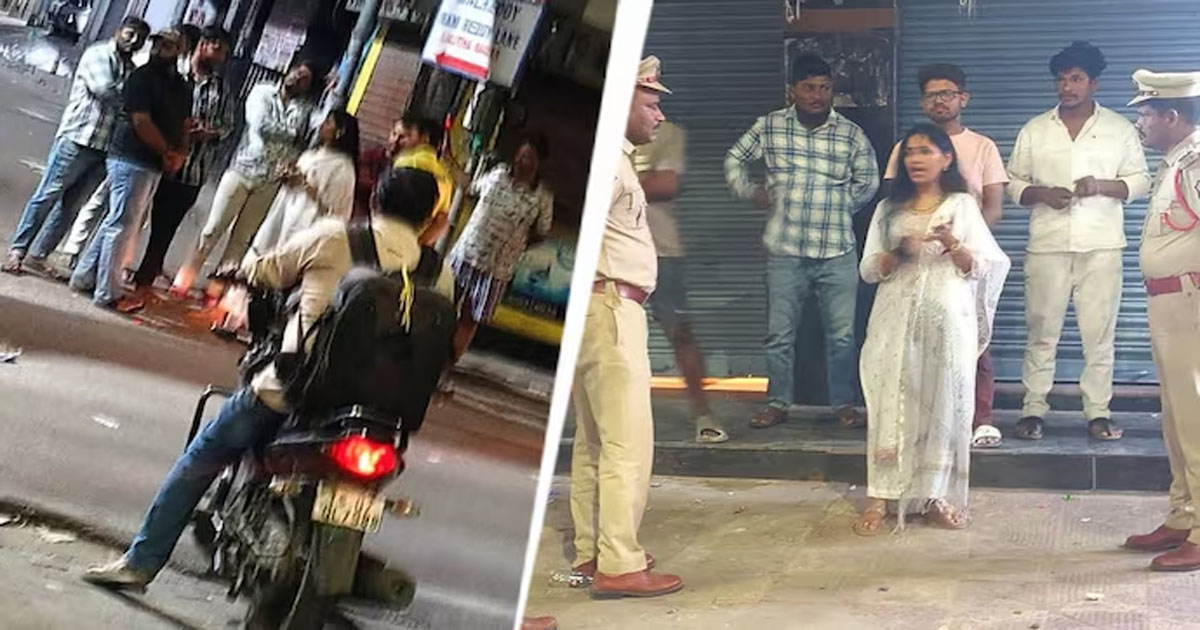
In a late-night undercover operation aimed at assessing women’s safety on the streets, Malkajgiri Commissioner of Police V Sumathi, posed as a regular commuter at a bus stop in Dilsukhnagar between 12.30 am and 3.30 am.
According to police sources, the Indian Police Service (IPS) officer remained alone at the location to observe ground conditions faced by women travelling during late hours.
What followed painted a troubling reality. During the three-hour operation, nearly 40 men allegedly approached her. Several of them were suspected to be under the influence of alcohol or ganja, officials said. The group included young men, some identified as students and private employees.
Plainclothes police teams, already stationed nearby as part of the operation, intervened and detained individuals found behaving in a suspicious or inappropriate manner. Police said action was taken against those who were allegedly involved in harassment or causing disturbance around the bus stop.
The initiative was reportedly conducted to evaluate night patrolling effectiveness, identify vulnerable public spaces, and examine the risks faced by women commuting alone during late hours.
In a parallel account of the operation, it was stated that the commissioner was approached by multiple individuals within minutes of her arrival, following which enforcement teams moved in and detained those suspected of misconduct. Police also carried out counselling sessions as part of a broader women’s safety awareness drive.
Further official details regarding the identities and legal status of those detained are awaited from the police department.

Major operation by Kandivali ANC unit, heroin worth Rs 4 crore seized, 2 accused arrested

Navi Mumbai Police Bust Hydro Ganja Racket In Nerul, Seize Drugs Worth ₹6.6 Lakh; 2 Arrested

Mumbai city to see 10% water cut from Friday, May 15 due to low water storage in reservoirs: Municipal Corporation administration

Mumbai Cyber Fraud Alert: Santacruz Residents Fear Data Breach After Fraudsters Use Piped Gas Registration Ruse To Spread APK Malware

Asaduddin Owaisi calls Pathan Brahmin, heir to Osama bin Laden, demands action from Devendra Fadnavis against Nitesh Rane

‘Son Falsely Implicated, We Are Well-Educated’: Father Of Accused Tausif Attar Defends Son After Skullcap, Namaz Coercion Allegations Rock TCS Nashik

Asha Bhosle’s son says last respects to be paid at residence in Lower Parel, followed by last rites at Shivaji Park

Mumbai: 15th arrest in Rohit Shetty shooting case, shooter identified, arrested, more arrests possible

Maharashtra Shock: 22-Year-Old Arrested For Exploiting & Blackmailing Multiple Women In Kolhapur; Love Jihad Angle Suspected

27 Years After Gangster Sadiq Kalia’s Encounter By Daya Nayak, His Nephew Arrested For Alleged Revenge Killing In Mumbai
-

 Crime4 years ago
Class 10 student jumps to death in Jaipur
-

 Maharashtra2 years ago
Mumbai Local Train Update: Central Railway’s New Timetable Comes Into Effect; Check Full List Of Revised Timings & Stations
-

 Maharashtra2 years ago
Mumbai To Go Toll-Free Tonight! Maharashtra Govt Announces Complete Toll Waiver For Light Motor Vehicles At All 5 Entry Points Of City
-

 Maharashtra2 years ago
False photo of Imtiaz Jaleel’s rally, exposing the fooling conspiracy
-

 National News2 years ago
Ministry of Railways rolls out Special Drive 4.0 with focus on digitisation, cleanliness, inclusiveness and grievance redressal
-

 Maharashtra1 year ago
Maharashtra Elections 2024: Mumbai Metro & BEST Services Extended Till Midnight On Voting Day
-

 National News2 years ago
J&K: 4 Jawans Killed, 28 Injured After Bus Carrying BSF Personnel For Poll Duty Falls Into Gorge In Budgam; Terrifying Visuals Surface
-

 Crime2 years ago
Baba Siddique Murder: Mumbai Police Unable To Get Lawrence Bishnoi Custody Due To Home Ministry Order, Says Report