
Politics
PM talks about tourist arrivals in Ladakh, Digital India


Prime Minister Narendra Modi on Tuesday talked about the arrival of tourists in Ladakh, Central government schemes like Digital India and did a pep talk while complimenting a beneficiary for her excellent way of communicating and jokingly saying she should contest elections as she will be very popular.
Participating virtually from the state capital Shimla in the Garib Kalyan Sammelan to mark completion of eight years of his government, Modi told Santoshi, a beneficiary of Ayushman Bharat from Kalburgi in Karnataka, that noticing her excellent way of communicating she should contest elections as she will be very popular.
On being asked, she narrated her experience with the scheme. She said the Health and Wellness Centre and free checkups and medicines are bringing many changes in her life.
Interacting with Tashi Tundup from Ladakh, the Prime Minister asked him about the arrival of tourists in Ladakh and his experience with the government schemes.
The Prime Minister praised Tundup’s services as an army man. Tundup said he did not face any problem in availing the benefits of schemes like Pradhan Mantri Awas Yojana (PMAY), constructing toilets, getting a gas connection and farming-related benefits.
Lalita Devi from Bihar is a beneficiary of PMAY, Ujjwala, Swachh Bharat, and Jal Jeevan Mission.
She informed the Prime Minister that how schemes led to her ease of living and dignified life. Prime Minister Modi said with a house, many things like education and marriage of the children will fall in place.
At the venue, farmer Sama Devi from Sirmaur district in Himachal Pradesh talked about PMAY, PM Kisan Samman Nidhi, Ayushman Yojana and CM Grahni Suvidha Yojna.
From Mehsana in Gujarat, Arvind, a beneficiary of PM Mudra Yojna, talked about his expansion of business and promoting digital payment. The Prime Minister complimented him for educating his employees about the government scheme and also for being a job creator.
On the occasion, the Prime Minister released the 11th installment of financial benefit under the Pradhan Mantri Kisan Samman Nidhi (PM-KISAN) scheme.
This enabled the transfer of around Rs 21,000 crore to more than 10 crore beneficiary farmer families.


Maharashtra
Two men arrested for forcibly pulling a woman’s gold chain and fleeing in Kandivali, a case of theft registered against both

On October 6, in the jurisdiction of the Kandivali Police Station, an elderly woman was walking home from the market. Under the pretext of helping her cross the road, unidentified thieves followed her close to her home; while she was seated, they forcibly snatched the gold chain from her neck and fled. Based on the complainant’s statement, the Kandivali Police registered a case (Case No. 1450/2026) under Section 309(4) of the Bharatiya Nyaya Sanhita (BNS), 2023. The stolen item was an antique gold chain, weighing approximately 17 grams and valued at Rs. 2,00,000.
Under the guidance of the DCP (Zone 2), the Kandivali Police formed three teams to track down the suspects. The officers and personnel conducted a technical investigation at the crime scene and the surrounding area. During this process, the Kandivali Police team learned that a case of motorcycle theft had been registered at the Kasturba Marg Police Station (Case No. 760/2026, under Section 303(2) of the BNS). A police team was subsequently formed at the Kasturba Marg Police Station to investigate that case as well.
Following this, four separate teams from the Kandivali and Kasturba Marg Police Stations—utilizing technical investigation methods and information from informants—identified the suspects wanted in connection with these crimes. On November 9, information was received that the wanted suspects were expected to arrive in the vicinity of Dadar Railway Station that night. Acting on the aforementioned information, police set a trap at Dadar Railway Station and, following a skillful investigation, took both suspects into custody. The suspects are Pramod Prabhakar Jatar (43, unemployed, residing at Room No. 07, 4th Floor, Sunshine Garden, Nalasopara East, Palghar District) and Mohammad Shahid Alauddin Khan (47, a tempo driver, residing at Azad Nagar, Gate No. 08, Ambojwadi, Malwani, Malad, Mumbai). Further interrogation regarding the crime revealed their involvement, leading to their formal arrest. During the investigation, police recovered a gold chain (weighing approximately 17 grams, valued at Rs. 2,00,000) that had been forcibly stolen, as well as the motorcycle used to commit the crime—a vehicle that had previously been reported stolen from the jurisdiction of the Kasturba Marg Police Station.
The investigation teams from the Kandivali and Kasturba Marg Police Stations demonstrated commendable performance; through tireless effort and professional skill—from the initial registration of the case to its resolution—they have fostered a sense of security among the public and enhanced the image of the Mumbai Police.
This operation was carried out under the guidance of Police Commissioner Deven Bharti, Joint Police Commissioner Manoj Kumar Sharma, Additional Commissioner Shashi Kumar Meena, and DCP Sandeep Ghuge.
National News
‘Took time to get used to Indian food but learnt slowly’: Sonia Gandhi shares her love for India’s cuisines

Congress Parliamentary Party (CPP) Chairperson Sonia Gandhi has shared her love for Indian food, saying that though she initially took time to adjust, she eventually “fell in love” with cuisines from different parts of the country.
This comes a day after her memoir “Belonging: A Journey of Love” hit bookstands worldwide.
A video posted on the official X account of the veteran Congress leader on Wednesday shows her, along with her daughter and party MP Priyanka Gandhi Vadra, interacting in the garden of 1, Safdarjung Road residence of the late former Prime Minister Indira Gandhi.
During the conversation, Priyanka Gandhi also made her mother fondly recall that the latter had even made the Gujarati dish ‘Khaandvi’ for her and her brother, Leader of the Opposition in the Lok Sabha, Rahul Gandhi, during their childhood.
Sharing her fondness for Indian dishes, Sonia Gandhi said: “I love Bengali food. Believe it or not, I love Gujarati food, from Surat.”
However, given her Italian roots, Gandhi said: “It took me time to get used to Indian food. It was difficult for me to enjoy Indian food right at the beginning. I didn’t know how to cook when I came. But later, slowly, I learned.”
The senior leader said that now she loves having kababs, chicken tikka, tandoori chicken, dal makhni, Kashmiri kofta and the ‘haakh’.
To this, Priyanka Gandhi added: “…and ‘Daal Chawal’, we used to have it every day.”
Sonia Gandhi further said: “From the day I came to this house till today, the only dal cooked is ‘arhar ki daal’, nothing else.”
The Wayanad MP then asked her mother about the Gujarati cuisine ‘Khaandvi’ that the latter used to make when the Gandhi siblings were younger, saying: “Didn’t you use to make Khaandvi while we were kids?…can you imagine?”
The CPP Chairperson then said on a lighter note, “Making Khaandvi is easy”.
Further, Priyanka Gandhi recalled: “But, Dadi couldn’t cook,” referring to late Prime Minister Indira Gandhi.
However, Sonia Gandhi asserted that even though her mother-in-law couldn’t cook, she had a very acute sense of how to make a dish better.
“She knew exactly how to improve something,” she said.
Meanwhile, in the post accompanying the video, the veteran leader shared she fell in love with her husband, former Prime Minister late Rajiv Gandhi, while looking for a good meal.
“Food has always had a special place in my story. It was while looking for a good meal that I met Rajiv, and fell in love,” Sonia Gandhi said.
She added: “Years later, India came to me the same way, one meal at a time. At first the variety amazed me and the spice scared me. Now dal chawal is the taste of home, and I can’t go a day without it.”
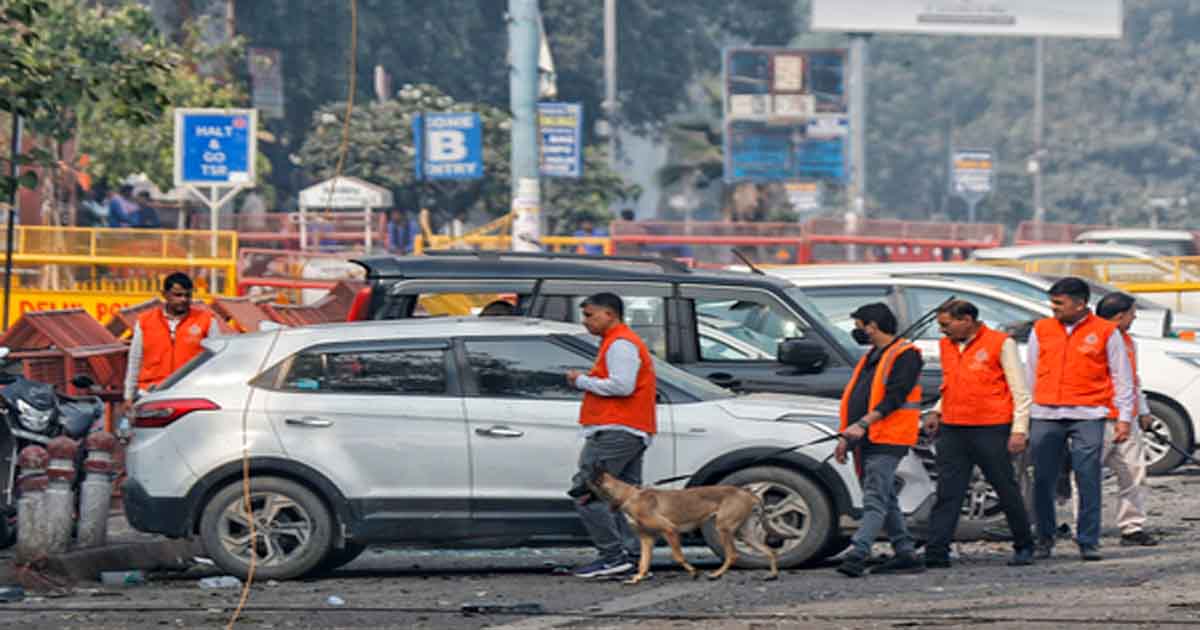
The investigation into last year’s Red Fort car blast in Delhi unearthed several crucial details about the attack and the manner in which the Faridabad module had been established.
Investigators were particularly struck by the meticulous planning behind the attack and the precision with which members of the Faridabad module had carried out their assigned tasks.
The members of the module not only managed to stay under the radar of security agencies but also procured thousands of kg of ammonium nitrate without attracting suspicion.
Despite the elaborate planning, however, the Red Fort blast was triggered prematurely, and the execution of the attack ultimately fell short of what the perpetrators had intended.
An official said that the bigger picture that one needs to look into is the radicalisation aspect.
“The module was not merely planning a major attack aimed at causing mass casualties. It had a much larger agenda, which was to overthrow the government in New Delhi,” the official added.
The literature recovered from the Faridabad module, also known as the ‘Doctor’s module’, along with its plans, points to an agenda that went far beyond carrying out terror attacks.
According to the official, the module also intended to impose Sharia law in India. To achieve this objective, its members had allegedly planned to overthrow the Union government, the official said.
Another official said that the mindset of these doctors part of the Faridabad module was dangerous.
“However, the bigger danger is that many more within the country may try and replicate what this module did or may be in the process of doing so,” the official said.
Such radicalisation modules tend to create a chain effect.
Outfits such as the Islamic State and Al-Qaeda inspire such modules to come up in large numbers across the country.
These terror groups are aware that to throw out a government and implement the Sharia law cannot be undertaken by one single module. The idea is to have scores of such modules across the country.
Although these modules would not be interconnected their goals would remain the same, the official said.
An Intelligence Bureau official said that one must also take into account the modus operandi of the Faridabad module.
“They were not just planning on creating an uprising by relying heavily on propaganda material. This group operated in seclusion and planned on a series of deadly attacks across North India. The idea was to inflict maximum damage and then pressurise the government to step down,” the official added.
Post the multiple blasts, such modules usually tend to focus on messaging.
The attack coupled with propaganda makes a module extremely dangerous. Such a modus-operandi also tends to stress out the security mechanism in the country.
Now imagine if multiple such modules are in operation and carry out similar activities simultaneously.
They manage to cover the length and breath of the country, while also posing an immense challenge to the security agencies, the official said.
With their ground operations severely curtailed, the Islamic State and Al-Qaeda have increasingly focused on region-specific radicalisation efforts, aiming to establish Faridabad-style modules in different pockets across states.
These modules are designed to function independently, without any operational links with one another. This makes it difficult for investigators to establish connections between them and trace the wider network behind their activities.
In many ways, such modules resemble lone actors. Their members operate without direct contact with other groups, acquire the skills required to manufacture explosives on their own and independently arrange the materials needed for their activities.
They are also largely self-funded, leaving investigators with little or no financial trail to follow. Modules inspired by the Islamic State and Al-Qaeda have been structured to function much like lone actors, thereby making detection and investigation more challenging, an official said.

Two men arrested for forcibly pulling a woman’s gold chain and fleeing in Kandivali, a case of theft registered against both

‘Took time to get used to Indian food but learnt slowly’: Sonia Gandhi shares her love for India’s cuisines

Red Fort car blast probe exposes blueprint for spread of terror modules across India

‘Conspiracy, not accident’: NCP on Ajit Pawar death

Shehzad Poonawalla presents winning trophy for ‘Rise and Fall 2’ to Maharashtra CM, Devendra Fadnavis

Rahul, Cong ecosystem want to force regime change: BJP after Neha Bora praises B’desh Gen-Z protest

BJP pays tribute to ex-President Abdul Kalam, recalls his enduring influence on generations of India’s youth

Attack on democratic rights: INDIA Bloc leaders on detentions of anti-ECI protestors

Congress trying to protect 3 crore Bangladeshi infiltrators in voter list: HM Shah

Online betting: ED conducts searches at 20 premises in Mumbai, Pune, Hyderabad
-

 Crime4 years ago
Class 10 student jumps to death in Jaipur
-

 Maharashtra2 years ago
Mumbai Local Train Update: Central Railway’s New Timetable Comes Into Effect; Check Full List Of Revised Timings & Stations
-

 Maharashtra2 years ago
Mumbai To Go Toll-Free Tonight! Maharashtra Govt Announces Complete Toll Waiver For Light Motor Vehicles At All 5 Entry Points Of City
-

 Maharashtra2 years ago
False photo of Imtiaz Jaleel’s rally, exposing the fooling conspiracy
-

 National News2 years ago
Ministry of Railways rolls out Special Drive 4.0 with focus on digitisation, cleanliness, inclusiveness and grievance redressal
-

 Maharashtra2 years ago
Maharashtra Elections 2024: Mumbai Metro & BEST Services Extended Till Midnight On Voting Day
-

 National News2 years ago
J&K: 4 Jawans Killed, 28 Injured After Bus Carrying BSF Personnel For Poll Duty Falls Into Gorge In Budgam; Terrifying Visuals Surface
-

 Crime2 years ago
Baba Siddique Murder: Mumbai Police Unable To Get Lawrence Bishnoi Custody Due To Home Ministry Order, Says Report