
National News
PM launches 5G services, calls it ‘historic day’ for 21st century India

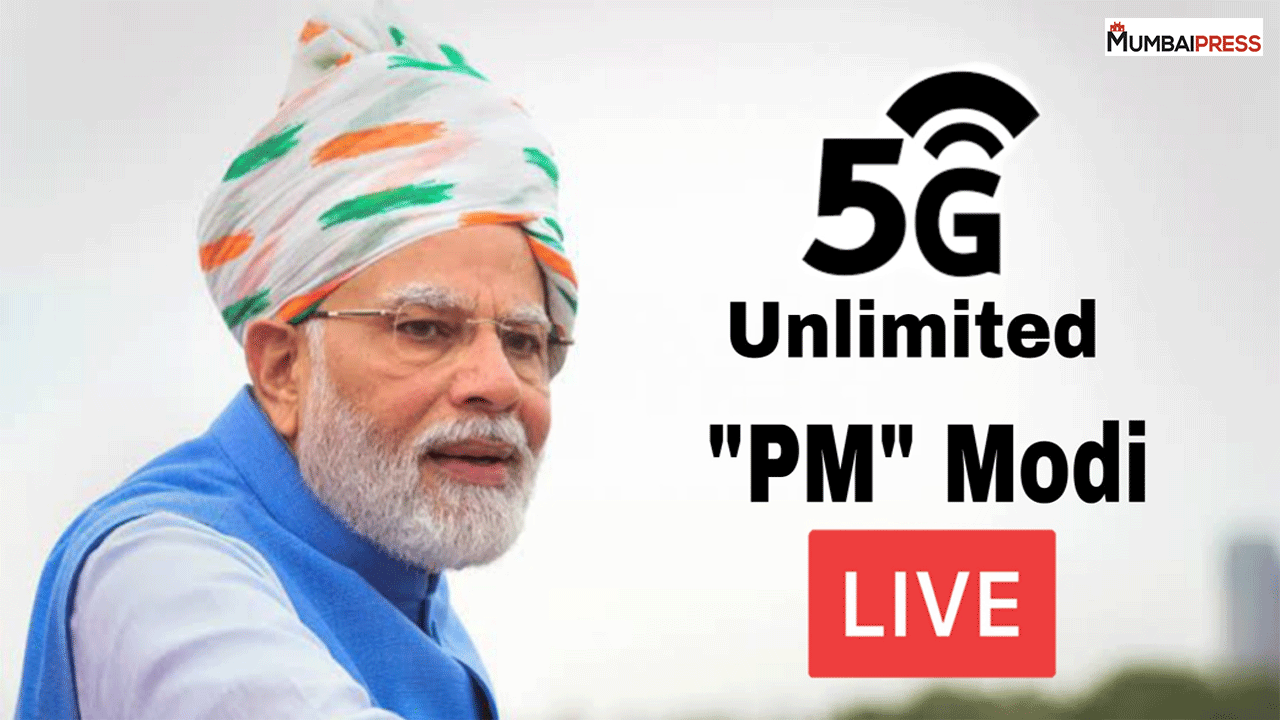
Prime Minister Narendra Modi on Saturday launched 5G services in the country, saying it was a “historic day for 21st century India” and added that the technology will revolutionise the country’s telecom sector.
Launching the service at the four-day India Mobile Congress (IMC) 2022 at Pragati Maidan in the national capital, Modi spoke about the benefits of 5G in India and how the service will help the country’s technological revolution.
He also spoke about key pillars that will support the Digital India movement, including the need for affordable technology and a widespread network.
The Prime Minister stressed on manufacturing of smart phones in India and said how it will ensure a reduction in device costs.
“Till 2014 we used to import 100 per cent of our mobile phones. That’s why we decided to become ‘atmanirbhar’ in this particular area. In India, we now have 200 mobile phone manufacturing units now,” he said.
Modi also mentioned that India had 25 crore internet connections back in 2014, a number which has now increased to 85 crore.
More internet users are coming onboard from rural areas, he said, adding that 5G will play a key role in how users new and old will benefit from the internet and its possibilities.
“Many people used to make fun of my atmanirbhar Bharat, but we increased mobile phone manufacturing units in India. Eight years ago, there were only two mobile manufacturing units in India. Today, there are over 200 units. We are at number 2 in the world and are exporting our mobile phones to world,” the Prime Minister noted.
Modi said that at the time of 2G, 3G, 4G, India was dependent on other natios for technology, but with 5G, the country has created a new history.
“With 5G, India is setting a global standard in telecom technology for the first time.”
The Prime Minister went on to say that with the increase in digital connectivity, the country has witnessed a multiplier effect.
“We have taken digital from the elite to the grassroots in India, and this has led to innovation in the country.”
Earlier, the Prime Minister virtually interacted with metro workers, who were present inside a tunnel, via 5G technology.
5G will be launched in select cities on Saturday and it will progressively cover the entire country over the next couple of years.
The cumulative economic impact of 5G on India is estimated to reach $450 billion by 2035.


National News
NEET-PG 2026: SC issues notice on plea seeking candidate-wise disclosure of questions, options, and answers

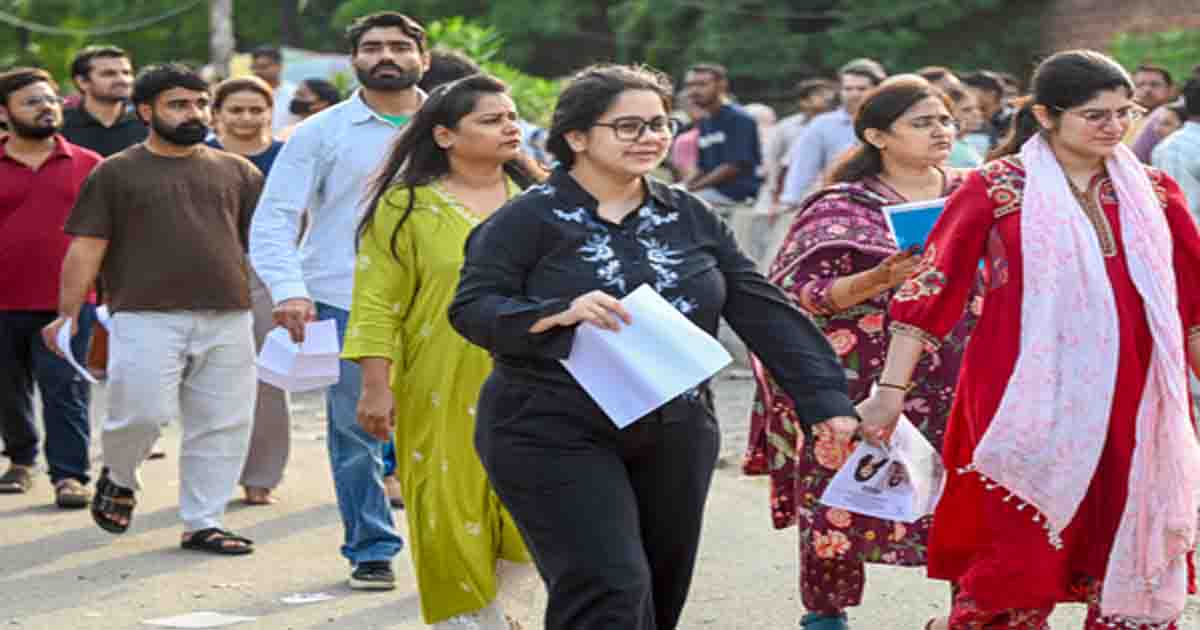
New Delhi, Oct 15: The Supreme Court on Thursday issued notice on a plea filed by the Democratic Medical Association and a group of NEET-PG 2026 aspirants challenging the manner in which the National Board of Examinations in Medical Sciences (NBEMS) disclosed the answer key and candidate responses for the postgraduate medical entrance examination.
A Bench of Justices P.S. Narasimha and Alok Aradhe issued notice to the Union of India, the NBEMS, and the National Medical Commission (NMC), and tagged the matter with pending petitions concerning the NEET-PG examination.
The plea challenges the October 1 notice issued by NBEMS, titled “Scorecard and Answer Key of NEET-PG 2026”, under which candidates can access question-wise evaluation details through their individual applicant login.
NEET-PG 2026 was conducted on August 30, while the results were declared on September 24.
Following the declaration of results, several candidates sought access to the actual question paper, official answer key and recorded responses to independently verify their scores.
According to the petition, the existing disclosure mechanism provides the Question ID, response status, numerical correct-answer ID, the option selected by the candidate, and the marks awarded for each question.
However, it does not provide the actual questions or the complete text of the options in the sequence in which they appeared during the examination.
“The candidate is consequently shown a coded numerical matrix, but is not able to correlate such identifiers with what he or she actually saw and answered during the examination,” the petition said.
The petitioners have contended that NBEMS adopts candidate-specific shuffling of both the sequence of questions and the order of options, making it difficult for candidates to verify whether the correct answers and recorded responses have been accurately mapped to their examination records.
“Thus, merely informing a candidate that, against a particular Question ID, ‘Option 2’ was correct and ‘Option 3’ was selected does not enable the candidate to ascertain what the underlying question was, what Options 2 and 3 actually contained, or whether the correct question and option sequence have been accurately mapped to that candidate’s examination record,” the plea stated.
It further argued that the existing mechanism may allow candidates to reconcile their marks arithmetically but does not enable independent verification of the substantive answer key or the mapping of questions and options to individual candidates.
The petitioners have maintained that, without access to the actual questions and corresponding options, candidates cannot meaningfully challenge ambiguous questions, identify instances where multiple answers may be correct or establish errors in the officially designated answers.
Seeking directions to the NBEMS, the plea has urged the apex court to make available a candidate-wise mapped question paper and response sheet containing the actual questions in the sequence presented during the examination, the complete options, recorded responses, correct answers, and marks awarded.
It has also sought a downloadable and permanent electronic copy of each candidate’s examination record, along with a reasonable, time-bound mechanism for raising question-wise objections.
The petitioners have proposed that such objections be examined by a duly constituted subject-expert committee, with consequential correction of scores and ranks wherever errors are established. The plea also refers to previous proceedings concerning transparency and verifiability in NEET-PG examinations and seeks appropriate guidelines or standard operating procedures to govern post-examination transparency in future postgraduate medical entrance examinations.
The matter is likely to be listed next on October 26.
Senior advocate Sidharth Suri, assisted by advocate Satyam Singh Rajput, appeared for the petitioners.
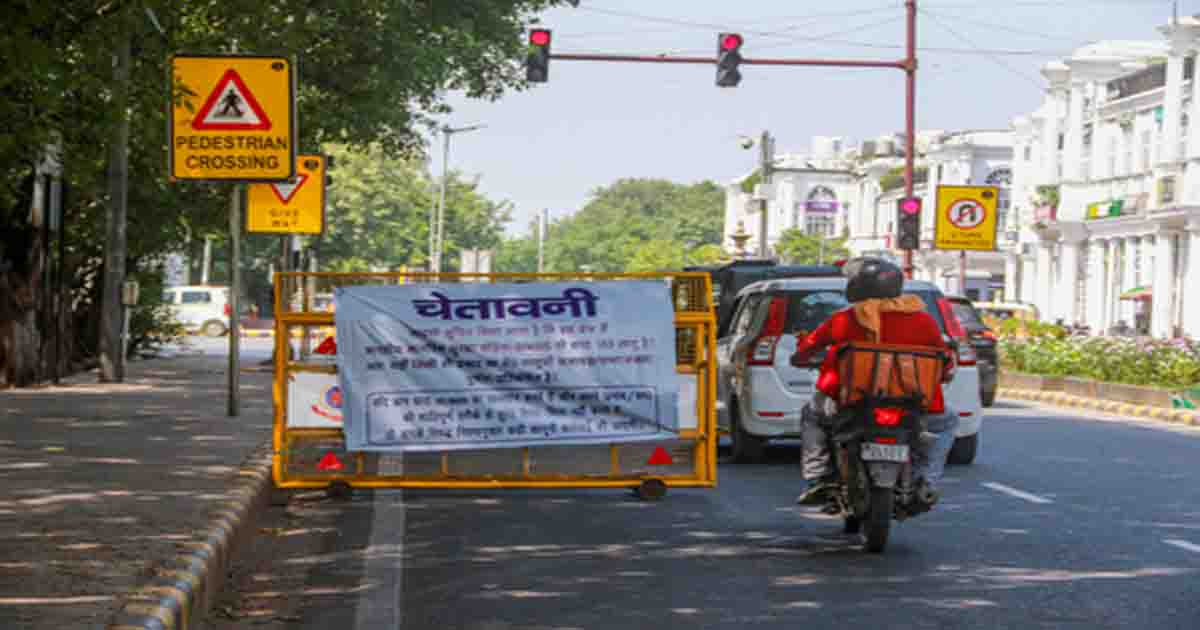
New Delhi, Oct 15: The Delhi High Court on Thursday recorded the assurance given by the Delhi Police that all possible measures under the law would be taken to control the proposed protest by the Cockroach Janta Party (CJP) and its founder Abhijeet Dipke at Connaught Place on Friday.
A Bench of Acting Chief Justice (ACJ) Nitin Wasudeo Sambre and Justice Sanjay Sharma took on record the assurance given by Additional Solicitor General (ASG) Chetan Sharma, appearing for the Centre and Delhi Police, after a petitioner expressed apprehension that the proposed demonstration could disrupt business activities in Connaught Place.
The High Court was hearing a plea filed by Anil Kumar Gupta, a street vendor at Palika Bazar in Connaught Place, seeking directions to restrain the CJP from organising any agitation, demonstration, march or gathering at Central Park or any other place not designated as a protest venue.
Senior advocate Sacchin Puri, appearing for the petitioner, submitted that the proposed demonstration could severely affect business activities in the area, particularly as it coincides with a major Hindu festival and the festive weekend.
Puri urged the High Court to directly restrain Dipke from holding the protest, stating that the traders had already suffered substantial losses over the past week and would be severely affected if the disruption continued through the weekend.
The ACJ Sambre-led Bench was informed that Dipke had already been served notice through email.
Recording the assurance given by the Centre’s law officer, the High Court said that the petitioner’s apprehensions would be addressed and all possible measures under the law would be taken to control and regulate the activities of the CJP founder.
“The respondents (authorities) have already taken action to control and regulate the activities of respondent no. 6 (Dipike) and all possible measures under the law will be taken,” the High Court recorded in its order, posting the matter for further consideration on November 3.
The plea was mentioned before the Acting Chief Justice earlier in the day by Puri, who sought urgent intervention to prevent the proposed gathering, apprehending that it could lead to traffic congestion, disruption of public life, and financial losses to traders in Connaught Place.
The proposed demonstration follows a call by CJP founder Dipke asking people to gather at Central Park at 5 p.m. on Friday to wave the national flag in protest against the arrest of the party’s co-conveners, Saurav Das and Ashutosh Ranka.
In a video message posted on X on Wednesday, Dipke described the proposed agitation as ‘Lehra do Tiranga’ and urged people to participate, asserting that waving the national flag was not a crime.
Das and Ranka were sent to five days’ judicial custody on Wednesday in connection with the Jantar Mantar trespassing case, while another CJP leader, Ajinkya Shinde, was released on a personal bond. The three party members were placed under preventive arrest over allegations of trespassing at Jantar Mantar, which has been de-notified as a designated protest site.
They were booked for alleged trespassing, violation of bond conditions, and obstruction of public servants in the discharge of their duties.
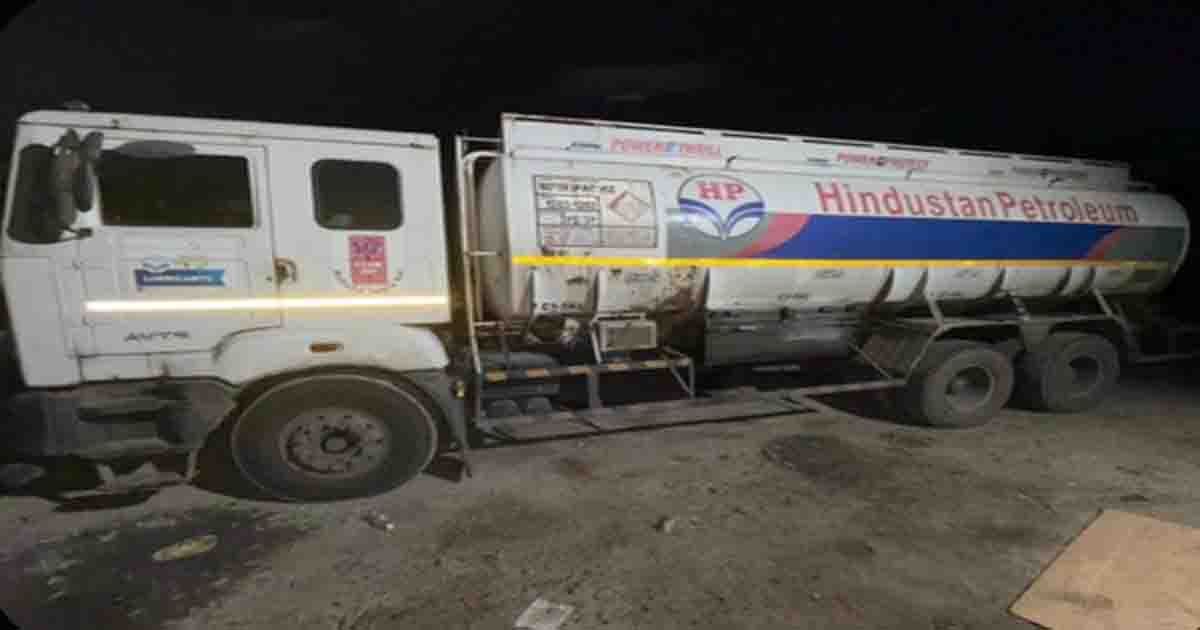
Anand, Oct 15: Gujarat Police’s State Monitoring Cell (SMC) has seized fuel, chemicals and vehicles worth a combined Rs 1.72 crore in two separate raids in Anand district, arresting seven people in connection with the alleged theft of petroleum products and chemicals, officials said on Thursday.
In the first raid conducted at the premises of Rajpurohit Hotel on National Highway 48 along the Anand-Nadiad highway in Boriyavi, police seized 10,290 litres of diesel and petrol worth Rs 20.08 lakh, two vehicles valued at Rs 23 lakh, and four mobile phones worth Rs 15,500.
The total value of the seized property was Rs 43.25 lakh. A team led by State Monitoring Cell Police Inspector M.K. Malviya conducted the raid. Four people were arrested, and a case was registered at Anand Rural Police Station on October 14 under Sections 287, 316(4), 317(4), 61(2) and 112(2) of the Bharatiya Nyaya Sanhita, 2023, and Sections 3, 7 and 8 of the Essential Commodities Act, the statement said.
The arrested accused were identified as Narvarbhai alias Natubhai Lakum, a resident of Dholka in Ahmedabad district; Swaroop Singh Rajpurohit, a resident of Barmer district in Rajasthan; Dhan Singh Rajpurohit, also from Barmer district; and Laxmanbhai Bharwad, a resident of Boriyavi in Anand district.
In a separate operation, the State Monitoring Cell seized chemicals weighing 65,312 kg, valued at Rs 71.84 lakh, from a location in Danteli village along the Vasad-Tarapur highway in Petlad taluka.
The seizure also included six plastic barrels worth Rs 700, three vehicles valued at Rs 57 lakh, and four mobile phones worth Rs 20,000. The total value of the seized property was Rs 1.29 crore.
The raid was conducted by Police Inspector A.J. Chauhan. A case was registered at Petlad Rural Police Station on October 14 under Sections 303(2), 316(3), 317(1), 317(2), 61(2)(a) and 54 of the Bharatiya Nyaya Sanhita, 2023.
Three people were arrested in the second case: Dharmendra Singh alias Munna Rajput and Rajan Singh Rajput, both residing in Kalali of Vadodara and originally from Sultanpur district in Uttar Pradesh; and Ramvikas Yadav, a resident of Pratapgarh district in Uttar Pradesh.
A notice was issued to a 15-year-old boy, who is also from Uttar Pradesh and resides in Vadodara. Police identified two other accused, Vivek Vanvasi, from Pratapgarh district, and a person identified only as Vijay, as wanted.
Further investigation is ongoing in both cases.

NEET-PG 2026: SC issues notice on plea seeking candidate-wise disclosure of questions, options, and answers

Delhi HC records police assurance to take all legal measures to control CJP protest

Nepal, World Bank explore ‘catastrophe bond’ to protect against disaster risks

Death toll from school roof collapse in Pakistan’s Peshawar rises to 33

Imran Khan to approach Bombay High Court, challenge notice issued by FRRO over his departure from India

INDIA bloc begins protest march against ECI

Maha Congress stages agitation against Gyanesh Kumar

Complaint against Netflix & Mukesh Chhabra for inappropriate language on ‘India’s Got Latent 2’

Mumbai Cyber Cell arrests 6 members of organized gang in major operation; Beware of cyber fraudsters; Digital arrest has no legal status; DCP Bajrang Bansode

Bombay HC warns Vijay Mallya against posting court documents on social media
-

 Crime4 years ago
Class 10 student jumps to death in Jaipur
-

 Maharashtra2 years ago
Mumbai Local Train Update: Central Railway’s New Timetable Comes Into Effect; Check Full List Of Revised Timings & Stations
-

 Maharashtra2 years ago
Mumbai To Go Toll-Free Tonight! Maharashtra Govt Announces Complete Toll Waiver For Light Motor Vehicles At All 5 Entry Points Of City
-

 Maharashtra2 years ago
False photo of Imtiaz Jaleel’s rally, exposing the fooling conspiracy
-

 National News2 years ago
Ministry of Railways rolls out Special Drive 4.0 with focus on digitisation, cleanliness, inclusiveness and grievance redressal
-

 Maharashtra2 years ago
Maharashtra Elections 2024: Mumbai Metro & BEST Services Extended Till Midnight On Voting Day
-

 National News2 years ago
J&K: 4 Jawans Killed, 28 Injured After Bus Carrying BSF Personnel For Poll Duty Falls Into Gorge In Budgam; Terrifying Visuals Surface
-

 Crime2 years ago
Baba Siddique Murder: Mumbai Police Unable To Get Lawrence Bishnoi Custody Due To Home Ministry Order, Says Report