
General
Plea against Delimitation Commission in Jammu and Kashmir, Supreme Court seeks Centre, Election Commission response

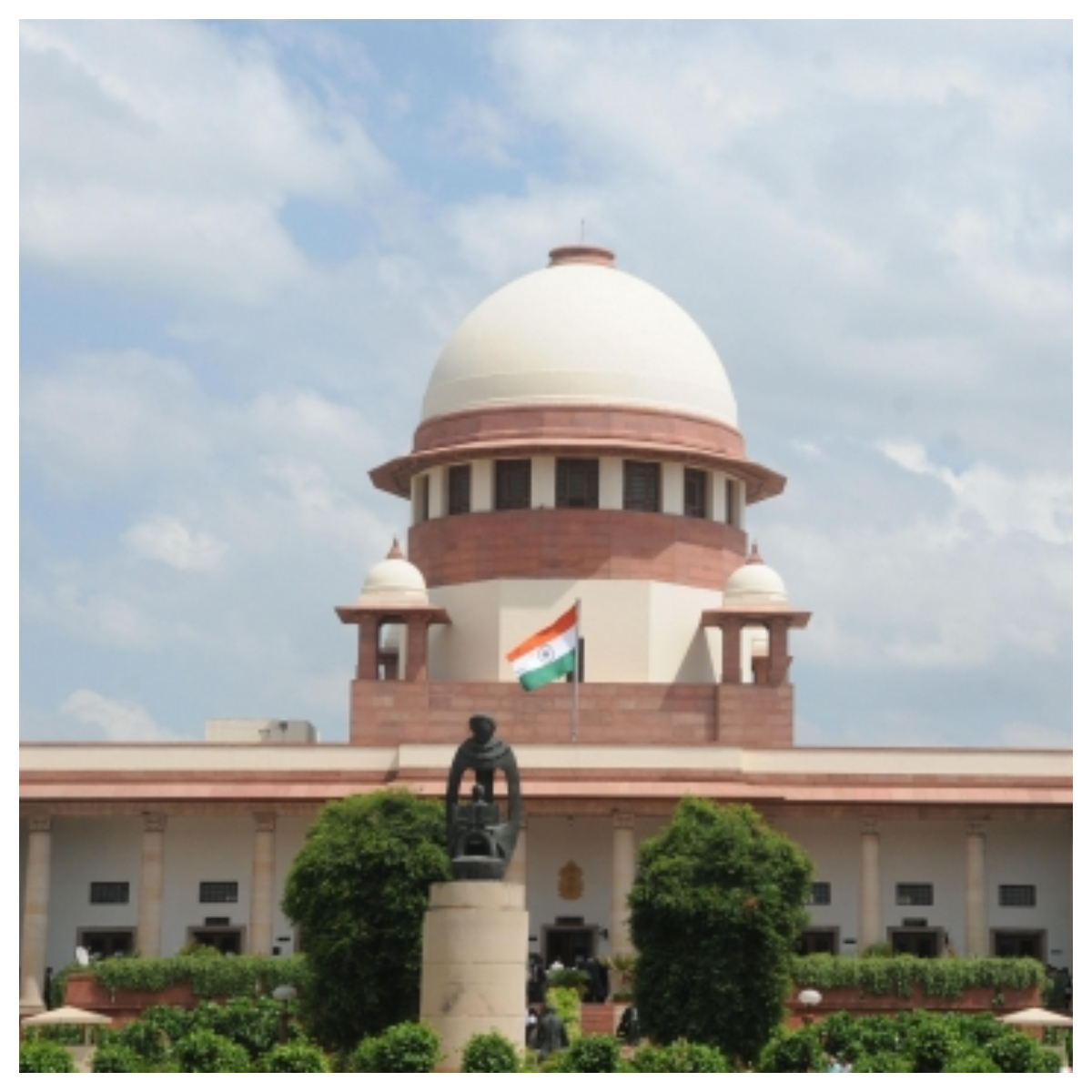
The Supreme Court on Friday sought reply from the Centre, the Jammu and Kashmir administration, and the Election Commission (EC), on a plea against the constitution of the Delimitation Commission to redraw the Assembly and Lok Sabha constituencies in the Union Territory.
Counsel representing the petitioners submitted before a bench headed by Sanjay Kishan Kaul that the delimitation exercise, which was carried out recently, was contrary to the scheme of the Constitution, as the alteration of boundaries could not be done.
The bench, also comprising Justice M.M. Sundresh, then asked counsel why the petitioners did not challenge the constitution of the Commission, which was formed some time ago. As counsel contended it is the Election Commission, as per delimitation order, which is empowered to do any changes, the bench further queried from the petitioners’ counsel as to why his clients did not challenge the formation of the Commission itself?
Solicitor General Tushar Mehta said the plea contends that delimitation can be conducted only by the EC and not the Delimitation Commission.
While objecting to some submissions, the bench told counsel that Kashmir was always part of India and just a special provision was removed.
Mehta said their case is that after Article 370 is gone, the census will only take place in 2026. He further added that delimitations are of two types: one based on geography done by the Delimitation Commission, and the other, by the Election Commission in connection with reservation of seats.
The petitioner’ counsel further argued that the government will place the delimitation order before Parliament, which would further complicate the matter. To this, the bench asked why the petitioners didn’t take it up two years ago.
After hearing the arguments, the top court issued notice to the Centre, J&K administration, and the poll panel, giving them six weeks to file their response, and scheduled the matter for further hearing on August 30.
The plea moved by Haji Abdul Gani Khan and Dr. Mohammad Ayub Mattoo, both residents of Kashmir, sought directions seeking a declaration that increase of number of seats from 107 to 114 in Union Territory of Jammu & Kashmir is ultra vires the constitutional provisions such as Articles 81, 82, 170, 330, and 332 and statutory provisions particularly under section 63 of the Jammu & Kashmir Reorganisation Act, 2019.
The plea also urged the top court to issue to direction to declare notification issued on March 6, 2020, constituting the Delimitation Commission to take up delimitation in the UT of J&K and states of Assam, Arunachal Pradesh, Manipur and Nagaland is violative of Article 14 of the Constitution.
“In fact, in the State of Jammu and Kashmir, the census operation was completed in 2001, but the delimitation was done in 1995. Even on this count, the entire process adopted is unconstitutional as there is no population census operation during 2011 at all for Jammu and Kashmir,” said the plea.
The plea argued that if August 5, 2019 was to unite the Jammu and Kashmir state with India, then the delimitation process defeats the “new order” of one nation and one Constitution in the country. It said: “While Article 170 of the Constitution of India provides that the next delimitation in the country will be taken up after 2026, why has the UT of Jammu and Kashmir been singled out?”



MIRA-BHAYANDAR, Oct 24 — In a major crackdown on interstate narcotics trafficking, the Crime Detection Branch Unit 4 of the Mira-Bhayandar, Vasai-Virar (MBVV) Police successfully dismantled a chemical factory in Telangana that was manufacturing raw materials for Mephedrone (MD) drugs. The recent raid marks a significant milestone in an ongoing investigation, bringing the total number of arrests in this sprawling drug syndicate to 25.
The operation traces its roots back to June 24, 2026, when police arrested two individuals—Avinash alias Sonu Loknath Iyer (22) and Ravikant Omprakash Ram (23)—near Priya Washing Center in Nallasopara East. Authorities seized 112 grams of MD worth Rs. 3,36,000 from their possession, registering an FIR at the Tulinj Police Station under the Narcotic Drugs and Psychotropic Substances (NDPS) Act.
Following the initial arrests, senior officials transferred the investigation to Crime Branch Unit 4 for a more in-depth probe. This intensive investigation previously led to the arrest of 19 accused and the unearthing of two illicit MD manufacturing factories. These factories were operating on agricultural lands in Gram Sandhan, Kutch, Gujarat, and Kosada Kala in Prayagraj, Uttar Pradesh. Prior to the latest raid, police had already seized 69.871 kilograms of MD, cash, 260 liters of chemicals, and lab equipment.
The continued investigation resulted in the arrest of five more individuals from various locations. These newly arrested suspects include:
- Murtuja Mohammadbhai Patrawala alias Monto alias Hasnain Bhopali (36) from Nandurbar.
- Shubham Vinod More (23) from Buldhana.
- Salim alias Salimbhai Ismail alias Ismail Dola (61) from Mumbai.
- Sabir Mohammad Devlekar alias King Memon alias Sabirali (42) from Mumbai.
- Mohammad Tehrim Abdul Rais Siddiqui (37) from Kanpur, Uttar Pradesh.
Interrogations revealed that a 25th accused, Ramesh Babu Sake, a resident of Medchal-Malkajgiri, Hyderabad, was illegally manufacturing and supplying an NDPS-controlled chemical powder, “2-BROMO-4-METHYLPROPIOPHENONE,” which is essential for producing MD drugs. He was operating out of IDA Pashamylaram in Sangareddy district, Telangana.
Acting on this intelligence, a team from Crime Branch Unit 4 raided the location on October 21, 2026, with the assistance of the Patancheru Police from the Cyberabad Police Commissionerate. The team successfully apprehended Ramesh Babu Sake and destroyed his factory. Police seized 44.699 kilograms of the chemical powder worth Rs. 27,06,740, along with other chemicals and laboratory equipment.
To date, the MBVV police have arrested 25 individuals involved in various roles—including chemical suppliers, drug manufacturers, smugglers, peddlers, and financial facilitators—from Nallasopara, Mumbai, Kalyan, Neral, Jalgaon, Gujarat, Uttar Pradesh, and Telangana.
The extensive operation was executed by Crime Branch Unit 4 under the guidance of Commissioner of Police Niket Kaushik, Additional Commissioner Sanjay Shintre, DCP (Crime) Sandeep Doiphode, and Senior PI Nitin Patil. The raiding team was led by Police Inspector Pramod Badakh, along with API Pravin Bhosale, API Dattatray Sarak, PSI Umesh Bhagwat, and other personnel, supported by the Cyber Cell.
Maharashtra
Action under the ‘Pedestrian First’ initiative by the ‘G-North’ ward of the Mumbai Municipal Corporation

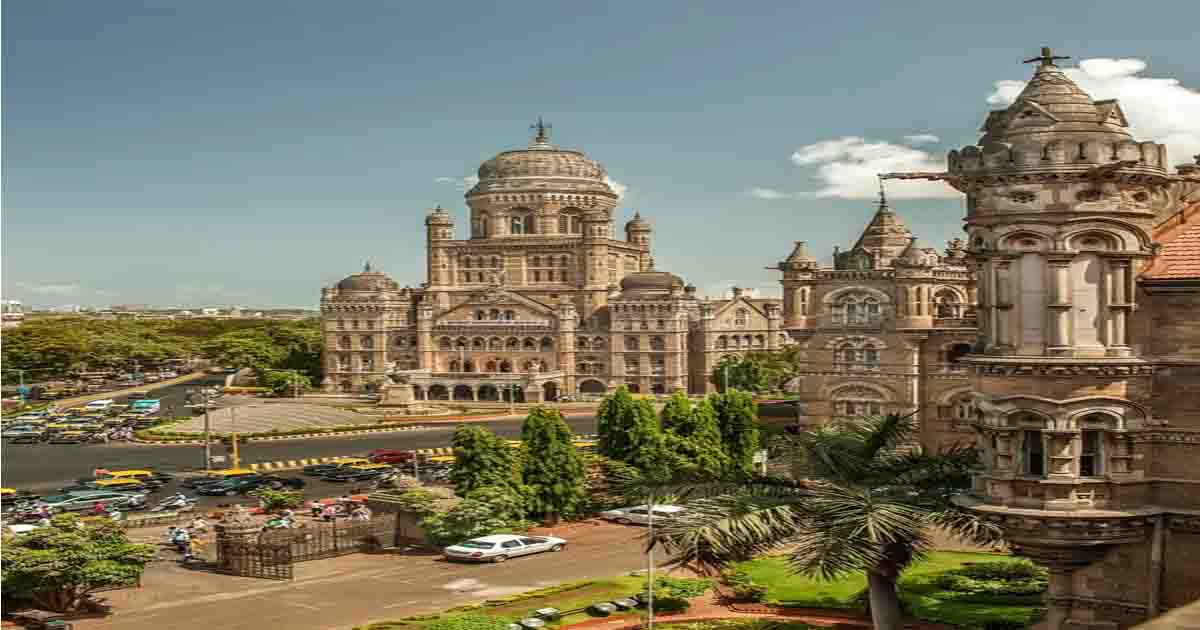
To ensure the unobstructed movement of pedestrians on footpaths, the Brihanmumbai Municipal Corporation (BMC) is implementing an initiative called ‘Pedestrian First’. In this regard, an enforcement drive was carried out today (October 23, 2026) in Dadar, near the ‘Late Maa Saheb Meenatai Thackeray Flower Market’ and along ‘Senapati Bapat Marg’. During this operation, 12 unauthorized structures—including temporary tarpaulin sheds and illegal platforms—were removed, and 60 hawkers obstructing the footpaths were cleared from the area. This operation was conducted by the BMC’s ‘G-North’ Ward.
Under the guidance of Municipal Commissioner Ashwini Bhide, the BMC is effectively implementing the ‘Pedestrian First’ initiative. The objective of this initiative is to clear footpaths of unauthorized hawkers and encroachments, ensuring they remain free from any obstructions.
In this context, the aforementioned action was carried out under the guidance of Deputy Municipal Commissioner (Zone-2) Prashant Sapkale and the leadership of Assistant Commissioner (G-North Ward) Yogesh Desai. Under this initiative, 12 unauthorized structures—including temporary sheds and illegal platforms—were removed in Dadar, near the ‘Late Maa Saheb Meena Tai Thackeray Flower Market’ and along ‘Senapati Bapat Marg’. Additionally, 60 street vendors who were obstructing the footpaths were cleared from the area. Adequate police personnel were deployed on-site during the operation.
Meanwhile, the Municipal Corporation is taking measures to ensure that footpaths remain open and accessible to pedestrians. Consequently, the Municipal Corporation administration has issued directives prohibiting any unauthorized construction on footpaths, as well as the placement of any items that might obstruct the path for pedestrians. Strict action will be taken against any such violations.
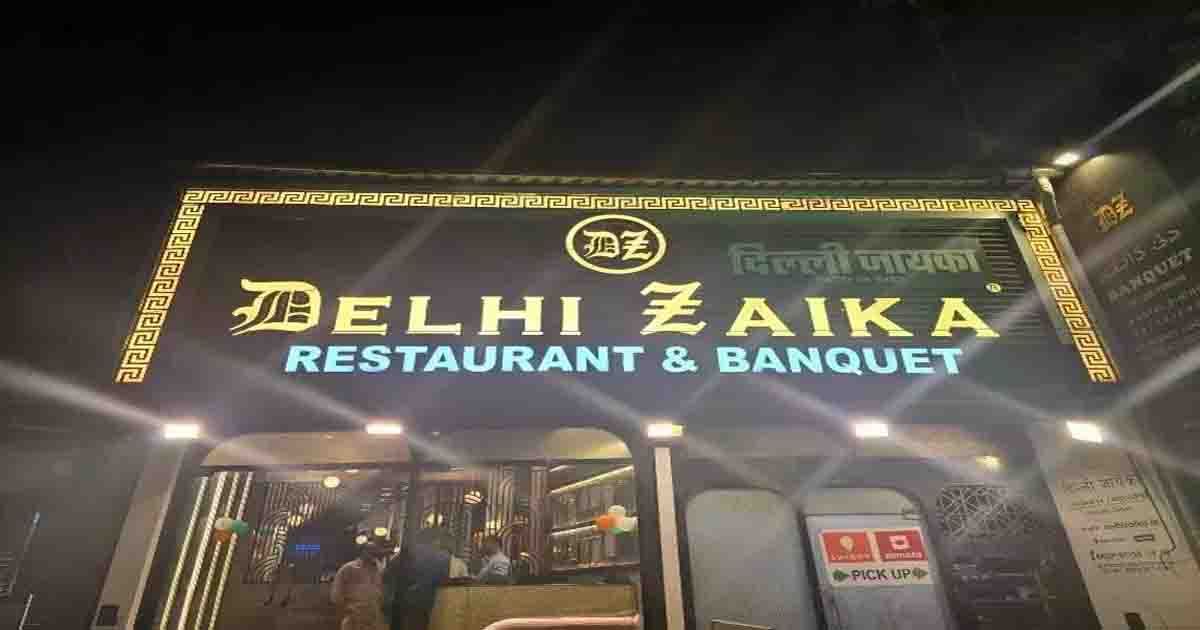
The Food and Drugs Administration (FDA) conducted a raid in Kurla, Mumbai, and suspended the license of ‘Desired Food and Hospitality’ (Delhi Zaiqa), imposing a complete ban on the sale of food items and prepared dishes at the establishment. Any violation of this order will result in further action by the FDA in accordance with the Food Safety Act.
During the inspection, the FDA observed several issues: the paint or plaster on the walls, ceilings, and doors was peeling; refrigeration and freezing facilities were inadequate; doors were not properly secured against pests; and utensils and containers were not in a condition to be cleaned effectively. The flooring had cracks, lacked proper slip resistance, and had an incorrect slope. Furthermore, food items were not stored at appropriate temperatures, and the establishment failed to follow FIFO (First-In, First-Out) or FEFO (First-Expired, First-Out) inventory management practices.
Additionally, the cooking oil used was unsuitable and unmonitored. There was no segregation between raw and cooked food, or between vegetarian and non-vegetarian items. Utensils were unclean, and the food did not meet hygiene standards. Records regarding suppliers and product expiry dates were unavailable. There was poor management of food quality, alongside unsanitary conditions in the kitchen and surrounding areas, including a lack of cleaning for floors and drains. Based on these findings, the FDA has suspended the establishment’s license for violating established rules and regulations.

Delhi Aastha Kunj Park: CCTV, 105 new lights in place after last month’s gang rape

Janhvi Kapoor admits she gained weight after Karan Johar stopped talking to her

MBVV Police Bust Interstate MD Drug Syndicate; Destroy Chemical Factory in Telangana

Most infiltrators in UP are from U’khand, says Akhilesh Yadav; CM Dhami hits back with Rampur Tiraha episode mention

Gold, silver decline sharply on weekly basis as crude prices rise

Rahul, Cong ecosystem want to force regime change: BJP after Neha Bora praises B’desh Gen-Z protest

BJP pays tribute to ex-President Abdul Kalam, recalls his enduring influence on generations of India’s youth

Attack on democratic rights: INDIA Bloc leaders on detentions of anti-ECI protestors

INDIA bloc begins protest march against ECI

Maha Congress stages agitation against Gyanesh Kumar
-

 Crime4 years ago
Class 10 student jumps to death in Jaipur
-

 Maharashtra2 years ago
Mumbai Local Train Update: Central Railway’s New Timetable Comes Into Effect; Check Full List Of Revised Timings & Stations
-

 Maharashtra2 years ago
Mumbai To Go Toll-Free Tonight! Maharashtra Govt Announces Complete Toll Waiver For Light Motor Vehicles At All 5 Entry Points Of City
-

 Maharashtra2 years ago
False photo of Imtiaz Jaleel’s rally, exposing the fooling conspiracy
-

 National News2 years ago
Ministry of Railways rolls out Special Drive 4.0 with focus on digitisation, cleanliness, inclusiveness and grievance redressal
-

 Maharashtra2 years ago
Maharashtra Elections 2024: Mumbai Metro & BEST Services Extended Till Midnight On Voting Day
-

 National News2 years ago
J&K: 4 Jawans Killed, 28 Injured After Bus Carrying BSF Personnel For Poll Duty Falls Into Gorge In Budgam; Terrifying Visuals Surface
-

 Crime2 years ago
Baba Siddique Murder: Mumbai Police Unable To Get Lawrence Bishnoi Custody Due To Home Ministry Order, Says Report