
International News
Palestinians disappointed with US policy ahead of Biden’s visit

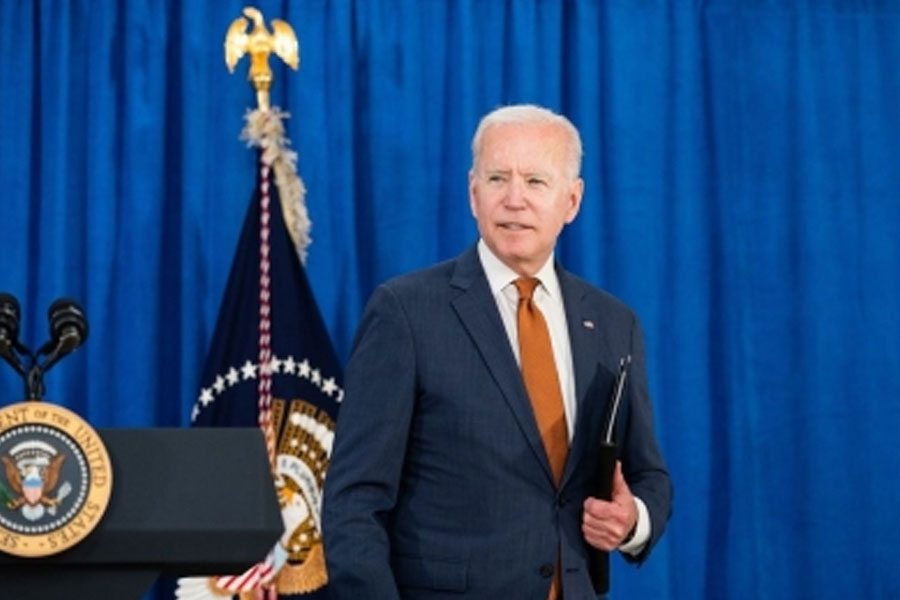
Ahead of US President Joe Biden’s first visit to the Middle East, the Palestinians are disappointed with the US’ failure to present any new peace initiative and fulfill its promises on the Palestinian cause.
Biden is scheduled to visit Israel, Palestine and Saudi Arabia during his first trip to the region which starts on Wednesday, Xinhua news agency reported.
In the past weeks, the Palestinians ramped up their voices calling on the Biden administration to deliver its promises by reopening the US consulate in East Jerusalem and the office of the Palestine Liberation Organisation (PLO) in Washington, and removing the PLO from the US terrorism list.
Meanwhile, the Palestinians criticized the US for its silence over the escalation of Israeli unilateral practices in the occupied West Bank and East Jerusalem.
Ramzi Rabah, a PLO executive committee member, said that within the PLO executive committee, there is widespread criticism of the US policy as its members urged the Palestinian Authority “not to bet on any actual US role in the region”.
The Palestinian leadership “must go to alternative options in dealing with Washington,” Rabah told Xinhua in an interview.
He said that as the US refuses to take any serious steps to stop Israel from escalating its practices against the Palestinians, “there is a need to go to the UN and the UN Security Council to create an international political initiative.”
“I think that the essence of Biden’s visit to the region is to arrange a regional alliance, to secure the American interests and confront Iran,” Rabah noted, expressing the Palestinians’ disappointment at the US inaction to break the protracted stalemate in the Israeli-Palestinian peace process.
Wassel Abu Yousef, another member of the PLO executive committee, ruled out major positive results from Biden’s visit on advancing the Palestinian cause, citing that the US has increased support for Israel and its practices against the Palestinians, including confiscating land, demolishing homes and expanding settlements.
The Palestinians “do not expect anything new from Biden’s visit to the region regarding the implementation of the US promises, except that it will result in more support for Israel,” he told Xinhua in an interview.
Frustration and despair are prevailing among the Palestinians as nearly 29 years have passed since the Palestinians signed the Oslo peace agreement with Israel, under the US sponsorship, to end the conflict between them.
The Israeli-Palestinian peace process has been deadlocked since 2014 mainly due to Washington’s refusal to change its biased pro-Israeli policy that ignores the political rights of the Palestinian people, who hope to establish an independent state on the 1967 borders with East Jerusalem as its capital.
Abdulmajid Sweilem, a Palestinian analyst from the West Bank city of Ramallah, said that Biden’s visit to the Palestinian territories is just “a political courtesy”.
Biden is expected to “repeat Washington’s old slogans of adhering to the two-state solution and protecting the Palestinian people’s right to dignity and security, among other cliches,” he told Xinhua in an interview.
“Ultimately, these cliches mean improving the lives of the Palestinians under the framework of Israeli domination and limited Palestinian self-rule,” Sweilem added.


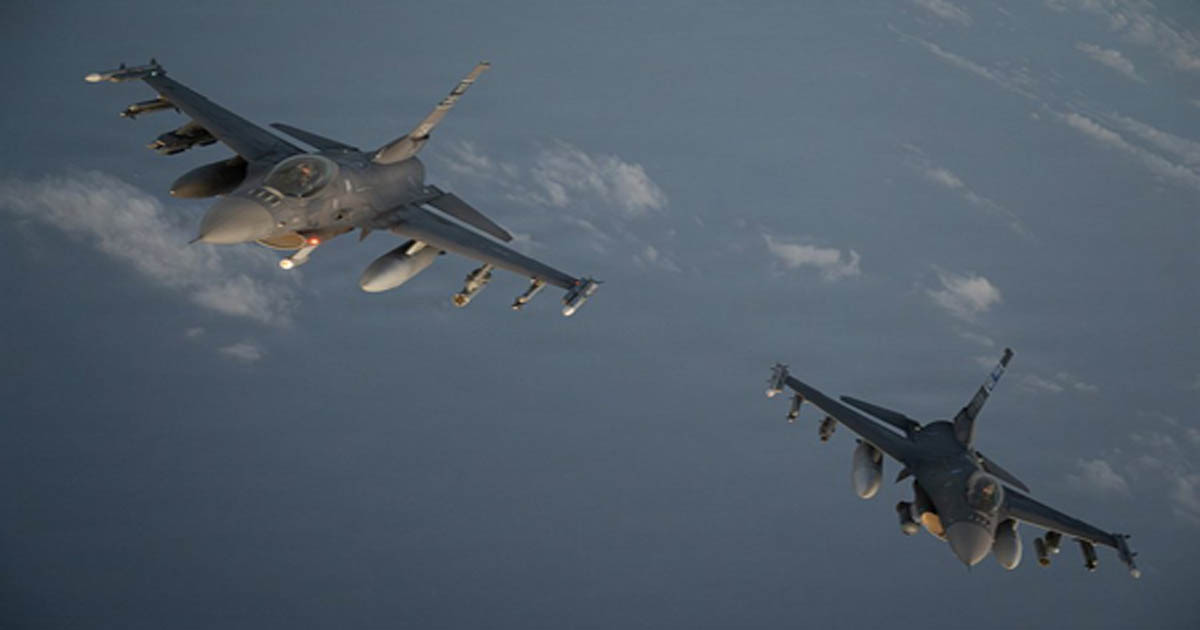
Washington, Sep 16: The US military campaign against Iran cost the Pentagon about $38 billion through July and could consume another $2 billion to $3 billion each month, according to the Congressional Budget Office.
The nonpartisan agency also warned that the conflict has depleted critical missile-defence stocks, increased energy prices and added to inflation across the American economy.
The CBO examined operational, logistical and economic costs associated with Operation Epic Fury, which began on February 28.
The initial phase lasted until a ceasefire took effect on April 8. President Donald Trump declared the ceasefire over on July 10 after attacks on tankers passing through the Strait of Hormuz.
The $38 billion estimate includes $21.7 billion to replace missiles and other munitions. It also covers $10.4 billion in additional flying hours, $2.7 billion in higher military fuel costs, $1.9 billion for equipment lost in battle and $1.5 billion in other operational expenses.
Replacing expended munitions was the largest single expense. The total included $13.1 billion for missile-defence interceptors and $7.3 billion for land-attack cruise missiles.
The estimate does not include the cost of repairing or rebuilding US military facilities damaged by Iranian attacks. It also excludes diplomatic operations, foreign assistance and the long-term cost of medical care and disability compensation for injured service members and veterans.
CBO said the Pentagon did not provide the information it requested. The agency relied instead on government databases and publicly available reports, leaving its findings subject to “considerable uncertainty”.
The report warned that the United States may have used between one-half and two-thirds of its missile-defence interceptor inventory since June 2025.
“Although DoD does not reveal the number of munitions it has on hand, a comparison of the reported expenditures of missile defense interceptors with the total numbers that DoD has purchased to date indicates that the United States has probably used between one-half and two-thirds of its inventory of those munitions since June 2025,” CBO said.
Rebuilding the stocks could take at least five years, even if the Pentagon accelerates procurement.
“The shortfall would become especially problematic if a conflict arose with an opponent whose arsenal included large numbers of ballistic and cruise missiles,” the report said.
CBO specifically identified China as possessing an arsenal that could play a major role in any military conflict involving Taiwan.
The conflict has also disrupted oil and natural gas shipments through the Strait of Hormuz and shipping through the Red Sea. CBO said the resulting increase in energy costs added 2.3 percentage points to the annualised inflation rate during the second quarter of 2026.
The agency projected that inflation in the first quarter of 2027 would be 0.5 percentage points higher than it had forecast before the war. Higher inflation is also expected to push up interest rates on US Treasury securities.
Defence Secretary Pete Hegseth told Congress in July that operations against Iran would cost $37.5 billion through September. The White House has requested $87.6 billion in supplemental funding, including $67.1 billion for the Pentagon. CBO said about $42.3 billion of the Pentagon request appeared directly related to the conflict.
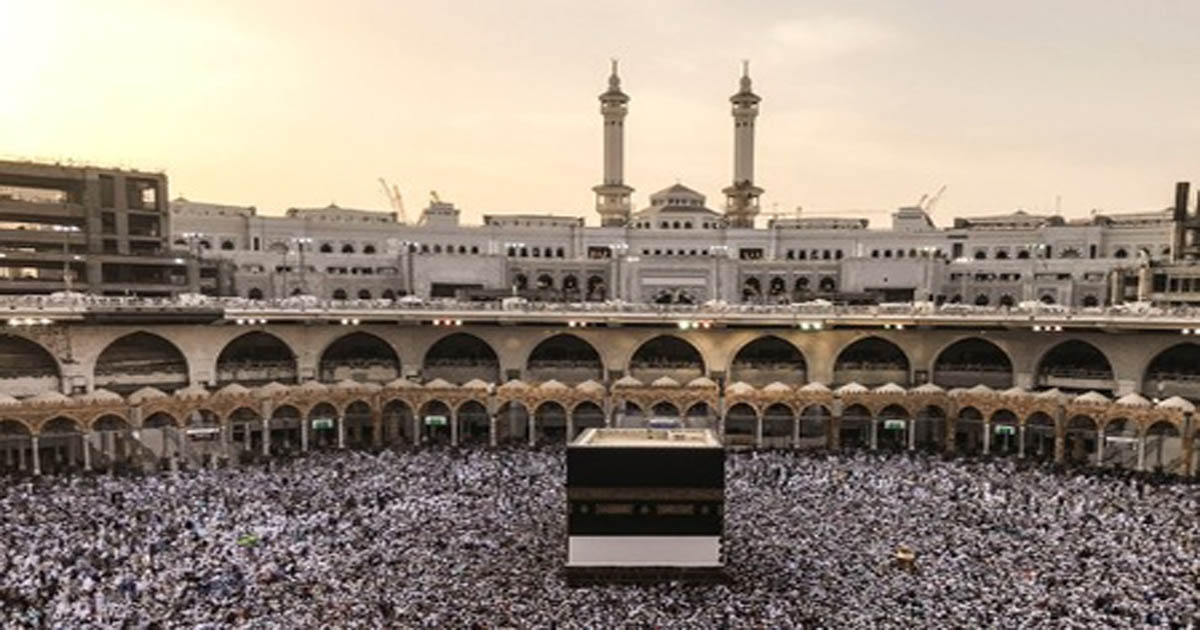
Riyadh, Sep 16: Saudi air defences intercepted and destroyed a Houthi drone south of Mecca before it entered the prohibited airspace of the holy city, the Saudi-led coalition said.
Coalition spokesman Turki Al Maliki said the security of the Two Holy Mosques and pilgrims is a “red line,” adding that the coalition would not hesitate to take necessary measures to deter further Houthi attacks.
An official from the Houthis rejected the allegation on Wednesday.
“The claims about targeting Mecca are a worn-out lie that has been used before and no longer fools anyone,” Hazem al-Assad wrote on X.
Meanwhile, Houthis said on Tuesday that Saudi warplanes had carried out 52 airstrikes across five provinces over the past 24 hours, as cross-border hostilities between the two sides continued to escalate.
Houthi military spokesperson Yahya Sarea said in a statement posted on social media platform X that F-15 and Typhoon fighter jets carried out the strikes after taking off from air bases in the southwestern Saudi city of Khamis Mushait and the western city of Taif.
Sarea said the strikes hit the southwestern province of Taiz, northern Al-Jawf, central Al-Bayda, and the northern provinces of Saada and Amran. He alleged that schools, bridges, roads and other civilian infrastructure were among the targets.
Sarea said the strikes “will not go unanswered,” suggesting further Houthi retaliation against Saudi Arabia.
There was no immediate comment from Saudi authorities on the Houthi claims.
Separately, Houthi-run al-Masirah TV said on Tuesday that 3 civilians, including 2 children, were killed and 2 others wounded in airstrikes on the Dhubab and Maqbanah districts of Taiz province.
The broadcaster also reported further strikes on Tuesday on a government complex in Khadir district, southeast of Taiz province, saying there were casualties without providing further details.
The strikes followed Houthi missile and drone attacks on Khamis Mushait, Abha and Taif on Monday, which the Saudi-led coalition said injured 13 civilians. The coalition vowed a “responsible and firm” response.
The cross-border escalation comes amid a Houthi offensive launched on September 3 that has shifted front lines along Yemen’s Red Sea coast. The group captured the strategic port city of Mocha on September 10 before advancing into the Bab al-Mandab area and seizing Mayun Island at the heart of the strait on September 11.
Yemen’s conflict erupted in late 2014 when the Houthis seized Sanaa and much of northern Yemen, prompting a Saudi-led coalition to intervene in March 2015 in support of the internationally recognised government.
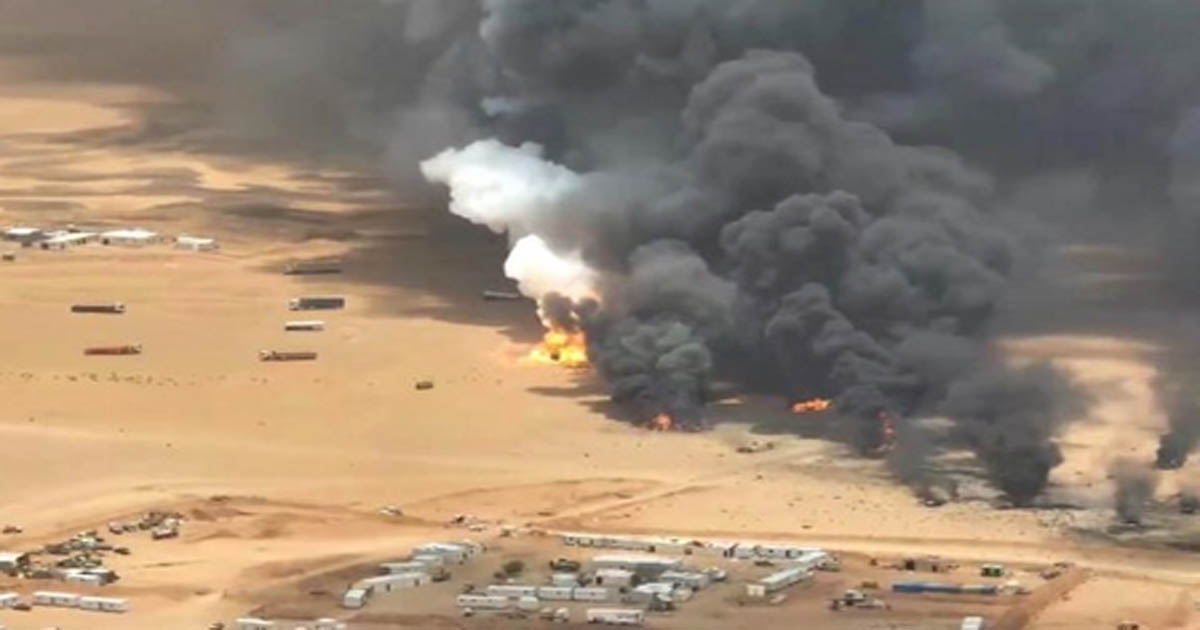
United Nations, Sep 15: UN humanitarians warned that hostilities in Yemen are forcing people to flee their homes, causing civilian casualties, and putting already stretched humanitarian operations under growing pressure.
Renewed fighting in Yemen has displaced at least 125,000 civilians since the start of September, said the UN Office for the Coordination of Humanitarian Affairs (OCHA) on Monday (local time).
The UN Human Rights Office has verified 40 civilian casualties — eight dead and 32 injured in the first two weeks of this month. Women and children account for half of those killed and more than half of those injured, reports Xinhua news agency.
OCHA said the United Nations and its humanitarian partners continue to respond, despite extremely difficult operating conditions, providing aid to thousands of households as of Saturday. However, supplies are critically low, and funding is falling short of needs.
“Humanitarian access and movements remain severely constrained due to insecurity,” the office said. “Humanitarian movements into and within several locations on Yemen’s west coast remain suspended, while key roads are restricted or impassable. OCHA once again calls on all parties to protect civilians, respect international humanitarian law, and facilitate safe and unimpeded humanitarian access.”
Earlier this month, Yemen’s government forces said that more than 500 soldiers were killed and about 1,500 wounded in month-long battles with the Houthis along the western coast, as the group mounted a sweeping advance toward the strategic Bab al-Mandab Strait.
In a statement carried by Al-Joumhouriya TV, the government’s National Resistance Forces said the casualties were recorded between August 9 and September 10, while claiming that more than 1,000 Houthi members were killed and thousands wounded. The figures could not be independently verified.
The statement said the fighting began with Houthi missile, drone and explosive-boat attacks before expanding from Hays in the southern part of the Red Sea province of Hodeidah to several fronts in neighbouring southwestern Taiz province.
The casualties came amid a sweeping Houthi offensive launched on September 3 that rapidly redrew front lines along Yemen’s Red Sea coast, with the group capturing several government-held areas in Hodeidah province and neighbouring Taiz province.

Mumbai: A person committing online cyber fraud using mobile SIM cards and various bank accounts was arrested from Goa, a major operation by the Mumbai Crime Branch.

Delhi: Murder case solved within 16 hours, husband arrested for killing wife

8th Pay Commission begins discussions in Chandigarh

Gurugram hit-and-run case: Car driver, cousin sent to two days’ police custody

Route march on Ganesh Utsav in Mumbai, police march in North Mumbai including Chembur

Four more Indian nationals rescued in Nepal, 120 cross safely from China: MEA

Gift to President Putin part of PM Modi bid to globally display India’s heritage

Nepal floods: First batch of 106 stranded Maharashtra tourists reaches India; 84 more expected today (Ld)

India, Brazil sign ICT MoU to deepen digital, telecom cooperation

Maharashtra: 17-year-old boy dies by suicide on Raksha Bandhan after emotional social media posts
-

 Crime4 years ago
Class 10 student jumps to death in Jaipur
-

 Maharashtra2 years ago
Mumbai Local Train Update: Central Railway’s New Timetable Comes Into Effect; Check Full List Of Revised Timings & Stations
-

 Maharashtra2 years ago
Mumbai To Go Toll-Free Tonight! Maharashtra Govt Announces Complete Toll Waiver For Light Motor Vehicles At All 5 Entry Points Of City
-

 Maharashtra2 years ago
False photo of Imtiaz Jaleel’s rally, exposing the fooling conspiracy
-

 National News2 years ago
Ministry of Railways rolls out Special Drive 4.0 with focus on digitisation, cleanliness, inclusiveness and grievance redressal
-

 Maharashtra2 years ago
Maharashtra Elections 2024: Mumbai Metro & BEST Services Extended Till Midnight On Voting Day
-

 National News2 years ago
J&K: 4 Jawans Killed, 28 Injured After Bus Carrying BSF Personnel For Poll Duty Falls Into Gorge In Budgam; Terrifying Visuals Surface
-

 Crime2 years ago
Baba Siddique Murder: Mumbai Police Unable To Get Lawrence Bishnoi Custody Due To Home Ministry Order, Says Report