
National News
Organisational rejig, bureaucratic reshuffle before SIR, poll process viewed as part of Trinamool’s 2026 gameplan


New Delhi, Oct 28: With Assembly elections expected in West Bengal by May-June next year, every move made by Chief Minister and Trinamool Congress Chairperson Mamata Banerjee will be under public scrutiny. Thus, the large-scale bureaucratic reshuffle carried out by her government hours before the Election Commission announced the Special Intensive Revision (SIR) of electoral rolls in the country, is suspected to be linked with the upcoming polls.
As is the ongoing organisational rejig seen as a move to strengthen a party facing incumbency, with alleged corruption, indiscipline, and infighting – sometimes leading to physical altercations – charges after about 14-and-a-half years in power.
The administrative order involves hundreds of officers being relocated or reassigned across several districts which the government described as routine, claiming that many of them had completed three years at their postings, requiring a move.
Technically, it is a norm at preventing any single officer from becoming a long-term local power broker. But in this case, the decision is being considered in certain sections as redeployment of key officials to place administrators with proven loyalty, competence, or responsiveness in critical districts before the SIR process begins.
Trinamool leaders have publicly criticised the Election Commission’s decision to conduct SIR in West Bengal, arguing the exercise risks wrongful deletion of legitimate voters and could be used to target specific communities for political advantage.
They framed the process as “politically-motivated” and warned of protests if valid electors were removed. They questioned the impartiality of the process and linked the timing of the exercise to heightened political stakes ahead of the 2026 Assembly polls.
However, the poll body clarified that as per law, electoral rolls have to be revised before every election or as per requirement, where SIR has been done eight times from 1951 till 2004, with the last taking place over two decades ago in 2002-2004.
Some changes, like frequent migration resulting in voters getting registered at more than one place, names of those deceased, including fraudulent entry of foreign nationals, among other, cannot be made in electoral rolls in the usual revision process. Such an exercise requires door-to-door visits at the booth level.
Reports – both administrative and media – have shown a demographic change in West Bengal, especially in districts bordering Bangladesh, due to decades of influx through porous borders and alleged political complicity.
Economic dominance and population growth among Muslims are allegedly altering local life, triggering tensions, as was reflected in this year’s violence in Murshidabad over the Waqf Amendment Bill.
Ruling party leaders publicly claim their absolute dominance in such areas, with poll results indicating the trend. There have been reports of certain immigrants holding voters’ identity card and participating in the poll process, without citizen status. Such voters can be identified through the process of SIR; though oversight or deliberate interference on ground level cannot be totally ruled out.
Meanwhile, in recent months, the Trinamool has undertaken widespread organisational changes at the district level to balance veteran leaders and emerging younger leaders.
The reshuffle aims to reduce factionalism, impose stricter controls, and future-proof the party machinery for securing a fourth term in power.
There also appears an attempt at a strategic recalibration from the “old vs. new” debate to a mix of prominent longstanding figures with younger faces in organisational committees and lists of future poll candidates.
The efforts involved restructuring, sometimes even abolishing, district presidents in favour of small, handpicked core committees. In Birbhum, Kolkata North, for example, district-level leadership has been moved from a single strongman to collective committees.
The party’s organisational moves may be viewed as a strategy to recentre control, reduce factionalism, and improve candidate quality – changes expected to influence party decision at considering tickets for the 2026 Assembly polls.


New Delhi, April 24: As India and New Zealand prepare to sign a Free Trade Agreement (FTA) on Monday, both sides are expected to benefit from expanded trade ties and improved market access, New Zealand Prime Minister Christopher Luxon has said.
Taking to the social media platform X, Luxon said, “We will sign a Free Trade Agreement with India on Monday.”
In a video message, Luxon said the agreement would improve market access for New Zealand exporters, particularly manufacturers of marine jet systems used in boats and exported to over 70 countries.
He added that the deal would help reduce trade barriers and strengthen commercial engagement between the two countries.
He also noted that certain exporters currently face tariffs while accessing the Indian market, and said the agreement would gradually ease such duties, improving competitiveness and supporting higher trade flows.
Luxon said the FTA would support increased business activity, employment opportunities and economic growth in New Zealand, while also strengthening bilateral trade linkages with India.
He added that the agreement would bring ‘more jobs, higher wages and more opportunities,’ highlighting the broader economic impact of the deal.
Once signed, the FTA is expected to expand trade and investment ties between the two countries and enhance export opportunities on both sides in a large and growing global market environment.
Earlier this month, legal verification of the New Zealand-India FTA was completed, with both countries agreeing to sign the pact on April 27 in the presence of a large contingent of business representatives, New Zealand Trade and Investment Minister Todd McClay said.
In a statement, McClay described the agreement as a “once-in-a-generation opportunity,” saying it would strengthen bilateral trade relations and provide improved access to each other’s markets.
He said that amid global economic and geopolitical uncertainty, strengthening trade partnerships remains important for long-term economic stability.
McClay added that signing the FTA would allow New Zealand to formally initiate parliamentary treaty examination, enabling public scrutiny of the agreement.
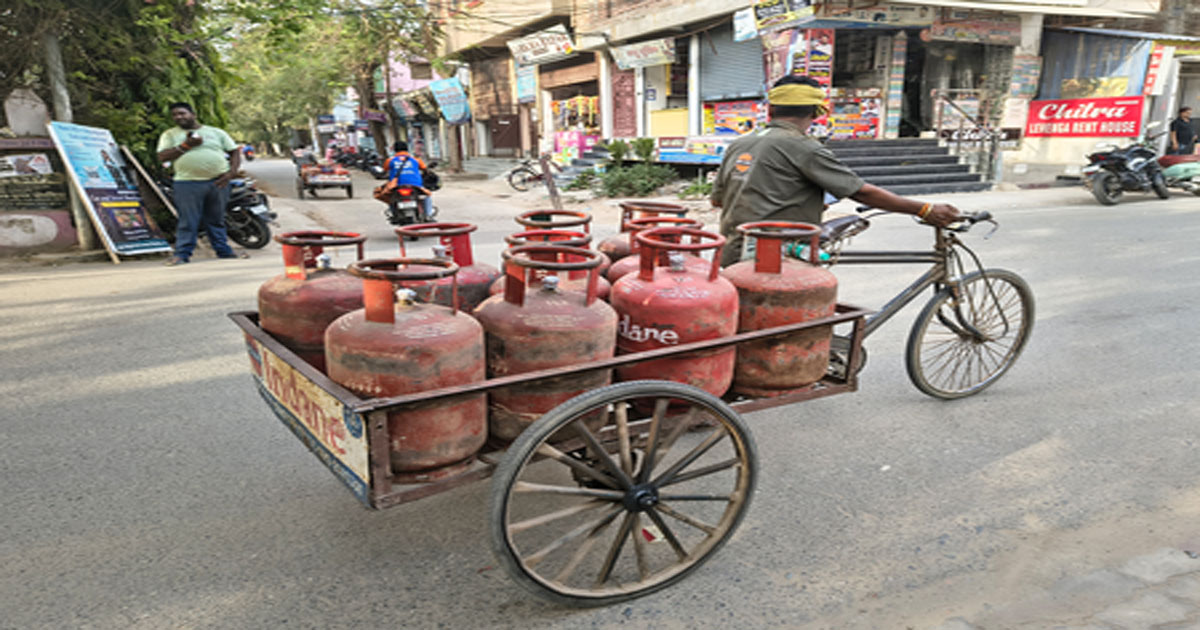
New Delhi, April 23: In a major breakthrough, the AGS/Crime Branch of Delhi Police, acting on specific and credible intelligence, carried out coordinated raids at multiple locations in the Palam and Dwarka areas, uncovering a large-scale illegal operation involving the unauthorised storage and refilling of LPG cylinders, officials said on Thursday.
The crackdown resulted in the recovery of 137 LPG cylinders along with refilling equipment, exposing serious violations of safety norms and regulatory guidelines. Officials said the operation points to a deliberate misuse of the LPG distribution system.
Keeping in view the prevailing circumstances, and as a preventive step against hoarding and black marketing of LPG cylinders, a dedicated team was constituted to identify and apprehend those involved in such activities.
The team comprised Inspector Krishan Kumar, along with Sub-Inspectors Narender Kumar and Agam Prasad; Assistant Sub-Inspectors Surender, Mintu, and Deepak; Head Constable Shyam Sunder; and Constable Dheeraj. The operation was carried out under the close supervision of ACP Bhagwati Prasad, ACP/AGS, and overall supervision of IPS officer Harsh Indora, DCP/Crime Branch.
Following sustained groundwork, specific and credible secret information was received regarding hoarding and illegal refilling of LPG cylinders in the Dwarka and Palam areas of Delhi.
Acting on the input, a raiding team was formed, and a search operation was conducted at JJ Colony, Sector-7, Dwarka. During the raid, 77 LPG cylinders were found stored at the premises. Some cylinders were also discovered loaded in vehicles present at the spot.
The following persons, all residents of Delhi, were found present along with their vehicles — Arjun (45), a resident of Bagdola; Surajpal Pandey (42), resident of Raj Nagar-II, Palam Colony; Amarjeet Kumar (28), resident of Raj Nagar-II, Palam Colony; Prempal Singh (52), resident of Raj Nagar-II, Palam Colony; Sukh Ram (48), resident of Goyla Dairy, Kutub Vihar Phase-1; and Vikram (42), resident of Dada Dev Road, Dev Kunj, Palam.
When questioned about the possession of such a large number of LPG cylinders, they failed to produce any valid documents or a satisfactory explanation. Subsequent interrogation led to further raids at two additional locations.
In a second recovery, 25 LPG cylinders were seized from a tempo parked near the premises. The owner of the vehicle, Malkhan (59), a resident of Sector-7, Dwarka, was found present at the spot.
A third recovery led to the seizure of 35 LPG cylinders from premises in Gali No. 6, near Bachpan Play School, Dev Kunj, Raj Nagar-II, Palam Colony, where the cylinders were stocked in an open area adjoining a house.
At this location, the following persons were found present: Raju Rai, a resident of Manglapuri Phase-II; Chander Pal, a resident of Palam Dada Dev Road; Bablu, a resident of Goyla Dairy; and Sujeet Kumar, a resident of Shyam Vihar Phase-1.
Considering the scale of the recovery, the Food and Supply Officer (FSO), Palam-Dwarka, was informed and called to the spot. The official stated that such accumulation of LPG cylinders is not authorised without proper permission. In his presence, all the recovered cylinders were seized.
The FSO subsequently informed the Senior Manager (LPGS), New Delhi and South-West District, and the case property was handed over to Shivam Jain, Senior Manager (LPGS).
All the accused persons have been apprehended. Investigations revealed that they were illegally storing domestic LPG cylinders for black market purposes and were involved in unauthorised refilling and tampering of cylinders, officials said.
A case has been registered at the Crime Branch police station under Sections 125/3(5) of the BNS and Section 3/7 of the Essential Commodities Act, 1955.
During interrogation, it emerged that the accused had procured LPG cylinders from a gas agency, but instead of delivering them as per the assigned targets, they diverted and stored them illegally at the identified premises.
They maintained an unauthorised stock and used illegal equipment to transfer gas from filled cylinders into empty ones, which were then sold in the open market for unlawful gains.
Further investigation into the matter is currently underway.
Mumbai Press Exclusive News
Employee arrested from UP for stealing from Mumbai spice shop, cash recovered

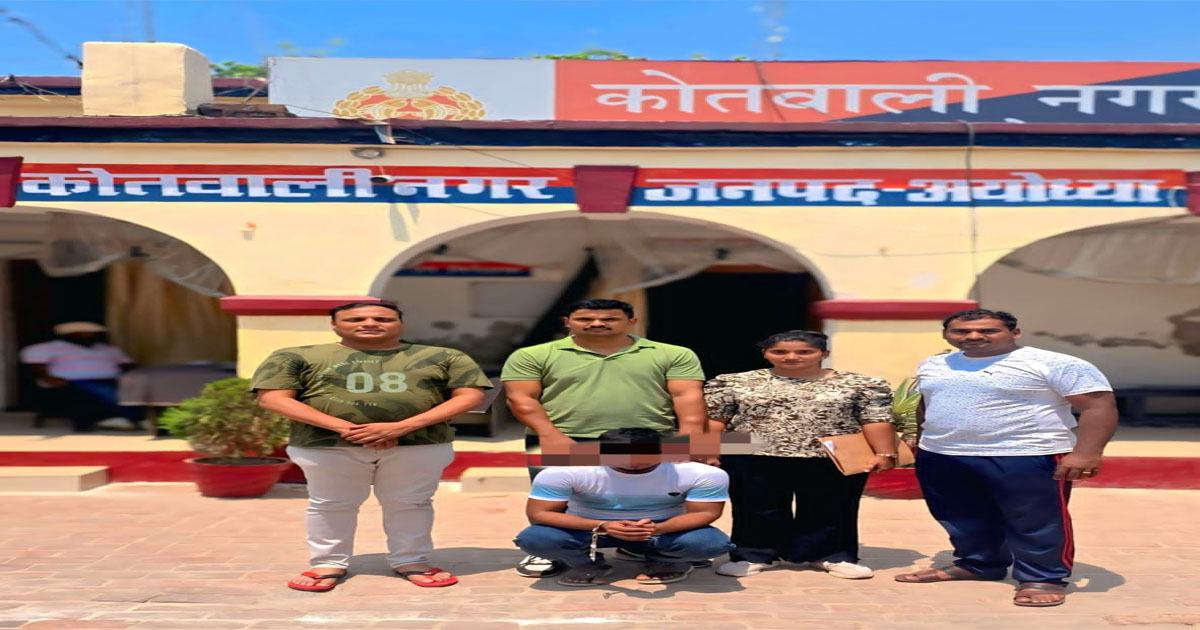
The police have claimed to have arrested an employee thief who stole Rs 13,86,200 from a spice shop in the Kala Chowki area of Mumbai from UP Ayodhya, Uttar Pradesh. The money collected for 8 days at the spice shop in the Kala Chowki area was kept in the grain and the next day the complainant shop owner searched for the money in the grain but did not find it. After that, he filed a report at the police station and the police conducted an inquiry and found that the employee working at the shop had been absent since morning, which made the police suspicious and the police arrested Ajay Kumar Shyam Sundar from Ayodhya, UP and recovered more than Rs 10 lakh in cash from his possession. This operation was solved by DCP Ragasudha on the instructions of Mumbai Police Commissioner Devin Bharti and the police have succeeded in arresting the accused from UP.

BMC Census 2027 begins… Publicize widely to make it accessible to the general public: Additional Municipal Commissioner

Mumbai: MLA Abu Asim Azmi has demanded an inquiry from Chief Minister Devendra Fadnavis into the case of poisoning of watermelons in Pydhuni.

Mumbai: Two clever thieves arrested for stealing Rs 10 lakh from a parking lot in Kandivali, search continues for more

A sensational incident in Andheri… The sanctity of relationship violated, brother-in-law arrested for sister’s murder, abandoned body identified

Iran’s FM Araghchi arrives in St Petersburg to hold talks with Russian President Putin

Mumbai Local Train Tragedy: Fatal Accident Reported At Bhayandar Station’s Platform No 1 – Disturbing Video Surfaces

Iran-Israel Conflict Hits India’s Real Estate: Supply Disruptions & Rising Costs Delay Project Possessions

‘Son Falsely Implicated, We Are Well-Educated’: Father Of Accused Tausif Attar Defends Son After Skullcap, Namaz Coercion Allegations Rock TCS Nashik

Bhiwandi Police Busts Vehicle Theft Gang, Arrests Three, Recovers 58 Stolen Motorcycles Worth ₹10.60 Lakh

Mumbai: Pan-India Hawala Trail Exposes Chilling Conspiracy Behind Rohit Shetty House Firing Case
-

 Crime4 years ago
Class 10 student jumps to death in Jaipur
-

 Maharashtra2 years ago
Mumbai Local Train Update: Central Railway’s New Timetable Comes Into Effect; Check Full List Of Revised Timings & Stations
-

 Maharashtra2 years ago
Mumbai To Go Toll-Free Tonight! Maharashtra Govt Announces Complete Toll Waiver For Light Motor Vehicles At All 5 Entry Points Of City
-

 Maharashtra2 years ago
False photo of Imtiaz Jaleel’s rally, exposing the fooling conspiracy
-

 National News2 years ago
Ministry of Railways rolls out Special Drive 4.0 with focus on digitisation, cleanliness, inclusiveness and grievance redressal
-

 Maharashtra1 year ago
Maharashtra Elections 2024: Mumbai Metro & BEST Services Extended Till Midnight On Voting Day
-

 National News2 years ago
J&K: 4 Jawans Killed, 28 Injured After Bus Carrying BSF Personnel For Poll Duty Falls Into Gorge In Budgam; Terrifying Visuals Surface
-

 Crime2 years ago
Baba Siddique Murder: Mumbai Police Unable To Get Lawrence Bishnoi Custody Due To Home Ministry Order, Says Report