
Business
Oil prices jump past $100 as Iran conflict shakes markets

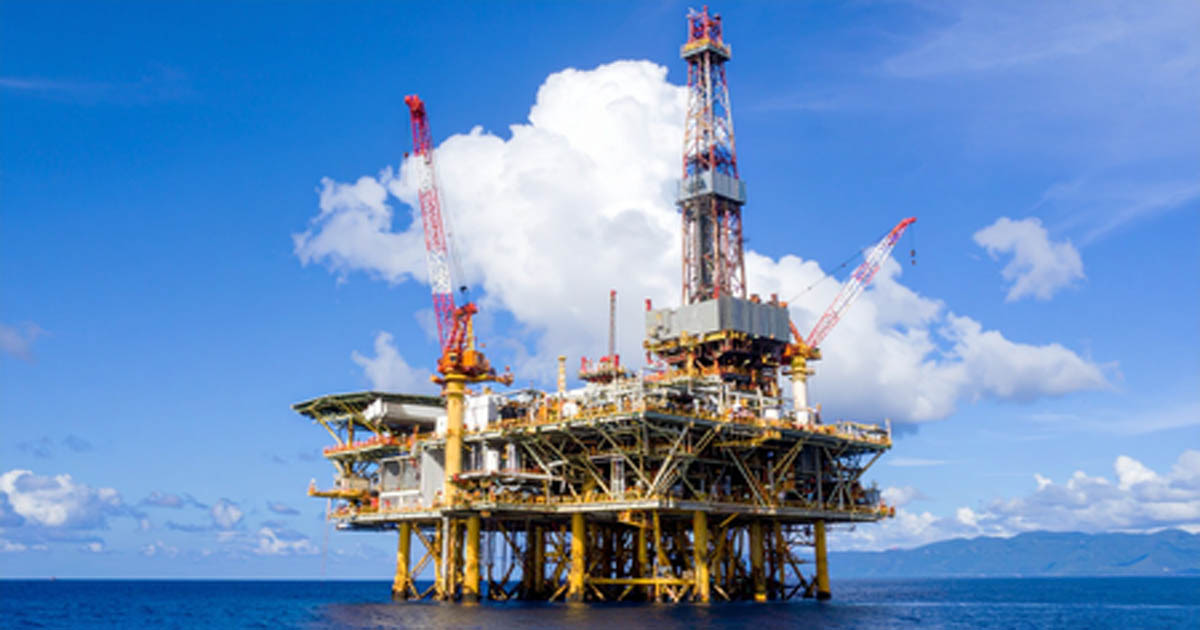
Washington, March 9: Oil prices surged past $100 a barrel as the conflict involving Iran disrupted energy flows through the Strait of Hormuz and rattled global markets.
US President Donald Trump defended the spike. He said higher oil prices were a temporary cost tied to confronting Iran’s nuclear threat.
“Short-term oil prices, which will drop rapidly when the destruction of the Iran nuclear threat is over, is a very small price to pay for U.S.A., and World, Safety and Peace,” Trump wrote on Truth Social.
“ONLY FOOLS WOULD THINK DIFFERENTLY!”
Crude oil prices almost touched $110 per barrel after major Middle East producers reduced output while the Strait of Hormuz remained effectively closed due to the Iran conflict, CNBC reported Sunday.
West Texas Intermediate crude jumped about 20.75 per cent, or $18.83, to $109.75 per barrel. Brent crude rose more than 18 per cent to about $109.48 per barrel, according to the report.
The jump marks one of the biggest weekly gains in oil futures trading since the early 1980s, it said.
The rally reflects fears that the Strait of Hormuz could remain disrupted. The narrow waterway is one of the world’s most critical oil routes. A large share of global oil and liquefied natural gas shipments moves through the Strait.
The Wall Street Journal reported that tanker traffic through the Strait slowed sharply as ships avoided the region after threats and attacks linked to the conflict.
Gulf producers have begun cutting output. Storage tanks are filling up. Without export routes, some producers are shutting wells or slowing production.
Financial markets reacted quickly.
Stocks in Asia dropped sharply when trading opened. Japan’s benchmark index fell about five per cent. South Korea’s market dropped more than seven per cent, The New York Times reported. Both economies depend heavily on imported oil and gas.
Analysts warn that prices could rise further if the conflict drags on. Market forecasts cited by financial trackers suggest crude could reach $143 per barrel by the end of the year.
Energy historian Daniel Yergin told The Wall Street Journal the situation could become “by far the biggest disruption in world history in terms of daily oil production.”
The conflict is also disrupting global trade routes. The Washington Post reported that missile and drone attacks in the region have slowed commercial shipping and damaged trade corridors between Asia, Europe and the Middle East.
Economists say Asia and Europe could face stronger economic pressure than the United States. Both regions rely heavily on imported energy moving through the Persian Gulf.
The United States may be somewhat protected because of its large domestic oil production and growing energy exports. Still, higher global oil prices can affect American consumers. Rising fuel costs often lead to higher transport and food prices.
Oil shocks in the Persian Gulf have triggered major economic crises before. The 1973 Arab oil embargo and the 1979 Iranian revolution both caused dramatic price spikes and global recessions.



New Delhi, April 25: US tech giant Google plans to invest up to $40 billion in the artificial intelligence (AI) firm Anthropic, as global technology giants accelerate their push into advanced AI models and infrastructure.
The proposed investment includes an initial $10 billion infusion at Anthropic’s latest valuation of $380 billion, with the remaining $30 billion tied to performance-based milestones, the companies confirmed, according to multiple reports.
The move has built on a multi-year partnership between the two firms, under which Google provides cloud infrastructure and access to Anthropic’s AI models, including its Claude suite.
Moreover, Anthropic also leverages Google’s custom tensor processing units (TPUs) as an alternative to widely used graphics processing units.
The latest agreement between the tech firms came amid surging demand for generative AI tools across enterprises, developers and consumers, which has placed increasing pressure on computing infrastructure.
Notably, Anthropic recently secured 5 gigawatts of compute capacity through collaborations involving Google and Broadcom, with additional expansion planned.
However, despite their collaboration, the companies remain competitors in the AI space, with Google’s Gemini models vying against Anthropic’s offerings in the rapidly evolving market.
Additionally, Google has been steadily increasing its stake in Anthropic since 2023, when it first invested $300 million for roughly a 10 per cent holding. Subsequent funding rounds pushed its total investment beyond $3 billion, with reports suggesting a stake of about 14 per cent prior to the latest deal.
The investment has underscored intensifying competition among major technology firms, which are committing tens of billions of dollars to leading AI labs such as Anthropic and rivals, including OpenAI.
Anthropic was founded in 2021 by former OpenAI researchers and has seen rapid growth in adoption of its AI products, particularly its Claude models, with annualised revenue crossing $30 billion.
The deal has followed a similar arrangement with Amazon, which recently invested $5 billion in Anthropic and committed up to $20 billion more, linked to specific commercial milestones.

New Delhi, April 24: As India and New Zealand prepare to sign a Free Trade Agreement (FTA) on Monday, both sides are expected to benefit from expanded trade ties and improved market access, New Zealand Prime Minister Christopher Luxon has said.
Taking to the social media platform X, Luxon said, “We will sign a Free Trade Agreement with India on Monday.”
In a video message, Luxon said the agreement would improve market access for New Zealand exporters, particularly manufacturers of marine jet systems used in boats and exported to over 70 countries.
He added that the deal would help reduce trade barriers and strengthen commercial engagement between the two countries.
He also noted that certain exporters currently face tariffs while accessing the Indian market, and said the agreement would gradually ease such duties, improving competitiveness and supporting higher trade flows.
Luxon said the FTA would support increased business activity, employment opportunities and economic growth in New Zealand, while also strengthening bilateral trade linkages with India.
He added that the agreement would bring ‘more jobs, higher wages and more opportunities,’ highlighting the broader economic impact of the deal.
Once signed, the FTA is expected to expand trade and investment ties between the two countries and enhance export opportunities on both sides in a large and growing global market environment.
Earlier this month, legal verification of the New Zealand-India FTA was completed, with both countries agreeing to sign the pact on April 27 in the presence of a large contingent of business representatives, New Zealand Trade and Investment Minister Todd McClay said.
In a statement, McClay described the agreement as a “once-in-a-generation opportunity,” saying it would strengthen bilateral trade relations and provide improved access to each other’s markets.
He said that amid global economic and geopolitical uncertainty, strengthening trade partnerships remains important for long-term economic stability.
McClay added that signing the FTA would allow New Zealand to formally initiate parliamentary treaty examination, enabling public scrutiny of the agreement.

Mumbai, Gold and silver prices started the session on a weaker note on Friday, with both precious metals declining by nearly 1 per cent in early trade on the Multi Commodity Exchange (MCX).
Gold futures for June 5 opened 0.39 per cent or Rs 594 lower at Rs 1,51,167 per 10 grams compared to the previous close of Rs 1,51,761.
Later, the yellow metal touched an intra-day low of Rs 1,50,750, down 0.66 per cent or Rs 1,011. At the last count, it was trading at Rs 1,51,449, a decrease of Rs 312 or 0.21 per cent. During the session so far, gold has touched an intra-day high of Rs 1,51,457.
On the other hand, silver futures for May 5 declined as much as 0.95 per cent or Rs 2,313 to Rs 2,39,200, an intraday low. The white metal was trading at Rs 2,41,345, down Rs 168 or 0.07 per cent. It recorded an intraday high of Rs 2,41,382, down 0.05 per cent or Rs 131.
In the international market, precious metals also witnessed selling pressure. COMEX gold was down nearly 1 per cent at $4,684 per ounce, while COMEX silver also slipped around 1 per cent to $74.81 per ounce.
According to commodity analysts, gold and silver prices are under pressure due to a stronger US dollar, rising bond yields, and uncertainty over geopolitical tensions in the Middle East.
They further said that crude oil moving back above $100 per barrel has raised inflation concerns, adding to pressure on precious metals.
Moreover, Brent crude was trading at more than $100 per barrel or 2 per cent higher.
Equity benchmarks Sensex and Nifty also traded up to 1 per cent lower in early trade on Friday.

Mumbai MGL Scam: APK File Download Tricks Over 100 Users, Including Teachers, Govt Employees; ₹2.7 Crore Lost In A Month: Report

Six Police Personnel Suspended in Raigad; Action by SP Anchal Dalal Creates Stir

‘Gunman carried shotgun, knives,’ police say after shooting at White House event

‘A dangerous profession’: Many US presidents have faced assassination attempts

Kalyan Traffic Chaos Triggers Political Firestorm As Shiv Sena (UBT) Accuses Police Of Nexus With Auto Drivers

Bharti Airtel Receives ₹1,74,000 Penalty Notice From DoT For Subscriber Verification Lapses

Dhurandhar 2 Box Office Collection Day 9: Ranveer Singh Starrer Earns ₹41.55 Crore On Its Second Friday; Enters ₹700 Crore Club

PM Modi & US President Donald Trump Hold Crucial Talks As West Asia Crisis Deepens; Musk Joins Call

Mumbai Local Train Tragedy: Fatal Accident Reported At Bhayandar Station’s Platform No 1 – Disturbing Video Surfaces

Ashok Kharat Sexual Exploitation Case: 2 More Cases Filed Against Self-Styled Astrologer & Godman; Total Complaints Rise To 10 In Nashik
-

 Crime4 years ago
Class 10 student jumps to death in Jaipur
-

 Maharashtra2 years ago
Mumbai Local Train Update: Central Railway’s New Timetable Comes Into Effect; Check Full List Of Revised Timings & Stations
-

 Maharashtra2 years ago
Mumbai To Go Toll-Free Tonight! Maharashtra Govt Announces Complete Toll Waiver For Light Motor Vehicles At All 5 Entry Points Of City
-

 Maharashtra2 years ago
False photo of Imtiaz Jaleel’s rally, exposing the fooling conspiracy
-

 National News2 years ago
Ministry of Railways rolls out Special Drive 4.0 with focus on digitisation, cleanliness, inclusiveness and grievance redressal
-

 Maharashtra1 year ago
Maharashtra Elections 2024: Mumbai Metro & BEST Services Extended Till Midnight On Voting Day
-

 National News2 years ago
J&K: 4 Jawans Killed, 28 Injured After Bus Carrying BSF Personnel For Poll Duty Falls Into Gorge In Budgam; Terrifying Visuals Surface
-

 Crime2 years ago
Baba Siddique Murder: Mumbai Police Unable To Get Lawrence Bishnoi Custody Due To Home Ministry Order, Says Report