
Business
Now travellers opting for premium services for safe travel: VFS Global


With international travel opening in a phased manner amidst pandemic-induced restrictions being lifted, data analysis of visas processed over the past six months indicate the emergence of a discerning set of travellers opting for premium services for a safe and convenient travel experience.
This trend comes to light as a result of a significant increase in customers requesting for the Visa At Your Doorstep (VAYD), service offered by VFS Global.
This optional service empowers customers to complete their entire visa application submission process from the comfort of their homes or any other location of their choice.
Through this service, customers can submit their application, enroll for biometrics, and get the passport couriered back to their location of choice.
VFS Global on Monday said foreign-bound travellers from India that opted for VAYD services grew by more than six times between January and July this year. Given international borders began to reopen only in June following the setback caused by the second wave until May, the number has more than doubled in just over a month.
“Touchless travel with an enhanced focus on safety and well-being are key to customers today. The uptick in VAYD services is another great indication of changing customer preferences. With the digital consumer experience evolving rapidly, we foresee a higher demand for such premium services that enable our customers to prioritise safe travel,” said Vinay Malhotra, Regional Group COO — South Asia, Middle East & North Africa and Americas, VFS Global.
The data trends also indicate large group bookings (in thousands) from relatively smaller markets such as Goa and Kochi. VAYD beneficiaries also comprised of CXOs, and celebrities from sports and the film industry.
Currently, the VAYD service is available to Indian travellers visiting the UK, Austria, Croatia, Czech Republic, Denmark, Estonia, Finland, France, Germany, Hungary, Iceland, Italy, Latvia, Lithuania, Luxembourg, Slovenia, Portugal, Slovakia, Switzerland, and Ukraine.



Mumbai, Gold prices remained largely steady on Wednesday as improving prospects of easing geopolitical tensions between the United States and Iran kept investor sentiment in check.
During early trade, MCX gold May futures were marginally higher by 0.02 per cent at Rs 1,53,305 per 10 grams.
Commenting on gold technical outlook, experts said that a sustained move above Rs 1,55,000 could revive momentum toward Rs 1,57,000-Rs 1,58,000.
“On the downside, a break below Rs 1,54,000 may lead to a corrective move toward Rs 1,52,000 and further to Rs 1,50,000,” an analyst stated.
Silver prices, however, saw stronger buying interest, with MCX silver May futures rising 0.83 per cent to Rs 2,54,842 per kg.
“Resistance is placed at Rs 2,60,000–Rs 2,63,000, with further upside toward Rs 2,68,000–Rs 2,70,000,” a market expert said.
“A sustained move above these levels could strengthen momentum and support further gains. On the downside, a break below Rs 2,48,000 may lead to a corrective move toward the Rs 2,44,000–Rs 2,40,000 range,” as per an analyst.
In the previous session, gold had ended flat at Rs 1,53,216 per 10 grams, while silver futures slipped 0.1 per cent to Rs 2,25,499 per kg.
Globally, the yellow metal held on to its recent gains amid optimism that Washington and Tehran could move towards a negotiated settlement to the conflict that began on February 28.
The easing of tensions has reduced fears of a sharp energy-supply shock, which had earlier raised concerns about inflationary pressures.
Spot gold hovered near $4,850 an ounce after rising as much as 0.6 per cent during the session. The metal had surged over 2 per cent in the previous trading session on expectations that the US and Iran may soon hold a second round of ceasefire talks.
US President Donald Trump has indicated that negotiations could resume “over the next two days,” further boosting hopes of a diplomatic breakthrough.
Despite the recent stability, gold has faced pressure in recent weeks, falling nearly 8 per cent since the conflict began.
Early in the crisis, a liquidity squeeze prompted investors to offload bullion holdings to cover losses in other asset classes.
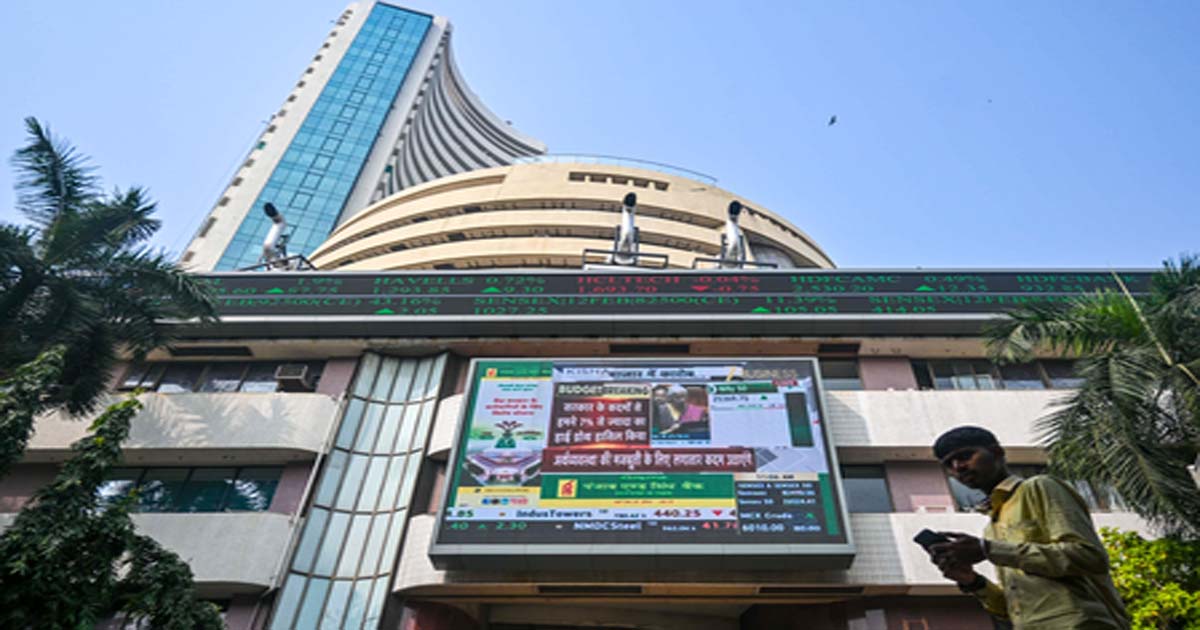
Mumbai, The Indian stock markets witnessed a strong rebound last week after six consecutive weeks of decline, supported by favourable global cues, according to analysts.
Sentiment remained buoyant amid optimism surrounding a temporary US–Iran ceasefire, although lingering geopolitical uncertainties capped the pace of gains as the week progressed.
“The rally was further aided by a stable domestic macro backdrop, with broader markets outperforming the benchmarks. Despite elevated volatility marked by sharp mid-week gains and subsequent profit booking, indices trended higher,” said Ajit Mishra – SVP, Research, Religare Broking Ltd.
The Nifty and Sensex gained around 6 per cent to close near the week’s highs at 24,050.60 and 77,550.25, respectively.
According to analysts, global developments remained a key influence, with the temporary ceasefire between the US and Iran improving risk appetite, though uncertainty around its sustainability persisted.
Meanwhile, a sharp decline in crude oil prices below the $100 mark eased domestic concerns and triggered a strong rebound across markets.
On the domestic front, the RBI maintained the repo rate at 5.25 per cent and retained a neutral stance, highlighting the need to balance inflation risks with growth support.
The central bank also revised FY26 GDP growth upward to 7.6 per cent while projecting FY27 growth at 6.9 per cent.
Inflation projections were raised to 4.6 per cent for FY27, reflecting risks from elevated energy prices and potential weather-related disruptions.
Market watchers said that overall sentiment remains balanced but cautious, shaped by global cues, crude oil price movements and ongoing foreign investor activity.
Downside appears to be relatively contained, but upside momentum remains constrained, pointing to a recovery that is still tentative and low in conviction, they added.
Economic indicators showed signs of moderation, with the Services PMI easing to 57.5 and the Composite PMI to 57.0 in March.
However, global agencies remained constructive, with the World Bank raising India’s growth outlook, supported by strong domestic demand and structural factors, said analysts.

New Delhi, April 8: Global crude oil prices on Wednesday plunged sharply up to 20 per cent, after US President Donald Trump announced a two-week ceasefire with Iran that includes a pledge to restore navigation through the Strait of Hormuz — the narrow waterway at the heart of the world’s most acute energy crisis in decades.
The international benchmark Brent crude futures shed nearly 16 per cent or $17.39 to $91.88, hitting an intraday low, while US WTI crude declined almost 20 per cent or $21.90 to $91.05.
The Strait of Hormuz, through which roughly a fifth of global oil flows, has been at the centre of the conflict. Iran had restricted passage for several weeks, contributing to rising prices and supply concerns. Markets had been on edge ahead of Trump’s deadline for Iran to reach a deal, with traders fearing a major escalation could disrupt shipments across the Gulf and send prices sharply higher.
Oil prices had surged in recent weeks amid fears that the strait could be closed or severely restricted. The waterway handles shipments critical to global supply chains, including crude oil and liquefied natural gas.
The US-Israel-Iran conflict has been paused for two weeks after approximately 40 days of hostilities that began in February.
President Trump’s shift in stance came just ahead of his stated deadline for Iran to reopen the Strait of Hormuz or risk extensive strikes on its civilian infrastructure.
Meanwhile, Iran indicated it would halt its military operations provided attacks against it ceased simultaneously. Foreign Minister Abbas Araghchi, in a formal statement, confirmed that safe passage through the Strait of Hormuz would be ensured for two weeks in coordination with Iranian armed forces.
The conflict had triggered an unprecedented surge in oil prices in March, with gains exceeding 60 per cent during the period.
Additionally, Indian equity benchmarks also rallied sharply on the development, trading more than 3 per cent higher in early trade. The Sensex jumped nearly 4 per cent, while the Nifty surged 3.5 per cent to their respective intraday highs.

Drain cleaning work continues on a war scale in the western suburbs, Additional Municipal Commissioner Dr. Vipin Sharma visits

Corporator Lakshmi Bhatia’s wallet was stolen during a meeting of the Mumbai Municipal Corporation Standing Committee; ₹20,000 in cash was taken—raising questions about security?

Goregaon NESCO concert turns into drug party, investigation launched after death of two youths

Centre provides security to Raghav Chadha after Punjab withdraws cover: Sources

Who Is Mohammad Ayaz? Man Accused Of Sexually Exploiting 180 Minor Girls, Shooting 350 Videos; Arrested In Amravati

Dhurandhar 2 Box Office Collection Day 1: Ranveer Singh Starrer Takes An Exceptional Opening; Crosses ₹100 Crore Mark

Mumbai Police Busts Fake Apple Accessories Racket In Ghatkopar, ₹16.33 Lakh Goods Seized; Six Booked

Dhurandhar 2 Box Office Collection Day 9: Ranveer Singh Starrer Earns ₹41.55 Crore On Its Second Friday; Enters ₹700 Crore Club

Bharti Airtel Receives ₹1,74,000 Penalty Notice From DoT For Subscriber Verification Lapses

Mumbai: 28-Year-Old Ghatkopar Woman Killed By Speeding Tanker While Crossing Road, Driver Arrested
-

 Crime4 years ago
Class 10 student jumps to death in Jaipur
-

 Maharashtra2 years ago
Mumbai Local Train Update: Central Railway’s New Timetable Comes Into Effect; Check Full List Of Revised Timings & Stations
-

 Maharashtra2 years ago
Mumbai To Go Toll-Free Tonight! Maharashtra Govt Announces Complete Toll Waiver For Light Motor Vehicles At All 5 Entry Points Of City
-

 Maharashtra2 years ago
False photo of Imtiaz Jaleel’s rally, exposing the fooling conspiracy
-

 National News2 years ago
Ministry of Railways rolls out Special Drive 4.0 with focus on digitisation, cleanliness, inclusiveness and grievance redressal
-

 Maharashtra1 year ago
Maharashtra Elections 2024: Mumbai Metro & BEST Services Extended Till Midnight On Voting Day
-

 National News2 years ago
J&K: 4 Jawans Killed, 28 Injured After Bus Carrying BSF Personnel For Poll Duty Falls Into Gorge In Budgam; Terrifying Visuals Surface
-

 Crime2 years ago
Baba Siddique Murder: Mumbai Police Unable To Get Lawrence Bishnoi Custody Due To Home Ministry Order, Says Report