
Crime
Now Calcutta HC orders CBI probe into primary teachers’ recruitment

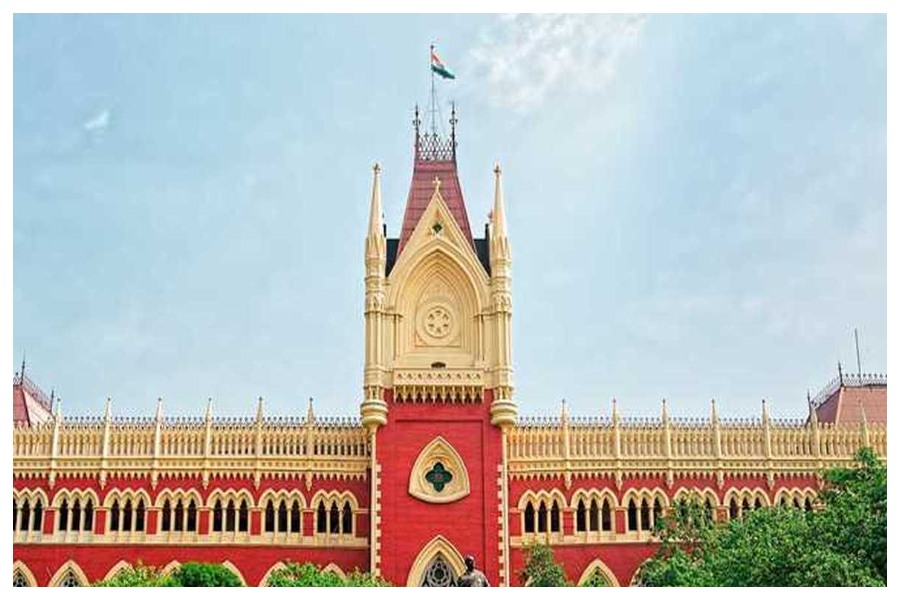
In yet another blow to the West Bengal government, in particular the education department, a single-judge bench of the Calcutta High Court on Monday ordered a CBI inquiry into the recruitment of primary teachers by the West Bengal Board of Primary Education (WBBPE) in 2014.
The bench of Justice Avijit Gangopadhyay also ordered immediate cancellation of the appointment of 269 candidates for the post of primary teachers.
While passing the order, Gangopadhyay observed that these 269 candidates secured jobs despite not qualifying in the written examination and some of them did not even appear for the same.
The single-judge bench directed WBBPE to immediately stop payment of salaries to these 269 candidates and also ensure that they are not able to enter the respective schools they were appointed henceforth.
WBBPE came out with a revised and second merit list in 2017 for the recruitment examination conducted in 2014. It was observed that in the revised merit list, these 269 candidates were awarded one additional mark each.
Although the WBBPE authorities explained that this additional one mark for each of these 269 candidates was awarded because of some error in the question paper, the explanation could not satisfy the court.
Justice Gangopadhyay said that by that logic why the additional one mark was awarded only to these 269 candidates, depriving the remaining 23 lakh candidates who appeared for the same examination. Hence the bench also rejected the revised and second merit list that WBBPE came out with in 2017.
Justice Gangopadhyay also directed WBBPE President Manik Bhattacharya and the board’s Secretary Ratna Chakraborty (Bagchi) to be present at the CBI’s Kolkata office by 5.30 PM on Monday with all the supporting documents and answer the questions of the central probe agency sleuths.
The CBI is already conducting a probe into the recruitment irregularities in various teaching and non-teaching posts by the West Bengal School Service Commission (WBSSC). The CBI sleuths have also questioned former Education Minister and Trinamool Congress secretary general Partha Chatterjee twice in this connection.



Mumbai: witnessed a deeply unsettling incident in Baiganwadi, Govandi, where a young man was caught on CCTV allegedly stealing a mobile phone during Friday Jumma namaz at Noor e Illahi Masjid on Road No 8 on April 3, 2026.
The video, now widely shared across social media platforms, shows devotees immersed in prayer, completely unaware of their surroundings. In a matter of seconds, the accused quietly reaches into the pocket of a worshipper standing ahead of him, removes the phone, and walks away without drawing attention.
The brazenness of the act, carried out during a moment of faith and silence, has left residents disturbed. Many locals believe this may not be an isolated case and suspect the same individual could be linked to previous thefts in the area.
The incident has triggered concerns about safety even in places traditionally considered secure. Residents say the violation of trust within a place of worship has intensified unease.
While Mumbai continues to be known for its resilience and communal harmony, such incidents underline the need for vigilance and stronger security measures, even in spaces meant for peace.
In a separate case, a 20 year old woman was apprehended at Kandivali railway station on Monday morning after allegedly stealing a mangalsutra worth Rs 2 lakh from a fellow commuter.
The incident occurred around 8 am during peak hours, when heavy crowds move through Mumbai’s suburban railway network. According to reports circulating online, the accused targeted a commuter and attempted to flee after committing the theft.
However, alert commuters and authorities quickly intervened, chasing and detaining her within the station premises before she could escape.
Visuals from the scene show the woman being handcuffed by police, drawing attention from onlookers.
These back to back incidents have reignited concerns over safety in crowded public spaces. Daily commuters have long flagged theft and chain snatching as recurring issues, particularly during rush hours.
As investigations continue, many are calling for enhanced surveillance, stricter monitoring, and increased awareness to prevent such crimes in the future.
Mumbai: The sessions court on Monday rejected the anticipatory bail of a man, his wife and son, booked by the Andheri police station on the complaint of their landlord for allegedly misusing power of attorney, transferring three rooms to their names and cheating the landlord to the tune of `63.60 lakh.
As per the case registered by the 75-year-old landlord of Sitabai Hawaldar Chawl, he had inducted Devendra Singh as a tenant in 2016.
The landlord claimed that over a period of time, Singh gained his trust and induced him to execute a General Power of Attorney on March 28, 2024. The landlord alleged that Singh began to misuse the document, taking control of the chawl and collecting rents from other occupants.
The three claimed that the complainant was in a sound state of mind when he executed the General Power of Attorney. The court, however, said, “prima-facie there is no convincing document on record to show that the informant has inducted applicants as a tenant of room voluntarily with free will.”

Mumbai: The Andheri police have booked an individual for allegedly driving a car into a police personnel and damaging a breath analysis machine. The incident occurred in Andheri East on Sunday. After registering a case, the police issued a notice to the accused.
According to the police, on Sunday night, Sahar traffic police personnel were deployed at Satamwadi Junction on the Andheri–Ghatkopar Link Road in Andheri East. At around 1:15 am, a car approached the junction at high speed. Constable Pritam Omase, 37, attempted to stop the vehicle.
However, the driver slowed down briefly and then tried to flee. When the police attempted to intercept the car, the driver allegedly drove the vehicle into the constable, causing injury to his right leg. The breath analysing machine fell from the constable’s hand due to the impact and was damaged.
The police eventually managed to stop the vehicle. The driver identified himself as Virender Singh, 41, a resident of Sahar village, who works with a private company.
Police personnel detected the smell of alcohol while he was speaking. Subsequently, a breath analysis test was conducted, which revealed an alcohol level of 134.9 mg per 100 ml of blood.
The injured constable was taken to Cooper Hospital in Juhu for treatment.
The police registered a case on April 5 under Section 324(3) (mischief causing loss to government or local authority) of the Bharatiya Nyaya Sanhita, along with relevant provisions of the Motor Vehicles Act.

Samajwadi Party Appoints Abu Farhan Azmi as Mumbai Maharashtra General Secretary

Maha youth arrested for defamatory video targeting CM Fadnavis over Ajit Pawar plane crash

Iran agrees to open Strait of Hormuz after Trump’s 14-day ceasefire announcement

Oil falls after Trump signals Iran pause

Crude oil prices tank up to 20 pc over Iran ceasefire announcement

Married Mumbai Woman Mocked In Andheri Society Over ‘Lift Kissing’ CCTV Video, Files Police Complaint

LPG Crisis In Maharashtra: Cyber Crime On Rise Amid Shortage, 2 Women Lose ₹4 Lakh In ‘Gas Update’ Online Scam In Kalyan-Dombivli

Dhurandhar 2 Box Office Collection Day 1: Ranveer Singh Starrer Takes An Exceptional Opening; Crosses ₹100 Crore Mark

Thane Horror: Man Slashed With Chopper In Naupada For Refusing ‘Vargani’, Caught On Camera

Mumbai Police Busts Fake Apple Accessories Racket In Ghatkopar, ₹16.33 Lakh Goods Seized; Six Booked
-

 Crime4 years ago
Class 10 student jumps to death in Jaipur
-

 Maharashtra2 years ago
Mumbai Local Train Update: Central Railway’s New Timetable Comes Into Effect; Check Full List Of Revised Timings & Stations
-

 Maharashtra1 year ago
Mumbai To Go Toll-Free Tonight! Maharashtra Govt Announces Complete Toll Waiver For Light Motor Vehicles At All 5 Entry Points Of City
-

 Maharashtra2 years ago
False photo of Imtiaz Jaleel’s rally, exposing the fooling conspiracy
-

 National News1 year ago
Ministry of Railways rolls out Special Drive 4.0 with focus on digitisation, cleanliness, inclusiveness and grievance redressal
-

 Maharashtra1 year ago
Maharashtra Elections 2024: Mumbai Metro & BEST Services Extended Till Midnight On Voting Day
-

 National News2 years ago
J&K: 4 Jawans Killed, 28 Injured After Bus Carrying BSF Personnel For Poll Duty Falls Into Gorge In Budgam; Terrifying Visuals Surface
-

 Crime1 year ago
Baba Siddique Murder: Mumbai Police Unable To Get Lawrence Bishnoi Custody Due To Home Ministry Order, Says Report