
Crime
Bulldozer row: Jamiat moves SC seeking direction to stop UP demolitions

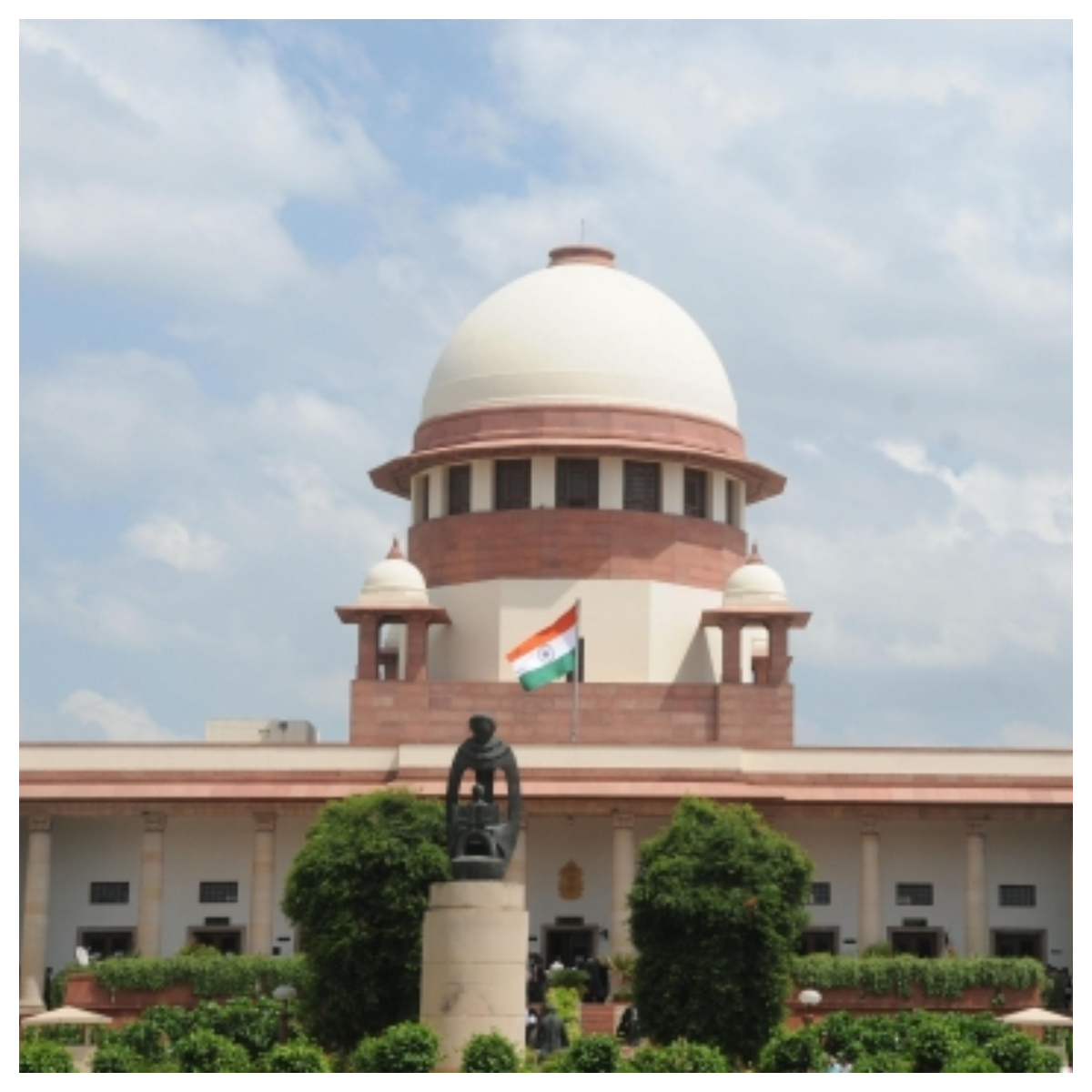
The Jamiat Ulama-i-Hind on Monday approached the Supreme Court seeking appropriate direction to the Uttar Pradesh government to ensure that no further demolitions are carried out without following due process of law, against the backdrop of the ongoing row over comments on the Prophet and subsequent demolition drives.
The application, filed through advocates Kabir Dixit and Sarim Naved, on behalf of Jamiat Ulama-I-Hind, sought directions to initiate action against those officials concerned responsible for the houses allegedly demolished in violation of the rule of law and the municipal laws enacted by the state.
The plea stated that the present situation is more alarming as the Supreme Court had already ordered a stay of demolitions that were being carried out as a punitive measure in northwest Delhi in similar circumstances. “It is a violation of the orders of the Supreme Court”, it read.
Incidents of violence and slogan-shouting were reported from Uttar Pradesh’s Prayagraj and Saharanpur on Friday (June 10) after prayers when people began protesting against former BJP spokespersons’ remarks on the Prophet.
On Sunday, bulldozers, now a symbol of Uttar Pradesh Chief Minister Yogi Adityanath’s crackdown on anti-social elements, reached the residence of Mohammad Javed, a.k.a. Javed Pump, who has been identified as the main conspirator behind the violence that erupted in the city on June 10.
The Prayagraj Development Authority had served notice to demolish the house that was allegedly built without getting the requisite permissions.

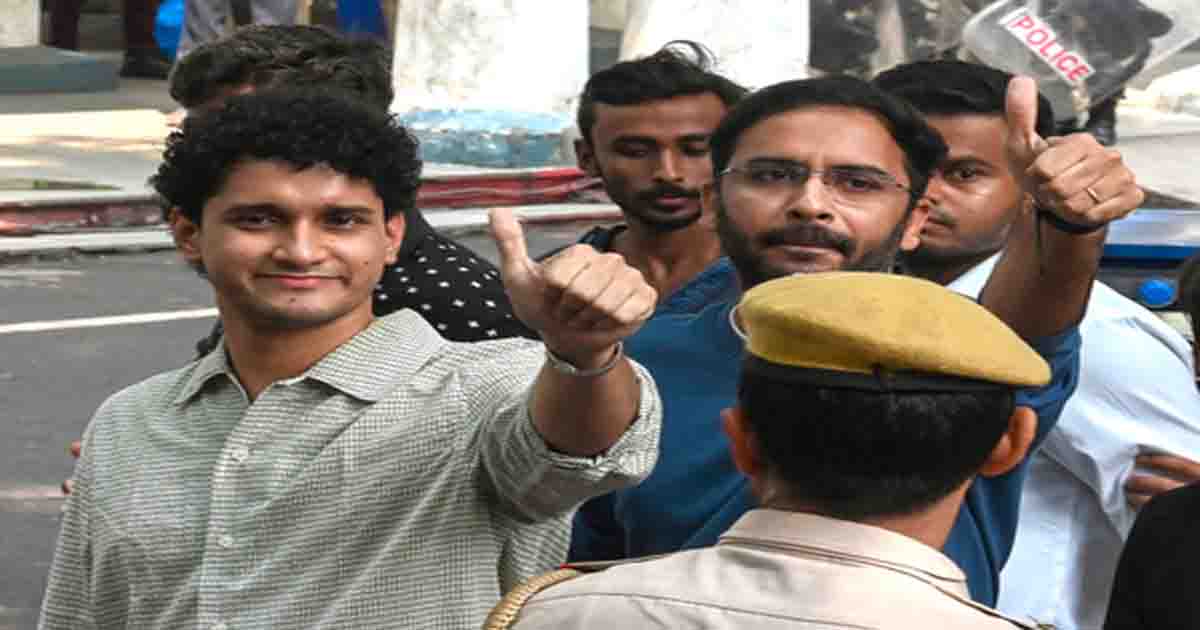
Cockroach Janta Party (CJP) leaders Saurav Das and Ashutosh Ranka arrived at the Delhi Police Crime Branch office in Rajouri Garden on Thursday for questioning in connection with the Jantar Mantar protest case.
Das and Ranka were summoned by the Delhi Police to appear for questioning on Thursday in connection with the protest case. They were asked to appear before the Delhi Police Crime Branch office in Rajouri Garden at noon.
Das and Ranka had been summoned by the Delhi Police earlier in October as well. However, they skipped the summons and later sought more time to appear before the Crime Branch for questioning.
The protest cases against the CJP leaders were transferred to the Crime Branch in October. The cases are in connection with the incident on October 13, when Das, Ranka and Ajinkya Shinde, along with 11 others, trespassed into Jantar Mantar, which has been de-notified as the designated protesting site.
All were detained by the Delhi Police. While Shinde was released on bail bond, Das and Ranka remained in judicial custody for a week.
The CJP members were protesting against alleged irregularities in the Special Intensive Revision (SIR) of electoral rolls and raised slogans against Chief Election Commissioner (CEC) Gyanesh Kumar.
On October 21, Das and Ranka were released from Tihar Jail following a week in judicial custody, after submitting written undertakings before a Special Executive Magistrate (SEM), assuring that they would maintain peace and refrain from calling for protests at Jantar Mantar until the site is de-notified in accordance with law.
SEM Ritu Raj directed the release of the two activists after they furnished personal bonds and surety bonds of Rs 50,000 each until the conclusion of the inquiry in connection with the Jantar Mantar trespassing case.
In their written undertakings, both activists promised not to commit any breach of peace and expressed full faith in the judiciary and all its instruments, including the SEM court.
The SEM court observed that the immediate measures required under Section 135(3) of the Bharatiya Nagarik Suraksha Sanhita (BNSS) to prevent a breach of peace or disturbance of public tranquillity could be adequately secured through the execution of bonds, supported by the written undertakings.

Cockroach Janta Party (CJP) leaders Saurav Das and Ashutosh Ranka have been summoned by the Delhi Police to appear for questioning on Thursday in connection with the Jantar Mantar protest case.
The CJP members have been asked to appear before the Delhi Police Crime Branch office in Rajouri Garden at noon.
Das and Ranka had been summoned by the Delhi Police earlier in October as well. However, they skipped the summons and later sought more time to appear before the Crime Branch for questioning.
The protest cases against the CJP leaders were transferred to the Crime Branch in October. The cases are in connection with the incident on October 13, when Das, Ranka and Ajinkya Shinde, along with 11 others, trespassed into Jantar Mantar, which has been de-notified as the designated protesting site.
All were detained by the Delhi Police. While Shinde was released on bail bond, Das and Ranka remained in judicial custody for a week.
The CJP members were protesting against alleged irregularities in the Special Intensive Revision (SIR) of electoral rolls and raised slogans against Chief Election Commissioner (CEC) Gyanesh Kumar.
On October 21, Das and Ranka were released from Tihar Jail following a week in judicial custody, after submitting written undertakings before a Special Executive Magistrate (SEM), assuring that they would maintain peace and refrain from calling for protests at Jantar Mantar until the site is de-notified in accordance with law.
SEM Ritu Raj directed the release of the two activists after they furnished personal bonds and surety bonds of Rs 50,000 each until the conclusion of the inquiry in connection with the Jantar Mantar trespassing case.
In their written undertakings, both activists promised not to commit any breach of peace and expressed full faith in the judiciary and all its instruments, including the SEM court.
The SEM court observed that the immediate measures required under Section 135(3) of the Bharatiya Nagarik Suraksha Sanhita (BNSS) to prevent a breach of peace or disturbance of public tranquillity could be adequately secured through the execution of bonds, supported by the written undertakings.
Crime
24-hour deadline to produce accused before Magistrate runs from actual detention, not formal arrest: SC

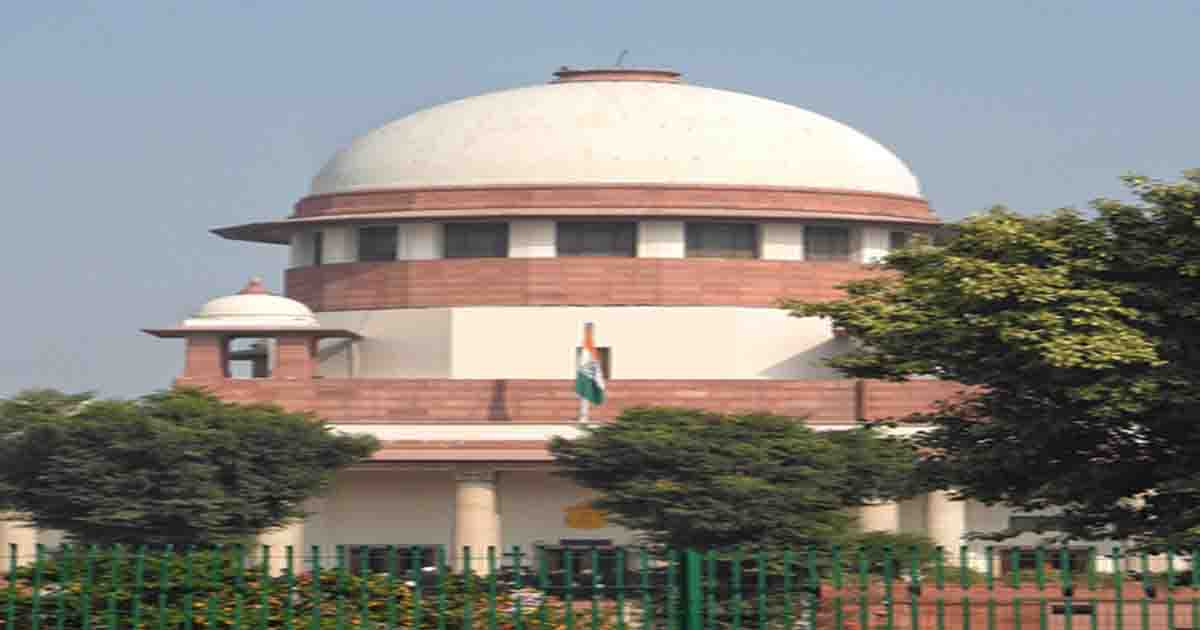
The Supreme Court has ruled that the 24-hour constitutional deadline for producing an arrested person before a Magistrate begins from the moment of actual detention, when the person’s liberty is curtailed, and not from the time of formal arrest recorded by the police.
The judgment came on appeals filed by four persons challenging a Tripura High Court decision denying them bail in a case registered under the Narcotic Drugs and Psychotropic Substances (NDPS) Act.
A Bench of Justices Ujjal Bhuyan and Atul S. Chandurkar held that the period of 24 hours prescribed under Article 22(2) of the Constitution must be calculated from the date and time when a person is actually detained, and not from the time when the investigating agency formally records the arrest.
Article 22(2) mandates that every person arrested and detained in custody must be produced before the nearest Magistrate within 24 hours of arrest, excluding the time necessary for the journey from the place of arrest to the court. It further prohibits detention beyond this period without the authority of a Magistrate.
Rejecting the distinction between detention and formal arrest for computing the constitutional deadline, the Justice Bhuyan-led Bench said that treating the period of 24 hours as commencing only after the completion of search and seizure and from the time of arrest formally recorded by the arresting authority was “not only unsustainable in law but is entirely unconstitutional”.
The Supreme Court further clarified that if a person’s detention continues beyond 24 hours without production before a Magistrate, the person must be released forthwith. It said that while computing the period, no time can be excluded except that which is necessary for the journey from the place of arrest to the Magistrate’s court.
The Justice Bhuyan-led Bench also stressed that compliance with the 24-hour constitutional limit alone would not automatically justify detention, as the investigating agency must ensure that the period of custody remains reasonable under Section 58 of the Bharatiya Nagarik Suraksha Sanhita (BNSS).
Section 58 of the BNSS provides that a police officer cannot detain a person arrested without a warrant for longer than is reasonable under the circumstances of the case, and, in the absence of a special order of a Magistrate, such detention cannot exceed 24 hours, excluding the necessary journey time.
The apex court said that a Magistrate, at the time of production of an accused, is duty-bound to record the actual date and time when the person’s liberty was curtailed and independently examine whether the constitutional deadline has been complied with.
It further held that even where the detention is within the 24-hour period, the Magistrate must examine whether the duration of custody was reasonable in the circumstances of the case. If the Magistrate finds that the detention has exceeded a reasonable period, he may decline to authorise further remand.
Setting aside the Tripura High Court’s judgment, the Supreme Court directed that the appellants be released on bail, subject to conditions imposed by the Special Court.

CJP Saurav Das, Ranka appear before Delhi Police in Jantar Mantar protest case

Yash Owns the Screen in Ramayana: A Superstar Who Continues to Evolve as an Actor

PM Modi says India’s metro network expanded from 248 km in 5 cities to 1200 km in 26 cities

‘Deliberate planting of fake, fabricated evidence’: Abhishek Banerjee on cash seizure at Trinamool office

Jantar Mantar protest: Saurav Das, Ashutosh Ranka summoned by Delhi Police today

Rahul, Cong ecosystem want to force regime change: BJP after Neha Bora praises B’desh Gen-Z protest

Attack on democratic rights: INDIA Bloc leaders on detentions of anti-ECI protestors

BJP pays tribute to ex-President Abdul Kalam, recalls his enduring influence on generations of India’s youth

Congress trying to protect 3 crore Bangladeshi infiltrators in voter list: HM Shah

Online betting: ED conducts searches at 20 premises in Mumbai, Pune, Hyderabad
-

 Crime4 years ago
Class 10 student jumps to death in Jaipur
-

 Maharashtra2 years ago
Mumbai Local Train Update: Central Railway’s New Timetable Comes Into Effect; Check Full List Of Revised Timings & Stations
-

 Maharashtra2 years ago
Mumbai To Go Toll-Free Tonight! Maharashtra Govt Announces Complete Toll Waiver For Light Motor Vehicles At All 5 Entry Points Of City
-

 Maharashtra2 years ago
False photo of Imtiaz Jaleel’s rally, exposing the fooling conspiracy
-

 National News2 years ago
Ministry of Railways rolls out Special Drive 4.0 with focus on digitisation, cleanliness, inclusiveness and grievance redressal
-

 Maharashtra2 years ago
Maharashtra Elections 2024: Mumbai Metro & BEST Services Extended Till Midnight On Voting Day
-

 National News2 years ago
J&K: 4 Jawans Killed, 28 Injured After Bus Carrying BSF Personnel For Poll Duty Falls Into Gorge In Budgam; Terrifying Visuals Surface
-

 Crime2 years ago
Baba Siddique Murder: Mumbai Police Unable To Get Lawrence Bishnoi Custody Due To Home Ministry Order, Says Report